Drought-Tolerant Plantings in Lake Havasu: What to Know Before You Buy
Establishing a vibrant yard in Lake Havasu City is exceptionally difficult due to intense summer heat, rocky soil, and strict municipal water codes. Without the right plant choices, homeowners often face withered landscapes, failed inspections, and costly fines. Selecting species that naturally thrive in the Mojave Desert is the most effective way to build a beautiful, compliant yard.
Here are the top options recommended for Lake Havasu City:
- Agave (Artichoke, Weber’s) – very low water, heat and cold tolerant
- Desert Willow (Chilopsis linearis) – low water, blooms May through October
- ‘Desert Museum’ Palo Verde – low water, no thorns, fast-growing shade tree
- Hop Bush (Dodonaea viscosa) – evergreen privacy screen, highly drought tolerant
- Chihuahuan Sage (Leucophyllum) – wind resistant, tolerates down to 10°F
- Valentine Bush (Eremophila maculata) – winter blooms, very low water
- Pink Muhly Grass – erosion control, seasonal color, minimal water
- Brittlebush and Creosote Bush – true Mojave natives, extremely drought tolerant
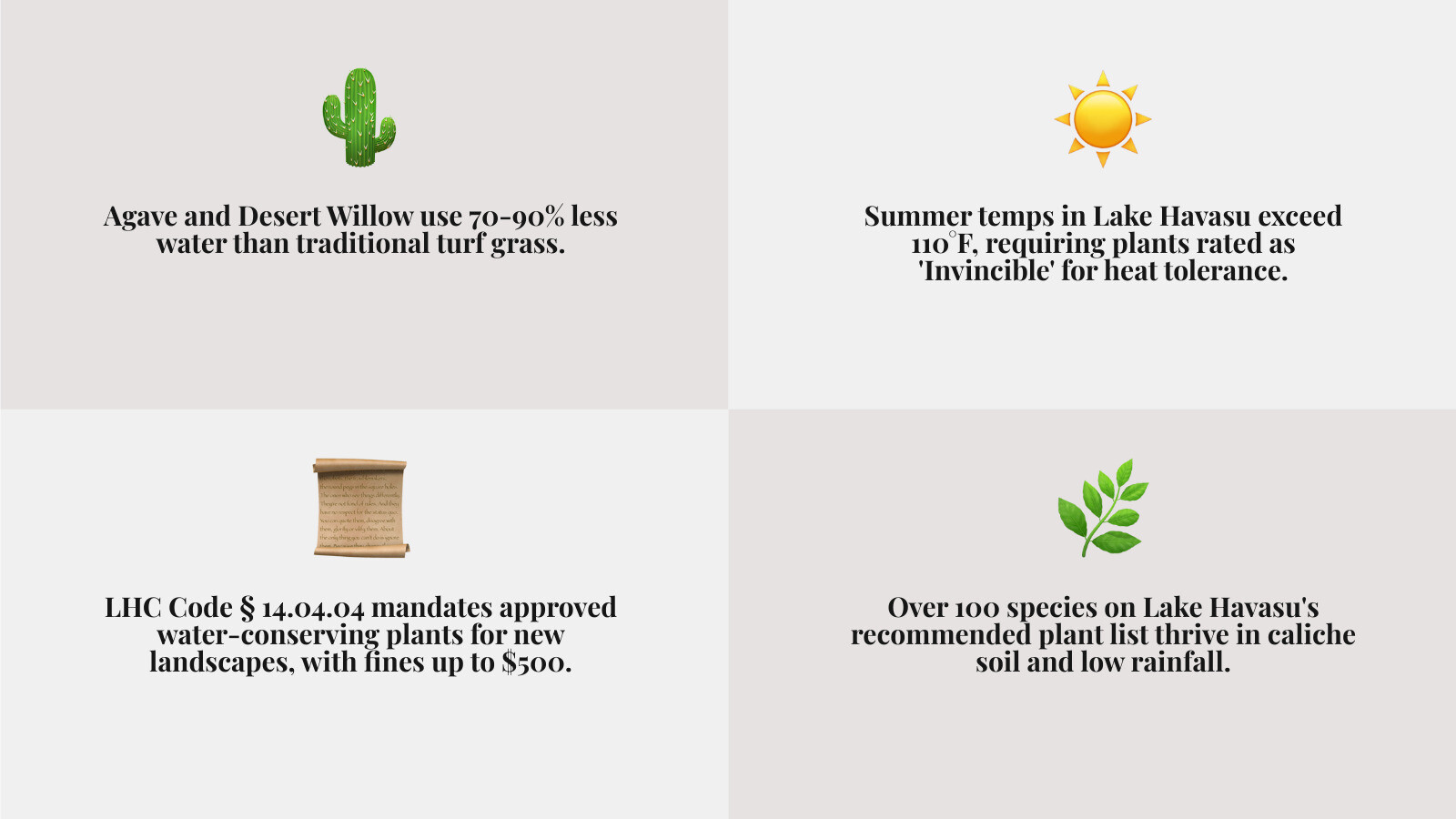
Landscaping in Lake Havasu City is genuinely tough. Summer temperatures regularly exceed 110°F, the soil is rocky and often packed with caliche, and water conservation isn’t just good practice — under LHC Code § 14.04.04, new developments are legally required to use plants from the city’s approved water-conserving list. Get it wrong and you’re looking at a failed final inspection and fines up to $500.
The good news is that the right plants don’t just survive here — they thrive. Lake Havasu City’s official recommended plant list covers more than 100 species of trees, shrubs, groundcovers, vines, succulents, and perennials that are proven performers in the Mojave Desert. Some are even officially classified as “Invincible” — meaning they hold up against heat, cold, wind, pests, and neglect all at once.
This guide covers exactly which plants to choose, how to design with them, how to care for them through brutal summers, and how to source and install them correctly for the Lake Havasu climate.
Drought-tolerant plantings in Havasu glossary:
Designing with Agave and Desert Ferns: The Foundation of Drought-Tolerant Plantings in Havasu
Creating a sustainable desert landscape is all about choosing plants that work together to combat the harsh Mojave climate. In Lake Havasu City, Golden Shores, and Parker, AZ, the combination of structural succulents like agave and soft, textured foliage like desert ferns forms a visually stunning, resilient foundation.
However, successful desert garden design in Havasu requires careful consideration of local microclimates. The south- and west-facing sides of a home experience intense reflected heat from walls, driveways, and rock mulches. Meanwhile, the soil is notoriously difficult—dense, alkaline, and frequently layered with caliche (a concrete-like layer of calcium carbonate) that prevents proper drainage.
To ensure your plantings survive, you must match species to their specific light and water tolerances. The Lake Havasu Recommended Landscaping Plant List serves as an excellent blueprint, categorizing species by water needs.
| Plant Type | Common Name | Growth Habit | Water Needs | Sun Tolerance | Best Landscape Use |
|---|---|---|---|---|---|
| Agave | Artichoke Agave | Tight, rounded rosette (2-3 ft) | Very Low | Full Sun to Partial Shade | Focal point, rock gardens |
| Agave | Weber’s Agave | Large, spreading rosette (6-10 ft) | Very Low | Full Sun | Large accent, background |
| Desert Fern | Feather Dalea | Low, spreading shrub (2-3 ft) | Low | Full Sun | Groundcover, bank stabilization |
| Desert Fern | Lysiloma (Desert Fern Tree) | Feathered canopy tree (15-20 ft) | Low-Medium | Full Sun to Filtered Shade | Patio shade, soft backdrop |
Selecting the Best Agave Varieties for Drought-Tolerant Plantings in Havasu
Agaves are the architectural anchors of the desert. They store water in their thick, fleshy leaves, making them incredibly resilient. When selecting agaves for your yard, look for drought-proof garden plants that can handle both the blistering 115°F summer heat and the occasional winter frost.
- Artichoke Agave (Agave parryi var. truncata): This species is highly prized for its clean, symmetrical shape, resembling an oversized artichoke. It is exceptionally cold-hardy (down to 10°F) and handles full Havasu sun beautifully.
- Weber’s Agave (Agave weberi): A magnificent, fast-growing specimen that can reach up to 10 feet wide. It features smooth, fleshy gray-green leaves that add dramatic scale to larger yards.
A Crucial Safety Note on Placement: Agaves have sharp, needle-like terminal spines. Never plant them right next to walkways, driveways, patios, or pool areas where guests, children, or pets might accidentally brush against them. Always establish a safety margin of at least 3 to 4 feet from any pedestrian path.
Integrating Desert Ferns and Soft Foliage in Drought-Tolerant Plantings in Havasu
While agaves provide bold, sculptural lines, a garden consisting entirely of spiky succulents can look harsh and uninviting. To soften the landscape, integrate desert ferns and other feathery, fine-textured plants. These species provide a beautiful contrast in texture and movement, catching the desert breeze.
- Feather Dalea (Dalea pulchra): A stunning, low-growing shrub that features soft, silvery-green foliage. It bursts into vibrant purple blossoms in late winter and early spring, bringing life to the garden when other plants are dormant.
- Desert Fern (Lysiloma microphylla): Often grown as a large shrub or a small multi-trunk tree, the Desert Fern features delicate, bright green, fern-like leaves. It provides excellent filtered shade, creating a protected microclimate underneath where more sensitive durable desert plants can thrive.

Navigating Lake Havasu City Landscaping Rules and the ‘Invincible’ Plant List
Before you start digging, it is vital to understand the local municipal codes. Lake Havasu City takes water conservation seriously. Under LHC Code § 14.04.04, all new developments, major renovations, and lawn conversions are required to select plants from the city’s approved water-conserving plant list.
The regulations also dictate how you cover your yard:
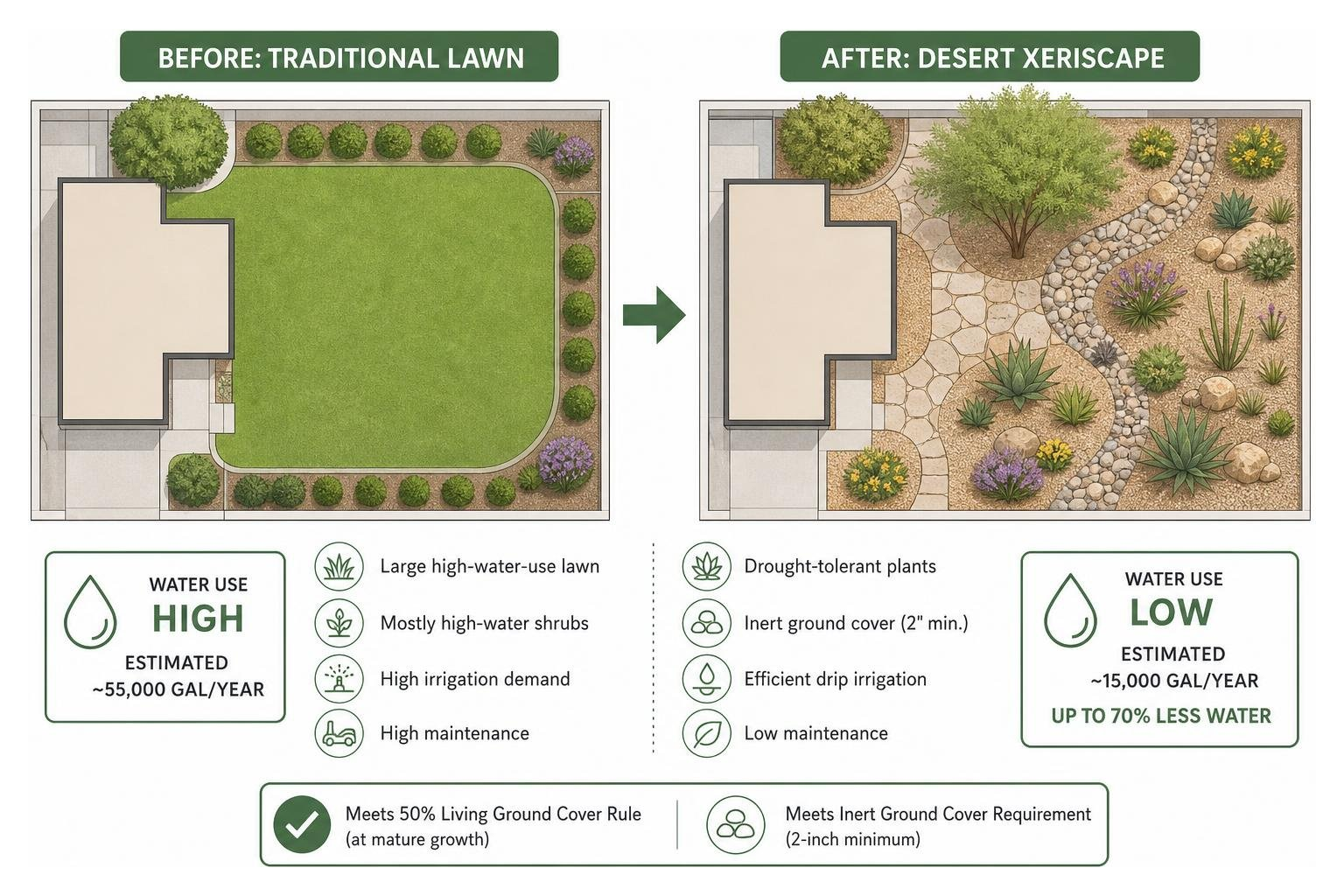
- The 50% Living Ground Cover Rule: At least 50% of your designated planted areas (zones containing trees and shrubs) must be covered with living ground cover at mature growth.
- Inert Ground Cover Requirements: Any remaining non-planted areas must be covered with a minimum 2-inch layer of inert material, such as decomposed granite, river rock, or gravel.
Failing to comply with these rules is a site-plan violation under § 14.05.06, which can stall your final building inspections and result in civil fines of up to $500. You can stay legally compliant and ensure your yard looks fantastic by reviewing the Lake Havasu City native plant guidelines and learning how to execute xeriscaping a Golden Shores front yard.
To make plant selection easier, the city highlights certain species as “Invincible.” These are the Navy SEALs of the plant world. To earn this title, a species must be:
- Highly tolerant of extreme summer heat and reflective light.
- Cold-hardy enough to withstand winter frosts (down to 25°F or lower).
- Wind-resistant (essential for our breezy lakeside properties).
- Water-efficient, low-maintenance, and highly resistant to local pests and diseases.
Choosing “Invincible” plants, such as Creosote, Desert Ironwood, and Chihuahuan Sage, guarantees a resilient yard that saves water and keeps the code enforcement officers happy.
Balancing Old and New Elements in Your Desert Landscape Renovation
If you are transitioning an older property from a water-thirsty lawn to a sustainable desert design, you don’t have to tear everything out. In fact, blending established mature elements with new, drought-tolerant plantings creates a beautiful sense of depth and maturity that a brand-new landscape lacks.
When planning your renovation, start by mapping out what to keep and what to replace. If you have a mature shade tree, like a Desert Willow or a Mesquite, preserve it! Its established root system is highly valuable, and its canopy provides the perfect filtered shade for introducing new understory plants.
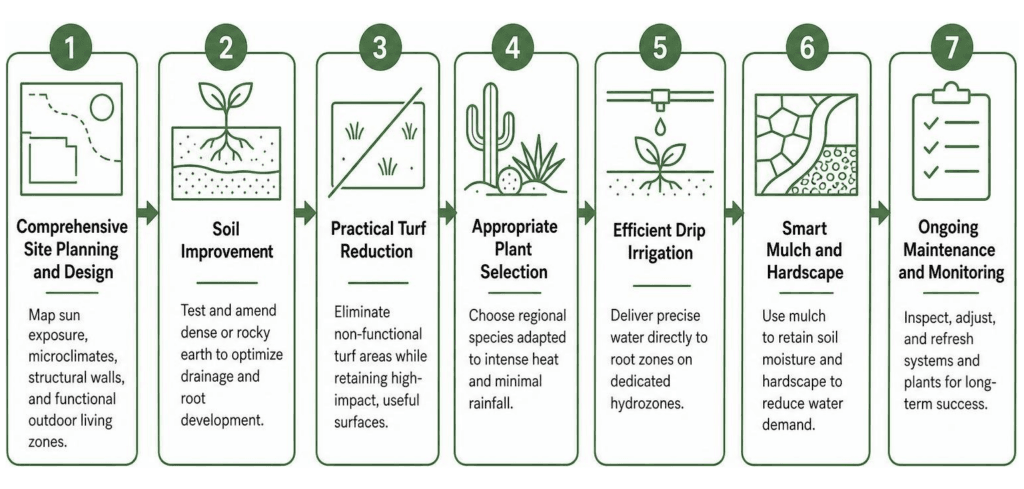
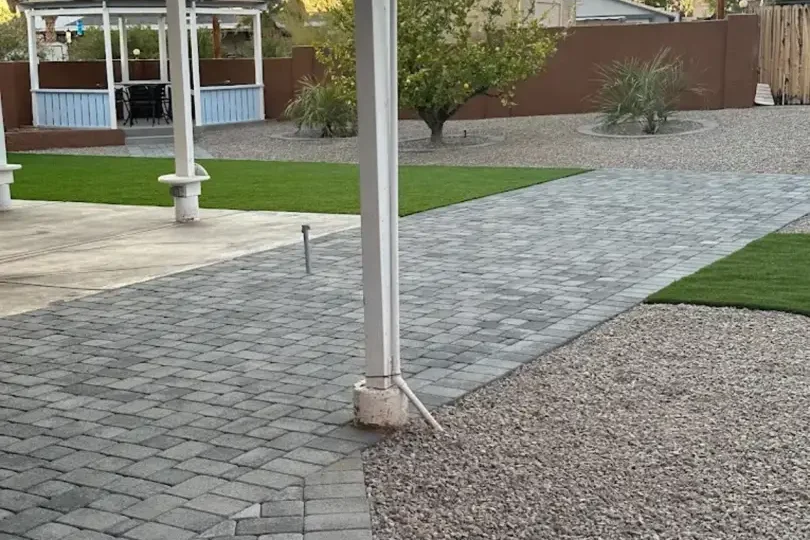
The biggest impact comes from bidding farewell to high-water-use grass. Replacing a struggling lawn with a flagstone patio, winding gravel pathways, and pockets of low-water plantings instantly modernizes your home. For inspiration on how to structure this transition, check out our guide on xeriscaping a yard and explore these creative desert backyard ideas.
Low-Water Alternatives to Overused and Diseased Shrubs
For decades, oleanders were the go-to choice for privacy hedges in Havasu. However, mature oleanders across Arizona are currently being devastated by Oleander Leaf Scorch—a fatal bacterial disease spread by tiny leaf-hopper insects. There is no cure, and infected hedges slowly wither and die over two to three years.
Furthermore, overusing oleanders makes neighborhoods look monotonous. Fortunately, there are excellent, water-wise alternatives listed in the University of Arizona Cooperative Extension guide on water-wise species:
- Hop Bush (Dodonaea viscosa): This native evergreen shrub is the ultimate oleander replacement. It grows rapidly up to 12 feet tall, tolerates intense wind, requires very little water, and is completely immune to Oleander Leaf Scorch. It is also far less toxic to pets.
- Tecoma Hybrids: If you want vibrant color, look to the Tecoma family. While the traditional ‘Orange Jubilee’ is gorgeous, it can easily take over a space, growing 8 to 12 feet tall. For tighter spaces, choose ‘Sparky’—a compact, bi-colored yellow and apricot hybrid developed by an ASU horticulturist that tops out at a manageable 4 to 5 feet. (Note to University of Arizona fans: plant ‘Sparky’ and simply call it by its botanical name!)
Cultivating Year-Round Color and Seasonal Interest
A common myth is that desert yards are brown and boring for half the year. By choosing plants with alternating bloom cycles, you can enjoy a continuous show of color.
- Winter Blooms: While other plants sleep, the Valentine Bush (Eremophila maculata ‘Valentine’) shines. From January through April, it explodes with rich, red-pink tubular flowers. Grouping them in clusters of 3 to 5 creates an incredible visual impact. Another winter superstar is ‘Blue Bells’ (Eremophila hygrophana), which features silvery foliage and purple bell-shaped flowers that bloom almost year-round.
- Fall Foliage and Texture: To bring autumn vibes to the desert, plant Pink Muhly Grass (Muhlenbergia capillaris). In late summer and fall, this ornamental grass produces airy plumes of cotton-candy pink flowers that catch the low autumn sun beautifully. For more ideas on maintaining a vibrant yard, read through these Arizona landscape ideas for a cool yard.
Advanced Desert Plant Care: Heat Waves, Plant Health, and Natural Pest Control
When summer temperatures climb past 110°F, even desert-adapted plants feel the stress. Managing your garden during these extreme waves requires a shift in how you water, fertilize, and prune.
First, adjust your watering schedule to run deeper and slightly more frequently, ensuring moisture reaches the entire root zone. Learn more about setting up a bulletproof watering schedule with our guide on efficient irrigation for desert gardens in Lake Havasu.
Two Golden Rules for Summer Survival:
- No Fertilizing: Never apply fertilizer during a summer heatwave. Fertilizing forces the plant to produce tender new growth when it is actively struggling just to survive the heat, leading to severe dieback.
- No Pruning: Avoid the temptation to trim away sunburned, brown leaves in July or August. Even though they look unsightly, those dead leaves act as a natural umbrella, shielding the sensitive interior branches of the plant from further sun damage. Delay all structural pruning until mid-September when temperatures cool.
Managing Bougainvillea in the Desert Landscape
Bougainvilleas are beloved for their dazzling, paper-like blooms, but they require strategic placement and care to thrive in the ground without overtaking your yard.
To succeed with bougainvilleas:
- Ensure Well-Draining Soil: These plants do not tolerate waterlogged roots. Plant them in sandy, well-draining soil to prevent root rot.
- Monitor Watering: Allow the soil to dry out between watering cycles. Moderate water stress actually encourages more abundant, vibrant blooms.
- Provide Winter Protection: While they thrive in summer heat, bougainvilleas are sensitive to hard frosts. Cover them with frost cloth when winter temperatures threaten to drop below freezing. Explore more design possibilities in desert landscaping ideas.
Hands-Off Natural Pest Control in the Desert Garden
In the spring, you might notice bright yellow aphids clustering on the tender tips of your Tecomas or milkweeds. Your first instinct might be to reach for a chemical spray—but don’t!
In a healthy desert ecosystem, chemical pesticides do more harm than good by killing off beneficial insects. If you leave the aphids alone, nature usually solves the problem for you. Within 7 to 10 days, local predators like ladybugs, lacewings, and parasitic wasps will discover the feast and eradicate the aphids naturally. A simple blast of water from the garden hose is all you need to knock down heavy infestations while waiting for the cavalry to arrive.
Sourcing and Installing Your Havasu Desert Landscape
When it comes to buying your drought-tolerant plantings in Havasu, you have two primary options: local specialty nurseries and national big-box stores.
- Locally Owned Nurseries: These are highly recommended for your primary structural plants, trees, and unique desert specimens. Local nurseries source plants that are already acclimated to our extreme sun, wind, and alkaline soils. Plus, their staff can offer invaluable, regional advice.
- Big Box Stores: These are excellent for budget-friendly groundcovers, seasonal annuals, or common shrubs. Many offer a one-year plant warranty, which is incredibly helpful if a plant fails to survive its first summer.
Regardless of where you buy, proper installation is the key to long-term survival. The soils in Lake Havasu, Golden Shores, and Parker are heavily compacted and often contain caliche. When planting trees or large shrubs, always dig a hole twice as wide as the root ball.
Pro Tip: Never plant in a “bathtub.” If you dig a hole in solid caliche and don’t break through it, water will pool at the bottom, rotting the plant’s roots. Always test drainage by filling the dug hole with water; if it doesn’t drain within 24 hours, you must use a jackhammer or digging bar to puncture the caliche layer.
Additionally, ensure your yard is properly graded so that monsoon run-off flows away from your home’s foundation and into designated drainage basins. To understand the financial planning behind these projects, check out our breakdown of the cost of desert landscaping and see how proper installation enhances front yard landscaping for desert homes in Lake Havasu.

Frequently Asked Questions About Landscaping in Lake Havasu
Does a yellowing cactus in the summer mean it needs more water?
Not necessarily. In the peak of summer, many cacti and succulents (like the Mexican Fence Post) turn yellow or pale as a natural physiological defense mechanism against intense UV exposure and extreme heat. Adding more water to an already stressed, dormant cactus can cause root rot. In most cases, they will green back up naturally once temperatures cool down in October.
Should I prune away heat-damaged brown leaves during the summer?
No! While those crispy brown leaves look ugly, leave them alone until mid-September. They act as a vital shield, protecting the living, sensitive wood inside the plant from getting sunburned. Trimming them off in July exposes fresh tissue to the brutal sun, which can kill the entire plant.
What are the best low-water plants for privacy and erosion control?
For privacy, Hop Bush and various Chihuahuan Sage (Leucophyllum) cultivars provide dense, wind-resistant evergreen screens. For stabilizing slopes and preventing erosion, Creeping Acacia, Dalea, and Pink Muhly Grass are exceptional choices. Their extensive root systems bind the soil together, preventing washout during heavy summer monsoons. You can combine these beautifully with a custom rock garden landscaping in Lake Havasu design.
Partner with River Palm Landscaping for Your Desert Oasis
Since 2003, River Palm Landscaping has been helping homeowners in Lake Havasu City, Golden Shores, and Parker, AZ, build beautiful, durable outdoor spaces. As a licensed, experienced local contractor, we understand how to design and engineer landscapes specifically for our brutal desert summers, rocky caliche soils, and wind-prone environments.
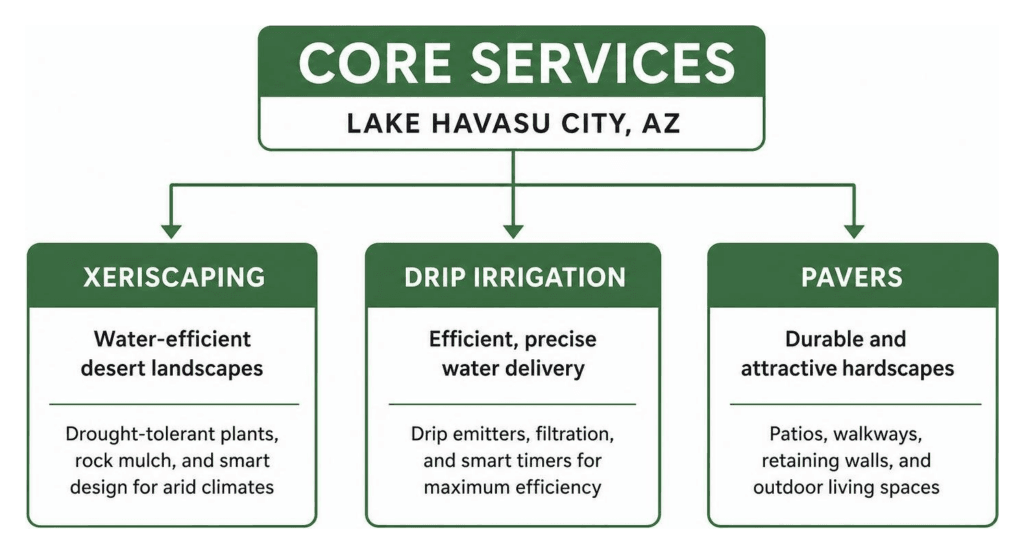
We specialize in complete, water-wise outdoor transformations, including:
- Custom desert landscaping design and plant installation.
- Water-efficient automatic drip irrigation systems.
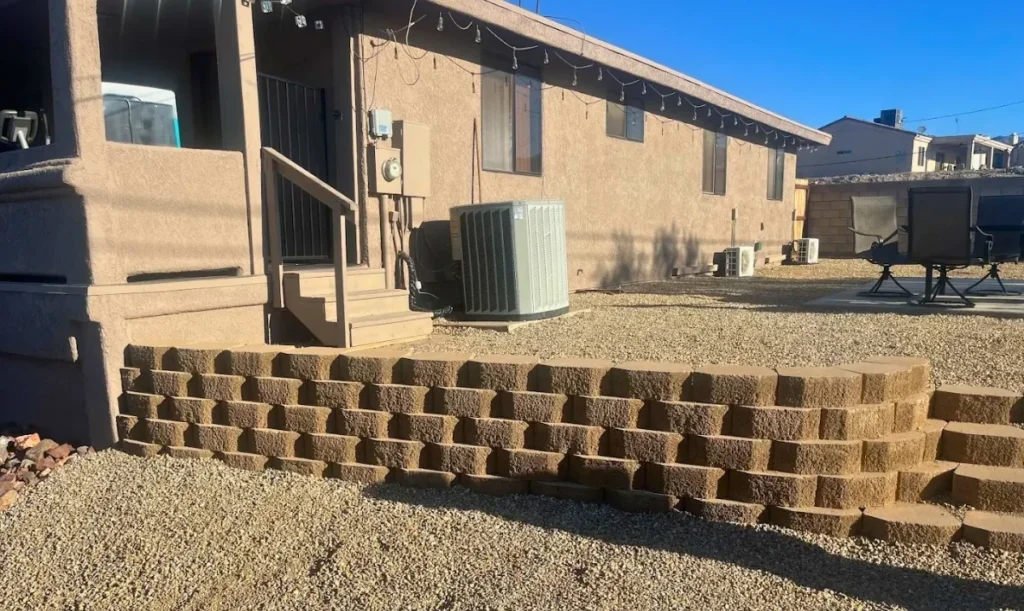
- Professional pavers, hardscaping, and retaining walls.
- Low-voltage landscape lighting to bring your yard to life at night.
Whether you are looking to convert a high-water lawn, install a stunning rock garden, or design a brand-new front yard that complies with LHC Code § 14.04.04, our team has the local expertise to get the job done right.
Ready to transform your Havasu property? Contact River Palm Landscaping today to schedule a consultation and take the first step toward a beautiful, low-maintenance desert oasis.