Core Principles of Professional Desert Garden Design in Havasu
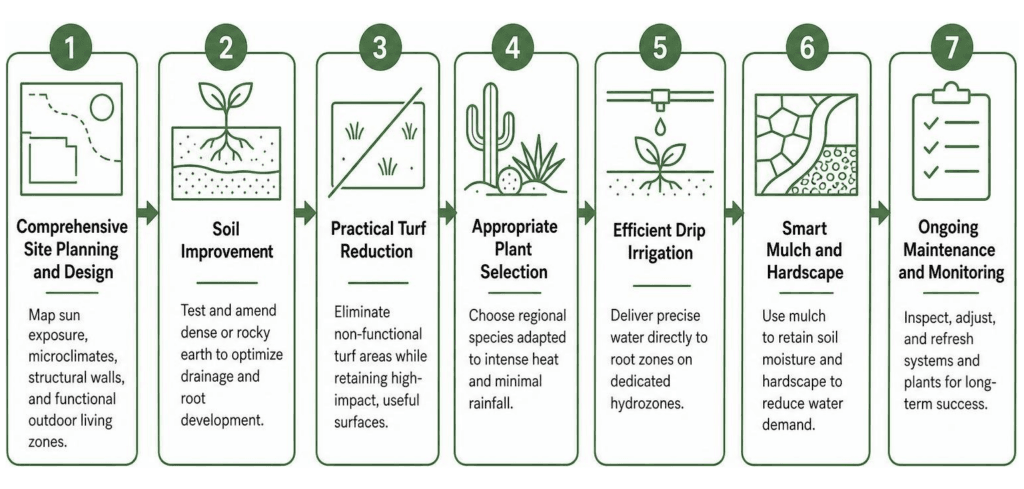
Creating a successful desert garden design in Havasu requires more than just adding rock and cactus. It requires a plan built for extreme heat, rocky soil, and long-term water efficiency. Professional landscape design in our region is a technical discipline that balances aesthetics with the harsh realities of the Mojave Desert. It begins with understanding that Lake Havasu City’s soil is often rocky, compacted, and alkaline, frequently containing layers of caliche—a concrete-like deposit of calcium carbonate. Overcoming these conditions requires specialized equipment for proper excavation and site preparation, ensuring that plant roots have the space and oxygen they need to establish.
Most problems we see in desert yards aren’t caused by the climate. They’re caused by poor planning, improper grading, or irrigation systems that were never designed for desert conditions.
One of the most critical principles used by experts is the grouping of plants based on their specific water-use zones. By placing species with similar water requirements together, a professional installer can calibrate irrigation zones to deliver the exact amount of moisture needed, preventing the overwatering of succulents or the underwatering of flowering shrubs. This method ensures that every drop of water is used efficiently, which is vital for long-term sustainability in our arid climate.
Furthermore, professional front yard landscaping for desert homes must account for drainage and grading. In a climate where months of drought are punctuated by intense monsoon downpours, a yard that isn’t properly graded can lead to erosion or foundation damage. Professional contractors utilize technical excavation to create subtle swales and slopes that direct runoff away from structures while allowing deep-root saturation for larger trees. This mastery of drainage is what separates a professional installation from an amateur project that might wash away during the first heavy storm.
Modern Desert Garden Design Havasu Aesthetics
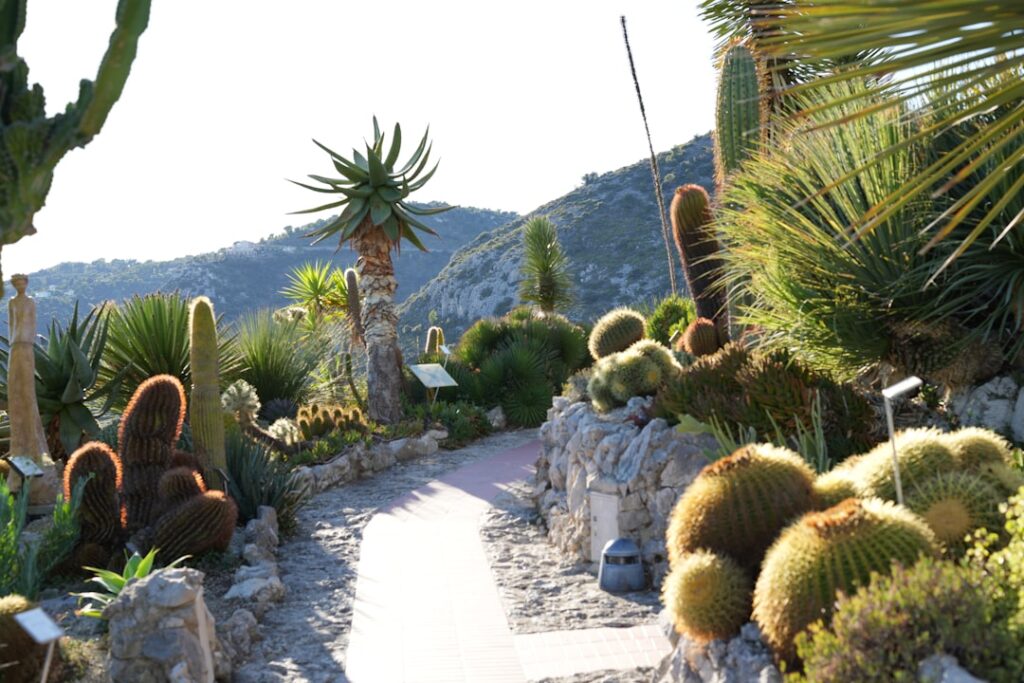
For many homeowners today, the goal is a sleek, contemporary look. Modern garden designs in Lake Havasu City focus on clean lines, minimalist plant palettes, and structural balance. Instead of a cluttered collection of small pots, modern design utilizes architectural plants like the Totem Pole cactus or large Agave specimens as focal points. These plants are chosen for their striking silhouettes and ability to thrive in the intense Arizona sun.
Landscape renderings are often used during the planning phase to ensure the geometry of the hardscape—such as rectangular paver pads or steel-edged planters—complements the home’s architecture. Professional installations use clean spacing and simple layouts to create a more modern, low-maintenance look. By focusing on structural balance, a professional designer can create a yard that feels expansive and intentional.
Adapting Cottage Styles to Arid Environments
If a minimalist look feels too cold, it is entirely possible to adapt cottage garden styles to the desert. This “high-desert cottage” aesthetic replaces thirsty roses and hydrangeas with drought-tolerant perennials that offer similar textures and colors. This approach allows for a softer, more organic feel while maintaining the water-conscious requirements of the region.
Species like Lavender, Salvia, and various Lantana varieties provide the soft, billowing look of a traditional cottage garden while standing up to 110-degree afternoons. Tropical-inspired accents can be achieved using desert-adapted palms or lush-looking shrubs like the Cape Honeysuckle, which provide seasonal color and attract local pollinators like hummingbirds without the massive water bill. A professional contractor knows how to layer these plants to create depth and visual interest throughout the year.
Hardscaping Essentials: Rock, Gravel, and Paver Installation

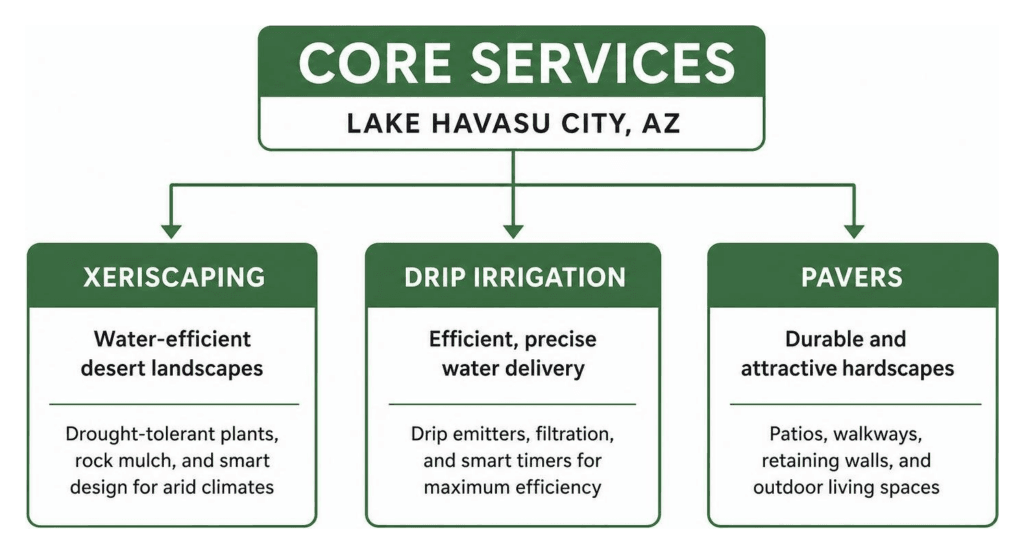
In desert garden design, hardscaping creates the true base of the yard. Unlike organic mulch, which decomposes quickly under Arizona’s intense sun, stone and gravel offer a longer-lasting solution with instant curb appeal. Following this guide to desert hardscape installation for Lake Havasu homes helps you choose materials based not only on color, but also on heat performance and long-term durability in extreme UV conditions.
Desert landscaping relies heavily on “aggregates”—a term for the various sizes of rock used in a design. Decomposed granite (DG) is a favorite for pathways because it packs down into a stable, natural-looking surface that is easy to walk on. River rock and larger cobble are often used to line dry creek beds, which serve the dual purpose of looking beautiful and managing heavy rainfall. Beyond aesthetics, light-colored rocks reflect sunlight away from the home, which can actually help in lowering indoor cooling costs by reducing the heat island effect around the property. Professional installation also includes the use of high-quality weed barriers to ensure the rock remains clean and low-maintenance for years.
Functional Elements for Desert Yard Design
Hardscaping is not just about surface materials. It also supports site stability, drainage, and everyday usability. Ideas shared in this guide to Arizona landscape ideas for a cool yard in a hot state often include practical features like retaining walls and stone pathways that help define and protect usable outdoor space.
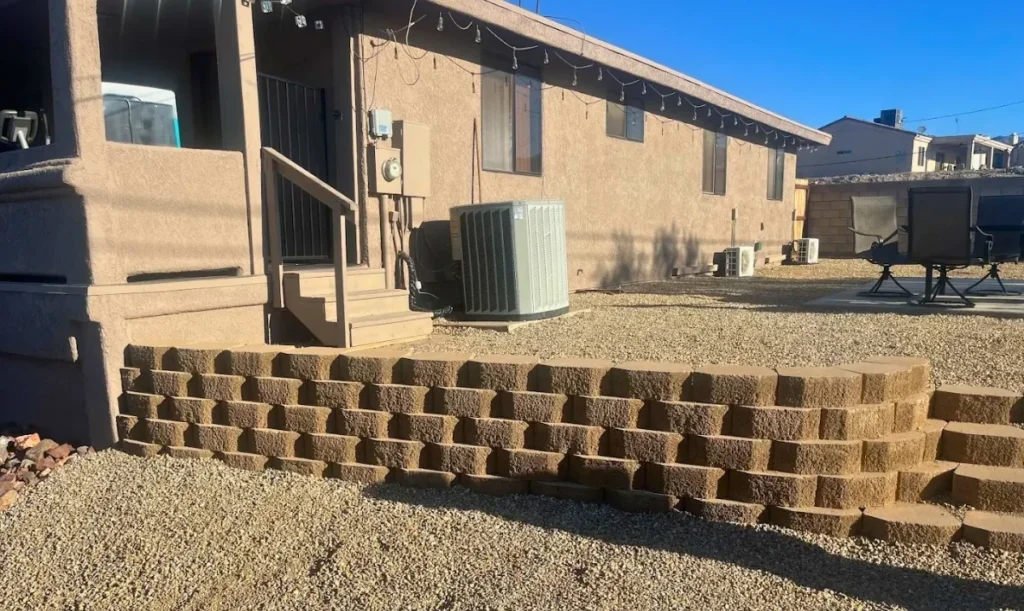
Retaining walls are essential for the sloped lots common in Lake Havasu City, preventing soil creep and creating tiered planting “galleries” that add vertical interest. Professional excavation is required here to ensure these walls are anchored properly in the rocky terrain and can withstand the pressure of saturated soil during monsoons. Pavers, meanwhile, offer a durable alternative to poured concrete, allowing for slight ground movement without cracking—a common issue in the desert’s extreme temperature swings. When installed by a professional, pavers provide a level, safe surface for outdoor living areas that enhances the overall usability of the yard.
Selecting Climate-Resilient Plants for Lake Havasu Gardens
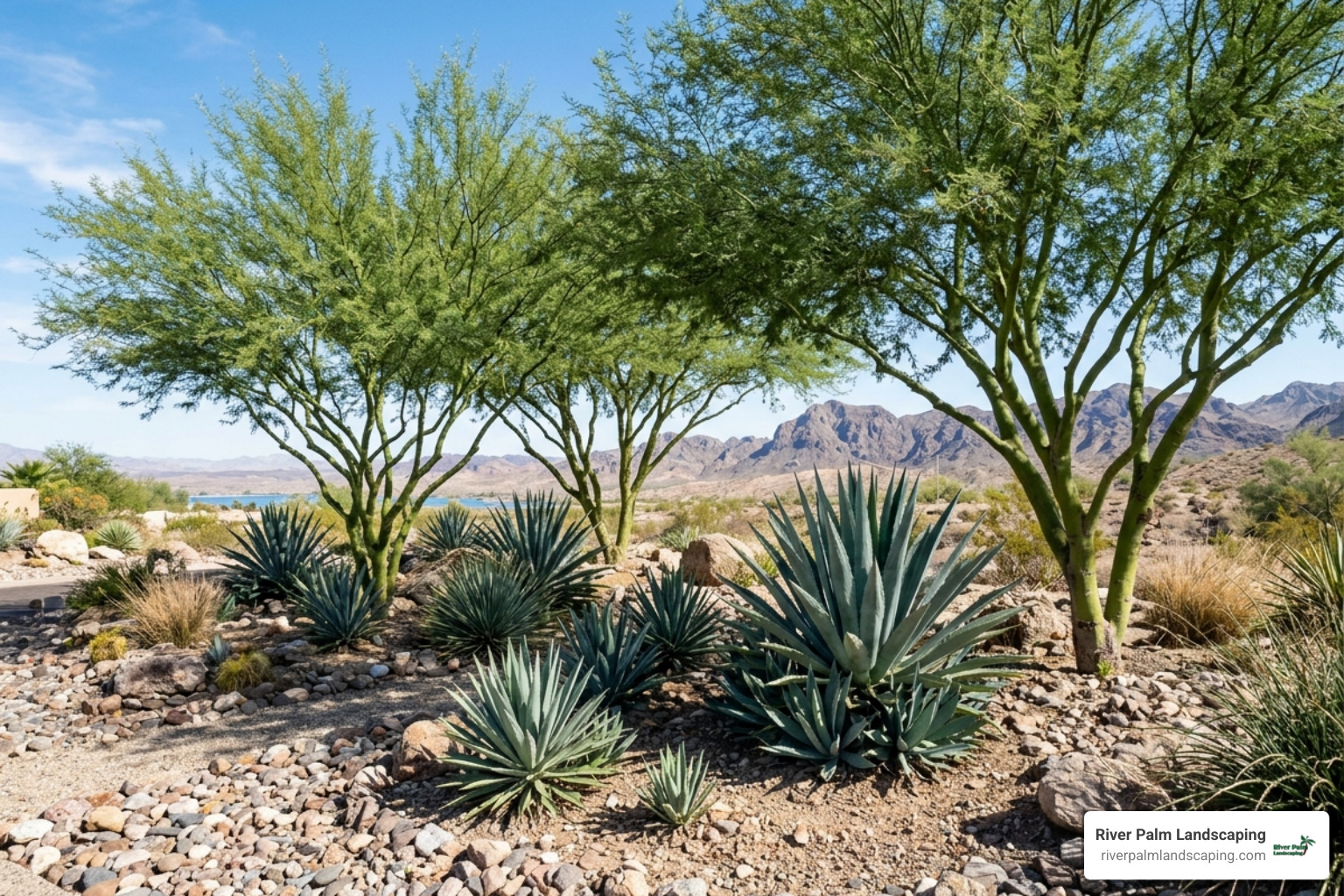
Choosing the right greenery is where many non-professional designs fail. In Zone 10a, “heat tolerance” is the minimum requirement; plants must also be able to handle the low humidity and occasional high winds of the Colorado River valley. The best low-maintenance desert plants are those that have evolved to thrive in these specific conditions, requiring less intervention and fewer resources.
- Trees: The Palo Verde and Desert Willow are staples of maximizing your landscape with desert landscaping. They provide filtered shade that protects smaller understory plants from the midday sun, effectively creating a cooler microclimate within your yard.
- Architectural Succulents: Agaves and the Totem Pole cactus provide year-round structure and require almost zero maintenance once established. Their unique shapes serve as living sculptures that define the character of the garden.
- Groundcovers and Shrubs: Native species are always preferred as they are naturally resistant to local pests and diseases. Lantana and various sages offer vibrant blooms that can withstand the peak of summer heat.
Professional installers are also careful to avoid invasive species like salt-cedar, focusing instead on plants that provide “tropical-inspired” beauty through vibrant blooms and interesting bark textures rather than high-water-consumption leaves. By selecting plants that are naturally adapted to the Mojave Desert, a professional contractor ensures your landscape remains healthy and vibrant without excessive water use.
Professional Irrigation and Water Management Systems
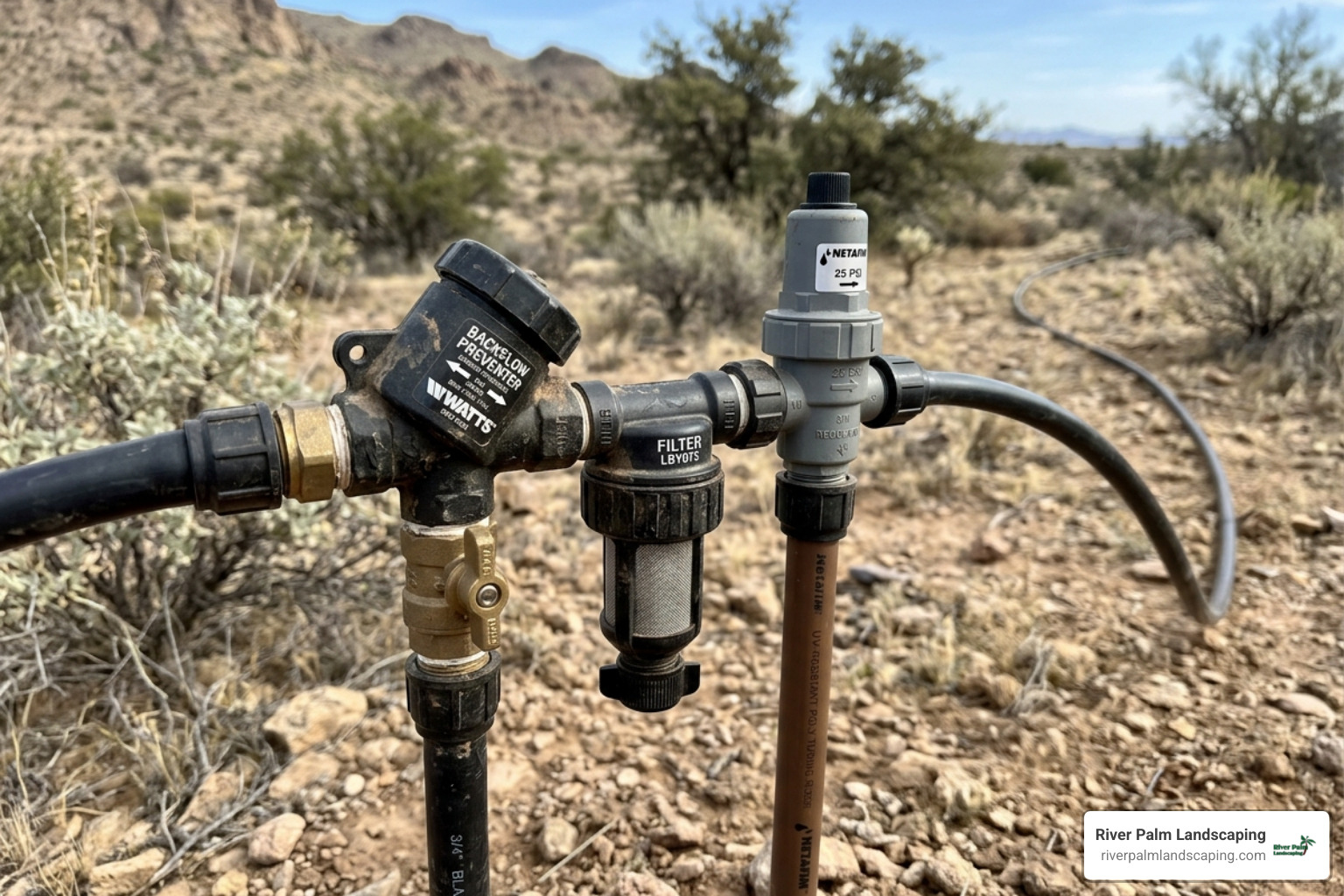
In Lake Havasu City, water efficiency is not a suggestion—it is a necessity. A professional drip irrigation system is the engine that keeps a desert garden alive. Unlike traditional sprinklers that lose a huge percentage of water to evaporation before it even hits the ground, drip systems deliver moisture directly to the root zone, minimizing waste and maximizing plant health.
When landscaping Lake Havasu properties, contractors focus on the “head assembly.” This critical component includes backflow prevention to keep your drinking water safe, a filter to prevent the sandy local water from clogging emitters, and a pressure regulator. Without these components, the high water pressure common in many Havasu neighborhoods can blow the emitters right off the tubing, leading to massive water waste and potential plant loss.
A crucial part of professional desert irrigation efficiency is the placement of emitters. As a tree grows, its “drip line” (the edge of its canopy) expands. A professional service ensures that emitters are moved outward over time, encouraging the roots to spread and creating a more stable, drought-resilient plant. Seasonal adjustments are also mandatory; a system set for July will drown plants in January, while a winter schedule will lead to plant death during a June heatwave. Professional contractors often install smart controllers that adjust automatically based on local weather data, providing peace of mind for the homeowner.
Frequently Asked Questions about Desert Garden Design Havasu
How does professional desert landscaping reduce home cooling costs?
A well-designed landscape acts as a thermal buffer for your property. By using light-colored aggregates like white ice rock or beige decomposed granite, the ground reflects heat rather than absorbing it. Furthermore, the strategic placement of desert-hardy trees can shade western-facing walls and windows, significantly reducing the load on your air conditioning system. Because desert plants undergo less transpiration (releasing water vapor) than lush grass, the air immediately around the home stays drier, which can make the heat feel less oppressive. This thermal mass management is a key benefit of professional design.
Why is professional grading essential for Havasu rock gardens?
Many homeowners assume that because it’s a “dry” climate, drainage doesn’t matter. In reality, the rocky, non-porous soil in Lake Havasu City can lead to flash flooding on a micro-scale during monsoon season. Professional grading involves technical excavation to ensure that water moves away from the home’s foundation and toward appropriate drainage areas. Without proper mastery of drainage, a new rock garden can quickly become a muddy pond or, worse, cause water to seep into your home’s crawlspace or slab, leading to expensive structural repairs.
What are the benefits of converting a grass lawn to xeriscaping in 2026?
The benefits are three-fold: financial, practical, and environmental. Financially, the reduction in water bills and the elimination of weekly mowing and fertilizing costs make the conversion a smart long-term investment in your property’s curb appeal and functionality. Practically, desert landscapes are much more resilient against local pests and produce significantly less pollen, which provides relief for allergy sufferers. Environmentally, removing thirsty turf is the single most impactful thing a homeowner can do to support water conservation in the Southwest, ensuring a more sustainable future for the Lake Havasu community.
Conclusion
Creating a beautiful outdoor space in Mohave County doesn’t have to be a struggle against nature. By leaning into the core principles of desert garden design in Lake Havasu—efficient irrigation, climate-hardy plants, and expert hardscaping—you can create a yard that is as durable as it is beautiful. A professional approach ensures that your landscape is not only aesthetically pleasing but also functional and sustainable in our unique environment.
Since 2003, River Palm Landscaping has helped homeowners in Lake Havasu City, Golden Shores, and Parker, AZ, navigate these challenges. From the initial landscape renderings to the final placement of decorative rock, professional installation ensures your yard is built to last. Understanding how to choose an Arizona desert landscape contractor is the first step toward a low-maintenance, high-impact yard. When you are ready to invest in the usability and curb appeal of your property, a professional desert landscaping plan is the most reliable path forward for long-term success.