Top Easy-Care Desert Plants for Lake Havasu City and Golden Shores Homes
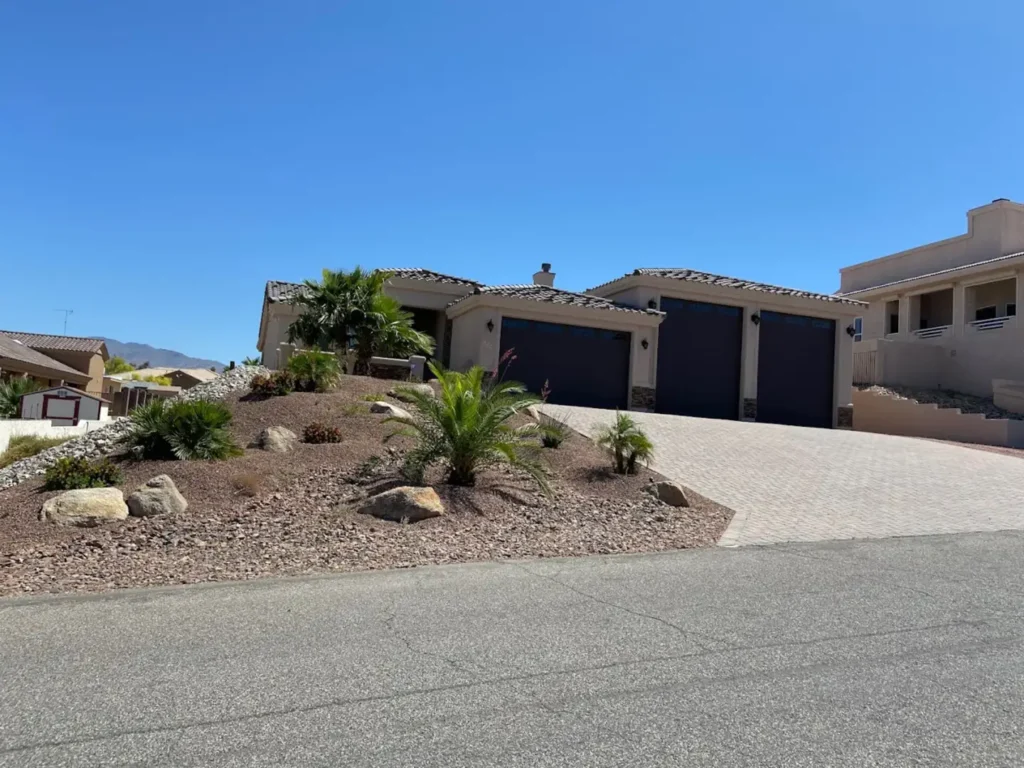
Low maintenance desert landscaping is one of the smartest choices you can make for a home in Lake Havasu City or Golden Shores, AZ. The right plants — chosen for the heat, the soil, and the climate — can transform a yard that demands constant work into one that practically takes care of itself.
Here are some of the best low-maintenance desert plants for this region:
| Plant | Why It Works |
|---|---|
| Foxtail Agave | Bold, sculptural form that thrives in full sun with very little water |
| Mexican Bird of Paradise | Bright seasonal color, excellent heat tolerance, and attracts pollinators |
| Lantana | Long-lasting color, handles intense heat well, and needs relatively little water once established |
| Totem Pole Cactus | Strong vertical interest, highly drought-tolerant, and very low maintenance |
| Palo Verde | Fast-growing shade tree native to the Sonoran Desert |
| Desert Willow | Showy flowers, tough in extreme heat, and adapted to low-water landscapes |
| Prickly Pear Cactus | Hardy choice with colorful blooms and edible pads |
| Cordyline (protected accent) | Adds a tropical feel when used selectively in sheltered spots |
Most of these plants require only occasional deep watering once established, with minimal supplemental irrigation compared to traditional lawns.
Living in the Mojave Desert along the Colorado River, Lake Havasu homeowners face some of the most intense heat and lowest rainfall in the country. A large share of household water use in desert climates can go toward outdoor plants and lawn — and traditional grass is one of the biggest culprits.
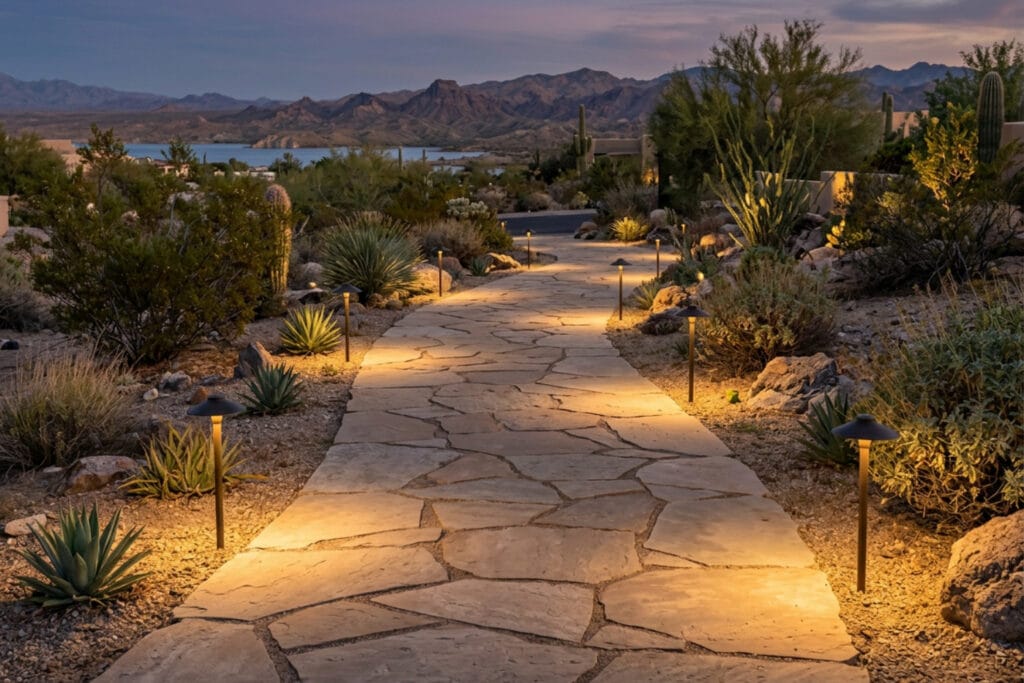
Water-wise landscaping doesn’t mean a yard full of rocks and nothing else. Done well, it looks more like a resort-style backyard — layered with color, texture, and structure — than a barren lot.
The plants listed above create the foundation for that tropical desert look.
Why Choose Low Maintenance Desert Landscaping for Your Home?
Choosing low maintenance desert landscaping isn’t just about saving time on the weekends; it’s about creating a sustainable environment that thrives in the unique conditions of Lake Havasu City and Golden Shores. In our region, the sun is relentless, and the soil is often rocky and nutrient-poor. Traditional “green” yards require massive amounts of water and constant fertilization just to survive, let alone look good.
By embracing Desert Landscaping, homeowners can significantly reduce their outdoor water usage. In many desert communities, traditional landscaping can account for a massive portion of a home’s total water consumption. Transitioning to a water-wise design allows you to invest those resources back into the beauty and functionality of your property.
Beyond the environmental benefits, a well-designed desert yard offers incredible curb appeal. Modern Landscaping with Style uses the natural colors of the desert—ochres, sage greens, and deep purples—to create a sophisticated look that complements the local architecture. It turns a high-maintenance chore into a durable, climate-appropriate outdoor space that improves the way you live.
Top Plants for a Tropical-Style Desert Landscaping Look
Many homeowners in Lake Havasu want the lush feel of a tropical oasis without the “tropical” water bill. Achieving a tropical-style desert landscaping look is entirely possible by selecting desert-adapted plants that mimic the textures and shapes of the tropics. This approach is often called “Xeriscape,” a term derived from the Greek word xeros, meaning dry.

Foxtail Agave (Agave attenuata)
The Foxtail Agave is a superstar for any resort-style backyard. Unlike many of its prickly cousins, this agave has soft, pliable leaves that curve gracefully, resembling a green flower or a fountain. It provides a bold, structural element that looks right at home next to a pool or a patio. It is exceptionally drought-tolerant and handles the Arizona sun with ease, though it appreciates a little afternoon shade during the most extreme summer peaks.
Mexican Bird of Paradise (Caesalpinia pulcherrima)
If you want vibrant, fiery color, this is your plant. The Mexican Bird of Paradise produces stunning clusters of red, orange, and yellow flowers throughout the summer. It is incredibly heat-tolerant and thrives even when the thermometer climbs past 110 degrees. It’s also a favorite for local hummingbirds and butterflies, bringing a sense of life and movement to your garden.
Lantana (Lantana camara)
For a softer, more colorful look, Lantana brings bright blooms and a loose, natural texture to desert landscapes. It handles heat well and adds long-lasting color that stands out against the bold shapes of cacti and succulents. It is a smart choice for Maximizing your landscape because it spreads nicely, attracts pollinators, and needs very little attention once established.
Cordyline (Selective Protected Accent)
To push that tropical vibe even further, some homeowners look to Cordyline. However, in the intense heat of Lake Havasu and Golden Shores, Cordyline should be treated as a protected accent plant. It features striking, strap-like leaves in shades of red or pink. To keep it healthy, it should be placed in a sheltered spot, such as under a covered patio or in a courtyard that receives filtered light, away from the direct, reflected heat of west-facing walls.
Essential Elements of Low-Water Landscape Design
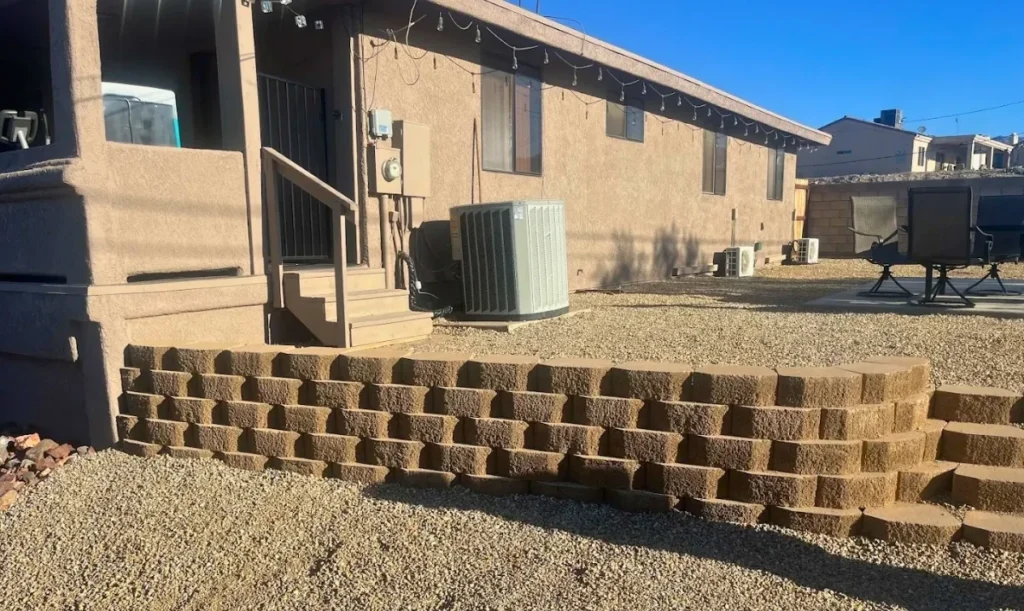
A successful desert yard is about more than plants alone. It also depends on the hardscape that ties everything together. In professional Landscape design, it often makes sense to dedicate a significant portion of the yard to hardscape elements like rock, decomposed granite, or pavers. This helps reduce water use, cuts down on upkeep, and gives the space a clean, intentional look.
Decomposed Granite and River Rock
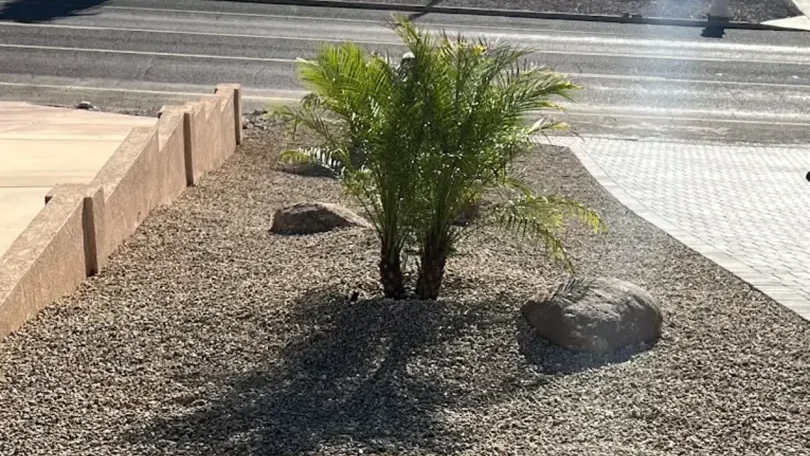
Decomposed granite (DG) is the backbone of low maintenance desert landscaping. It comes in a variety of colors—from “desert gold” to “rose”—and acts as a natural mulch that suppresses weeds and helps the soil retain what little moisture it gets. River rock and larger cobbles can be used to create “dry stream beds” that add visual interest and help direct drainage during our occasional heavy monsoon rains.
Boulders and Focal Points
Large boulders are the “furniture” of the desert garden. They provide scale and a sense of permanence. By grouping plants around a large boulder, you create a natural-looking vignette that mimics the high desert environment. Boulders also provide small pockets of shade for the roots of smaller succulents, helping them stay cool during the day.
Smart Irrigation and Hydro-zoning for Low Maintenance Desert Landscaping
Even the most drought-tolerant plants need a little help to get started. The key to a truly low-maintenance yard is a smart irrigation system.
- Drip Systems: Unlike traditional sprinklers that lose a lot of water to evaporation and wind, drip systems deliver water directly to the root zone of each plant. This is far more efficient and prevents the growth of weeds in the surrounding dry soil.
- Hydro-zoning: This is the practice of grouping plants with similar water needs together. For example, you might place your thirstier flowering shrubs on one irrigation valve and your “zero-water” cacti on another. This ensures that no plant is over-watered or under-watered.
- Mulch: In the desert, we use gravel or rock as mulch. This “stone mulch” protects the soil from the sun, reduces evaporation, and keeps the root systems of your plants at a more stable temperature.
For more detailed planning on irrigation zones, you can refer to this Desert Landscapes Guide which outlines how to set up efficient zones for various yard sizes.
Planning Your Low Maintenance Desert Landscaping Project
Before you start digging, it’s important to evaluate your site. Look at the sun patterns—which areas get blasted by the afternoon sun, and which stay in the shade? This will dictate where your most sensitive plants should go.
Soil preparation is also vital. Desert soil is often compacted and lacks organic matter. While most desert plants prefer “lean” soil, adding a bit of compost or a specialized desert soil amendment during installation can give them the head start they need to establish deep, healthy roots.
For those who want the look of a green lawn without the hassle, Synthetic turf is a popular addition to many Lake Havasu designs. It provides a vibrant pop of green that stays perfect year-round, regardless of the temperature.
Frequently Asked Questions about Desert Yards
How often do desert plants need water?
This is the most common question we hear. During the “establishment period”—usually the first year after planting—new plants need regular water to build their root systems. You might water them every few days during the heat of their first summer.
Once established, many desert plants only need a deep soak every few weeks during the summer and can often go all winter without any supplemental water at all. The goal is “deep and infrequent” watering, which encourages roots to grow deep into the earth where the soil stays cooler. For more on keeping your yard looking its best with minimal effort, check out our tips on Artificial grass maintenance.
Is artificial turf better than real grass in Lake Havasu?
In our climate, artificial turf is often the superior choice for those who want a lawn. Real grass in Lake Havasu is a massive commitment; it requires constant mowing, fertilizing, and thousands of gallons of water. Synthetic turf provides that lush curb appeal and a soft place for kids or pets to play without any of the chores. It’s heat-resistant and won’t turn brown in the July sun.
What are the best plants for extreme heat?
If you want plants that can handle the absolute worst the desert can dish out, start with true heat lovers. The Totem Pole cactus stands out for its bold, sculptural form and excellent tolerance for intense sun, drought, and reflected heat once established. It brings strong visual impact with very little upkeep, which makes it a smart fit for low-maintenance desert landscaping.
The Palo Verde (Arizona’s state tree) is another champion. It has green bark that can actually perform photosynthesis even if the tree drops its leaves to conserve water during a dry spell. The Desert Willow is also a fantastic choice, offering beautiful orchid-like flowers while remaining tough as nails in the heat.
Conclusion
Creating a beautiful, low maintenance desert landscaping project is about working with the environment rather than against it. By selecting the right plants—like the sculptural foxtail agave or the colorful Mexican bird of paradise—and supporting them with smart hardscape and irrigation, you can enjoy a stunning yard that requires a fraction of the work of a traditional landscape.
At River Palm Landscaping, we have been helping homeowners in Lake Havasu City and Golden Shores since 2003. We specialize in durable, climate-appropriate designs that stand up to the extreme heat and rocky soil of our region. Whether you are looking for a full Desert Landscaping overhaul, a new patio with pavers, or the perfect synthetic turf installation, our team has the local expertise to get the job done right.
Investing in your landscape is one of the best ways to improve your home’s curb appeal and reduce your weekly maintenance list. Ready to transform your outdoor space? Contact us for desert landscaping today and let’s build something beautiful together.