Why Front Yard Landscaping Makes or Breaks Your Home’s First Impression
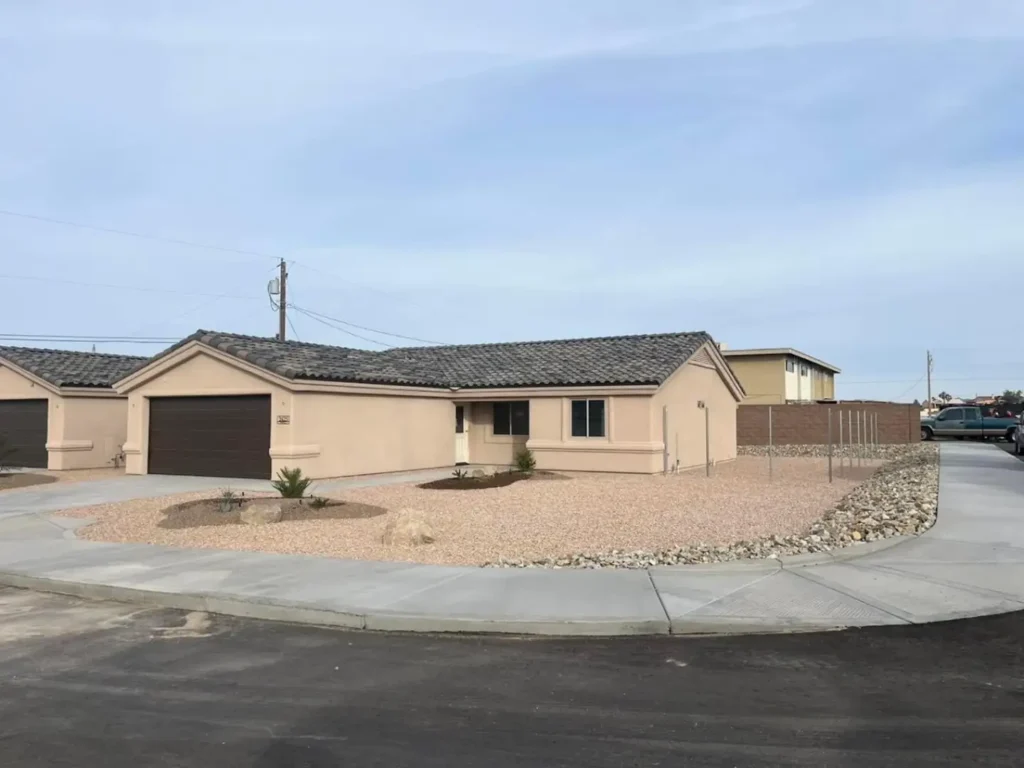
Front yard landscaping is one of the most impactful upgrades you can make to your home — and in a desert climate like Lake Havasu City or Golden Shores, AZ, getting it right means more than just picking pretty plants.
Quick answer: What makes great front yard landscaping?
- Structure first — anchors, shrubs, and defined edges before flowers
- Right-sized plants — matched to your space and desert climate
- Smart hardscape — pavers, gravel, or rock that reduce water and maintenance
- Clear entry path — at least 36–48 inches wide, guiding visitors to your door
- Year-round interest — evergreens, cacti, and drought-tolerant shrubs that look good in every season
Most front yards in the Havasu area struggle with the same problems: overgrown foundation plants, patchy grass that burns out in summer heat, or bare gravel with no real design. The result? A yard that looks unfinished, even when money has been spent on it.
The good news is that a well-planned front yard doesn’t need to be complicated — or expensive to maintain. In fact, the best desert front yards are simpler than most people expect. The right combination of hardy plants like Lantana and Totem Pole cactus, durable hardscape, and efficient irrigation can keep your yard looking sharp year-round with minimal effort.
This guide walks you through everything — from design principles and plant selection to hardscape, irrigation, and finishing touches — all tailored to the heat, rocky soil, and water realities of Lake Havasu City and Golden Shores.
Front yard landscaping terms to remember:
Core Principles of Effective Front Yard Landscaping
Effective front yard landscaping isn’t just about filling space; it’s about creating a cohesive look that complements your home’s architecture. To achieve this, in the field, we rely on several core principles: unity, balance, and scale.
Unity is achieved when all elements of your yard feel like they belong together. This often means repeating certain colors, textures, or plant varieties. For example, using the same type of decorative rock throughout your beds creates a grounded, intentional look. Visual interest, on the other hand, comes from variety—mixing heights and shapes so the eye has something to follow.
Scale and proportion are particularly critical. A tiny cactus lost in a massive gravel bed looks accidental, while a massive palm tree blocking a small window feels claustrophobic. The goal is to choose elements that fit the size of your house and the footprint of your yard. Rhythm and repetition help guide the eye toward the front door, using plants or lights as “markers” along the way.

Professional Landscape Design ensures these principles work together to boost curb appeal without making the yard feel cluttered.
Evaluating Your Site and House Style
Before moving a single rock, you must evaluate the unique conditions of your property. In Lake Havasu City and Golden Shores, sun exposure is the biggest factor. A plant that thrives in the morning sun might wither in the intense afternoon heat reflected off a west-facing wall.
Rocky soil conditions and drainage patterns are also vital. Desert soil can be incredibly dense, making it difficult for water to penetrate or drain. When planning your Residential Landscaping, observe where water sits after a rare heavy rain. You want to ensure water flows away from your foundation, not toward it.
Finally, consider your home’s architectural style. A modern, angular home looks fantastic with minimalist plantings and straight-edged pavers, while a Mediterranean-style home might benefit from softer curves and terracotta-toned gravel. Using landscape renderings can help you visualize how these elements will harmonize before the installation begins.
Achieving Balance and Symmetry
Balance doesn’t always mean a mirror image. Symmetrical balance is common for formal entries—think two identical planters flanking a front door or matching shrubs on either side of a walkway. This creates a sense of stability and importance.
Asymmetrical balance is often more suited to the relaxed, desert lifestyle of Arizona. This involves balancing a large element, like a specimen tree, with a group of smaller shrubs or a decorative boulder on the opposite side. This “informal” balance feels more natural and is excellent for framing the house and creating focal points that lead the eye toward the entrance. Understanding How Residential Landscaping Can Transform Your Home often starts with finding this perfect visual equilibrium.
Hardscape and Functional Infrastructure
Hardscape refers to the non-living elements of your yard—the “bones” of the design. In our region, hardscape is often the most important part of front yard landscaping because it provides structure and functionality without requiring a drop of water.
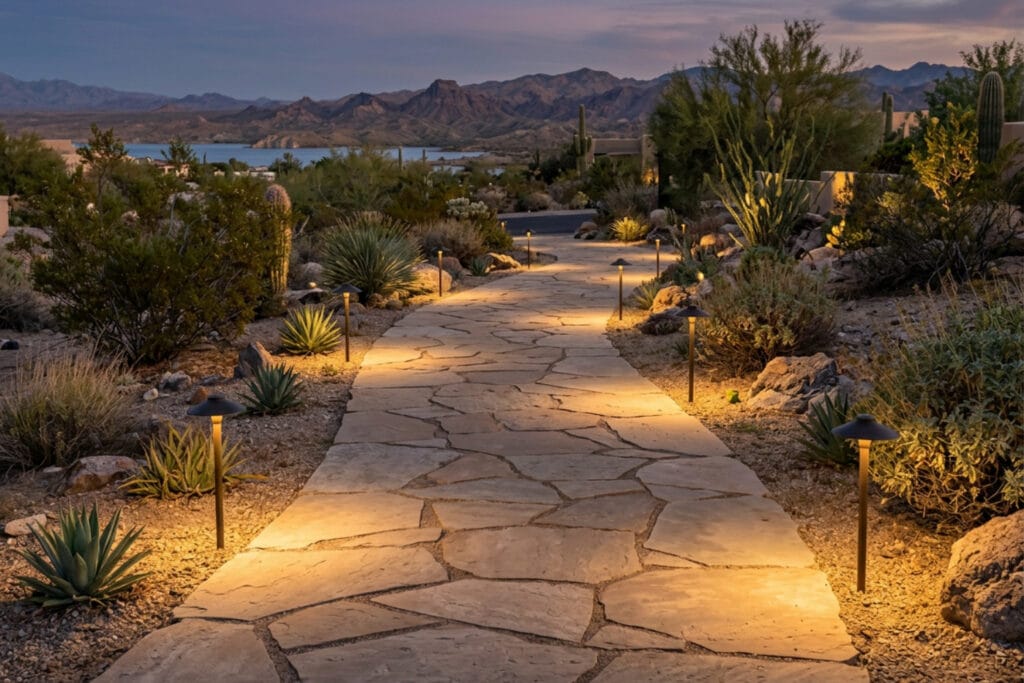
Walkway geometry plays a huge role in how visitors perceive your home. A direct, straight path feels modern and efficient, while a gently curved path feels more inviting and “exploratory.” Regardless of the shape, primary walkways should be 36–48 inches wide to allow two people to walk side-by-side comfortably.
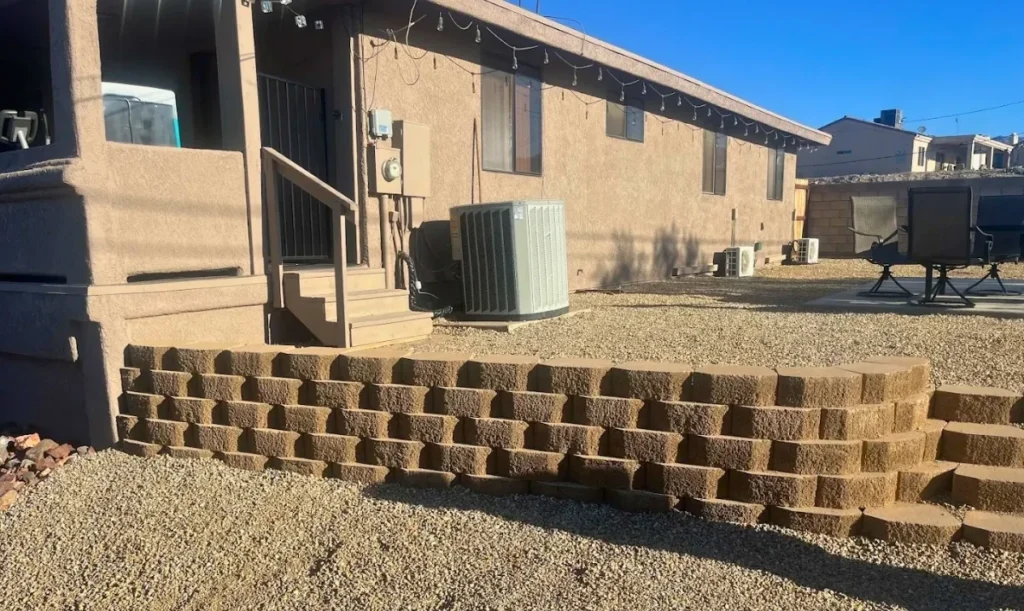
For yards with elevation changes, segmental retaining walls and gravity wall systems are essential. These aren’t just for looks; they hold back soil, prevent erosion, and create flat “terraces” for planting. High-quality pavers and stackable blocks are preferred for Landscaping Lake Havasu because they withstand the extreme UV exposure and temperature swings typical of the Mojave Desert.
Directing Visitors with Front Yard Landscaping
The primary job of a front yard is to tell people where to go. A well-designed entry walk should clearly lead from the street or driveway to the front door. If your driveway is the main point of arrival, consider widening it with a border of contrasting pavers to create a dedicated pedestrian lane.
Material selection is key here. You want a surface that is stable, slip-resistant, and holds up to extreme heat and UV exposure common in desert environments.
Managing Slopes and Drainage
Slopes can be a challenge, especially in the rocky terrain of Lake Havasu. Without proper management, heavy rains can wash away expensive mulch or rock and even damage your home’s foundation. Terracing is a popular solution, using rock walls or stackable block walls to break a steep slope into manageable levels.
By directing runoff through planned channels—often styled as “dry creek beds” using larger river rocks—you can turn a drainage necessity into a beautiful design feature. This approach to Desert Landscaping keeps your soil in place and protects your investment.
Sustainable Plant Selection for Front Yard Landscaping
In desert installations, plant selection is driven by what can reliably handle extreme heat, poor soil, and limited water long-term. The best front yard landscaping uses native or desert-adapted species that can handle 110-degree days without flinching.
Evergreens are the workhorses of the desert yard. Unlike deciduous plants that leave your yard looking “bony” in the winter, desert evergreens and succulents provide year-round interest. Foundation planting—the plants closest to the house—should be chosen carefully. Avoid plants that will grow tall enough to block windows or wide enough to crowd your walkways. For more inspiration, check out these Arizona Landscape Ideas for a Cool Yard in a Hot State.
Grouping Plants with Similar Water Needs
One of the smartest ways to manage a desert yard is by grouping plants with similar water needs. This ensures your irrigation system works efficiently, providing enough water for thirstier plants without drowning your cacti.
Common favorites for Lake Havasu include:
- Lantana: Tough-as-nails ground cover with vibrant flowers.
- Totem Pole Cactus: A sculptural, slow-growing focal point that needs almost no water.
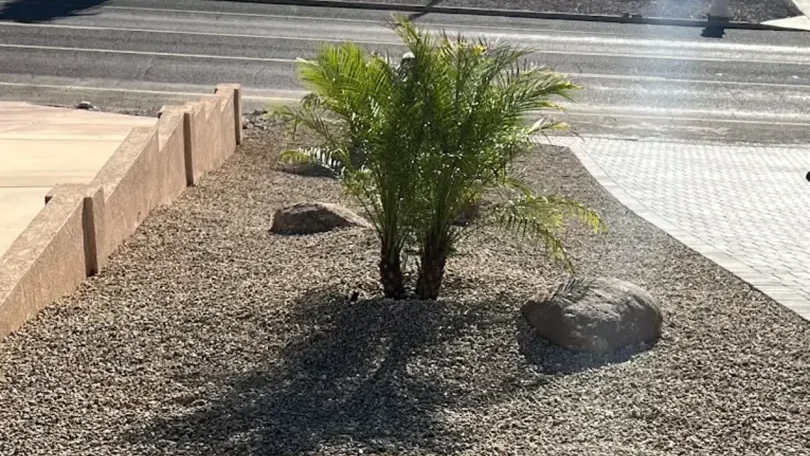
- Mediterranean Fan Palm: A hardy, multi-trunk palm that adds a lush feel.
- Pygmy Date Palm: Perfect for smaller spaces or near entries.
This approach is why Tropical Landscaping can actually work in Arizona, provided you choose the right “look-alike” species and group them correctly.
Avoiding Common Planting Mistakes
The biggest mistake homeowners make is planting for the size the plant is now, rather than the size it will be in five years. Overcrowding leads to “plant wars” where species compete for light and water, often resulting in a tangled mess that requires constant pruning.
Mismatched scales—like a tiny shrub against a two-story wall—can make a house look awkward. According to the University of Arizona Cooperative Extension, you should always check the mature width and height of a plant before digging. Foundation plants should generally not exceed two-thirds of the height of the window trim to keep the house from looking “swallowed” by greenery.
Low-Maintenance Alternatives to Traditional Lawns
Let’s be honest: keeping a green grass lawn in Lake Havasu is a full-time job and a significant water commitment. More homeowners are turning to low-maintenance alternatives that offer curb appeal without the sweat.
Artificial turf (synthetic grass) has become a staple for Maximizing Your Landscape with Desert Landscaping. It provides that pop of green we all crave without the irrigation requirements of natural sod. Alternatively, river rock and gravel beds offer a clean, modern look that is exceptionally durable. While natural grass requires frequent mowing and significant irrigation, these alternatives focus on long-term durability and minimal upkeep.
Ground Covers and Rock Mulch
In desert front yard installations, we typically use a combination of decorative rock and select low-water plant groupings to break up large gravel areas and create a more finished look. Instead of relying on traditional ground covers that struggle in extreme heat, we focus on spacing, irrigation layout, and material transitions to control weeds and maintain clean lines between planting areas and hardscape.
Rock mulch (granite or decorative stone) is the standard for Tropical Landscaping in this region because it holds up to wind, heat, and monsoon conditions far better than organic mulch. It also helps stabilize soil, reduce maintenance, and tie the entire design together visually. In most projects, we use contrasting rock colors and structured plant placement to create that classic Arizona look without adding unnecessary upkeep.
Efficient Irrigation Systems
Even a desert yard needs water to look its best. The key is efficiency. Drip irrigation is the gold standard for Our Services, delivering water directly to the root zone where it’s needed most. This reduces evaporation and prevents the weed growth that comes with traditional sprinklers.
We often install systems that adjust watering schedules based on local weather conditions, helping prevent overwatering during cooler periods and ensuring plants get enough coverage during extreme heat. In Golden Shores and Lake Havasu, a durable, well-installed irrigation system is the difference between a thriving landscape and a dying one.
Finishing Touches for a Polished Look
The difference between a “good” yard and a “great” yard often lies in the details. Once the big plants and hardscapes are in, it’s time for the finishing touches.
Permanent edging is one of the best investments you can make. Whether it’s concrete curbing, brick, or metal, a clean edge between your gravel beds and your driveway or turf prevents “migration” and keeps the yard looking sharp. Landscape lighting is another game-changer. Low-voltage LED lights along walkways and uplights on specimen trees like a Mediterranean Fan Palm make your front yard landscaping pop after the sun goes down.
Decorative boulders and small water features can also add a sense of luxury. Boulders should be partially buried (about one-third deep) to look like they naturally emerged from the ground, rather than just being “dropped” on top of the gravel.
Enhancing Small Front Yards
You don’t need a massive lot to have great curb appeal. In small front yards, the key is repetition and restraint. Instead of planting one of everything, choose three or four species and repeat them. This creates a sense of order rather than chaos.
In smaller front yards, we typically focus on simplifying the layout rather than adding more elements. Clean edges, defined walkways, and a limited number of plant groupings tend to perform better long-term in desert conditions. Keeping materials consistent and spacing intentional makes a small yard feel more finished without increasing maintenance.
Privacy and Borders
Many homeowners want a bit of a “buffer” between their front door and the street. Waist-high barriers, such as low hedges or open-slat fences, provide a sense of seclusion without making the house feel like a fortress.
Proper spacing is essential here to maintain street visibility—you don’t want to create “blind spots” for your driveway. Defining your property lines with a subtle change in rock color or a low row of shrubs helps frame your space and makes your yard feel larger and more intentional.
Frequently Asked Questions about Front Yard Landscaping
What are the best low-maintenance plants for Lake Havasu?
The best choices are those that have adapted to the Mojave Desert. Lantana, Yellow Bells (Tecoma stans), and various Agaves are incredibly hardy. For trees, the Desert Willow or Palo Verde provide beautiful blooms with very little water.
How can I improve my curb appeal on a budget?
Start with the “clean and lean” approach. Refresh your gravel with a new top layer, install permanent edging to define your beds, and add a few well-placed LED solar lights. Removing overgrown or dead bushes and replacing them with a few high-impact desert evergreens can transform a yard for a relatively low cost.
Is artificial turf better than a rock garden for front yards?
It depends on your goals! Artificial turf is better if you want a “lush” look and a soft surface for kids or pets. A rock garden is better if you want the absolute lowest maintenance possible and a more natural, modern desert aesthetic. Many homeowners choose a “mixed” approach, using turf for a focal point and rock for the borders.
Conclusion
Creating a beautiful front yard in the desert doesn’t have to be a struggle against nature. By focusing on structure, choosing climate-appropriate plants, and investing in durable hardscapes, you can create an outdoor space that looks fantastic year-round.
River Palm Landscaping has been a staple in the Lake Havasu City and Golden Shores community since 2003. As a licensed contractor, they specialize in building durable, high-impact outdoor spaces that are specifically designed for our extreme heat and rocky soil. Whether you need a full landscape renovation, an efficient irrigation system, or the perfect artificial turf installation, they bring the local expertise needed to ensure your investment lasts.
Ready to transform your home’s first impression? Visit River Palm Landscaping to explore their services and start planning a yard that works for your lifestyle and our desert environment.