Why Lake Havasu Homeowners Are Rethinking Their Yards
Many Arizona homeowners struggle with high water bills, failing lawns, and extreme summer heat that make traditional landscaping difficult to maintain. A properly designed xeriscape yard provides a sustainable solution that reduces water use, lowers maintenance, and protects long-term property value.
Learning how to xeriscape a yard starts with seven key steps: evaluating your property, improving the soil, planning water zones, selecting drought-tolerant plants, installing efficient irrigation, adding appropriate mulch or decorative rock, and maintaining the landscape as plants become established. The rest of this guide explains why each step matters and how experienced contractors design landscapes that perform for decades in Arizona’s desert climate.
In Lake Havasu City and Golden Shores, outdoor watering can account for more than half of a household’s total water use. Replacing a high-water landscape with a well-designed xeriscape can cut that significantly — while also reducing the time spent on yard upkeep every week.
But desert xeriscaping is not just about picking a few cacti and spreading gravel. Done right, it involves careful grading, proper drainage engineering for monsoon season, material choices that hold up under reflected heat, and an irrigation system calibrated for your specific yard. That is where an experienced installer makes a real difference.
Homeowners planning a complete landscape transformation can learn more about professional desert garden design, efficient irrigation for desert gardens, and additional desert landscaping ideas to better understand how these elements work together in a successful xeriscape.
The Seven Steps to Xeriscaping a Yard Successfully
To design a landscape that withstands the harsh realities of the Mojave Desert, professional contractors follow a structured seven-step process when xeriscaping a yard. This methodology is built on practical water-wise landscaping principles that help a property remain beautiful, functional, and efficient throughout the year.
Together, these seven steps create a landscape that is more water-efficient, easier to maintain, and better suited to Arizona’s extreme climate:
- Assess the Property: A detailed site plan accounts for property lines, existing structures, drainage patterns, sun exposure, and how the outdoor space will be used.
- Improve the Soil: Desert soil often lacks organic matter or suffers from severe compaction. Properly preparing the ground allows plant roots to access oxygen and moisture.
- Select Desert-Appropriate Plants: Choosing native or drought-tolerant plants reduces the need for constant watering and chemical fertilizers.
- Reduce or Replace Turf: Traditional turfgrass is limited to small, functional zones where it serves a specific purpose, or it is eliminated entirely in favor of more durable options.
- Install Efficient Irrigation: Targeted delivery systems, such as drip irrigation lines and smart controllers, minimize water waste from evaporation and wind drift.
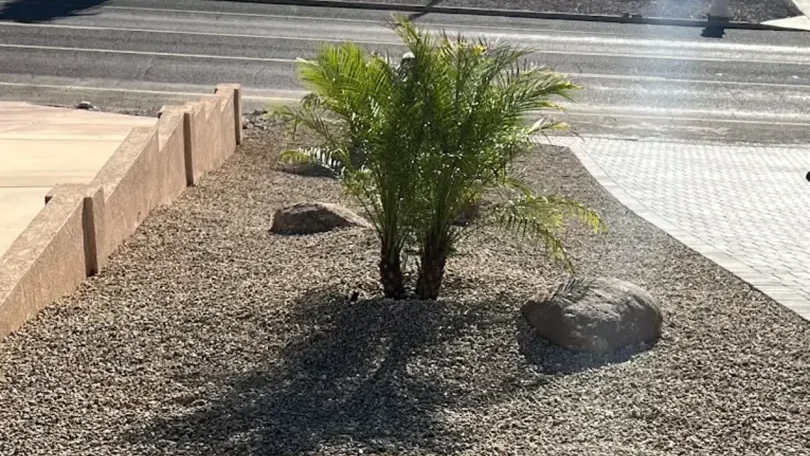
- Apply Mulch or Decorative Rock: Covering bare soil with organic mulch or decorative landscape rock regulates soil temperature, slows evaporation, and suppresses weed growth.
- Maintain the Landscape: While xeriscapes require far less upkeep than grass lawns, seasonal pruning, weed control, and irrigation adjustments keep the low-maintenance landscaping healthy.
Each of these steps builds on the previous one. Skipping soil preparation, irrigation planning, or grading often leads to higher water use, plant failure, and expensive landscape repairs.
Following this structured approach helps homeowners create landscapes that use less water, require less maintenance, and perform better over the long term.
Site Assessment and Water Zoning for Desert Climates
Before any equipment arrives on site, an experienced contractor performs a thorough site assessment. In places like Lake Havasu City, Golden Shores, and Parker, AZ, simply guessing where to place plants is a recipe for expensive plant loss. Contractors map out microclimates, which are small localized areas where temperatures, wind patterns, and moisture levels differ from the surrounding yard.
One of the most overlooked factors in desert landscaping is thermal mass. Block walls, concrete patios, and large rock ground covers absorb intense heat during the day and radiate it back into the yard long after the sun goes down. This extra heat can scorch sensitive species if they are placed too close to hardscaped surfaces.
Mapping Sun Exposure and Western Sun Realities
The western exposure of a property in Arizona receives the most punishing, intense sunlight of the day. During the summer, temperatures against west-facing walls can soar far above ambient air temperatures due to reflected heat.
When planning a layout, a landscape professional carefully evaluates shade orientation throughout the day. This assessment determines where to position structural shade elements, such as pergolas, or where to group heat-tolerant plants to shield more sensitive varieties. Furthermore, the intense UV radiation from the western sun impacts material longevity. Standard residential-grade drip tubing and landscape fabrics quickly degrade and crack under this exposure, making the use of commercial-grade, UV-resistant materials a necessity. Homeowners can read more about managing these unique regional challenges in this guide on how to xeriscape your golden shores front yard like a pro.
Designing Water Zones for Maximum Irrigation Efficiency
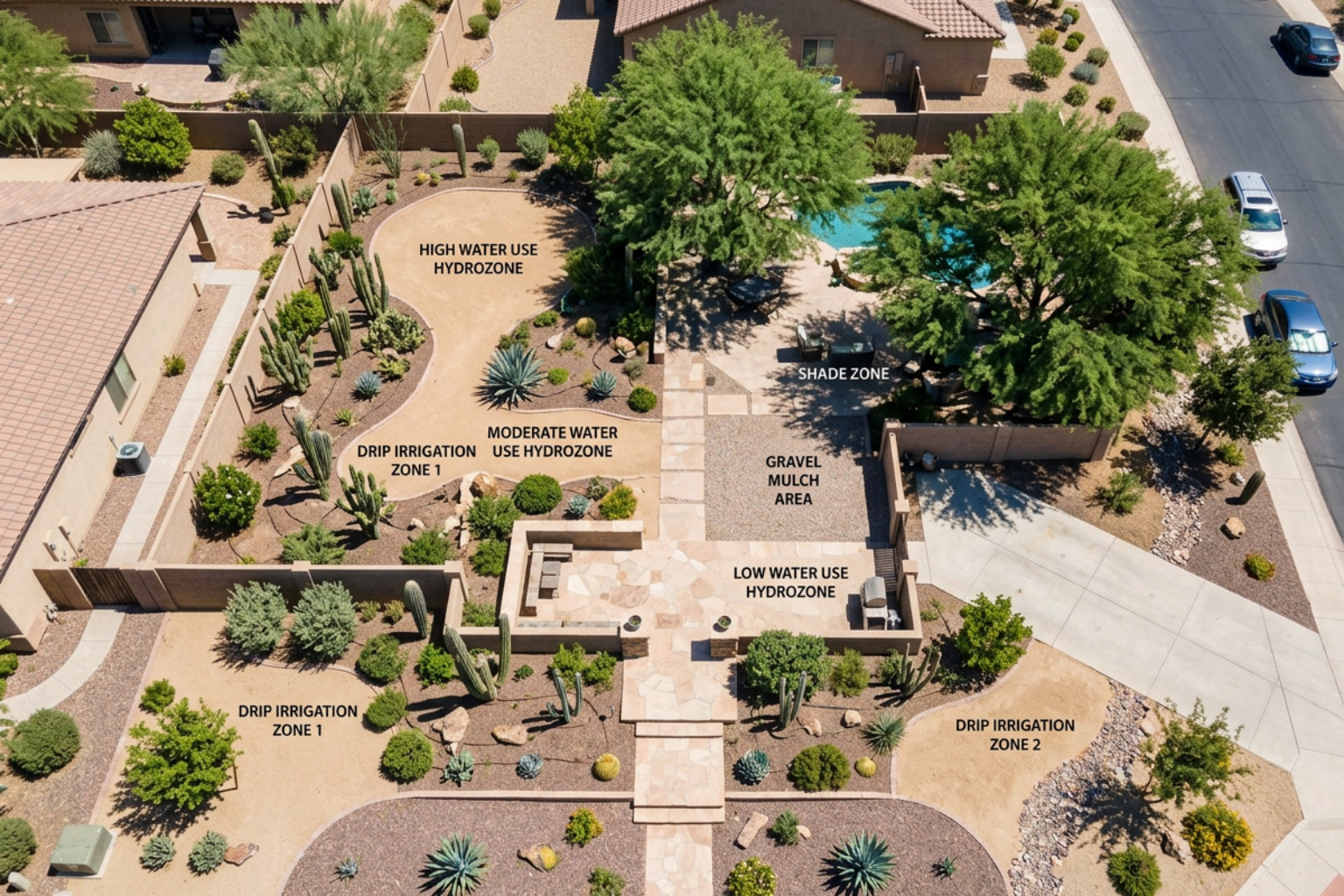
Water zoning is the practice of grouping plants with identical water, soil, and sun requirements into specific irrigation zones. This ensures that low-water desert plants are not drowned by the water schedules required for more sensitive accent plants.
A contractor-designed landscape layout typically divides a property into three distinct water zones:
- The Oasis Zone (Moderate Water): Usually located near the entryway, patio, or primary viewing windows. This zone features lush, colorful accent plants or small, highly efficient turf areas that receive regular irrigation.
- The Transition Zone (Low Water): Located between the high-visibility areas and the property boundaries. This zone contains hardy shrubs and ornamental grasses that require occasional deep watering to maintain their structure.
- The Xeric Zone (Very Low Water): Positioned along the outer edges of the property. This zone is dedicated to resilient native desert plants and cacti that, once established, survive primarily on natural rainfall and require almost no supplemental irrigation.
Properly separating these zones prevents water waste and keeps the entire landscape balanced, as highlighted in efficient irrigation desert gardens lake havasu.
Preparing Soil and Grading for Xeriscaping
A beautiful xeriscape is only as good as the foundation beneath it. In the desert, soil preparation is not a matter of simply turning over the earth with a shovel. It requires the right equipment, precise grading, and an understanding of how water moves across compacted terrain during extreme weather events.
Overcoming Caliche and Rocky Soil Challenges
Homeowners in Lake Havasu City and surrounding areas frequently encounter caliche. Caliche is a concrete-like layer of soil where calcium carbonate has bound the gravel and sand together into an impermeable barrier. Plant roots cannot penetrate it, and water cannot drain through it, leading to root rot and plant death.
Qualified contractors use commercial demolition hammers, augers, and excavators to break through caliche layers before planting. Once the caliche is breached, the planting holes are backfilled with a blend of native soil and organic compost. This amendment improves the soil structure and water-holding capacity, giving young root systems the oxygen and drainage they need to establish themselves in rocky terrain.
Managing Monsoon Drainage and Hydrostatic Pressure
Monsoon season in Arizona brings sudden, violent downpours that can drop inches of rain in a matter of minutes. Without proper site grading, this water will pool against home foundations, erode decorative rock, and wash away expensive plants.
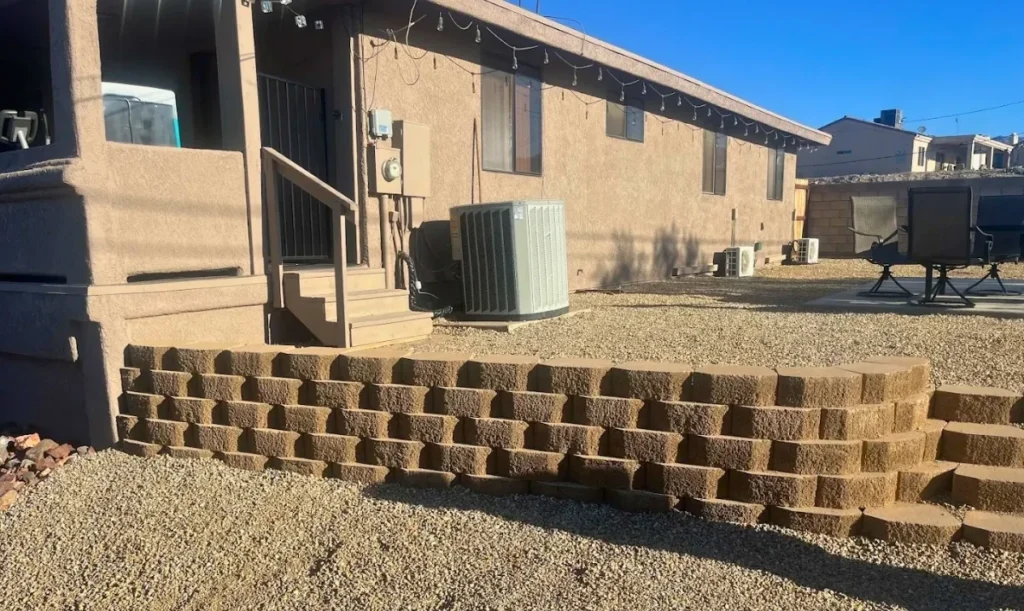
Contractors engineer the yard’s grade to direct stormwater safely away from structures. On sloped properties, this often requires the construction of retaining walls and rock-lined swales to slow down runoff and encourage water to infiltrate into the ground naturally. Retaining walls must be built with proper drainage weep holes to relieve hydrostatic pressure — the pressure exerted by water accumulating behind the wall. Without these engineering details, walls can bow, crack, or collapse entirely during a heavy storm. Experienced design strategies for managing these desert realities are discussed in this resource on desert landscaping ideas.
Choosing Desert-Hardy Plants and Hardscape Materials
Selecting the right combination of living plants and non-living hardscape materials is the key to creating a water-wise landscaping plan that looks intentional, structured, and vibrant.
Choosing the Best Low-Water Plants for Arizona Heat
When selecting plants for a desert xeriscape, native and highly desert-adapted species are always the top performers. These drought-tolerant plants have evolved natural defense mechanisms against extreme heat, such as waxy leaf coatings, silver foliage that reflects sunlight, or deep taproots.
Some of the most reliable, low-maintenance options for local yards include:
- Lantana: A resilient ground cover or mounding shrub that produces vibrant clusters of red, yellow, purple, or orange flowers throughout the warm months. It thrives in full sun and reflected heat.
- Totem Pole Cactus: A slow-growing, architectural cactus with a smooth, sculptural appearance. It makes an excellent focal point and handles the intense western sun without scorching.
- Silver Sage: A hardy shrub with silvery-green leaves that bursts into purple blooms in response to changes in humidity and summer rains.
For homeowners who prefer a lush look, contractors can design “tropical-inspired” zones using drought-tolerant plants like Yellow Bird of Paradise or Bougainvillea, which offer dramatic color without the high water demands of true tropical plants. Homeowners can explore more options in the best low maintenance desert plants and discover hardy options in drought-proof garden plants.
Integrating Rock, Pavers, and Cooling Materials
Hardscaping makes up a significant portion of a desert xeriscape, reducing the need for irrigation while providing clean lines and functional outdoor living spaces. However, material selection is critical. Traditional poured concrete is highly susceptible to cracking under the extreme thermal expansion and contraction caused by desert temperature swings.
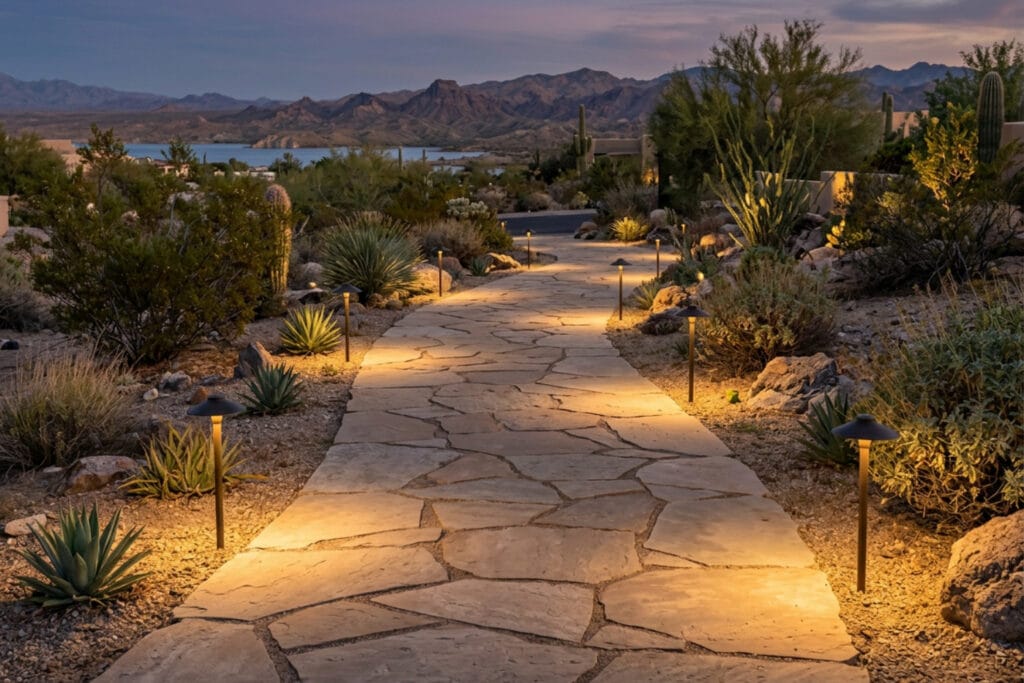
Experienced contractors often recommend concrete pavers or natural flagstone set on a compacted sand base. These materials flex naturally with ground movement, preventing cracks and allowing water to seep into the soil. For ground cover, decomposed granite and decorative river rock are the gold standards.
| Material Type | Water Retention | Temperature Regulation | Longevity & Maintenance |
|---|---|---|---|
| Organic Wood Mulch | High; holds moisture near the surface | Keeps soil cool; degrades over time | High maintenance; must be replaced every 1–2 years; can wash away in monsoons |
| Landscape Rock / Granite | Moderate; slows evaporation from deeper soil layers | Increases surface temperature; stores heat | Extremely durable; low maintenance; holds up well against monsoon winds |
Using landscape rock effectively requires careful placement to prevent weed growth and ensure proper water infiltration, as detailed in xeriscaping with landscape rock.
Professional Irrigation and Turf Conversion
Attempting a large-scale yard transformation without specialized equipment and technical expertise often leads to system failures, dead plants, and wasted money. Proper installation ensures that every element of the landscape performs efficiently for decades.
Professional Drip Irrigation Systems
Overhead sprinkler systems are incredibly wasteful in the desert. High winds and extreme temperatures cause much of the sprayed water to evaporate before it ever touches the soil. Contractor-designed xeriscaping relies on sub-surface or ground-level drip irrigation.
A commercial-grade drip irrigation system utilizes pressure-compensating emitters to deliver a precise volume of water directly to the root zone of each plant. This drip irrigation system is controlled by a smart irrigation controller that adjusts watering schedules automatically based on real-time local weather data. Contractors program these systems to use the cycle-and-soak method — applying water in short bursts with pauses in between — which allows the compacted desert soil to absorb moisture deeply without creating surface runoff.
Turf Conversion and Modern Alternatives
Replacing a traditional grass lawn with a water-wise alternative is one of the most impactful steps a homeowner can take. The process begins with full sod removal, using specialized sod cutters and heavy equipment to clear out the old grass and its aggressive root system completely.
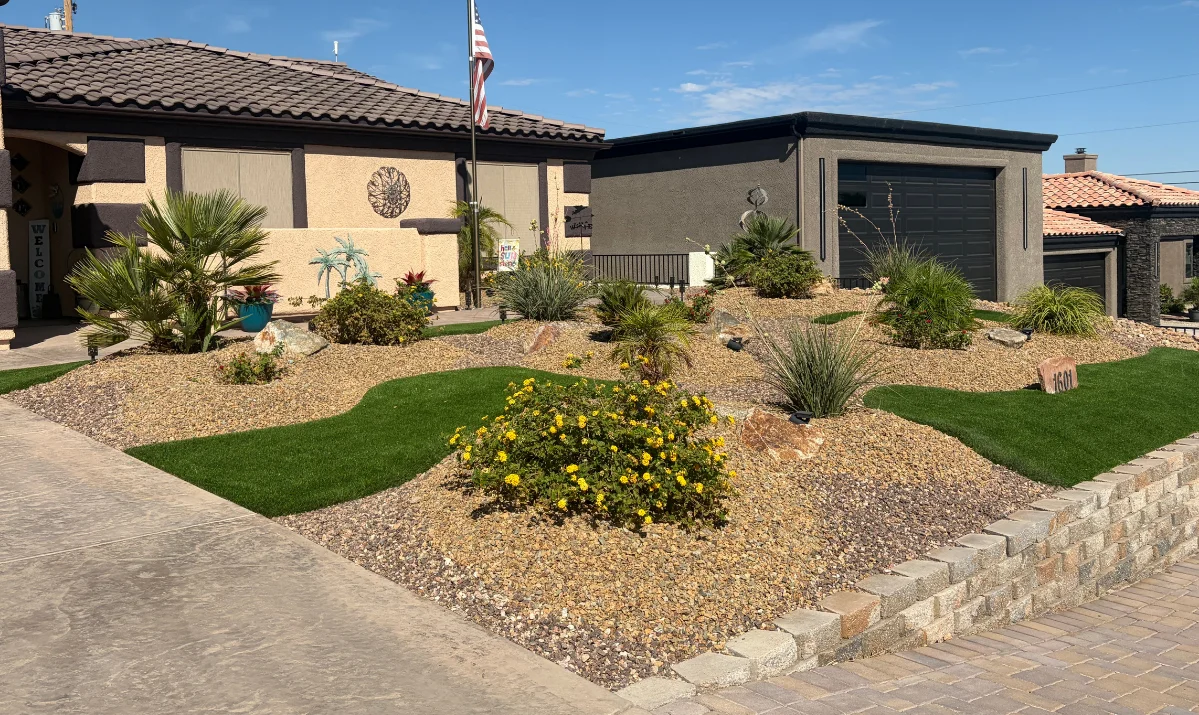
Once the turf is removed, many homeowners choose to install high-quality artificial turf. Modern synthetic turf can provide the appearance of a traditional lawn year-round while eliminating irrigation and reducing ongoing maintenance. An experienced installer excavates the native soil, lays a compacted crushed rock base for proper drainage, and secures the turf with commercial-grade infill to prevent shifting and buckling in the heat. Homeowners can find inspiration for these clean, modern installations in arizona landscape ideas for a cool yard in a hot state.
Frequently Asked Questions About Desert Xeriscaping
What is the average cost to xeriscape a yard in Arizona?
The cost of a professional xeriscape installation varies widely depending on the size of the property, the complexity of the site conditions, and the materials selected. A project’s price is determined by factors such as caliche excavation, the length of retaining walls needed for slope stabilization, the type of decorative rock or pavers chosen, and the sophistication of the drip irrigation system.
While the upfront cost is a significant investment, it should be viewed as a long-term improvement in the property’s usability, structural integrity, and curb appeal. Over time, homeowners recoup this investment through drastically lower monthly water bills and reduced ongoing maintenance expenses.
How long does it take for a xeriscape to become fully established?
Even the most drought-tolerant desert plants require regular, deep watering immediately after installation. This establishment period typically lasts between one and two years. During this time, the plants are developing the deep, extensive root systems required to survive the extreme summer heat. Once a professional contractor verifies that the root systems are fully established, the irrigation controller can be transitioned to a long-term, low-frequency schedule.
Can I still have a green lawn area in a xeriscape design?
Yes. Xeriscaping does not mean eliminating all green spaces. The key is using turf practically. Homeowners can work with a designer to install a small, highly functional area of turf grass in a high-use zone, such as a pet area or backyard play space, while converting the rest of the yard to low-water plantings. Alternatively, many homeowners opt for premium artificial turf to enjoy a lush, green aesthetic with zero water consumption.
Conclusion
Successfully learning how to xeriscape a yard means understanding that every decision—from grading and irrigation to plant selection and hardscape materials—works together to create a landscape built for Arizona’s desert climate. For homeowners in Lake Havasu City, Golden Shores, and Parker, AZ, partnering with a licensed, experienced local contractor is the best way to ensure the job is done right.
River Palm Landscaping has been serving the local community since 2003, specializing in durable, climate-appropriate outdoor spaces built to withstand extreme heat and rocky terrain. From expert grading and caliche removal to smart irrigation systems and custom paver installations, their experienced team delivers beautiful, functional landscapes that enhance long-term property value.
To start planning a desert-appropriate yard transformation, contact the team at River Palm Landscaping today to schedule a consultation for your next desert landscaping project.