Why Desert Landscaping Ideas Matter More Than Ever in Lake Havasu City
If your yard is still fighting the desert instead of working with it, you already know the pain: a water bill that climbs every summer, turf grass that turns brown by June, and concrete that keeps cracking because no one accounted for the caliche layer underneath. For homeowners in Lake Havasu City, Golden Shores, and Parker, AZ, these aren’t minor annoyances — they’re expensive, recurring problems that get worse every season.
The good news is that desert landscaping ideas have evolved well beyond a few rocks and a cactus. Today’s best desert yards combine smart grading, climate-resilient plants, efficient irrigation, and durable hardscaping into outdoor spaces that look sharp, handle monsoon runoff, and stay manageable year-round — without burning through water or maintenance budgets.
Here’s a quick look at the most effective desert landscaping ideas for arid climates like Lake Havasu:
| Idea | Best For | Key Benefit |
|---|---|---|
| Decomposed granite and river rock | Ground cover | Reduces evaporation, minimal upkeep |
| Zoned drip irrigation | Water efficiency | Significantly reduced water waste |
| Structural cacti and Palo Verde trees | Visual interest and shade | Arid-adapted, heat-tolerant |
| Boulders and steel edging | Focal points and definition | Thermal management, clean lines |
| Artificial turf zones | Play areas and curb appeal | Zero water, year-round green |
| Dry creek beds | Slope and drainage management | Monsoon runoff control |
| Fire pits and shade structures | Outdoor living | Functional, cool-evening use |
Whether you’re replacing a dying lawn, managing monsoon drainage on a sloped lot, or simply trying to make a rental property look attractive without constant upkeep, the right desert landscape design starts with understanding how your site actually behaves — soil, sun, slope, and all.
This guide walks through everything a Lake Havasu homeowner needs to evaluate a professional desert landscape installation: from caliche soil and grading challenges to plant selection, hardscaping materials, irrigation systems, and functional outdoor spaces built to survive 115°F summers.
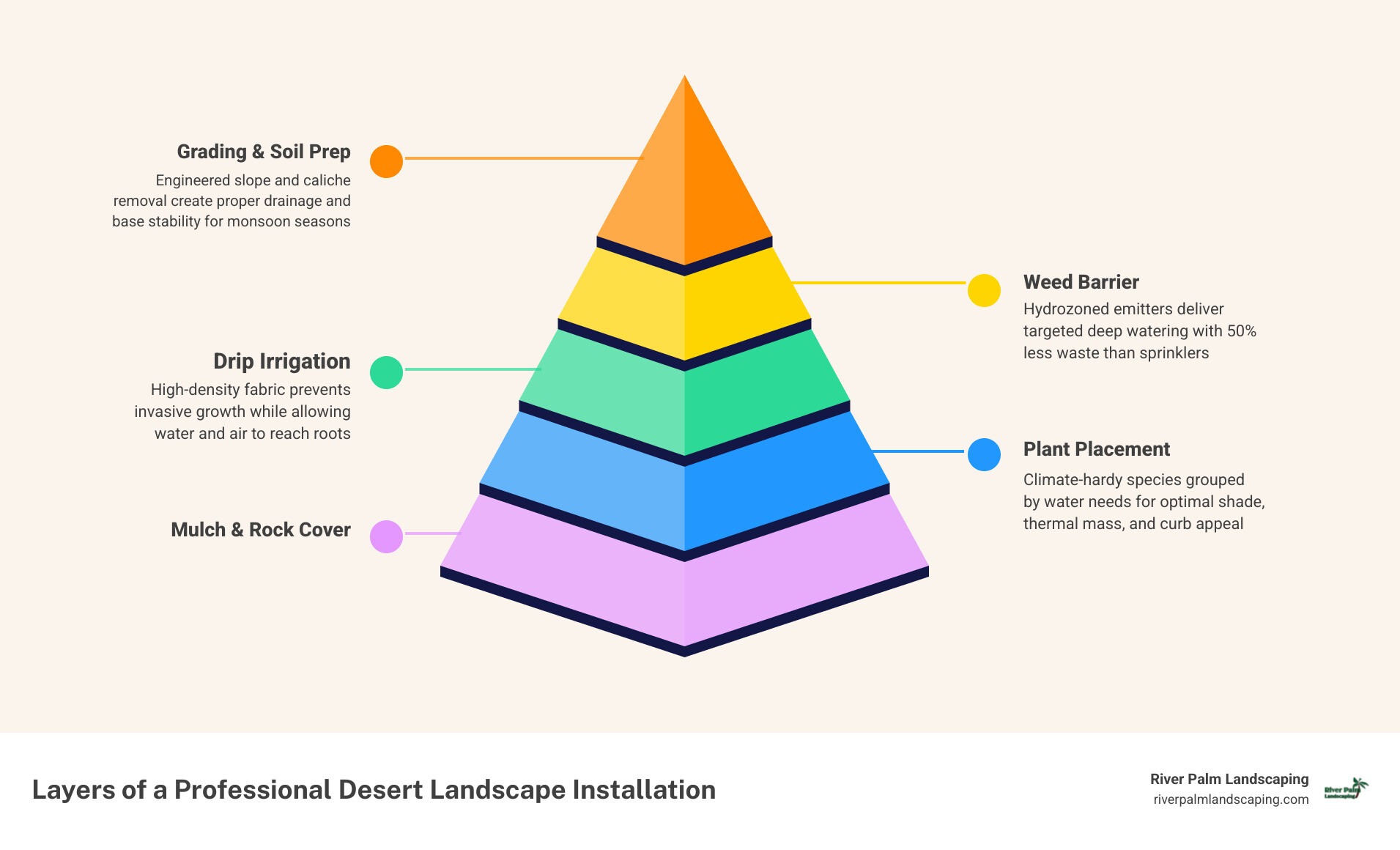
When planning your project, working with experienced desert landscape design and installation contractors in Lake Havasu City is the first step to ensuring long-term success. A licensed arizona desert landscape contractor can help you navigate local soil conditions and design a custom desert garden design havasu tailored to your property.
Core Engineering Principles for Arid Climates
Beautiful desert landscaping ideas are only as good as the ground they are built on. In the Colorado Desert and Mojave transition zones, successful landscape installation requires addressing physical and geological challenges before a single plant goes into the ground.
The primary obstacle beneath most local yards is caliche—a concrete-like layer of calcium carbonate. Attempting to plant trees or install drainage systems without professional excavation equipment often results in stunted plant growth or standing water. If caliche is not broken up during the initial grading phase, water cannot drain, creating a bathtub effect that rots plant roots and damages hardscape foundations.
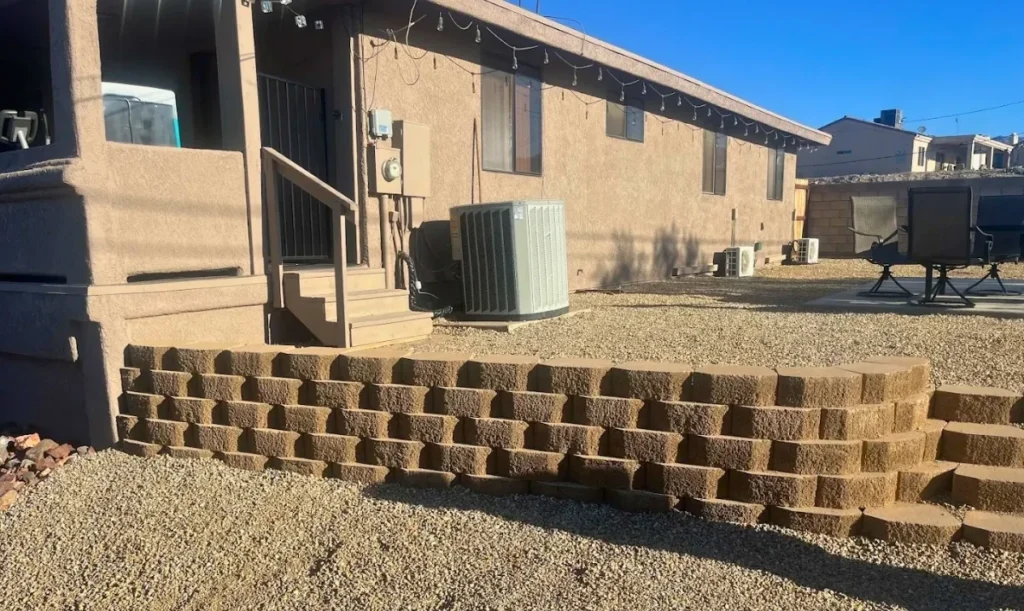
Monsoon season brings high-intensity rainfall that can quickly overwhelm poorly graded yards. Proper grading must direct water away from residential foundations, patios, and retaining walls. When surface water is allowed to pool against concrete structures, it creates hydrostatic pressure. Over time, this pressure forces moisture through concrete pores, leading to cracking, shifting, and structural failure. Professional grading ensures that runoff flows safely toward municipal drainage or designated dry creek beds.
Thermal expansion is another critical engineering factor in regions with extreme temperature swings. Materials expand in the 115°F summer heat and contract during cooler desert nights. Poured concrete, pavers, and retaining walls must be installed with precise expansion joints and sub-base preparation to prevent cracking. On sloped properties, professional slope stabilization using rip-rap, geogrid, or engineered retaining walls is necessary to hold the soil in place against wind and heavy rains. Understanding these structural realities is essential when maximizing your landscape with desert landscaping to ensure long-term durability.
Hardscaping and Rock Selection for Thermal Management
Hardscape materials act as the structural framework of a desert yard, but they also dictate how much heat the property retains. The concept of thermal mass is highly relevant here; dark-colored rocks absorb solar radiation during the day and emit that heat back into the surrounding air long after the sun goes down, driving up home cooling costs.

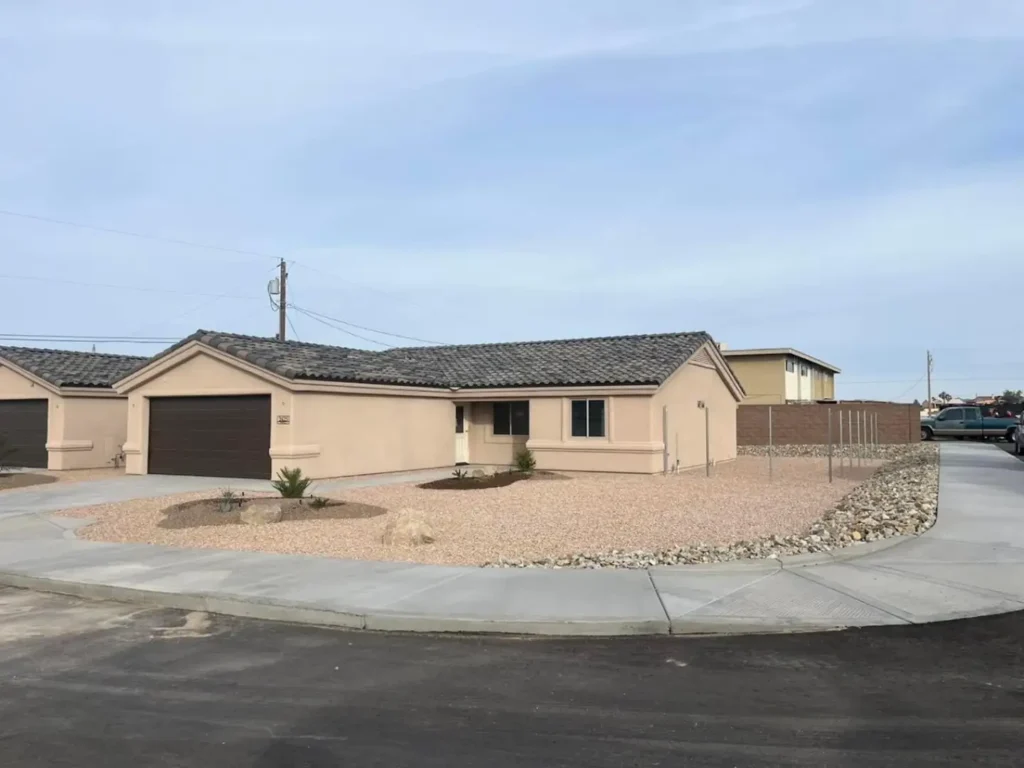
To combat this reflected heat, experienced contractors prioritize materials with a high Solar Reflectance Index (SRI). Light-colored gravel, beige decomposed granite (DG), and multi-colored river rock reflect more sunlight, keeping the outdoor living spaces noticeably cooler.
When choosing ground cover materials, size and weight matter:
- Decomposed Granite (DG): Excellent for pathways and low-traffic areas. It provides a natural, packed surface but requires professional compaction and stabilizing binders to prevent erosion during heavy winds.
- River Rock and Cobble: Ideal for dry creek beds and drainage swales. They are heavy enough to stay in place during monsoon downpours and add excellent visual texture.
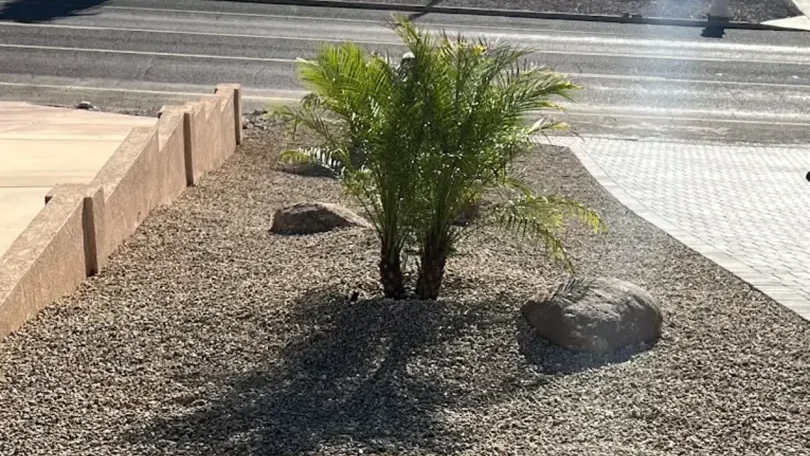
- Boulders: Act as natural focal points. To look natural rather than placed, boulders should be buried one-third of their height into the ground. This anchors them visually and physically.
To keep these materials from mixing and migrating, professional installations use heavy-duty steel edging. Unlike plastic edging, which cracks and buckles under intense UV exposure, steel edging maintains crisp, clean lines between different rock beds, pathways, and planting areas. Incorporating these structural elements is a core part of successful rock garden landscaping in Lake Havasu. By balancing stone textures with structural forms, homeowners can implement classic succulent landscape design principles that highlight the natural beauty of the region.
Selecting Climate-Resilient Plants and Trees
Plants in Western Arizona must survive intense UV radiation, low humidity, alkaline soil, and drying winds. Choosing species that are naturally adapted to these conditions ensures a vibrant yard that does not depend on constant watering.
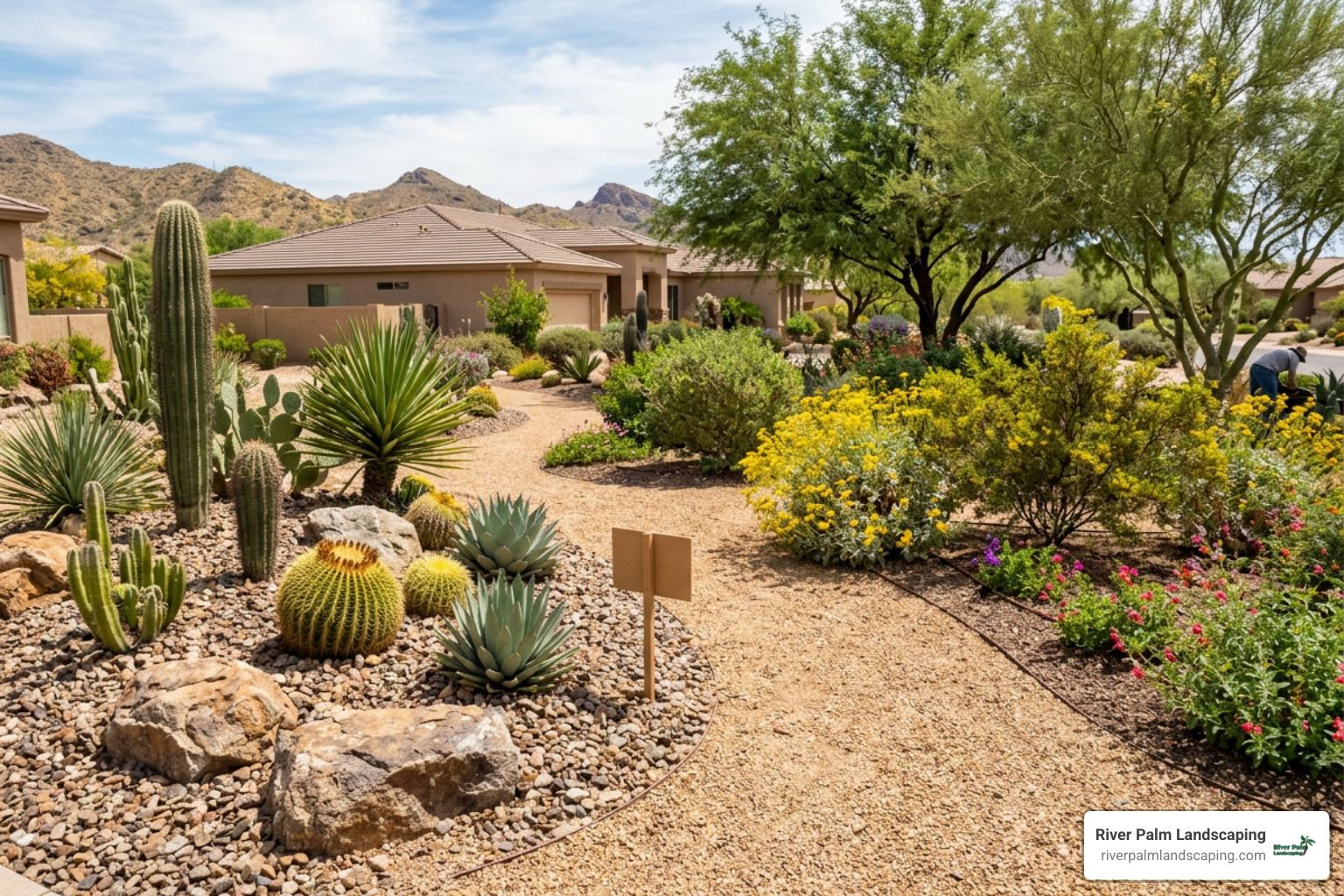
A professional planting plan relies on grouping plants with similar water and sun requirements. This prevents overwatering desert-adapted cacti while ensuring transitional shrubs get the moisture they need.
Key plant selections for local climates include:
- Lantana: A highly resilient evergreen ground cover that thrives in full western sun exposure, offering bright purple, yellow, or red blooms throughout the warmer months.
- Totem Pole Cactus: A slow-growing, spineless columnar cactus that serves as a striking architectural accent. It handles intense reflected heat without scarring.
- Palo Verde (e.g., ‘Desert Museum’): A native shade tree with bright green bark and vibrant yellow spring flowers. It provides filtered, dappled shade that helps cool the ground below.
- Desert Willow: A durable native tree that produces orchid-like pink and purple blossoms, attracting local pollinators while requiring minimal water once established.
For homeowners who want a softer look, tropical-inspired accents like bougainvillea or yellow orchid vine can be integrated near patios or entryways where they receive a bit of afternoon shade. By planning for proper shade orientation and wind protection, these plants can thrive alongside more rugged species, reflecting the latest modern desert garden trends.
Designing Functional Spaces with Desert Landscaping Ideas
A successful desert landscape design balances open, low-maintenance areas with functional outdoor living zones. Because natural turf lawns require excessive water and constant mowing in hot climates, modern desert landscaping ideas often replace large grassy areas with a combination of decorative rock, hardscape pavers, and strategically placed artificial turf.
To help visualize how to allocate space in a functional backyard design, consider the physical performance and maintenance differences between these two primary ground covers:
| Feature | Artificial Turf | Decorative Rock & Gravel |
|---|---|---|
| Water Usage | Zero water required | Zero water required |
| Heat Retention | Absorbs heat; needs shade or brief rinsing to cool | Low-to-moderate heat absorption (if light-colored) |
| Maintenance | Occasional brushing and debris blowing | Pre-emergent weed control twice a year |
| Primary Function | Play areas, pet zones, vibrant green accents | Footpaths, drainage swales, open ground cover |
| Longevity | 10 to 15 years depending on traffic and UV exposure | Indefinite; may require minor top-offs over time |
By integrating these materials thoughtfully, homeowners can create distinct zones for dining, recreation, and drainage. Working with a professional contractor to implement comprehensive desert landscaping solutions ensures that these zones are cohesive, durable, and engineered to handle local weather extremes.
Front Yard Desert Landscaping Ideas for Curb Appeal
Front yards are all about structure, clean geometric lines, and street-facing aesthetics. A professionally designed front yard often uses structural cacti, such as the Totem Pole or Mexican Fence Post, to create vertical interest against the horizontal lines of the home.
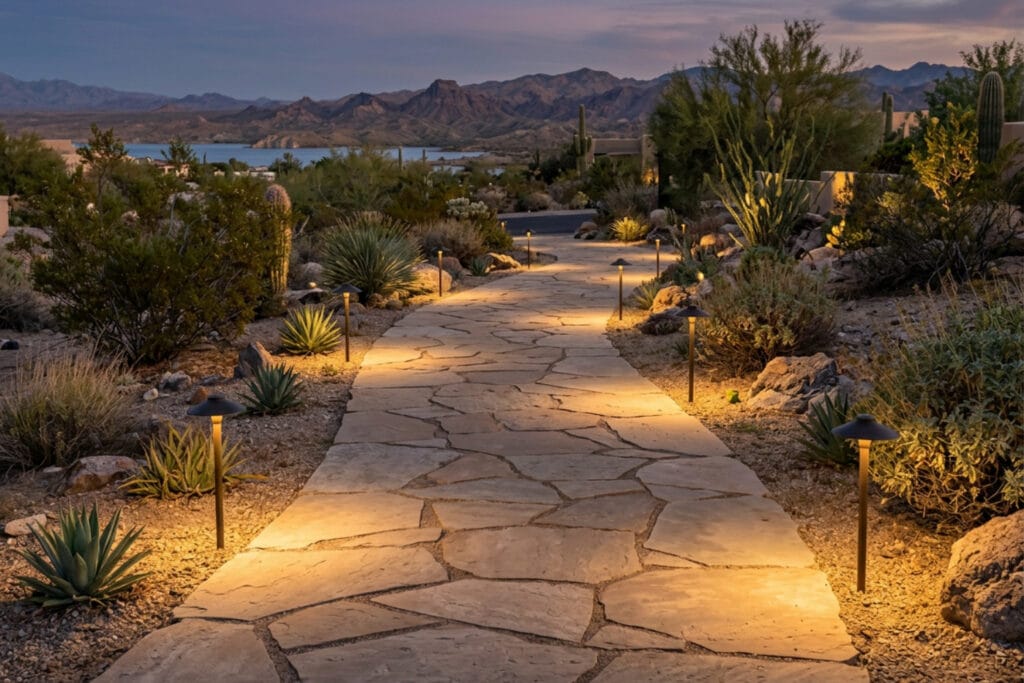
Low-voltage landscape lighting is essential for highlighting these architectural plant forms after dark. Professional lighting design utilizes 2700K LED fixtures to cast warm, natural light upward onto trees and unique cacti. To protect the clear desert night sky and comply with local DarkSky guidelines, fixtures should be shielded and aimed downward or directly at target features, preventing light pollution while enhancing home security and curb appeal.
Backyard Desert Landscaping Ideas for Outdoor Living
The backyard should function as a private, comfortable retreat. To make the space usable during cooler desert evenings, fire pits and integrated outdoor fireplaces are highly popular additions. These features are best constructed from durable masonry or stone that complements the home’s architecture.
For pool-side plantings, select low-litter species that will not drop leaves, needles, or sap into the water. Succulents, agaves, and ornamental grasses provide a clean, modern look without clogging pool filters. Shade structures, such as pergolas or solid-roof patio extensions, should be oriented to block the intense late-afternoon western sun, creating a cooler microclimate for seating areas.
Irrigation Efficiency and Water Conservation Systems
Even the most arid-adapted plants require regular water to establish their root systems during the first two years after installation. A professional drip irrigation system is the most efficient way to deliver water directly to the root zone, minimizing evaporation loss.
An efficient irrigation system consists of several key components:
- Drip Emitters: Pressure-compensating emitters deliver a precise volume of water (typically 1 to 4 gallons per hour) regardless of elevation changes or pipe length.
- Smart Controllers: These systems adjust watering schedules automatically based on local weather data, reducing water delivery during cooler winter months or turning the system off entirely during monsoon events.
- Pressure Regulators: Desert soils and municipal water connections can experience pressure fluctuations. A high-quality regulator prevents high pressure from blowing emitters off the distribution tubing.
- Deep Watering Schedules: Instead of watering for a few minutes every day, professional schedules run for longer periods less frequently. This encourages roots to grow deep into the soil, where moisture remains longer and temperatures are cooler.
By investing in professional irrigation engineering, homeowners can avoid common mistakes like surface runoff and underwatering. For more inspiration on creating a water-wise, climate-appropriate yard, explore Arizona landscape ideas for a cool yard.
Frequently Asked Questions About Desert Landscaping
How does caliche soil affect desert landscape installation?
Caliche is a hardened layer of soil bonded by calcium carbonate, common throughout the local desert. It acts like natural concrete, blocking root growth and preventing water from draining. Installing trees, large shrubs, or fence posts in caliche requires heavy equipment like excavators, jackhammers, or augers to break through the hardpan layer. Professional soil preparation involves digging planting holes at least twice as wide as the root ball and ensuring the caliche layer is fractured at the bottom to allow proper drainage.
What are the best cooling materials to reduce reflected heat in a desert yard?
To minimize heat retention, choose hardscape materials with a high Solar Reflectance Index (SRI). Light-colored river rock, beige or gold decomposed granite, and light-toned concrete pavers reflect solar radiation rather than absorbing it. Additionally, installing shade structures, planting desert-adapted shade trees like the Palo Verde, and using high-quality artificial turf in shaded zones can significantly lower the ambient temperature of an outdoor living space.
How often should professional drip irrigation systems be adjusted?
Drip irrigation systems should be adjusted at least four times a year to match seasonal temperature changes. In the extreme heat of summer, plants require more frequent, deep watering. During the winter, watering frequency can be reduced significantly as plants go dormant and evaporation rates drop. Smart irrigation controllers equipped with weather sensors can automate these adjustments, but manual inspections are still recommended to check for clogged emitters or line leaks.
Conclusion
Implementing the right desert landscaping ideas is about more than just aesthetics—it is an investment in the durability, functionality, and long-term value of your property. By working with the natural desert environment instead of fighting it, homeowners can enjoy beautiful outdoor spaces that stand up to extreme heat, rocky soils, and seasonal monsoons.
Since 2003, River Palm Landscaping has provided professional, durable landscape design and installation services for residential properties in Lake Havasu City, Golden Shores, and Parker, AZ. From heavy excavation and grading to custom hardscaping, water-efficient irrigation, and expert plant selection, the team builds outdoor spaces engineered to last.
Ready to transform your yard into a resilient, easy-care desert oasis? Contact the local experts at River Palm Landscaping today to schedule a professional consultation and explore our comprehensive desert landscaping services.