Why Finding the Right Drainage and Irrigation Companies Near Me Makes All the Difference in the Desert
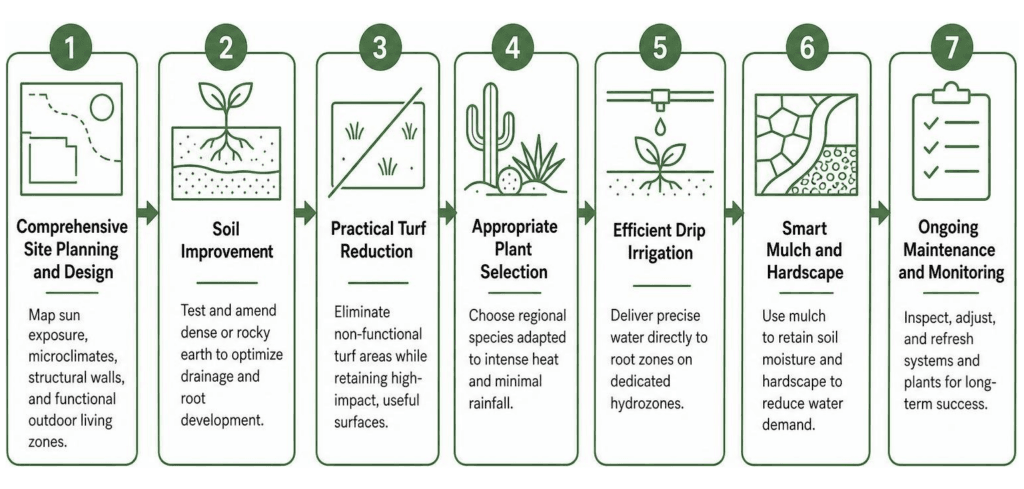
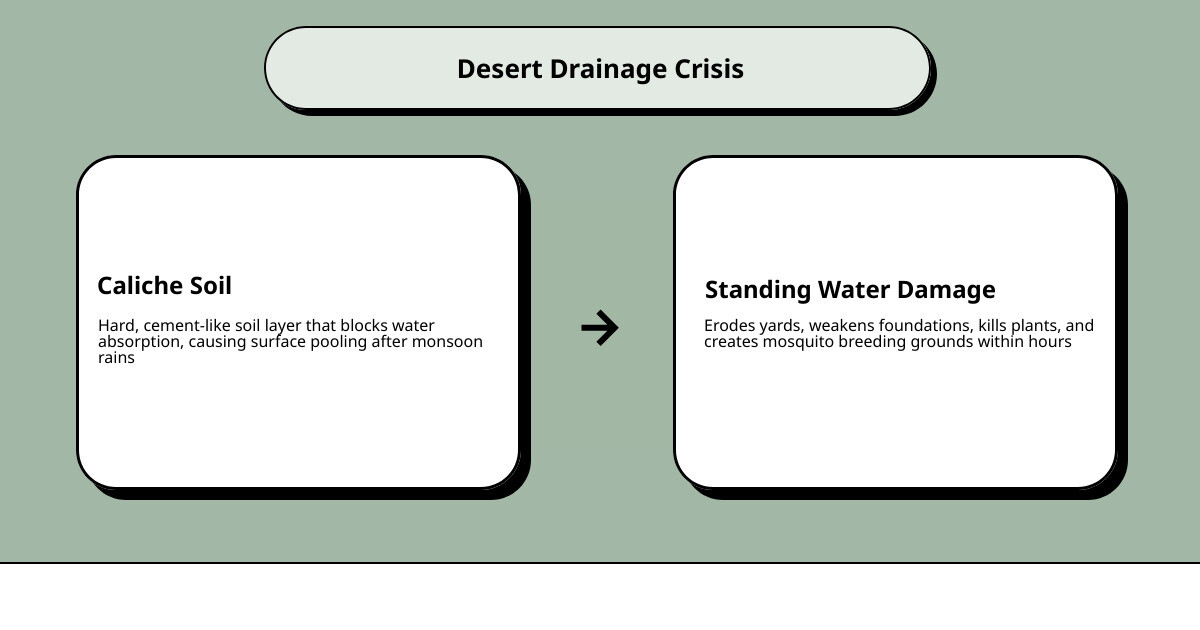
Desert properties in Lake Havasu City, Golden Shores, and Parker, AZ face severe water challenges that most homeowners do not anticipate. Impenetrable caliche soil prevents monsoon rainwater from draining, leading to standing water that erodes yards and undermines foundations. At the same time, extreme summer heat rapidly evaporates water from poorly designed systems, driving up utility bills while leaving plants dehydrated.
To address these issues, finding experienced drainage and irrigation companies near me is essential. Before hiring a contractor, keep these key factors in mind:
- Look for contractors licensed with the Arizona Registrar of Contractors (ROC)
- Confirm they have hands-on experience with caliche and rocky desert soil
- Ask about written warranties, maintenance plans, and permit compliance
- Choose a company that designs systems specifically for desert water challenges — not a one-size-fits-all approach
- Request an on-site evaluation, not a generic phone quote
Getting this right takes more than a standard sprinkler company. It requires a professional who understands desert hydrology, local soil conditions, and how to build systems that withstand intense UV exposure and wide temperature swings.
Useful resources for finding drainage and irrigation companies near me:
- best yard drainage company near me
- irrigation system repair near me
- full service landscape company near me
Core Services Offered by Drainage and Irrigation Companies Near Me
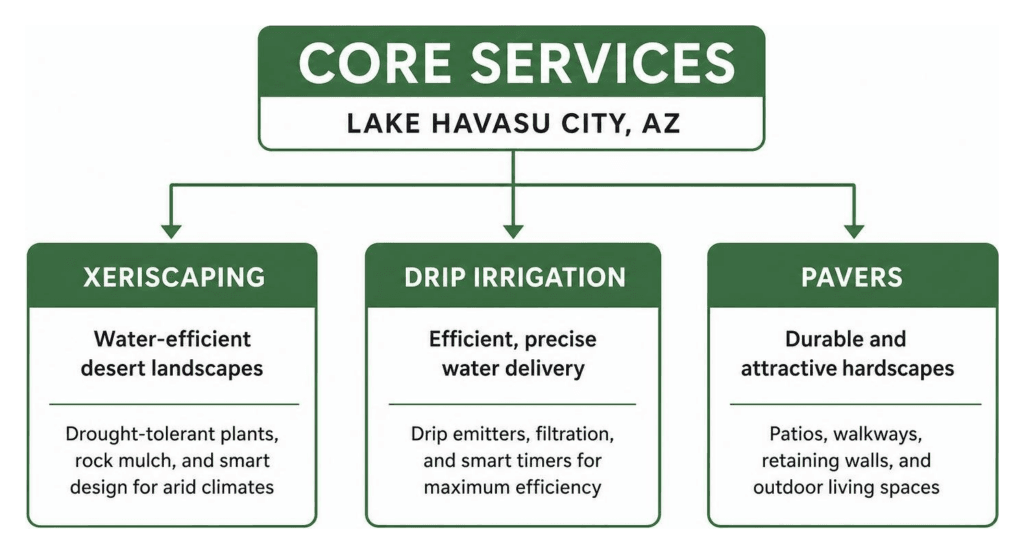
When searching for drainage and irrigation companies near me, it is vital to understand that comprehensive water management involves more than just fixing a broken sprinkler head. A professional contractor handles the entire lifecycle of outdoor water use, from bringing water in safely to directing storm runoff away from structural foundations.
For homeowners in Lake Havasu City and surrounding desert areas, core services typically include custom system design, drip irrigation installation, backflow prevention, and integrating low-voltage landscape lighting. Because desert landscapes rely on precision, these services are engineered to maximize every drop of water while protecting hardscaping, artificial turf, and native plantings from water damage. To learn more about how to protect your property from pooling water, explore the best yard drainage company near me resources.

Drip Irrigation vs. Traditional Sprinkler Systems
In the harsh Mojave Desert climate, traditional overhead sprinkler systems are highly inefficient for watering plants and trees. Spraying water into the air when temperatures exceed 110°F results in massive evaporation loss before the water ever hits the soil. Furthermore, overspray on decorative rock or granite causes unsightly mineral buildup and weed growth.
This is why modern desert landscaping relies on drip irrigation systems. Drip systems apply water directly to the root zone of each plant through low-volume emitters. By delivering water slowly and precisely, drip irrigation prevents evaporation, minimizes runoff, and encourages deep root growth, which is essential for plants to survive the extreme summer heat. Using water-efficient heads, drip emitters, and specialized spray nozzles can significantly reduce monthly water bills while keeping desert flora thriving. For an in-depth look at optimizing your watering setup, check out how we implement efficient irrigation for desert gardens in Lake Havasu.
Backflow Prevention and Low-Voltage Landscape Lighting Integration
A critical but often overlooked component of any irrigation system is the backflow prevention assembly. This device prevents irrigation water—which can contain fertilizers, pesticides, and soil bacteria—from siphoning backward into your home’s clean drinking water supply. Because backflow prevention is a matter of public health, local municipalities in Arizona require these devices to be professionally installed, maintained, and occasionally tested to ensure safety compliance.
When installing or upgrading an irrigation system, there is also a prime opportunity to integrate low-voltage landscape lighting. Since both systems require trenching throughout the yard, installing lighting cables in the same trenches as your irrigation lines minimizes landscape disruption and reduces labor costs. Low-voltage (12V) LED lighting not only enhances nighttime curb appeal but also improves home security by illuminating walkways, pathways, and architectural features without consuming excessive electricity.
Selecting the Right Contractor for Desert Landscapes
The desert environment is incredibly unforgiving on outdoor installations. Intense UV radiation degrades standard plastics within a few seasons, and extreme thermal expansion can crack underground pipes that are not correctly installed. Therefore, selecting a contractor with specific local expertise is paramount.
In Arizona, any contractor performing irrigation or drainage work must be properly licensed, bonded, and insured. Homeowners should verify a company’s status with the Arizona Registrar of Contractors (ROC) before signing any contract. A licensed contractor understands local building codes, knows when to pull municipal permits, and uses commercial-grade materials designed to withstand local soil chemistry and temperature fluctuations.

Key Criteria for Hiring Drainage and Irrigation Companies Near Me
To help you evaluate local contractors, use a structured evaluation framework. Reliable companies will always offer written warranties on both parts and labor, provide structured preventative maintenance plans, and utilize water-efficient, smart components.
Here is a quick checklist to guide your hiring process:
- Licensing: Active ROC license in good standing for landscaping or excavation.
- Desert Experience: Proven track record of working with rocky caliche soil and extreme heat conditions.
- Equipment: Ownership of heavy machinery (like Bobcats or mini-excavators) necessary for digging in hard-packed desert ground.
- Warranties: Clear, written guarantees on installation workmanship and product parts.
- Smart Technology: Experience installing Wi-Fi-enabled, EPA WaterSense-certified smart controllers.
For a comprehensive guide on choosing a repair specialist, refer to our guide on finding top-rated irrigation system repair services.
Red Flags to Avoid with Drainage and Irrigation Companies Near Me
While searching for drainage and irrigation companies near me, be on the lookout for warning signs that indicate a contractor may cut corners. One major red flag is a company offering a generic, sight-unseen estimate over the phone without conducting a thorough on-site analysis of your property’s soil, grading, and existing utilities.
Other warning signs include:
- Refusal or reluctance to pull required municipal permits.
- Demanding a large cash deposit upfront before any materials are delivered.
- Lack of specialized excavation equipment, which often leads to shallow, improperly buried lines that are highly susceptible to damage.
- Proposing standard lawn sprinklers for a desert xeriscaping project.
If you are dealing with a poorly installed system, read about fixing your broken desert irrigation system to learn how to correct these issues permanently.
Common Signs Your Irrigation System Needs Repair
Because irrigation lines are buried underground, system failures can go unnoticed until significant water damage has occurred or your water bill suddenly skyrockets. Recognizing the early warning signs of system failure can save you thousands of dollars in water bills and replacement plants.
- Low Water Pressure: If drip emitters or bubblers are barely trickling, there may be a subterranean line break, a clogged filter, or a failing control valve.
- Clogged Emitters: Desert dust, hard water minerals, and soil debris can easily clog small drip emitters, starving your plants of water.
- Broken PVC Pipes: Ground shifting—often caused by soil expanding and contracting during seasonal temperature swings—can crack rigid PVC pipes, leading to underground leaks.
- Sudden Spikes in Water Bills: A dramatic, unexplained increase in your monthly water bill is a classic sign of a hidden underground leak.
- Soggy Spots or Standing Water: Wet patches in dry gravel or soil indicate a broken line directly beneath the surface.
Engineered Drainage Solutions for Yard Flooding and Standing Water
When heavy monsoon rains hit the Lake Havasu region, dry desert soils often cannot absorb the sudden volume of water. This leads to rapid pooling, flash flooding, and standing water that can threaten your home’s foundation or ruin your outdoor living spaces. Resolving these issues requires engineered drainage solutions designed to capture, channel, and redirect excess water safely away from your property.
To dive deeper into protecting your yard from heavy rains, you can explore how to prevent your lawn from drowning with drainage solutions, find specific drainage solutions for rocky soil, or learn how to keep Havasu dry with local drainage solutions.
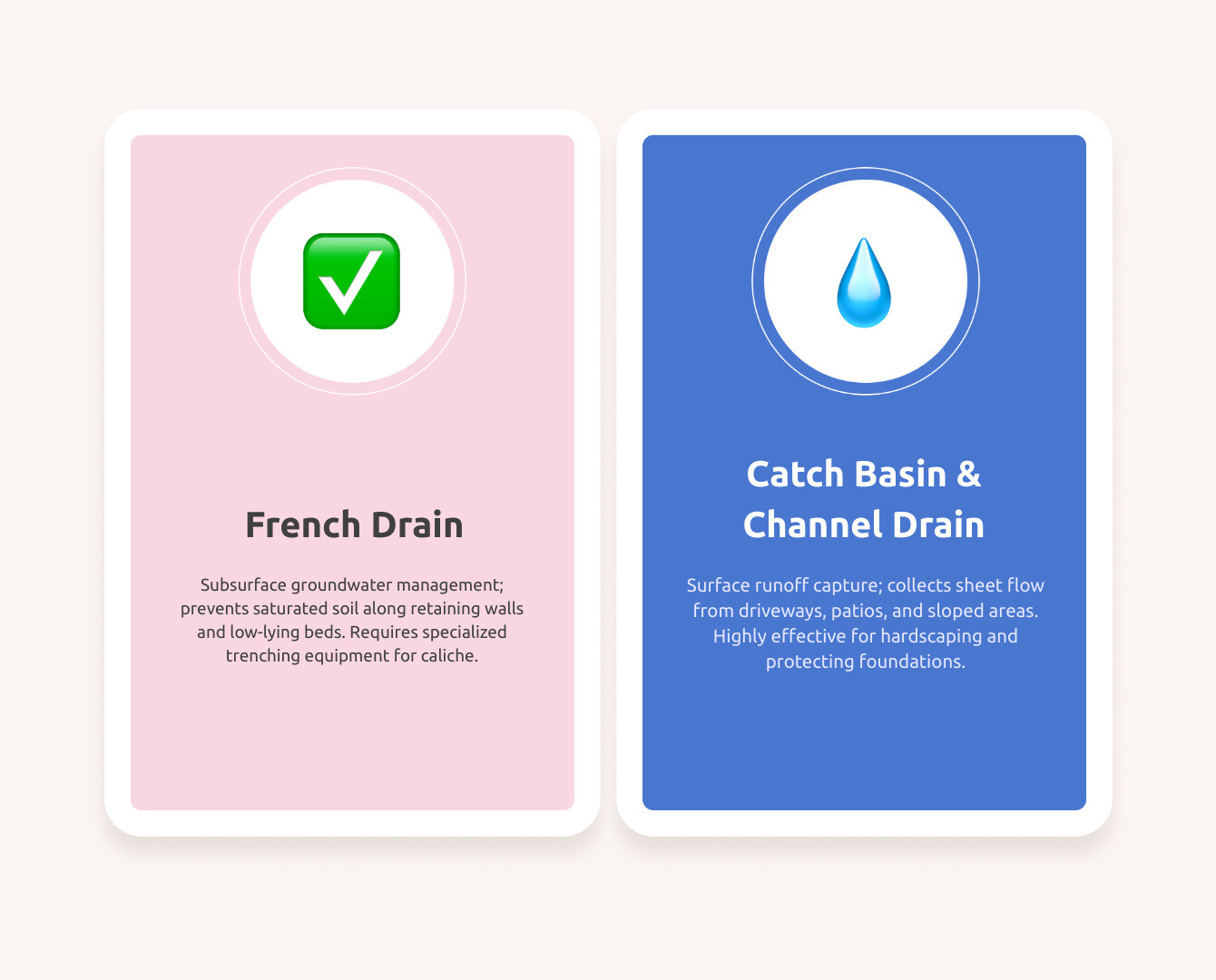
French Drains vs. Catch Basins vs. Channel Drains
Different drainage challenges require different engineering approaches. Below is a comparison of the three most common drainage solutions used to manage water runoff in residential desert landscapes:
| Drainage Type | Primary Function | Ideal Placement | Caliche Soil Compatibility |
|---|---|---|---|
| French Drain | Manages subsurface groundwater and prevents saturated soil. | Along retaining walls, property borders, or low-lying landscape beds. | Requires specialized trenching equipment to cut through hardpan layers. |
| Catch Basin | Captures surface water runoff and filters out large debris. | Low spots in the yard, near downspouts, or at the bottom of sloped areas. | Highly effective; acts as a central collection point for surface water. |
| Channel Drain | Collects sheet flow runoff across wide, flat, paved surfaces. | Across driveways, patios, pool decks, and walkways. | Excellent for protecting hardscaping and preventing water from entering homes. |
For properties with sloped yards or terraced designs, managing water runoff must be integrated with structural elements. Learn how to combine these systems by reading about managing water runoff with smart retaining wall design and explore when a subsurface drain is necessary by determining when your yard needs a French drain.
Smart Irrigation Controllers: Saving Water and Money in Arid Climates
One of the most effective ways to modernize your landscape and reduce water waste is by upgrading to a Wi-Fi-enabled smart irrigation controller. Traditional irrigation timers run on rigid schedules, watering the yard regardless of whether it just rained or if temperatures have dropped. Smart controllers, however, use local Wi-Fi connections to monitor real-time weather data, temperature, humidity, and soil moisture levels.
By automatically adjusting watering schedules based on actual environmental conditions, smart controllers prevent overwatering and underwatering. Many models carry the EPA WaterSense certification, which can save homeowners hundreds of dollars annually on utility bills. Furthermore, these smart systems allow you or your landscape contractor to monitor, adjust, and troubleshoot your irrigation system remotely via a smartphone app—offering a convenient, hands-off management experience.
Project Timelines, Costs, and Maintenance Plans
Understanding what to expect in terms of project schedules and financial investment will help you plan your landscape upgrade with confidence.
- Installation Timelines: A typical residential irrigation or drainage installation can take anywhere from two to five days, depending on the property size, layout complexity, and the presence of rocky caliche soil that requires heavy excavation machinery.
- Cost Factors: Pricing varies by project based on materials, site conditions, and complexity. Excavating through hard rocky soil, the total linear footage of piping, and the integration of advanced smart controllers or commercial-grade valves are the primary factors that influence the overall investment.
- Maintenance Plans: Many reputable contractors offer semi-annual maintenance plans. These plans typically include checking for leaks, adjusting drip emitters, testing backflow devices, cleaning filters, and reprogramming controllers for seasonal temperature changes to ensure peak performance year-round.
Frequently Asked Questions about Drainage and Irrigation
How long does a typical irrigation system installation take?
For an average-sized residential yard in the Lake Havasu City area, a professional irrigation system installation typically takes between two to four days.
However, this timeline can vary based on several local factors. If your property has dense, hard-packed caliche soil, the excavation process requires specialized heavy machinery like mini-excavators or jackhammers to dig trenches to the proper depth, which can add time to the project. A professional team will always coordinate utility marking (calling 811) before digging to ensure safety and minimize any disruption to your existing landscape.
What is involved in winterizing a desert irrigation system?
While desert winters are generally mild, overnight freezes can still damage outdoor plumbing. Professional technicians protect systems by insulating above-ground backflow assemblies, draining residual water from vulnerable pipes, and reprogramming smart controllers to winter schedules so plants receive the correct amount of water during their dormant phase.
What areas do local irrigation and drainage companies serve?
Local drainage and irrigation contractors typically serve residential and light commercial properties throughout the tri-state area, including Lake Havasu City, Golden Shores, and Parker, AZ.
Hiring a contractor who is deeply familiar with this specific geographic region ensures they understand the unique municipal codes, watering restrictions, and desert soil conditions that dictate how systems must be designed and installed for long-term durability.
Conclusion
Investing in a professionally engineered drainage and irrigation system is one of the most important decisions you can make to protect your home and enhance your property’s long-term value. In the extreme desert climate of the Mojave, generic, cut-corner installations simply will not last. By choosing a licensed, experienced contractor who understands how to navigate caliche soil, manage monsoon runoff, and design water-efficient systems, you can enjoy a beautiful, hassle-free landscape for years to come.
When you are ready to optimize your outdoor space with a durable, climate-appropriate irrigation or drainage system, contact the local experts at River Palm Landscaping to schedule a professional, on-site consultation.