Why Standing Water in Your Yard Is a Problem You Shouldn’t Ignore
how to fix water pooling in yard is a critical concern for homeowners in Lake Havasu City, where improper grading can lead to significant foundation risks. Professional drainage services are the most effective way to mitigate these issues before they compromise the structural integrity of a property.
Effective professional interventions include:
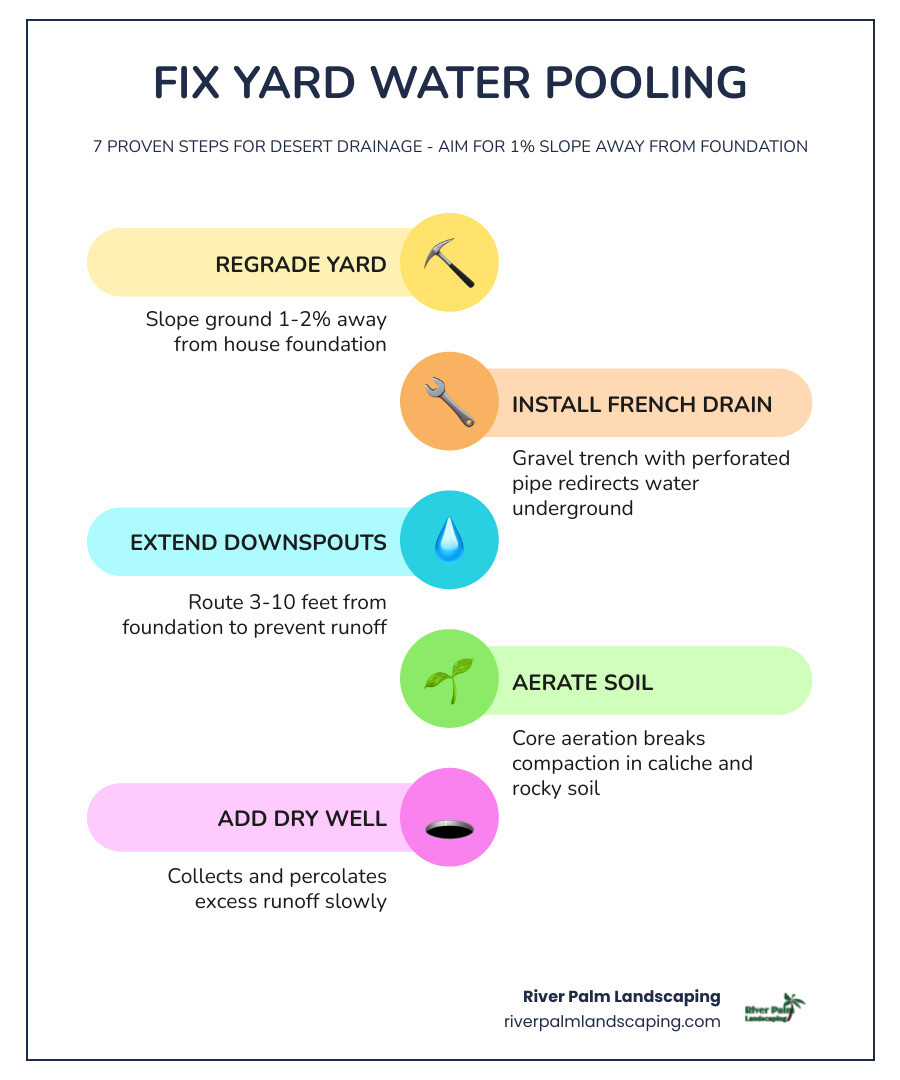
- Regrading the terrain to ensure water flows away from the foundation
- Installing subsurface French drains to redirect runoff
- Extending downspouts to move roof water further from the home
- Professional soil aeration to improve natural absorption
- Installing dry wells or soakaways for high-volume management
- Constructing engineered swales or dry creek beds
- Strategic planting of moisture-tolerant desert natives like Lantana
Standing water that persists after a storm indicates a drainage failure that requires expert assessment. In the desert, compacted layers and rocky soil prevent natural percolation, making professional intervention necessary to prevent soil erosion and foundation damage. Left unaddressed, pooling water can damage landscaping, attract pests, and impact the home’s foundation. The right professional drainage solution can solve these problems permanently.
Identifying the Root Causes of Standing Water
When a homeowner in Lake Havasu City or Golden Shores notices water collecting on their patio or lawn, it often reveals underlying yard drainage problems: what causes them and how to fix them. Understanding how to fix water pooling in yard issues begins with identifying the root cause, which in our desert climate is rarely as simple as excessive rainfall. In our specific residential landscaping environment, the issues are often structural.
One of the primary culprits is improper grading. During initial construction, many lots were leveled for the house pad but not properly sloped for the surrounding yard. This leads to water flowing toward the foundation rather than away from it. Furthermore, the Mojave Desert features caliche, a natural, cement-like layer that acts as a barrier to water penetration. When combined with soil compaction, this creates persistent pooling.
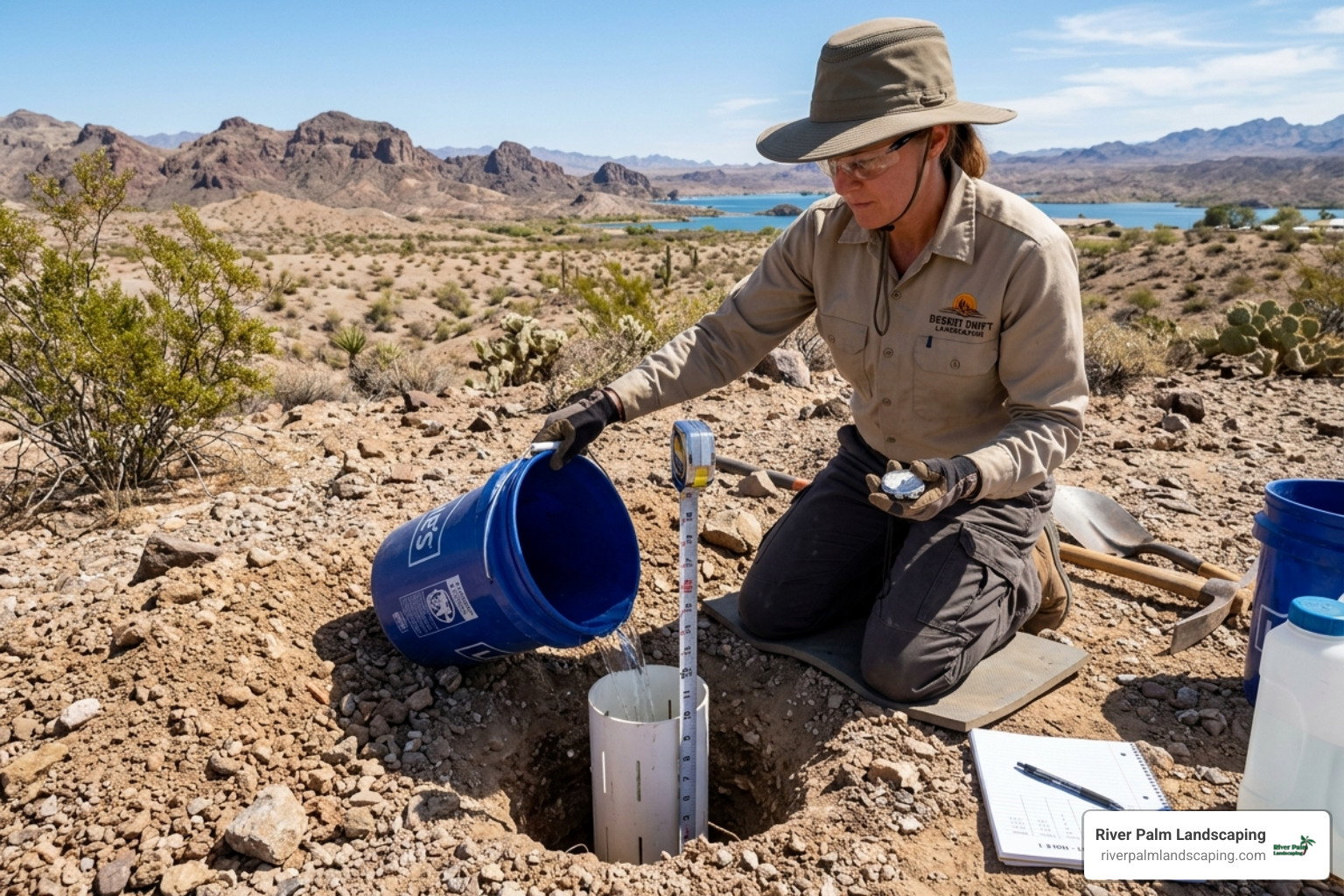
Professional assessment of soil compaction
Soil compaction significantly reduces permeability, causing water to sit on the surface. Professionals use specialized diagnostic tests to determine the absorption rate of the soil. If the rate is insufficient, it indicates a significant compaction or clay issue. To address this, core aeration is often utilized to create channels for water to reach deeper soil layers. In some cases, incorporating organic matter or soil conditioners can help improve the overall structure and absorption capacity of the ground.
Recognizing signs of drainage failure
Ignoring persistent moisture can lead to several property issues. Beyond visible puddles, red flags include foundation cracks caused by soil expansion, increased pest activity in stagnant areas, and the decline of desert plants that cannot tolerate saturated roots. In homes with lower levels, moisture can also migrate through walls, leading to long-term structural concerns.
Professional Solutions for how to fix water pooling in yard
When standard aeration is insufficient, engineered systems provide a more robust solution. These systems are designed to move water from vulnerable areas near the home to safe dissipation points.
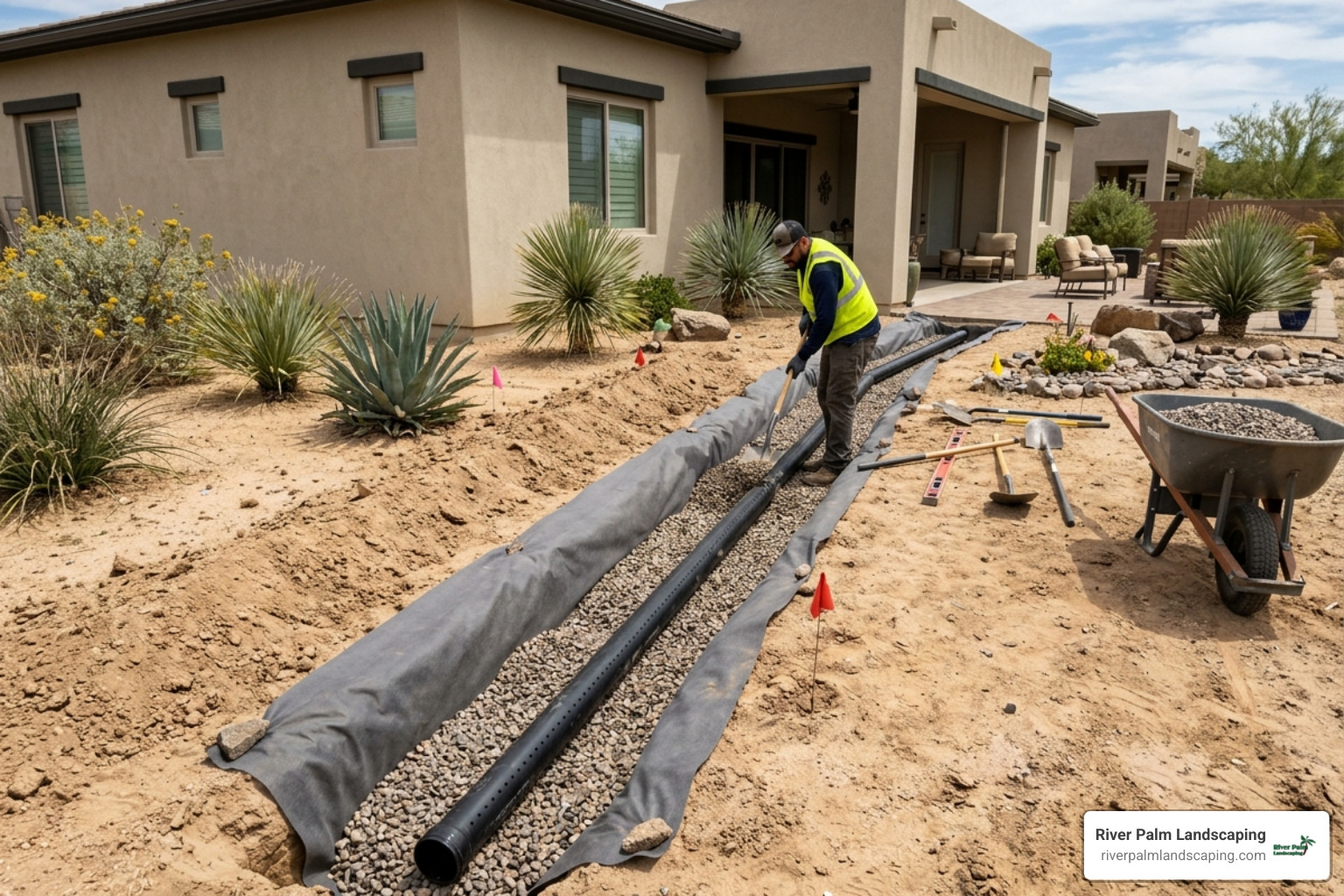
One of the most reliable methods is the French drain. This involves a professionally sloped trench lined with geotextile fabric and filled with perforated pipe and clean gravel. The fabric is essential for preventing desert silt from obstructing the system. This approach is a standard component of professional landscape design. For surface-level water on hardscapes, catch basins and channel drains are effective. Understanding how to fix water pooling in yard issues involves utilizing these professional subsurface and surface-level tools to handle different types of runoff as described in how to remove standing water from your yard.
Engineered swales and dry creek beds
For a solution that integrates with desert landscaping, engineered swales or dry creek beds are excellent options. A swale is a wide, shallow channel designed to direct flow. When lined with river rock and accented with decorative boulders, it becomes a functional dry creek bed that manages runoff while enhancing the landscape. These features are highly effective for erosion control, slowing water down and directing it safely toward a designated drainage area.
Subsurface dry wells and soakaways
In areas without a natural exit point for water, a dry well or soakaway may be required. This is a high-capacity collection system buried underground. During heavy storms, the system acts as a temporary reservoir, allowing water to slowly percolate into the deeper soil layers over time, protecting the root zones of surrounding vegetation.
Managing Runoff and Protecting Your Foundation
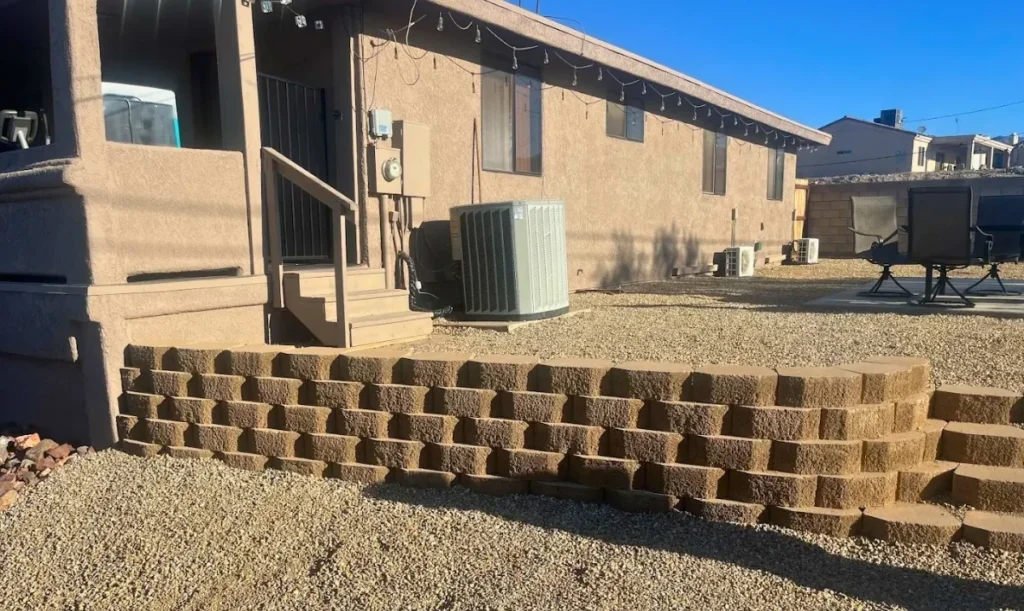
A home’s roof can generate significant runoff during a storm, which must be managed to protect the foundation. Utilizing everything you need to know about erosion control retaining walls is a key strategy for managing these flows. For properties on sloped lots in Parker or Lake Havasu, erosion control retaining walls are often necessary to stabilize the soil and prevent erosion.
Other critical protection steps include:
- Gutter extensions to discharge water away from the foundation
- Splash blocks to dissipate the force of falling water
- Permeable pavers for patios to allow for natural infiltration
Strategic grading for long-term stability
Professional regrading is a permanent solution for how to fix water pooling in yard issues. The goal is to establish a consistent slope away from the home. This ensures that gravity works to keep the foundation dry and the soil stabilized even during heavy rainfall.
Utilizing rain gardens and desert-hardy plants
Nature can also assist in water management. A rain garden is a shallow area planted with species that can handle varying moisture levels. In our region, plants like Lantana and the Totem Pole cactus are effective choices. These plants help with natural filtration and absorption, as their root systems help maintain soil porosity and allow water to penetrate deeper into the ground.
Desert-Specific Drainage and Irrigation Adjustments
In Lake Havasu City, drainage issues can also stem from irrigation management. Overwatering is a common cause of saturated soil in the desert. If a wet spot persists during dry weather, it may indicate a need for fixing your broken desert irrigation system for good. Regular efficient irrigation desert gardens lake havasu inspections are essential to prevent man-made drainage problems.
Addressing how to fix water pooling in yard concerns with smart irrigation
Smart irrigation systems serve as a drainage prevention tool. By using controllers that adjust based on weather data, homeowners can prevent soil over-saturation.
- Timer calibration to avoid watering during rain events
- Transitioning to drip emitters to reduce surface runoff
- Regular system checks to identify leaks or valve failures
Professional maintenance of the landscape ensures that mulch layers are managed correctly and soil amendments are applied to maintain proper absorption levels without the need for constant manual intervention.
Frequently Asked Questions about Yard Drainage
How long is it normal for water to pool after a storm?
In a desert environment, water should dissipate relatively quickly. If standing water remains long after a storm has passed, it indicates a drainage issue that requires professional evaluation.
Can I install a French drain myself in rocky soil?
While the concept of a French drain is straightforward, installation in rocky desert soil is complex. Digging through caliche often requires heavy machinery, and achieving the precise slope necessary for effective drainage is difficult without professional equipment. An incorrectly installed drain can lead to stagnant water issues.
Does artificial turf improve or worsen yard drainage?
When installed by professionals, artificial turf can improve drainage. A proper installation includes a base of compacted drain rock and decomposed granite, which allows water to pass through the surface and into the ground more efficiently than compacted natural soil.
Conclusion
Solving how to fix water pooling in yard issues requires an understanding of Lake Havasu’s unique geology. From managing caliche to engineering proper slopes, these tasks are essential investments in a property’s longevity.
River Palm Landscaping has been a licensed contractor in Lake Havasu City since 2003, specializing in durable outdoor spaces built for extreme heat and rocky soil. Whether you need a French drain system, a dry creek bed, or erosion control retaining walls, our team focuses on functional designs that protect your home. Professional drainage solutions are the key to a dry and stable desert home.
Ready to address your drainage concerns? Contact a local expert today to evaluate your property’s unique needs.