What Is an Erosion Control Retaining Wall and Do You Need One?

An erosion control retaining wall is a structure built to hold back soil, redirect water runoff, and protect your landscape from the gradual — and sometimes rapid — loss of ground. If you have a sloped yard, crumbling edges, or soil that washes away after rain, a retaining wall is likely the most effective long-term solution.
Quick answer: Here’s what you need to know
- What it does: Holds soil in place on sloped or uneven terrain, preventing it from washing or shifting downhill
- Who needs one: Homeowners with sloped yards, eroding garden beds, exposed roots, or runoff problems
- Common materials: Segmental concrete block, natural stone, gabion baskets, and gravity wall systems
- DIY vs. professional: Small walls under 3 feet may be manageable for DIYers; taller walls typically need professional installation and local permits
- Lifespan: A well-built wall can last anywhere from 25 to 100 years with proper maintenance
- Cost range: Projects vary widely based on materials, wall height, drainage needs, and site conditions
Soil erosion is one of the most common — and most overlooked — problems in desert landscapes. In Lake Havasu City and Golden Shores, monsoon rains and hard-packed soil create the perfect conditions for runoff to carve away your yard, undermine structures, and leave behind an uneven, unusable mess.
Retaining walls don’t just stop erosion. They also flatten usable space, improve drainage control, and give your property a clean, structured look that holds up in the desert climate.
This guide walks you through everything a Lake Havasu homeowner needs to know — from wall types and materials to costs, drainage, and when to call a professional.
How an Erosion Control Retaining Wall Protects Your Landscape
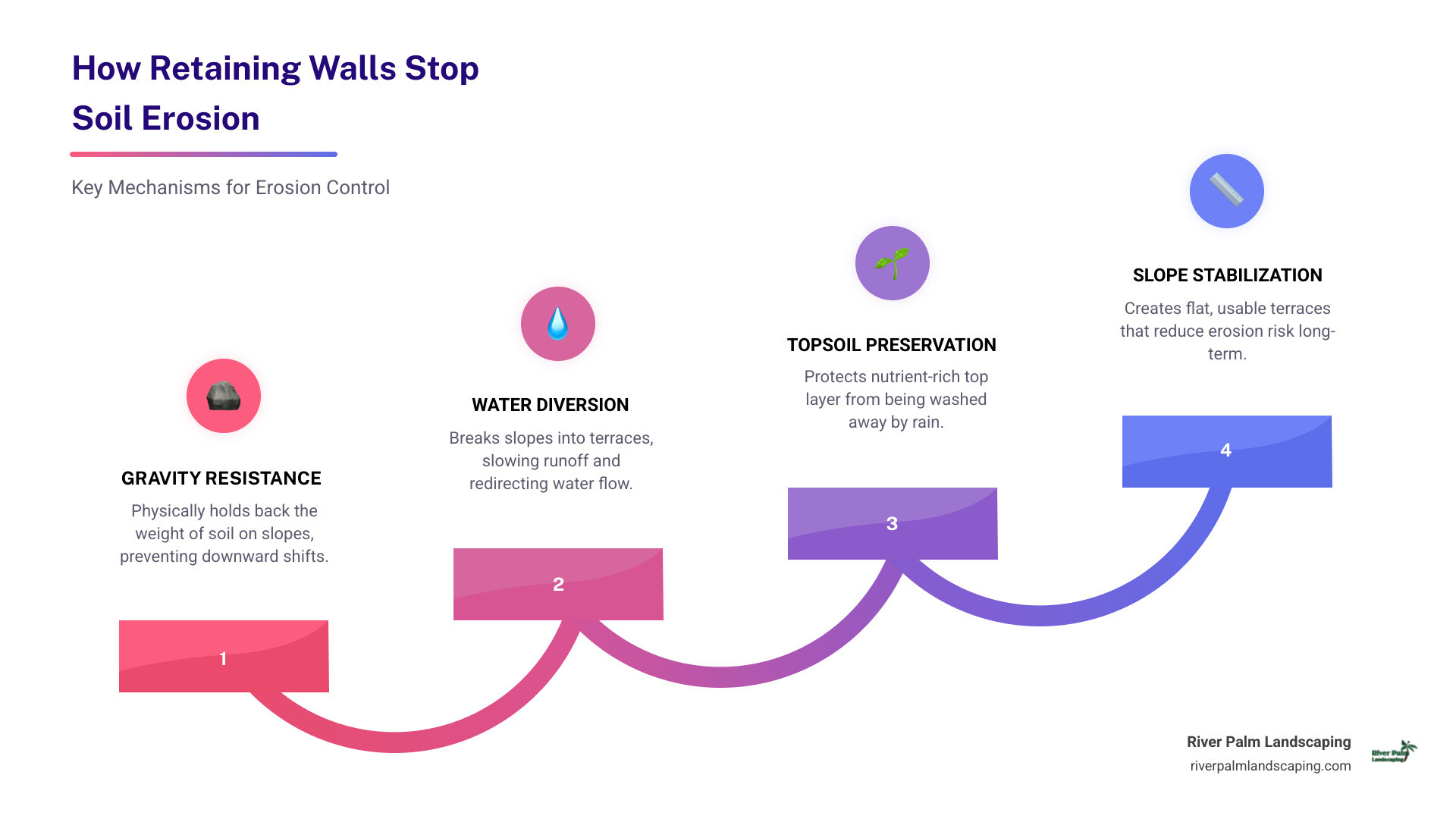
At its core, an erosion control retaining wall acts as a barrier that holds soil in place and slows runoff. In our local Arizona environment, the soil isn’t always the soft, loamy dirt you see on TV; it’s often a mix of rocky fill and hard caliche. When heavy rains hit, the water doesn’t soak in quickly. Instead, it gains speed as it moves downhill, taking your topsoil and decorative rock with it.
A retaining wall provides gravity resistance, physically holding the weight of the earth in place so it cannot shift downward. By breaking up a steep slope into flat “steps” or terraces, the wall also assists in water diversion. Instead of water rushing down a single long hill, it is forced to slow down or follow a designated path, which significantly reduces its power to wash away soil.
This process is vital for topsoil preservation. Even in desert landscaping, the upper layer of soil and decorative rock is what keeps your yard looking manicured. Without a wall, you might find yourself constantly replacing expensive “rip rap” or gravel that has migrated to the bottom of the hill or into the street. These structures are essential for protecting shorelines and embankments from the persistent forces of nature. For more detailed insights into how these systems function in our local climate, you can explore more about erosion control retaining walls.
Common Signs You Need a Retaining Wall for Erosion Control
How do you know if your yard is actually eroding or if it’s just “settling”? Here are the red flags that suggest you need a structural intervention:
- Exposed Tree Roots: If the roots of your trees or large shrubs are becoming visible where they used to be buried, the soil is literally leaving the premises.
- Sediment Gullies: Small “rivers” or trenches carved into your dirt or rock after a rainstorm are a clear sign that water is moving too fast and taking the landscape with it.
- Foundation Puddles: If water pools against your home’s foundation instead of draining away, the slope of your yard may have shifted due to erosion, creating a risk for structural damage.
- Downhill Soil Creeping: If you notice your fence line is leaning or that soil is piling up against the bottom of a slope, gravity is slowly winning the battle.
Benefits of Professional Erosion Control
While the primary goal is stopping dirt from moving, the secondary benefits are what turn a “fix” into an “upgrade.”
- Increased Usability: A steep, eroding hill is wasted space. A retaining wall can turn that slope into flat, usable tiers for garden beds, patios, or artificial turf.
- Yard Leveling: Leveling a yard makes it safer for foot traffic and easier to maintain. No more struggling to mow or walk on a 30-degree incline.
- Moisture Management: By controlling where water goes, you protect your plants from being “drowned” in low spots and prevent your foundation from absorbing excess moisture.
- Structural Protection: A well-placed wall protects other hardscapes—like your driveway, pool deck, or patio—from being undermined by shifting earth.
Residential Wall Types and Material Selection
Choosing the right material is a balance of aesthetics, budget, and the specific demands of your property. In Lake Havasu City, materials must be able to withstand intense UV rays and the expansion/contraction of rocky soil.
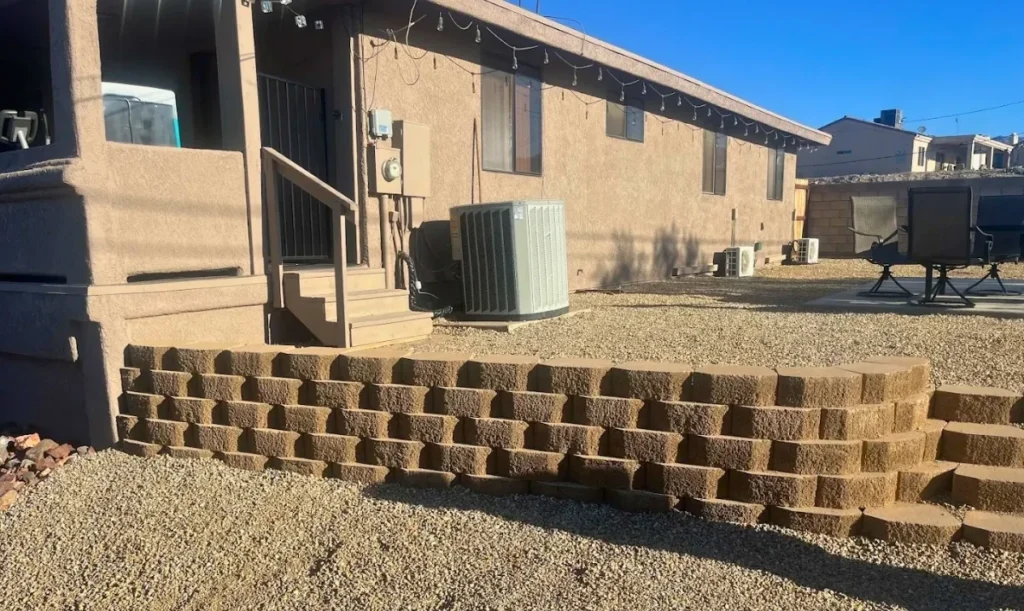
- Segmental Block Walls: These are the “Lego blocks” of the landscaping world. They are made of pre-cast concrete and are designed to interlock. They are incredibly popular because they don’t require mortar and allow for slight movement without cracking.
- Natural Stone Gravity Walls: These rely on the sheer weight of heavy stones to hold back the earth. They offer a timeless, high-end look that blends perfectly with the Arizona desert.
- Interlocking Concrete: Similar to segmental blocks but often featuring different textures and colors, these are engineered for durability and ease of installation.
- Gabion Baskets: These are wire cages filled with rock. They are excellent for erosion control because they are highly permeable—water flows right through them, but the soil stays put. They are often used in conjunction with rip rap to stabilize larger areas.
Choosing the Right Erosion Control Retaining Wall for Your Soil
Our local “soil” is rarely just dirt. We often deal with rocky terrain and desert caliche (a natural cement-like layer of calcium carbonate). These conditions require specific considerations:
- Caliche Challenges: If you have a thick layer of caliche, digging a traditional trench for a wall base can be difficult. It may require heavy machinery or a specialized base design.
- Slope Gradient: The steeper the hill, the more pressure the wall has to handle. For very steep slopes, a tiered system (multiple shorter walls) is often more effective and safer than one massive wall.
- Material Compatibility: Using high-quality retaining wall pavers ensures that the blocks won’t crumble or fade under the desert sun.
Innovative and Eco-Friendly Wall Solutions
Modern technology has introduced “green” ways to hold back the earth. Vegetated faces use specialized mats or blocks that allow plants to grow through the wall. This creates a “living wall” that looks natural and helps cool the immediate area.
Some modern systems allow vegetation to grow through reinforced wall structures, creating a “living wall” that blends into the landscape while stabilizing soil. These are excellent for homeowners who want a softer look than traditional concrete.
Planning Your Erosion Control Retaining Wall Project
Before the first block is laid, a significant amount of planning must happen. A wall is only as strong as its foundation and the plan behind it.
- Site Assessment: This involves checking the soil type, measuring the slope, and identifying where water currently flows during a storm.
- Property Lines: It sounds obvious, but you must ensure the wall (and its underground base) is entirely on your property.
- Utility Marking: In Arizona, calling 811 to mark underground power, water, and gas lines is a mandatory first step.
Factors Influencing Installation Costs
When budgeting for your project, keep in mind that the “visible” part of the wall is only a fraction of the cost. Several factors will influence the final investment:
- Wall Height: Taller walls require more materials, deeper foundations, and often professional engineering.
- Material Choice: Prices vary significantly between materials. For instance, basic concrete block or modular block systems may cost less than natural stone installations.
- Site Accessibility: Can a skid-steer or excavator get to the backyard? If materials have to be moved by hand or through a narrow gate, labor costs will increase.
- Drainage Requirements: Adding perforated pipes, gravel backfill, and weep holes is an added cost, but it is non-negotiable for a wall that lasts.
According to HomeAdvisor, the average cost of a retaining wall in the U.S. ranges from $3,000 to $9,000, but local factors in Lake Havasu—like rocky soil—can shift these numbers.
Understanding Building Codes and Safety
In many parts of Arizona, including Lake Havasu City, there are specific height thresholds for retaining walls. Generally, walls over 3 or 4 feet tall (including the buried portion) may require a building permit and professional engineering plans.
These codes exist for your safety. A collapsing wall isn’t just a landscaping fail; it’s a major safety hazard that can damage your home or injure someone. Professional contractors stay up-to-date on these local regulations to ensure your project is fully compliant and built to last.
The Importance of Proper Drainage and Construction
If there is one thing that destroys retaining walls more than anything else, it’s hydrostatic pressure. This is the pressure exerted by water building up in the soil behind the wall. When it rains, that soil gets heavy. If the water has nowhere to go, it will eventually push the wall over.
To prevent this, a professional installation includes:
- Granular Backfill: Usually a layer of crushed stone or gravel directly behind the wall to allow water to filter down.
- Perforated Piping: A “French drain” at the base of the wall to carry water away to a safe exit point.
- Weep Holes: Small gaps in the wall face that allow trapped water to escape.
| Wall Height | Typical Drainage Needs |
|---|---|
| Under 2 Feet | Gravel backfill usually suffices for well-draining soil. |
| 2 to 4 Feet | Gravel backfill + perforated drain pipe recommended. |
| Over 4 Feet | Engineered drainage system + geogrid reinforcement + professional oversight. |
Why Professional Installation Outperforms DIY
It’s tempting to think of a retaining wall as a weekend DIY project. However, the technical details are where most DIY walls fail.
- Leveling Pads: A wall is only as level as its base. Professionals use compacted gravel and precise leveling techniques to ensure the first row of blocks is perfectly flat.
- Compaction Standards: Each layer of soil and gravel must be compacted with heavy machinery to prevent future settling.
- Geogrid Reinforcement: For larger walls, professionals use a high-strength mesh called geogrid that extends back into the soil, essentially anchoring the wall to the earth it’s holding back.
Maintaining Your Wall for Longevity
A properly built retaining wall can last for decades with proper drainage and maintenance, but it does require some basic “check-ups.”
- Visual Inspections: After a major storm, look for any tilting, cracking, or “bulging” in the wall.
- Clearing Debris: Ensure that weep holes and drain pipe exits aren’t clogged with dirt, leaves, or desert debris.
- Monitoring Runoff: If you see water pouring over the top of the wall rather than through the drainage system, you may need to adjust your yard’s grading.
Frequently Asked Questions About Erosion Control
Can I build a retaining wall as a DIY project?
Small decorative borders or garden walls under three feet are often manageable for experienced DIYers. However, once a wall reaches a height where it is holding back significant weight, or if it is located near a home’s foundation, professional expertise is required. This ensures the wall meets safety codes and won’t fail during the next monsoon season.
How much does a typical retaining wall cost?
While national averages suggest homeowners spend between $3,000 and $9,000, local costs in Lake Havasu are highly dependent on the site. Materials like vinyl can be as low as $10 per linear foot, while natural stone or high-end masonry can reach $200 per linear foot. It’s best to view a retaining wall as a long-term investment in your property’s usability and protection.
How does a wall enhance property aesthetics?
Beyond the technical benefits, these structures are a major design asset. They allow you to create tiered garden beds full of desert-hardy plants, define different “rooms” in your outdoor living space, and replace messy, eroding slopes with clean, architectural lines. They turn a “problem area” into a focal point.
Conclusion
An erosion control retaining wall is more than just a pile of rocks or blocks; it is a vital piece of infrastructure for any sloped property in Lake Havasu City or Golden Shores. By managing water runoff and holding soil in place, these walls protect your investment and make your yard more enjoyable.
At River Palm Landscaping, we understand the unique challenges of our desert environment. From navigating hard caliche to designing drainage systems that handle Arizona monsoons, we specialize in durable, desert-appropriate hardscaping. Whether you need a simple garden border or a tiered system to stabilize a residential slope, we are here to help.
Start your project with River Palm Landscaping today and let us help you build a landscape that stands the test of time.