Your Yard Is Working Against You — Here’s How to Fix It
Many homeowners in the Colorado River Valley find their outdoor spaces failing after just one season due to poor drainage and extreme heat. Caliche rock layers stop water flow, while intense sun exposure quickly ruins standard installations. Finding a professional full service landscape company near me is essential to design and build a yard that can actually withstand this demanding desert environment.
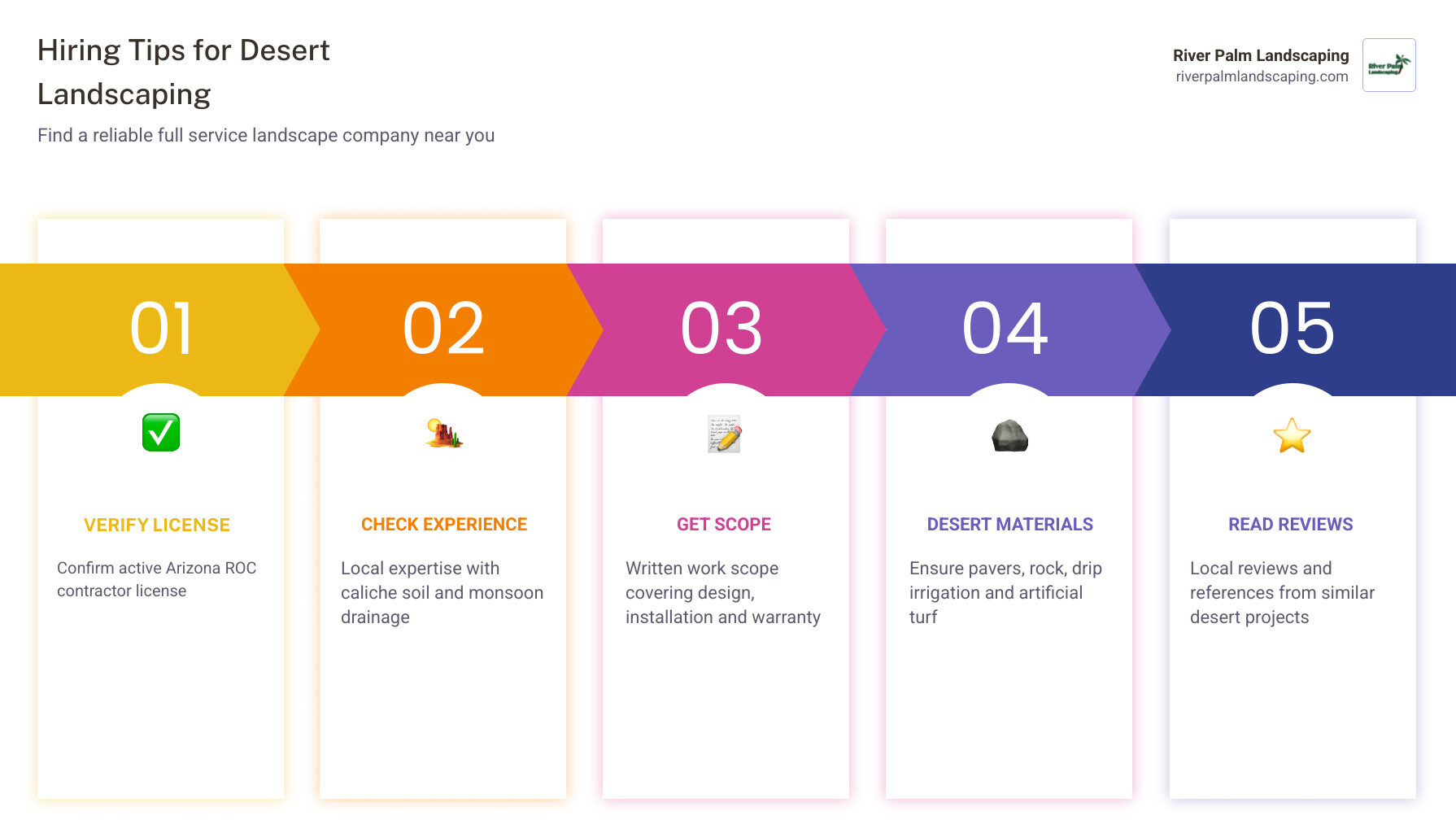
Here is what to look for when selecting a contractor:
- Verify they hold an active Arizona ROC contractor license
- Confirm they have local experience with caliche soil, monsoon drainage, and extreme heat
- Ask for a written scope of work covering design, installation, and warranty
- Check that they offer desert-appropriate materials — pavers, rock, drip irrigation, and artificial turf
- Read local reviews and ask for references from similar desert projects
Many Lake Havasu homeowners run into the same problem: a yard that looked fine on paper but failed within a season. Caliche rock just inches below the surface stops drainage cold. Monsoon runoff has nowhere to go. A retaining wall shifts because the sub-base wasn’t engineered for expansive desert soil. These aren’t freak accidents — they’re predictable outcomes when a landscape isn’t built for this specific environment.
The Colorado River Valley is one of the most demanding climates in North America for outdoor construction. Soil conditions, reflected heat off hardscapes, and intense western sun exposure punish materials and installations that would hold up fine anywhere else. Getting this right requires more than a crew with shovels — it takes a contractor who understands how this desert actually behaves.
That’s what separates a true full-service provider from a general handyman. This guide walks you through exactly what to expect, what to ask, and what red flags to avoid before signing anything.
What to Expect from a Professional Landscaping Partner
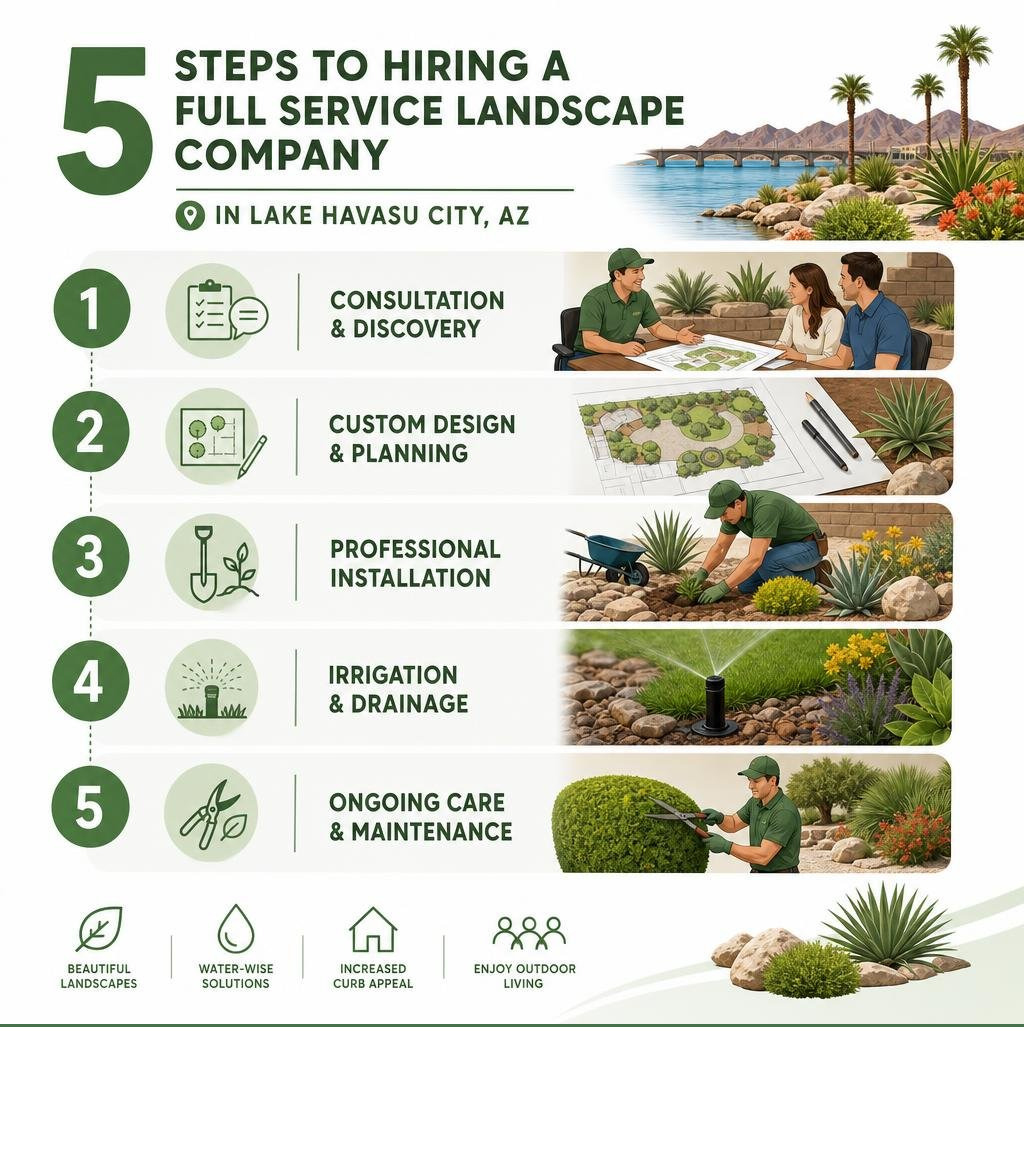
Hiring a full-service provider means partnering with a team that manages your project from the initial dirt excavation to the final lighting adjustments. In our desert region, this process is heavily focused on civil and structural engineering. The ground underneath your feet is not simple dirt; it is a complex, hard-packed mixture that requires heavy machinery and specialized knowledge to navigate.
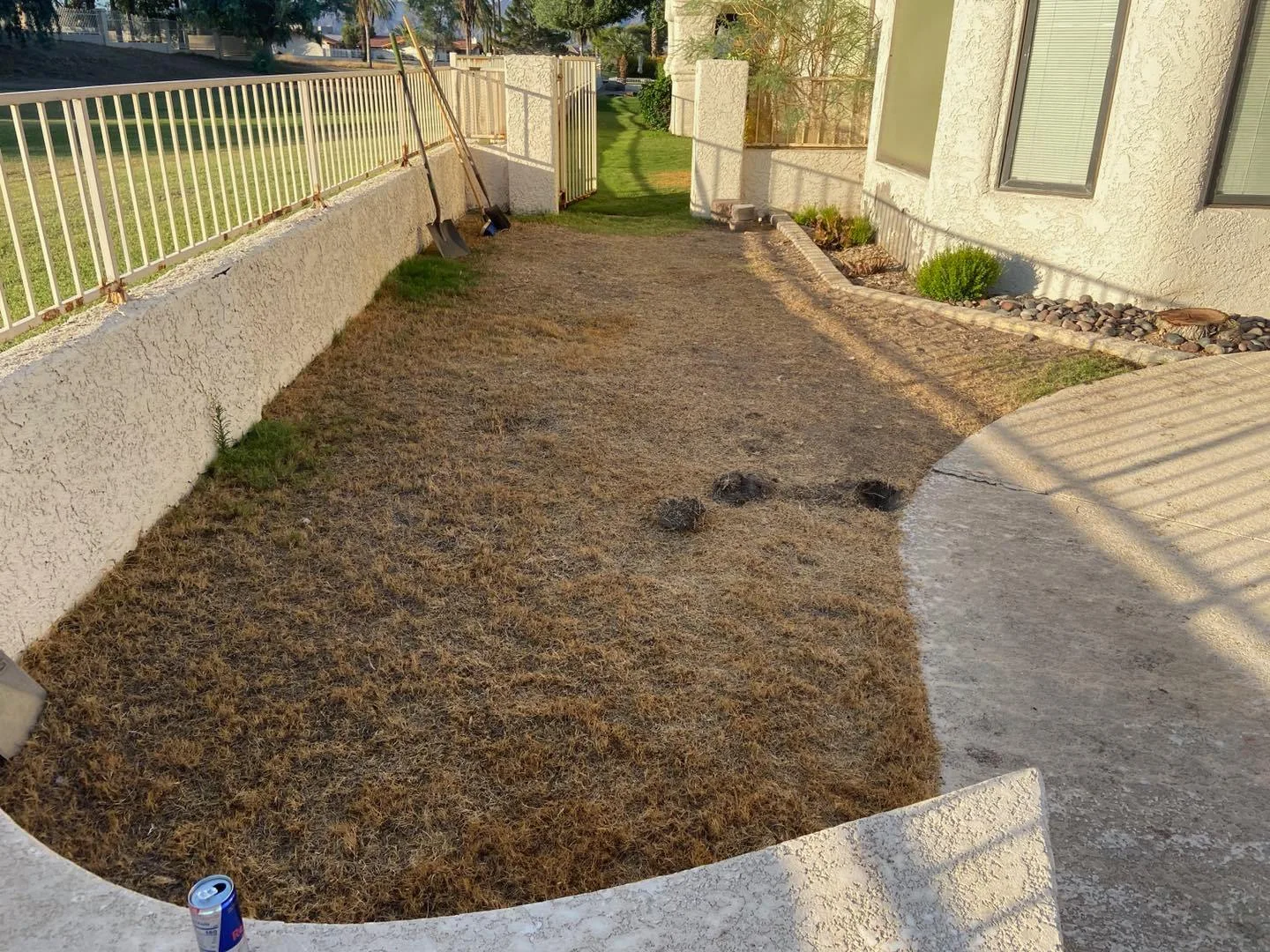
When homeowners attempt to tackle these projects themselves or hire unlicensed day laborers, structural failures are common. Without proper compaction, sub-base preparation, and drainage planning, hardscapes shift and plants wither. A professional crew brings the heavy excavators, jackhammers, and engineering standards required to build an outdoor space that lasts.
Design and Build Services for Extreme Heat
Designing an outdoor space in the Colorado River Valley requires a deep understanding of thermal mass and sun angles. During the summer, ambient temperatures routinely exceed 115 degrees Fahrenheit, and reflected heat from unshaded concrete can push surface temperatures past 140 degrees. Professional designers plan layout features based on shade orientation, ensuring that seating areas are protected from the harsh western sun exposure during peak afternoon hours.
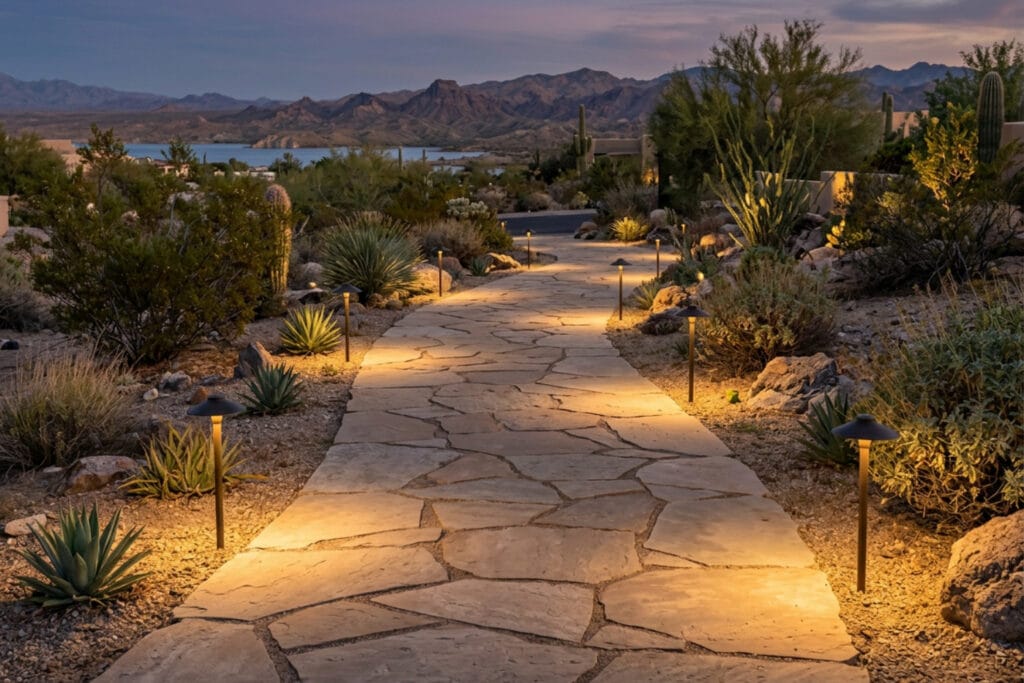
Plant selection must be equally strategic. While tropical-inspired accents can add a resort-like feel to a pool deck, they must be selected and positioned carefully to survive the intense heat. Hardy, desert-adapted species like Lantana and the architectural Totem Pole cactus are excellent choices because they thrive in direct sunlight and require minimal water once established.
Every successful installation begins with a detailed, scaled plan. Utilizing a professional landscape design service allows homeowners to visualize the relationship between hardscape structures, shade elements, and plantings before any earth is moved.
Structural Hardscaping and Slope Stabilization
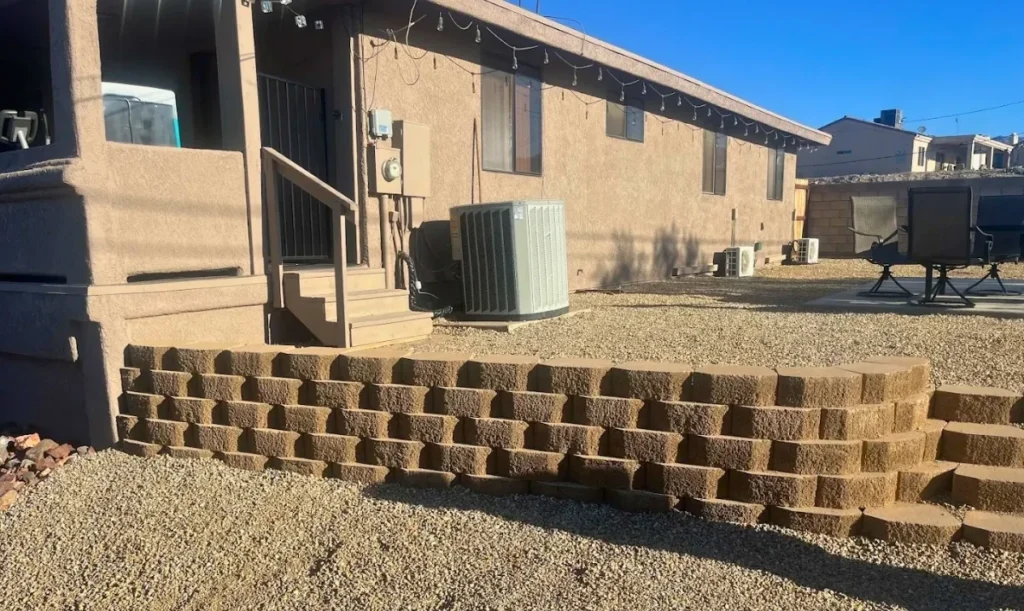
Hardscaping in our region is not merely decorative; it is often structural. Many properties in the area feature significant elevation changes that require robust slope stabilization. Retaining walls must be engineered to withstand both the weight of the soil behind them and the immense hydrostatic pressure that builds up during sudden monsoon downpours. Without proper weep holes, gravel backfill, and filter fabric, a retaining wall will bow and eventually fail.
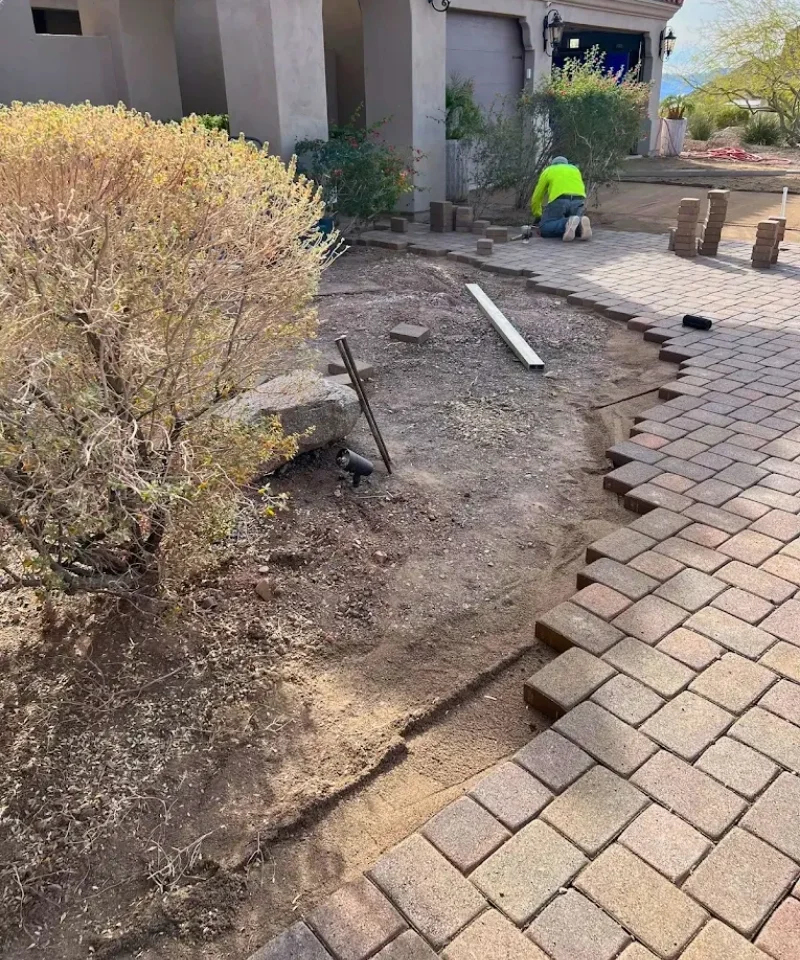
Paver installations also require meticulous engineering. Unlike poured concrete, which is highly prone to cracking due to thermal expansion and contraction in our extreme temperature swings, interlocking pavers can flex slightly with ground movement. However, a paver surface is only as stable as its sub-base. A professional contractor will excavate the native soil, install a crushed stone base, compact it to engineering standards, and place edge restraints to prevent lateral shifting over time.
The Realities of Desert Landscaping in the Colorado River Valley
To build a landscape that endures, a contractor must work with the desert, not against it. The combination of rocky soil, intense reflected heat, and limited water resources means that traditional landscaping methods do not apply here.
Every element of a modern desert yard must be chosen for its durability and efficiency. This is particularly true for residential landscaping projects, where homeowners want to maximize their outdoor living space without committing to endless maintenance or astronomical water bills.
Irrigation Engineering and Water Conservation
In a hyper-arid climate, water management is the most critical component of any landscape. Standard overhead sprinklers are highly inefficient here; high wind speeds and rapid evaporation rates mean that much of the water never reaches the plant roots. Instead, professional contractors design and install custom low-volume drip irrigation systems.
These systems utilize pressure-compensating emitters to deliver water directly to the root zone of each plant. Incorporating smart controllers that adjust watering schedules based on local weather data ensures compliance with water conservation guidelines while protecting your investment. For commercial landscaping properties, these smart systems are essential for managing operating costs and maintaining curb appeal across large acreage.
Selecting Materials for Desert Longevity
Material selection directly dictates how well your yard will age. Standard outdoor materials that perform well in cooler climates can degrade rapidly under the desert sun. For example, cheap plastics will warp and become brittle within a single season, while certain dark stone selections will absorb and radiate unbearable amounts of heat.
When planning your project, look for cooling materials and high-quality synthetic options:
- Artificial Turf: Modern turf products are engineered with heat-reducing technologies and UV stabilizers to prevent fading and melting.
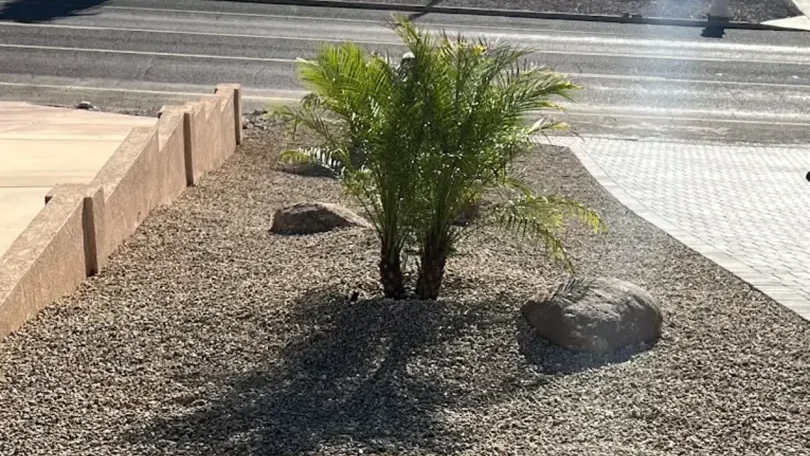
- Decorative Rock: Sourcing rock from reputable local landscape supply options ensures you receive durable, locally sourced granite and river rock that won’t discolor or break down under intense UV exposure.
- Low-Voltage Lighting: High-quality brass or copper fixtures resist corrosion and handle thermal expansion much better than aluminum or plastic alternatives.
How to Evaluate and Choose a Local Landscape Contractor
Finding a contractor is easy, but finding a qualified, licensed professional who understands the specific challenges of our region requires some diligence. Taking the time to properly vet local companies can save you thousands of dollars in repairs down the road.
Red Flags to Avoid When Hiring
The landscape industry has its share of unlicensed operators who offer low-ball estimates. While these prices may seem attractive, hiring an unlicensed handyman carries significant risks. In Arizona, any commercial or residential contracting work exceeding $1,000 in value requires a license from the Arizona Registrar of Contractors (ROC).
Before hiring, always check the contractor’s license status on the ROC database. Working with an unlicensed individual means you have no recourse through the state if the work is shoddy or incomplete. Furthermore, ensure the company carries active general liability and workers’ compensation insurance. If an uninsured worker is injured on your property, you could be held liable. For a detailed breakdown of what to look for, read our guide on how to choose a landscape contractor for a full yard remodel.
Additionally, be wary of contractors who offer generic, copy-paste designs that do not account for your property’s specific drainage patterns or soil conditions. Every yard in our area has unique grading requirements to handle monsoon runoff safely. For more tips on navigating this process, consult our article on how to choose an Arizona desert landscape contractor.
Questions to Ask a Potential Contractor
When interviewing potential contractors, ask targeted questions that test their local expertise:
- How do you handle caliche excavation? If they do not mention heavy machinery like jackhammers or excavators, they may not be prepared for the realities of our soil.
- How will you manage monsoon drainage on my property? They should be able to explain how they will grade the yard to direct water away from your home’s foundation and hard hardscapes.
- What kind of workmanship warranty do you offer? A reputable contractor should stand behind their installations with a written warranty of at least one to two years on hardscapes and irrigation.
To verify a company’s reputation and see how they handle customer relations, check local contractor reviews on Yelp to read feedback from actual local homeowners.
The Financial Reality: Costs and Timelines for Desert Landscape Construction
Every yard is unique, and landscape pricing varies significantly based on site conditions, material choices, and project complexity. In our region, excavation often represents a substantial portion of the initial budget. Breaking through tough caliche layers and grading rocky slopes requires specialized machinery and labor-intensive work.
To help plan your investment, it is helpful to look at how budgets are typically distributed across a comprehensive landscape remodel:
| Project Element | Typical Budget Allocation | Key Considerations |
|---|---|---|
| Demolition & Excavation | 15% – 25% | Caliche removal, grading, hauling old materials |
| Hardscaping & Retaining Walls | 40% – 50% | Pavers, block walls, steps, structural engineering |
| Irrigation & Utilities | 10% – 15% | Drip systems, smart controllers, low-voltage wiring |
| Softscaping & Decorative Rock | 15% – 20% | Desert-hardy plants, trees, decorative granite, turf |
By viewing your backyard remodel as a long-term investment in structural stability, usability, and curb appeal, you can make informed decisions about where to allocate your resources.
Frequently Asked Questions About Desert Landscaping
How long does a full yard remodel take in Lake Havasu City?
A typical residential landscape installation takes anywhere from two to six weeks once ground is broken. However, the total timeline depends heavily on the project’s complexity, the volume of caliche that must be excavated, and material lead times for custom pavers or specific stone selections.
Why is caliche soil such a major issue for landscape installations?
Caliche is a layer of soil in which the particles have been cemented together by calcium carbonate. It is essentially natural concrete. It restricts root growth, prevents water from draining, and cannot be dug by hand. Installing a landscape in caliche requires heavy excavators with hydraulic breakers to fracture the layer and create proper planting pockets and drainage pathways.
How do commercial properties benefit from desert-appropriate landscaping?
Commercial properties face unique challenges, including high water costs and strict municipal codes. Transitioning to a professionally designed desert landscape reduces water consumption, lowers maintenance costs, and ensures the property remains attractive and accessible year-round. To learn more about the business advantages of these installations, read how commercial landscaping improves your business.
Conclusion
Building a beautiful, enduring outdoor space in the desert requires a deep understanding of local soil, extreme heat, and proper engineering. Since 2003, River Palm Landscaping has provided homeowners and businesses in Lake Havasu City, Golden Shores, and Parker, AZ, with durable, high-quality outdoor installations designed specifically for our challenging climate.
Whether you need a complete yard remodel, structural retaining walls, efficient irrigation, or high-quality artificial turf, our team has the local experience and equipment to get the job done right. Ready to transform your property? Contact River Palm Landscaping today to explore our Lake Havasu City landscaping services and schedule your consultation.