Why professional landscape design matters in the Arizona desert
Landscape design is the process of planning and arranging outdoor spaces to be both functional and visually appealing — and in Lake Havasu City, getting it wrong is an expensive mistake.
Many homeowners here invest in a yard only to watch it fail within a season or two. Hardscapes crack from heat expansion. Soil erodes during monsoon rains. Plants die because they were never suited for extreme desert conditions. These aren’t just aesthetic problems — they’re costly ones.
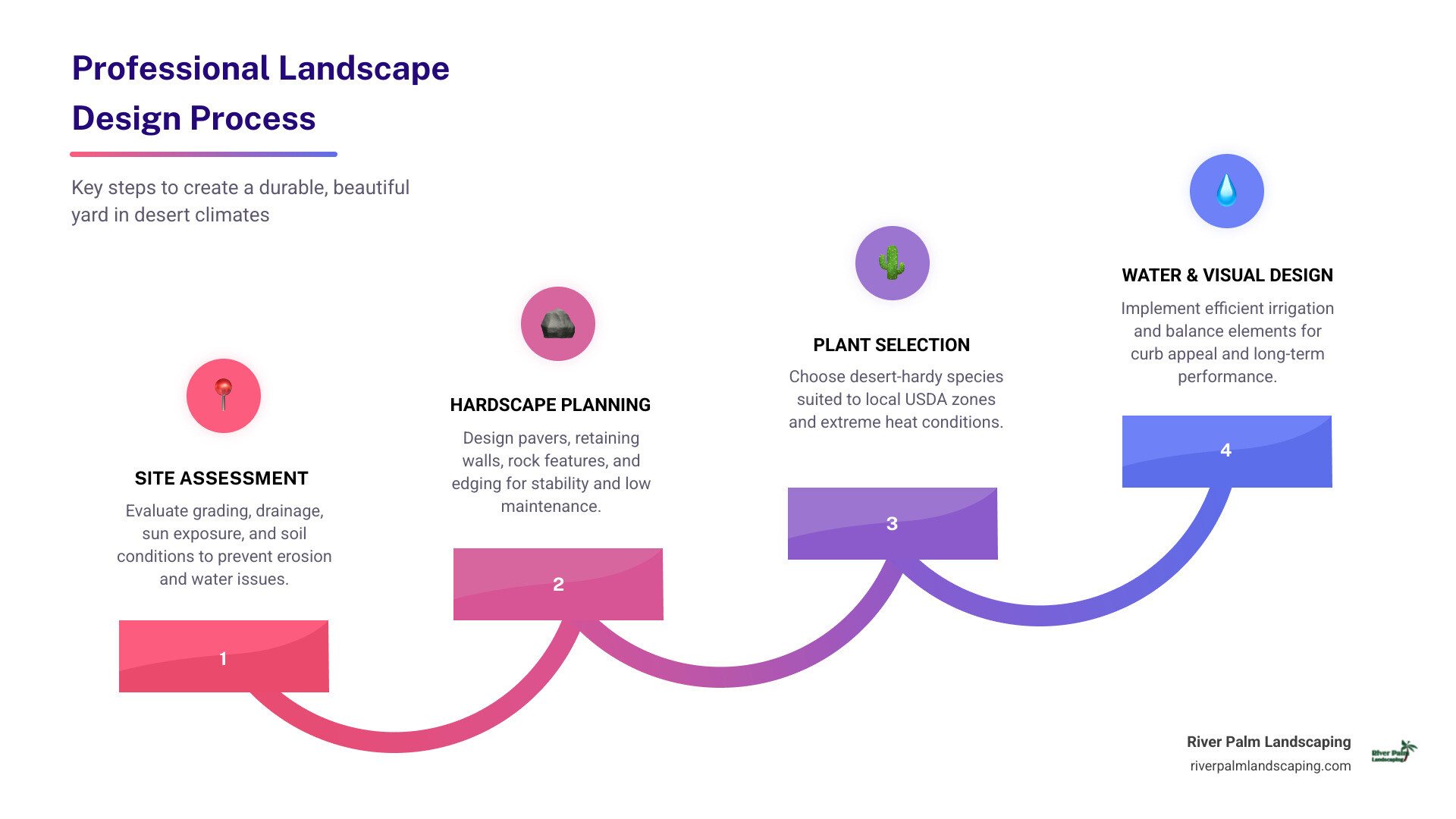
Here’s what professional landscape design covers at a glance:
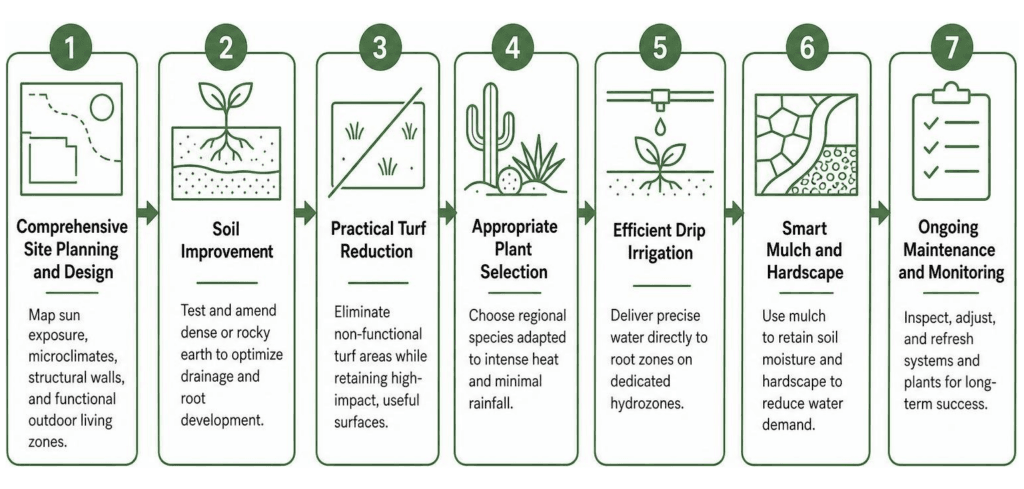
- Site assessment — grading, drainage, sun exposure, and soil conditions
- Hardscape planning — pavers, retaining walls, rock, and edging
- Plant selection — desert-hardy species matched to your USDA zone
- Water management — irrigation systems designed for low-water, high-heat environments
- Visual design — balance, proportion, focal points, and curb appeal
- Long-term planning — materials and plants that perform over years, not months
A basic landscape project can start around $2,600 for simpler work, while a full professionally drafted design plan typically ranges from $2,000 to $8,000 depending on site complexity and scope. Most homeowners spend roughly 10% of their home’s value on landscaping over time — so the decisions you make upfront have real financial consequences.
This guide walks you through everything you need to know to evaluate a professional landscape design project in Lake Havasu City, Golden Shores, or Parker, AZ — from site conditions and hardscape materials to plant selection and choosing the right contractor.
The fundamentals of professional landscape design
Professional landscape design is more than just picking out a few attractive rocks and cacti. It is a calculated discipline that bridges the gap between the architecture of the home and the natural environment. While landscape architecture often focuses on large-scale urban planning, residential design is about creating a “living room” without a ceiling.
To achieve a yard that feels “right,” professionals rely on several core principles:
- Proportion: This ensures that every element fits the scale of the space. A massive boulder might look majestic in a sprawling backyard in Golden Shores, but it would completely overwhelm a small courtyard in Lake Havasu City.
- Unity: A cohesive design uses repetition and a consistent theme to make the yard feel like a single, intentional space rather than a collection of random plants.
- Rhythm: By repeating certain colors, textures, or forms, a designer creates a visual “beat” that guides the eye naturally through the landscape.
- Balance: This can be symmetrical (identical on both sides) or asymmetrical (balanced by visual weight). For example, a large tree on one side of a driveway might be balanced by a group of smaller shrubs and a decorative rock feature on the other.
- Transition: Good design avoids abrupt changes. Using plants of varying heights to step down from a tall house wall to a flat patio creates a smooth visual flow.
- Focalization: Every yard needs a “star of the show.” Whether it’s a custom water feature, a specimen Totem Pole cactus, or a beautifully lit fire pit, focal points give the eye a place to rest.
According to the landscape design definition, the process must result in an aesthetically pleasing and functional outdoor space that considers ecological health and long-term stewardship.

Core elements of landscape design
When a contractor sits down to draft a landscape design, they are manipulating five primary elements:
- Color: In the desert, color isn’t just about flowers. It includes the deep greens of native shrubs, the silver hues of agave, and the rich ochres of decorative rock.
- Form: This refers to the shape of plants and structures. A rounded Lantana provides a soft contrast to the rigid, vertical lines of a privacy wall.
- Texture: Mixing coarse textures (like craggy boulders) with fine textures (like decomposed granite or delicate desert grasses) adds depth and interest.
- Line: Lines are created by walkways, garden bed edges, and even the shadows cast by a pergola. They control how people move through the space.
- Scale: This is the relationship between the size of an object and the space it occupies. In outdoor design, because there is no ceiling, elements can often be larger than they would be indoors to avoid looking “lost.”
Common mistakes in landscape design
Even with the best intentions, many landscape design projects fall flat because they ignore the technical realities of the Arizona climate.
- Poor Drainage: This is the most common failure. Without proper grading, the rare but intense desert rains can turn a backyard into a pond or wash away expensive rock mulch.
- Improper Plant Spacing: It is tempting to plant things close together for an “instant” look, but ignoring the mature size of a plant leads to overgrown walkways and stressed root systems.
- Ignoring Micro-Climates: The south side of a house in Lake Havasu City is significantly hotter than the north side. Placing heat-sensitive plants in full southern exposure is a recipe for failure.
- Neglecting Maintenance Needs: A design that looks great on day one but requires four hours of pruning a week is rarely sustainable for the average homeowner.
Site assessment and hardscape integration in arid climates
Before a single shovel hits the dirt, a professional contractor must perform a thorough site assessment. In Mohave County, this isn’t just about measuring the lot. It’s about understanding the “bones” of the property.
Grading and Drainage are the top priorities. Because our soil is often “caliche” (a hardened, clay-like layer) or extremely rocky, water doesn’t always soak in—it runs off. A professional residential landscaping plan includes topographical mapping to ensure water flows away from the home’s foundation and toward appropriate drainage areas or rain gardens.
Soil Reconnaissance is also vital. Rocky soil requires specific equipment for installation and may need amendments to ensure that even desert-hardy plants can establish a healthy root system.
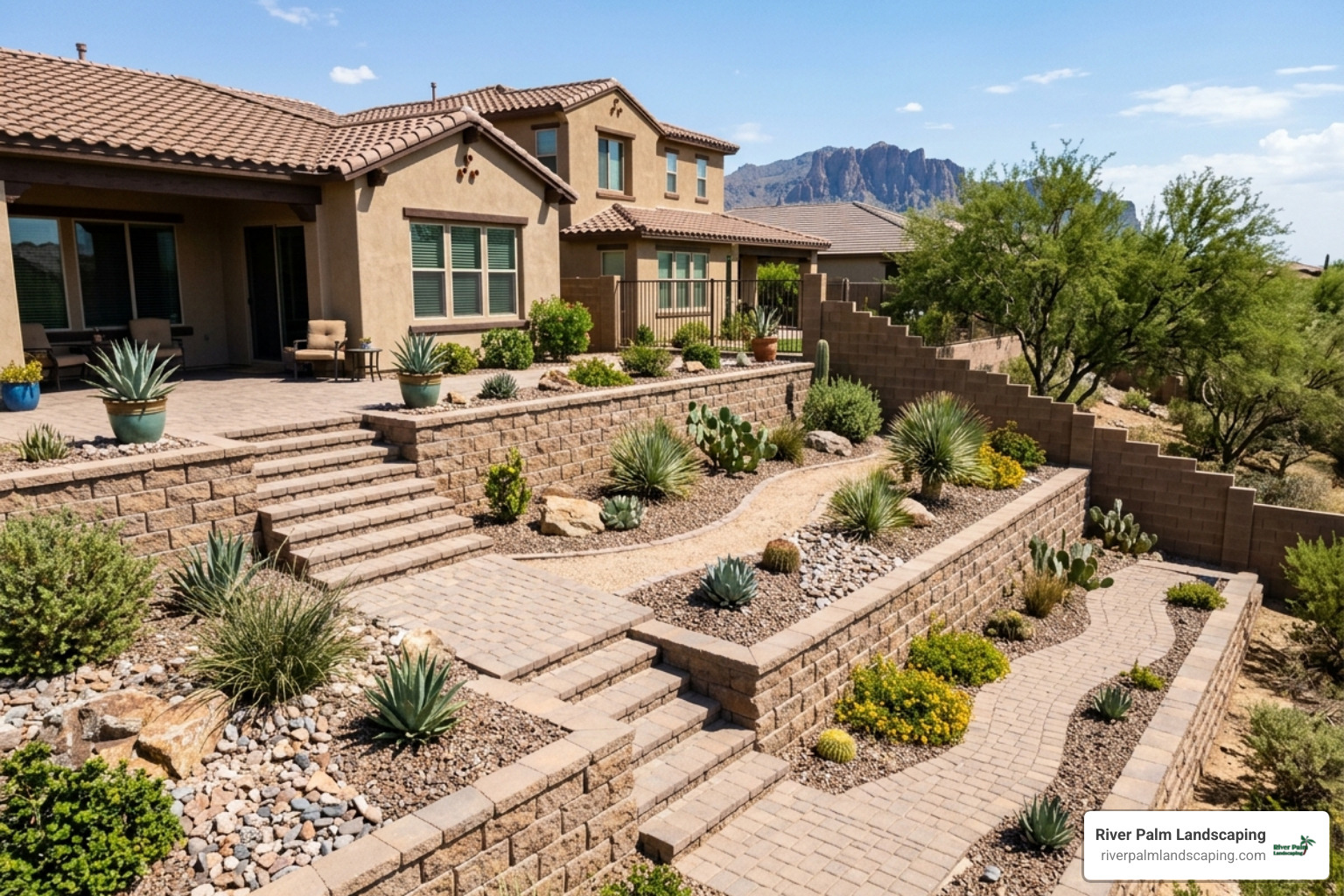
Durable hardscaping for Lake Havasu
In our region, hardscape is the foundation of the yard. It provides the structure that plants alone cannot.
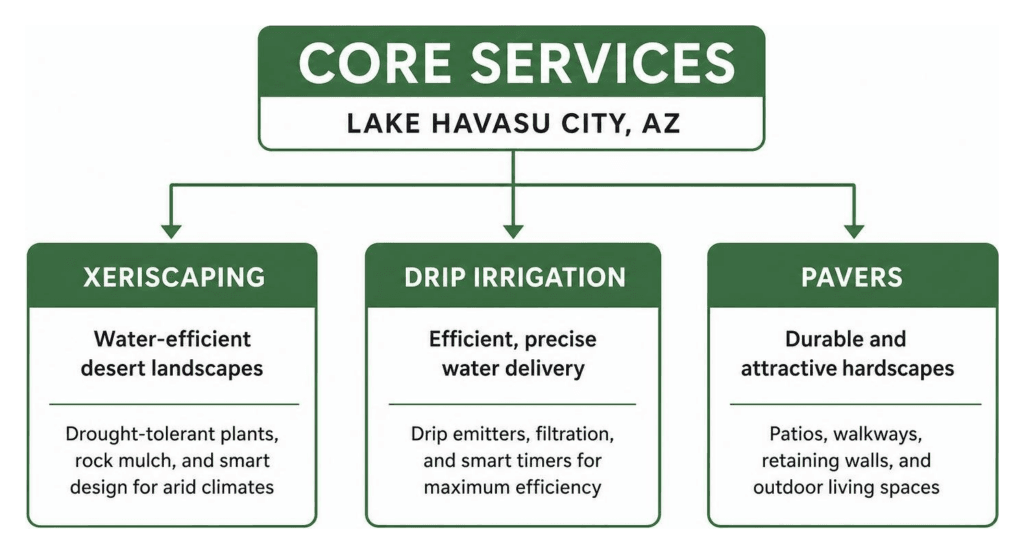
- Pavers: Unlike poured concrete, which frequently cracks under the intense Arizona sun and shifting desert soils, pavers are flexible. They can expand and contract without failing, and if one is damaged, it can be replaced individually.
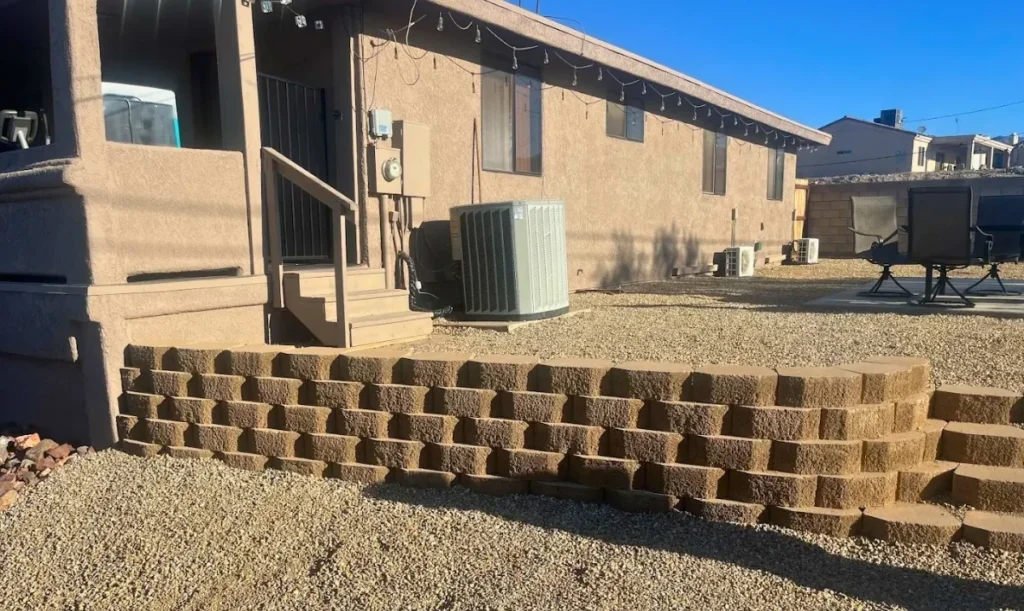
- Retaining Walls: For sloped properties in Lake Havasu City, retaining walls are essential for creating flat, usable “rooms” in the yard and preventing hillside erosion.
- Rock Installation: Decorative rock (or “top dressing”) is the desert’s version of mulch. It suppresses weeds, retains a small amount of soil moisture, and provides the primary color palette for the yard.
- Low-Voltage Lighting: Lighting extends the usability of the yard into the evening—the best time to be outside in the desert. It also highlights the architectural forms of cacti and provides safety along pathways.
Comparison: Rock Mulch vs. Artificial Turf
| Feature | Natural Rock Mulch | Artificial Turf |
|---|---|---|
| Heat Retention | High (cools at night) | Very High (can be hot to touch) |
| Maintenance | Minimal (occasional weeding) | Low (rinsing and brushing) |
| Water Usage | Zero | Minimal (for cleaning) |
| Durability | Permanent | 10–15 years |
| Best Use | General coverage, slopes | Play areas, pet zones |
Balancing hardscape and softscape
A yard that is 100% rock and pavers feels like a parking lot. A yard that is 100% plants feels like an overgrown thicket. The key is balance.
Professionals use hardscape to define functional zones—like a dining area or a fire pit—and use softscape (plants) to soften the edges. This balance creates “visual weight.” A heavy stone wall is balanced by the light, airy movement of desert grasses. When you how to choose landscape contractor full yard remodel, look for someone who understands how to marry these two worlds to create a sustainable, livable environment.
Popular styles and plant selection for Arizona living
While we live in a desert, your yard doesn’t have to look like a barren wasteland. Modern landscape design offers several distinct styles tailored for the Southwest.
- Modern Desert: Focuses on clean lines, geometric paver patterns, and dramatic specimen plants like the Totem Pole cactus.
- Native/Pollinator-Friendly: Uses plants like Desert Willow and Milkweed to support local birds, butterflies, and bees while requiring almost zero supplemental water once established.
- Tropical-Inspired: Yes, you can have a “lush” look! By using desert-hardy plants with large leaves or vibrant blooms—like certain palms or Bougainvillea—you can create a desert garden design havasu that feels like an oasis.
Selecting desert-hardy species
Selecting the right plants is a matter of survival. In Lake Havasu City, we look for species that can handle 120-degree days and rocky, alkaline soil.
- Lantana: These are the workhorses of the desert. They provide nearly year-round color, are incredibly drought-tolerant, and love the heat.
- Totem Pole Cactus: For a modern, sculptural look, these slow-growing cacti are perfect. They are thornless and require almost no maintenance.
- Native Shrubs: Species like Chuparosa or Little Leaf Cordia provide privacy and structure while being perfectly adapted to desert landscaping requirements.
Designing for specific yard types
Every lot has its own challenges. A professional designer approaches them differently:
- Small Yards: Use vertical elements and “garden rooms” to make the space feel larger. Avoid cluttering the center of the yard.
- Front Yard Curb Appeal: Focus on the view from the street. Use a mix of rock colors and a clear focal point near the entryway to welcome guests.
- Privacy Screening: Instead of a solid “prison wall,” use a combination of decorative fencing and tall, narrow desert trees to block the neighbor’s view.
- Hillside Stabilization: This requires a mix of deep-rooted plants and hardscape structures like rip-rap or retaining walls to keep your yard from ending up in your neighbor’s pool. For more ideas, check out arizona landscape ideas for a cool yard in a hot state.
Frequently asked questions about landscape design
How much does a professional landscape design project cost?
Pricing varies significantly based on the size of the lot, the materials chosen (natural stone vs. concrete pavers), and the existing site conditions. While a refresh might represent a smaller investment, a full professional remodel usually represents a significant commitment. A good rule of thumb is to budget approximately 10% of your home’s value for a complete landscaping lake havasu project. This investment not only improves your daily quality of life but can also bolster the long-term marketability of your property.
What are the best tools for planning a yard remodel?
While there are many apps available, they often lack the localized data needed for Arizona’s unique climate. Professionals use site evaluation forms to track sun movement and soil quality, combined with CAD (Computer-Aided Design) software to create precise, to-scale blueprints. The most important resource, however, is a consultation with a licensed contractor who understands local building codes and drainage requirements.
How can landscape design improve property value?
A well-designed landscape creates “curb appeal,” which is the first impression a buyer has of your home. Beyond aesthetics, smart design can lower energy bills by shading walls from the afternoon sun and reduce water costs through efficient irrigation. Additionally, functional outdoor living spaces—like a paved patio with a pergola—effectively increase the usable square footage of your home’s environment.
Conclusion
Creating a beautiful, durable outdoor space in the Arizona desert requires more than just a green thumb; it requires a contractor who understands the intersection of art and engineering. Since 2003, River Palm Landscaping has been the trusted name for homeowners in Lake Havasu City, Golden Shores, and Parker, AZ.
Whether you need a full landscape installation, a modern paver patio, or a water-wise irrigation system, our team specializes in building outdoor environments that thrive in extreme heat and rocky soil. We don’t just plant yards; we build long-term property value and functional beauty.
Ready to transform your dusty lot into a desert masterpiece? Start your landscape design project today with the local experts at River Palm Landscaping.