Why Golden Shores Homeowners Are Switching to Xeriscaping
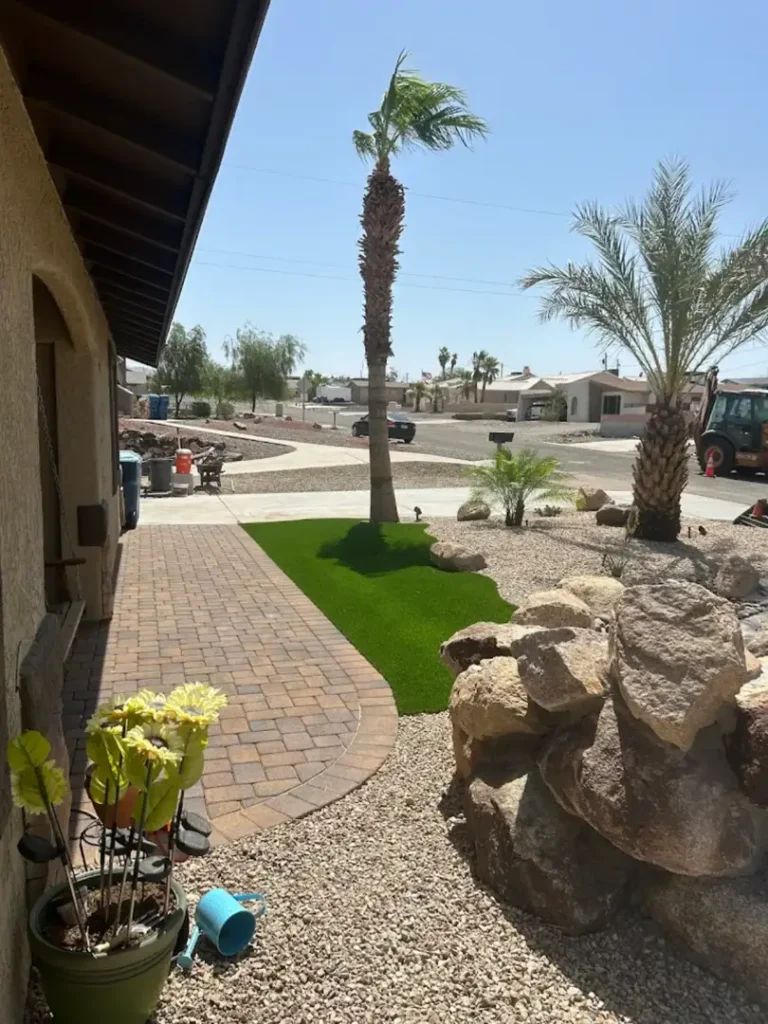
Front yard xeriscaping in Golden Shores is one of the most practical upgrades a desert homeowner can make — replacing a water-hungry lawn with a drought-adapted landscape that holds up through brutal summers and monsoon season alike.
Many homeowners here find out the hard way that traditional grass simply doesn’t work in this climate. By mid-July, it’s a dust bowl. Water bills spike. And rock landscapes installed without proper grading can pond during monsoons or radiate heat directly against the home’s foundation.
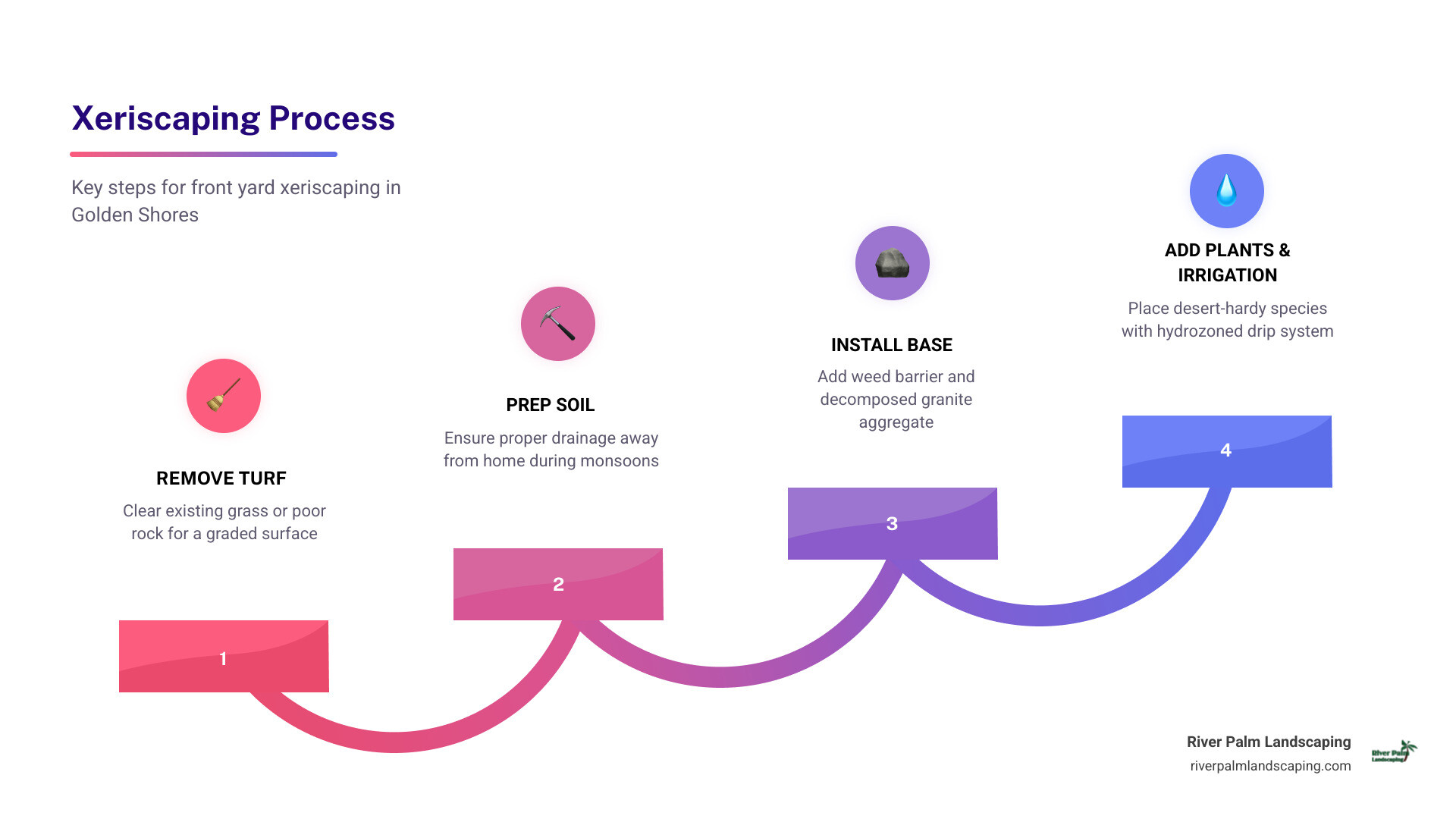
Here’s what front yard xeriscaping in Golden Shores typically involves:
- Remove existing turf or poorly installed rock to start with a clean, properly graded surface
- Prepare the soil and drainage so water moves away from the structure during monsoon events
- Install a weed barrier and base material — usually decomposed granite or compacted aggregate
- Place landscape rock, boulders, or flagstone for structure, drainage, and visual interest
- Select desert-hardy plants like lantana, agave, golden barrel cactus, or Mexican bird of paradise
- Add drip irrigation sized to each plant’s water needs (grouped by hydrozone)
- Finish with decorative rock or decomposed granite for a clean, low-maintenance surface
Done right, xeriscaping can cut outdoor water use significantly compared to a traditional lawn — and it looks sharp year-round without constant upkeep.
Front yard xeriscaping golden shores basics:
The Strategic Value of Front Yard Xeriscaping in Golden Shores
In the arid environment of Golden Shores, Arizona, the decision to transition to a xeriscaped front yard is often driven by the harsh reality of our local climate. As of April 2026, water conservation is no longer just an environmental choice; it is a financial necessity for homeowners. Traditional Kentucky bluegrass requires a minimum of 40 inches of rainfall per year to stay lush, yet our region frequently averages 8 inches or less. This massive deficit is usually made up through expensive municipal water, leading to summer utility bills that can shock any budget.
The strategic value of front yard xeriscaping golden shores lies in its ability to bridge the gap between aesthetic beauty and environmental survival. A professionally designed xeriscape doesn’t just “save water”—it creates a climate-resilient barrier for the home. By utilizing specialized materials and layout techniques, a contractor can reduce outdoor water consumption by 50% to 75%.
Beyond the meter, there is the matter of property value and curb appeal. A dying lawn or a “zero-scaped” yard (one consisting only of bare gravel and a few struggling weeds) actively detracts from a home’s marketability. In contrast, a modern xeriscape with tiered rock layers and vibrant, desert-hardy perennials signals to potential buyers that the property is low-maintenance and thoughtfully maintained. Understanding how xeriscaping actually works in the front range environments is key to moving away from the “gravel pit” stereotype and toward a lush, albeit water-wise, sanctuary.
For those looking at the long-term horizon, maximizing your landscape with desert landscaping is about reducing the “labor tax” of homeownership. The time and money spent on mowing, fertilizing, and repairing broken sprinkler heads can be redirected into enjoying the outdoor space.
| Feature | Traditional Grass Lawn | Professional Xeriscape |
|---|---|---|
| Annual Water Needs | 40″+ rainfall equivalent | 0″ – 10″ (rainfall + minimal drip) |
| Annual Maintenance Cost | $900 – $2,700 | $150 – $450 |
| Water Savings (Yearly) | Baseline | 5,000 – 20,000 Gallons |
| Mowing/Trimming | Weekly in growing season | None to occasional pruning |
| Fertilizer/Pesticides | High requirement | Minimal to none |
Professional Design Elements for Arid Curb Appeal
A common mistake in DIY attempts is a lack of structural depth. Professional front yard xeriscaping golden shores relies on several core design elements that provide visual interest even when plants aren’t in bloom. One of the most effective techniques is hydrozoning—the practice of grouping plants with similar water requirements. This ensures that a high-water-use shrub isn’t drowning a nearby cactus, and it allows the irrigation system to run with maximum efficiency.
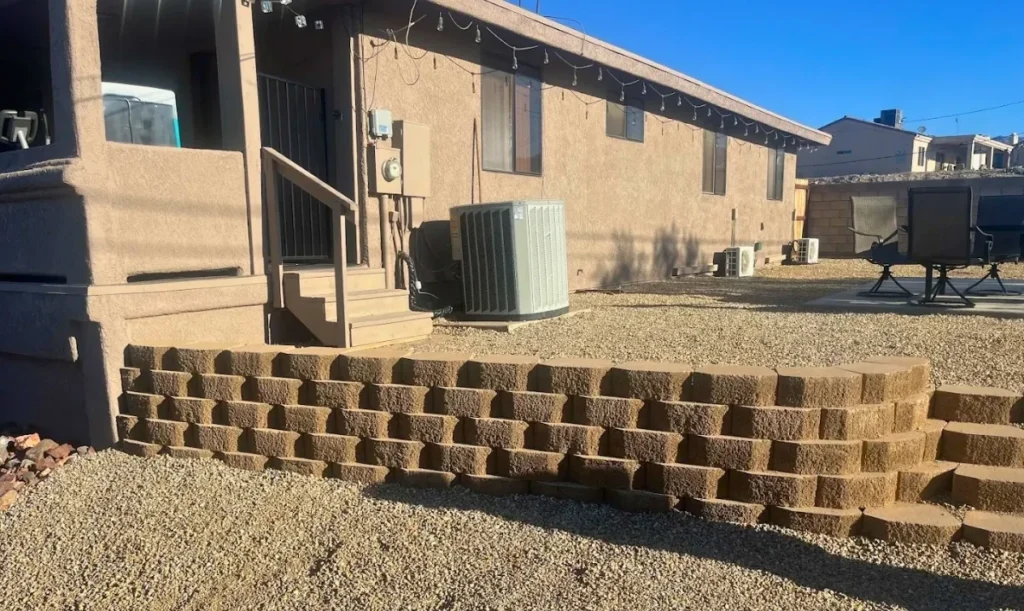
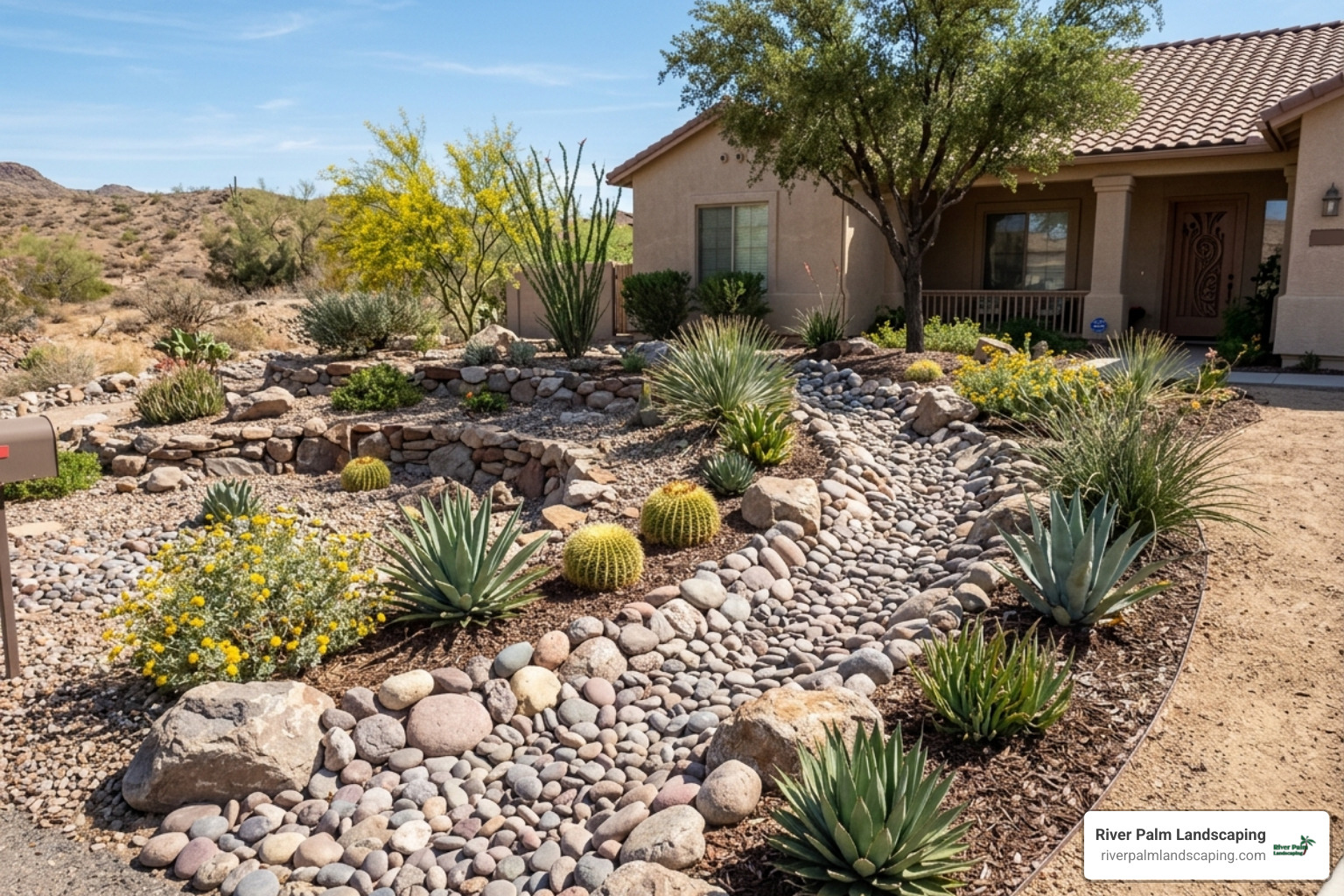
Another high-impact element is the dry riverbed. In Golden Shores, we deal with intense, albeit infrequent, monsoon rains. A poorly graded yard can lead to foundation damage or soil erosion. A dry riverbed, constructed with varied sizes of river rock and larger cobbles, serves a dual purpose: it acts as a beautiful focal point and a functional drainage channel that directs runoff safely away from the home.
Boulder placement is where the “art” of landscaping meets the “science” of construction. Professionals don’t just “drop” rocks; they bury boulders approximately one-third into the ground to mimic natural outcroppings. Using odd-numbered groupings (threes or fives) creates a balanced, organic look that anchors the rest of the vegetation. For more on these techniques, exploring desert garden design havasu can provide inspiration for local aesthetics.
Planning Front Yard Xeriscaping Golden Shores for Small Spaces
Small front yards in Golden Shores present unique challenges, primarily regarding scale and privacy. When space is limited, every element must earn its keep. Professional planning focuses on visual balance—avoiding the “cluttered” look that occurs when too many different rock colors or plant varieties are used in a tight area.
Strategic privacy screening can be achieved without the need for high-water hedges. Using tall, columnar desert plants or decorative metal screens integrated with rock features can create a sense of seclusion from the street. Focal points, such as a single sculptural Agave or a well-placed decorative boulder, draw the eye and make a small yard feel intentionally designed rather than just “filled.” For homeowners in tighter residential lots, front yard landscaping desert homes lake havasu offers specialized insights into maximizing curb appeal in smaller footprints.
Selecting Durable Materials and Desert-Hardy Species
The foundation of any successful xeriscape is the choice of ground cover. In Golden Shores, we typically recommend a combination of decomposed granite (DG) and larger landscape rocks. Decomposed granite provides a permeable surface that allows water to reach plant roots while suppressing weed growth. It comes in various earthy tones—from “Desert Gold” to “Apache Brown”—which can be matched to the home’s exterior palette.
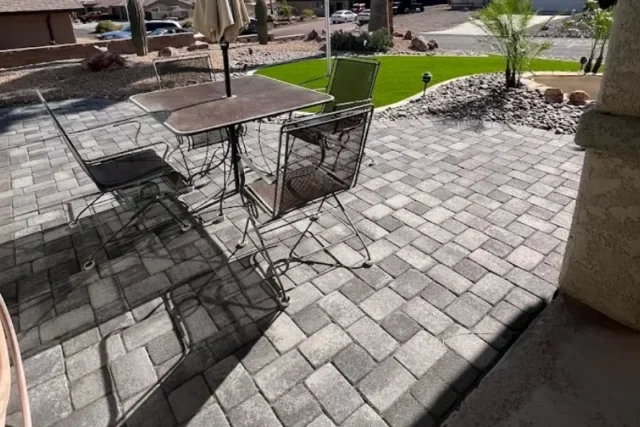
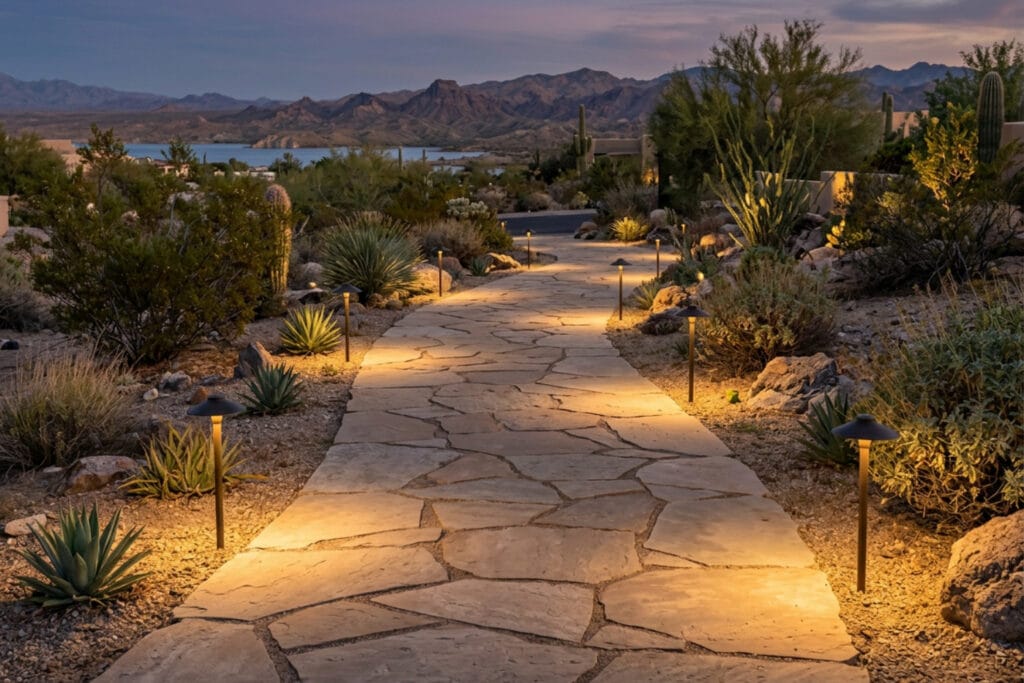
Flagstone is another premium material used for walkways or small seating areas. Unlike concrete, flagstone is porous and stays cooler under the intense Arizona sun, making it a functional addition to any front yard. When selecting materials, it’s important to look at the essential guide to drought tolerant plants for Arizona to ensure your hardscape and softscape work in harmony.

Selecting Plants for Front Yard Xeriscaping Golden Shores
Plant selection is where many amateur projects fail. In the extreme heat of the Lower Colorado River Valley, “drought-tolerant” isn’t enough; plants must be “desert-hardy.” We prioritize species that can handle 115-degree afternoons and the occasional winter frost.
- Lantana: These are the workhorses of the desert garden. They provide vibrant color (purple, gold, or multi-color) for most of the year and are incredibly resilient once established.
- Totem Pole Cactus: For those seeking a sculptural, low-maintenance vertical element, the Totem Pole is ideal. It lacks the dangerous spines of other cacti, making it safer for walkways.
- Agave: Varieties like the Whale’s Tongue or Cabbage Agave offer striking geometric shapes. They store water in their thick leaves and require almost no intervention.
- Golden Barrel Cactus: Known for their bright yellow spines and round shape, these are perfect for grouping near boulders to add pops of color.
- Mexican Bird of Paradise: This shrub provides height and stunning orange-red flowers that attract local pollinators.
For a deeper dive into these species, see our guide on the best low-maintenance desert plants. While the Saguaro is iconic to Arizona, it often struggles in the specific soil and heat conditions of the immediate Golden Shores/Lake Havasu area compared to the higher Sonoran desert; therefore, we often recommend more localized alternatives for long-term success.
Critical Installation Standards for Desert Environments
The longevity of front yard xeriscaping golden shores depends entirely on what happens below the surface. Our local soil is notoriously rocky and compacted, which can lead to drainage issues if not handled correctly. Professional installation begins with proper soil preparation—loosening the earth to allow for root expansion and ensuring that the grading (the slope of the land) moves water away from the home’s foundation.
Weed barriers are a point of much debate, but in a professional setting, we use high-grade, UV-resistant landscape fabrics. Cheaper plastic liners should be avoided at all costs; they trap heat, kill soil microbes, and eventually crack, allowing weeds to penetrate.
Irrigation is perhaps the most critical technical component. Even desert plants need supplemental water during their first two years to establish a deep root system. We install high-efficiency drip irrigation systems that deliver water directly to the root zone, minimizing evaporation. Using smart controllers that adjust based on local weather patterns ensures that your landscape gets exactly what it needs and nothing more. For more information on these systems, see our article on efficient irrigation desert gardens lake havasu.
Frequently Asked Questions
How much water can I save with xeriscaping in Golden Shores?
On average, homeowners can save between 5,000 and 20,000 gallons of water per year by replacing a traditional lawn with a professionally designed xeriscape. This typically results in a 50% to 75% reduction in outdoor water costs. Because xeriscaping uses plants specifically adapted to the Arizona heat, they thrive on a fraction of the water required by non-native species.
Does xeriscaping require any maintenance?
While xeriscaping is “low-maintenance,” it is not “no-maintenance.” To keep a front yard looking its best, it requires occasional weeding, seasonal pruning of perennials like Lantana or Mexican Bird of Paradise, and periodic checks of the drip irrigation system to ensure emitters aren’t clogged. However, this is a fraction of the time required for mowing and edging a lawn.
Can I xeriscape without a drip irrigation system?
It is possible to create a “zero-water” landscape using only cacti and succulents like Golden Barrels and Agaves once they are fully established. However, even these plants usually require hand-watering for the first two years to survive. For a lush, colorful front yard that includes flowering shrubs, a professional drip irrigation system is highly recommended to ensure plant health during extreme heat waves.
Conclusion
Transitioning to front yard xeriscaping golden shores is a strategic investment in your home’s future. In an era of rising water costs and increasing temperatures, the traditional lawn is no longer a viable or attractive option for the Arizona desert. By choosing professional design and installation, you ensure that your landscape is not only beautiful but also functional, durable, and environmentally responsible.
Since 2003, River Palm Landscaping has specialized in creating outdoor spaces that work with the desert, not against it. Whether you are dealing with rocky soil, drainage concerns, or simply want to boost your curb appeal, a professional xeriscape provides a long-term solution that pays for itself in water savings and peace of mind.
For more information on how we can transform your property, explore our more info about desert landscaping services or contact us today to discuss your next project in Golden Shores, Lake Havasu City, or Parker.