Why Low Water Plant Selection Defines a Successful Desert Landscape
Smart low water plant selection is the single biggest factor that separates a landscape that thrives in Lake Havasu City from one that slowly fails — no matter how good your irrigation system is. In the Mojave Desert, where summer temperatures regularly push past 110°F and annual rainfall hovers below 5 inches, choosing the wrong plants means constant replacement costs, runaway water bills, and a yard that always looks stressed.
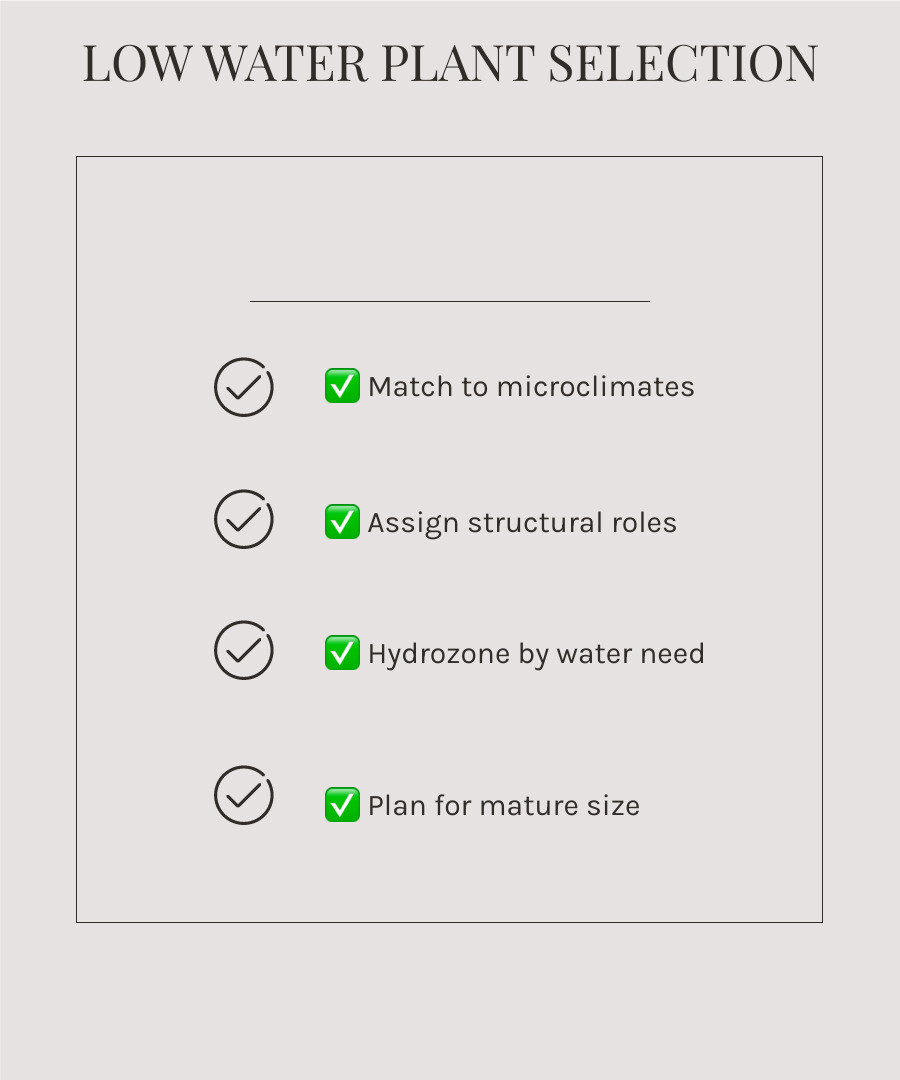
Here is a quick-reference guide to choosing low-water plants that actually perform in the low desert:
- Match plants to your microclimate — south-facing walls, reflected heat from stucco, and gravel surfaces create intense heat pockets that only true xeric plants can handle.
- Assign every plant a structural role — canopy tree, mid-level filler, accent, or groundcover — before you shop.
- Group by water need (hydrozone) — never put a thirsty shrub on the same drip valve as a cactus.
- Plan for mature size — most desert plants look small at the nursery but spread aggressively in the right conditions.
- Establish first, then back off water — even drought-tolerant plants need consistent irrigation during their first season.
- Source regionally tested species — plants vetted for Arizona’s low desert conditions outperform generic nursery picks.
Over 40% of the United States is currently experiencing drought, and landscape irrigation accounts for a significant share of residential water use — roughly 55% in states like Colorado, and comparable figures apply across the Southwest. In Lake Havasu City, Golden Shores, and Parker, that water pressure is real and ongoing. The good news is that the Mojave and Sonoran Desert regions are home to an extraordinary range of plants that are built for exactly these conditions — from brittlebush and globemallow to Palo Verde trees and Golden Barrel Cactus. The challenge is knowing which ones to pick, where to put them, and how to combine them into a landscape that looks designed rather than accidental.
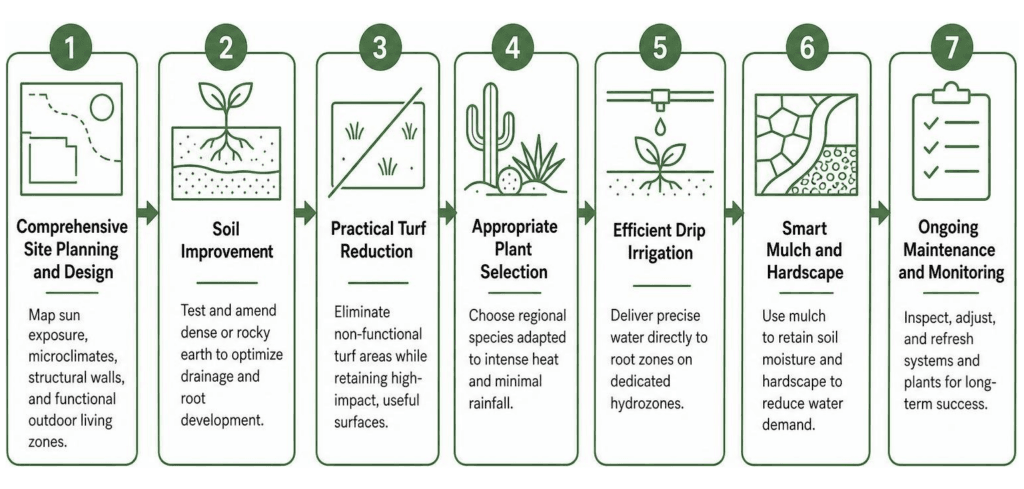
To build a resilient yard, learn how to xeriscape a yard, discover versatile desert landscaping ideas, and implement efficient irrigation desert gardens to save resources in the low desert.
What “Drought-Tolerant” Really Means in the Low Desert
Many homeowners walk into a nursery, see a tag marked “drought-tolerant,” and assume the plant can handle whatever the Arizona desert throws at it. However, the term “drought-tolerant” covers a massive range of plant adaptations, and what works in a mild coastal climate or temperate prairie will quickly burn out under a 115°F July sun in Mohave County.
In true desert horticulture, there is a distinct difference between xeric species (true desert plants adapted to extreme dryness and thermal stress) and adapted low-water plants (species native to semi-arid or Mediterranean climates that tolerate dry periods once established). Understanding physical plant biology helps homeowners identify species that will genuinely survive.
Desert-adapted plants survive extreme conditions through unique physiological structures:
- Waxy Cuticles and Thick Epidermis: Plants like Agave and Yucca feature thick, fleshy leaves coated in waxy layers (cuticles) that seal in moisture and dramatically reduce transpiration during high heat.
- Silvery, Hairy, or Aromatic Foliage: Species such as Brittlebush (Encelia farinosa) and White Sage (Salvia apiana) grow fine, tiny hairs or light-colored silver foliage. These silver hairs reflect intense sunlight away from leaf tissue, lowering surface heat and creating a micro-layer of calm air that traps humidity.
- Deep Taproots vs. Broad Shallow Systems: Trees like Velvet Mesquite drive taproots tens of feet into subterranean water tables, whereas cacti like the prickly pear utilize expansive, shallow root systems right under the soil surface to catch sudden desert rains.
- Crassulacean Acid Metabolism (CAM): Cacti and succulents open their breathing pores (stomata) only at night to absorb carbon dioxide, preventing moisture loss during hot daytime hours.
To understand how different desert plants operate in low-water landscapes, review this direct comparison between true xeric succulents and adapted low-water perennials:
| Characteristic | True Xeric Succulents & Cacti | Adapted Drought-Tolerant Perennials |
|---|---|---|
| Water Storage Mechanism | Internal fleshy tissue (stems or rosettes) | Deep root systems and dormant survival |
| Heat & Reflected Heat Tolerance | Exceptional (handles 120°F+ and rock mulch) | Moderate to high (needs protection from extreme reflected heat) |
| Irrigation Frequency (Established) | Monthly or seasonal rainfall | Every 10 to 21 days during summer |
| Soil Drainage Requirements | Sharp, gritty, fast-draining gravel or sand | Tolerates light clay if not waterlogged |
| Primary Design Role | Architectural accents and focal points | Mid-level fillers, mass color, and soft borders |
| Best Examples | Golden Barrel, Agave desmettiana, Ocotillo | Desert Globemallow, Black Gold Salvia, Gaura |
When building a drought-resilient yard, combining both categories creates visual depth while controlling total outdoor water consumption. Learning how to xeriscape a yard begins with understanding drought-tolerant plant adaptations so you can put each plant in an environment where its natural physiology thrives.
Low Water Plant Selection by Structural Design Role

A common mistake in desert landscaping is collecting individual plants simply because they look attractive on a nursery table. Without a clear plan, this leads to a disorganized “plant collector” look where isolated specimens sit across bare rock. High-end low-water landscapes rely on deliberate landscape architecture principles: assigning each plant a structural role to build layered depth, shade, and visual rhythm.
Canopy Anchors and Desert Trees
Trees serve as the primary framework of any landscape. In Lake Havasu City, broad desert canopy trees perform a crucial environmental function: they cool surrounding soil, shield lower plants from scorching sun, and lower neighborhood heat island effects.
- Palo Verde (Parkinsonia species): The Museum Palo Verde and Foothill Palo Verde are standout performers. Featuring smooth green bark that conducts photosynthesis even when leaves drop, Palo Verdes produce brilliant displays of yellow blossoms in spring. They provide filtered shade (“dappled light”) under which sensitive mid-level shrubs thrive.
- Velvet Mesquite (Prosopis velutina): Renowned for its twisting, sculptural wood and delicate compound leaves, the Mesquite offers exceptional shade and extreme cold and heat hardiness. Its extensive root system stabilizes surrounding native soil.
- Desert Willow (Chilopsis linearis): A smaller, graceful multi-trunk tree that displays trumpet-shaped pink and purple flowers from spring through autumn. It drops leaves in winter to allow beneficial sunlight into house windows during cooler months.
Incorporating structured canopy anchors provides essential overhead balance while laying the foundation for the best low-maintenance desert plants across your property.
Low Water Plant Selection for Fillers and Mid-Level Color
Mid-level filler plants bridge the visual gap between tall trees and ground-level plantings. They provide volume, continuous seasonal color, and rich texture across landscape beds.
- Brittlebush (Encelia farinosa): A classic native shrub forming rounded silvery mounds about 3 to 5 feet wide. In late winter and early spring, it produces tall sprays of bright yellow daisy-like flowers. Its leaf hairs effectively reflect intense solar radiation.
- Desert Globemallow (Sphaeralcea ambigua): An extremely tough, low-water perennial that thrives in poor, rocky soils. It yields dozens of cup-shaped blooms in apricot orange, pink, or red from late winter into summer.
- Black Gold Superstition Salvia (Salvia hybrids): A heat-loving perennial shrub featuring dark green foliage and intense purple flower spikes that bloom through spring and summer, drawing hummingbirds and native bees.
By grouping these mid-level choices in repeated clusters of three to five, homeowners master structuring plant roles in waterwise landscapes without creating visual clutter.
Structural Accents and Focal Points
Accent plants act as outdoor sculpture. Their bold, rigid geometry contrasts beautifully with the soft, flowing forms of desert grasses and flowering perennials.
- Smooth Agave (Agave desmettiana): Features bright green, graceful rosettes that grow 3 feet tall and wide. Unlike spiny wild agaves, smooth agave options like ‘Quicksilver’ or variegated varieties fit safely near walkways.
- Golden Barrel Cactus (Echinocactus grusonii): A classic spherical cactus boasting vibrant yellow spines. Planted individually or in tight geometric clusters, Golden Barrels provide striking color contrast against dark rock mulches.
- Ocotillo (Fouquieria splendens): Long, upright, whip-like stems reach 10 to 15 feet high, bursting into small green leaves after rainfall and topping out with fiery crimson bloom spikes at the tips.
- Saguaro (Carnegiea gigantea): A specialty icon of the Sonoran Desert. Slow-growing and majestic, a single Saguaro acts as a permanent architectural center line in front yards.
Using distinct focal points is key to introducing drought-proof garden plants into clean, modern landscape layouts.
Living Groundcovers and Low-Growing Softness
Living groundcovers shade bare soil, reducing surface temperatures by up to 20°F compared to unshaded gravel mulch. They actively cut water evaporation from the soil root zone while preventing weed seeds from taking hold.
- Damianita (Chrysactinia mexicana): A low, aromatic, evergreen shrublet forming dense green mats around 1 foot tall. It smothers itself in fragrant yellow flowers through spring and autumn.
- Trailing Lantana (Lantana montevidensis): Spreads low across large areas, producing continuous sheets of purple or white blossoms that thrive in intense summer heat and reflected wall temperatures.
- Elephant Food (Portulacaria afra ‘Prostrata’): A low-growing, fleshy succulent groundcover featuring reddish stems and glossy green leaves that cascades cleanly over retaining walls and decorative borders.
Microclimates, Hydrozoning, and Soil Realities in Lake Havasu Yards
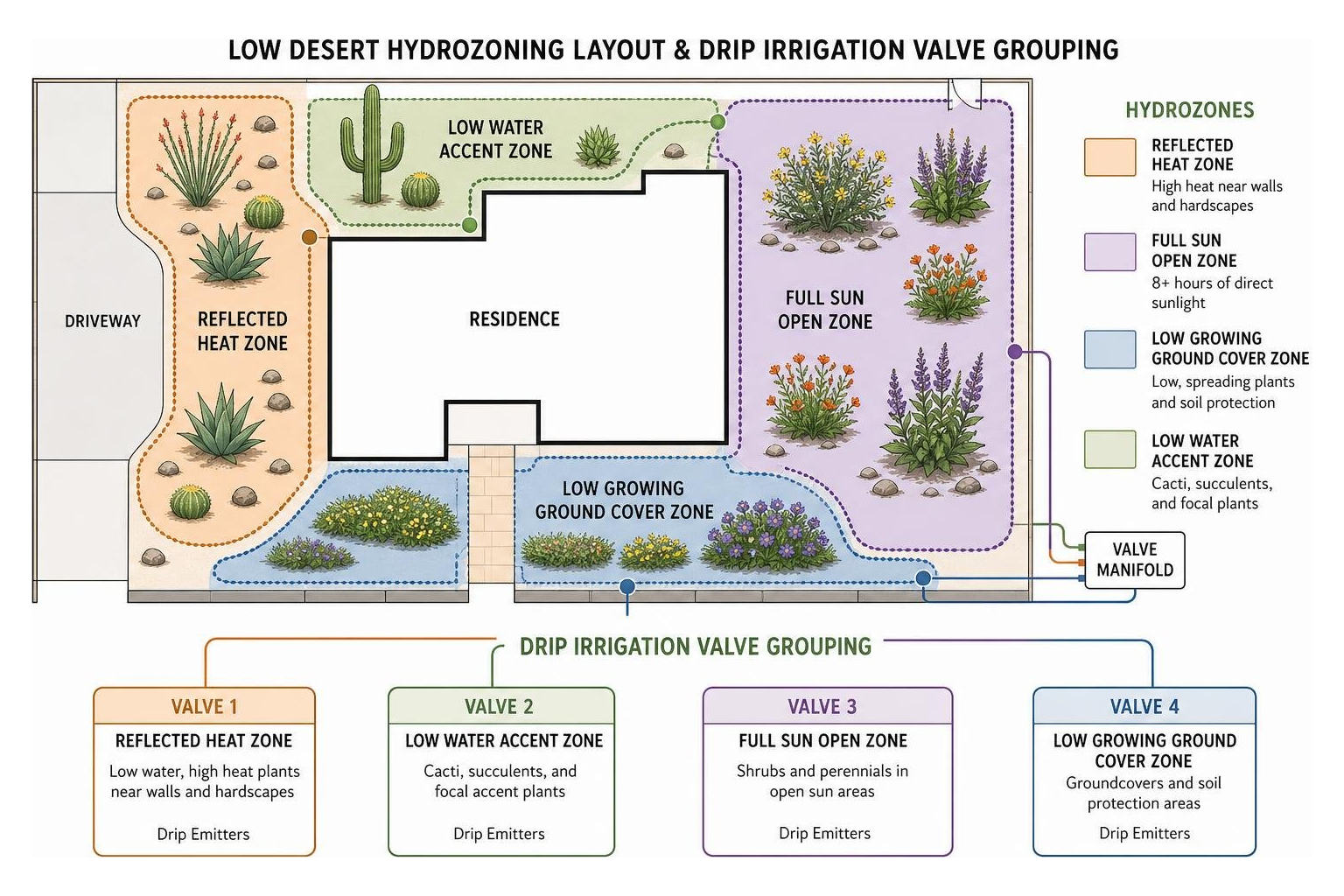
A single residential yard in Lake Havasu City is not a uniform environment. Reflected heat from south-facing stucco, dense caliche layers underneath the surface, and intense wind corridors off the lake create distinct microclimates. Selecting the right plant is only half the battle; placing it in the correct microclimate is what guarantees success.
When planning your layout, evaluate these four common desert microclimates:
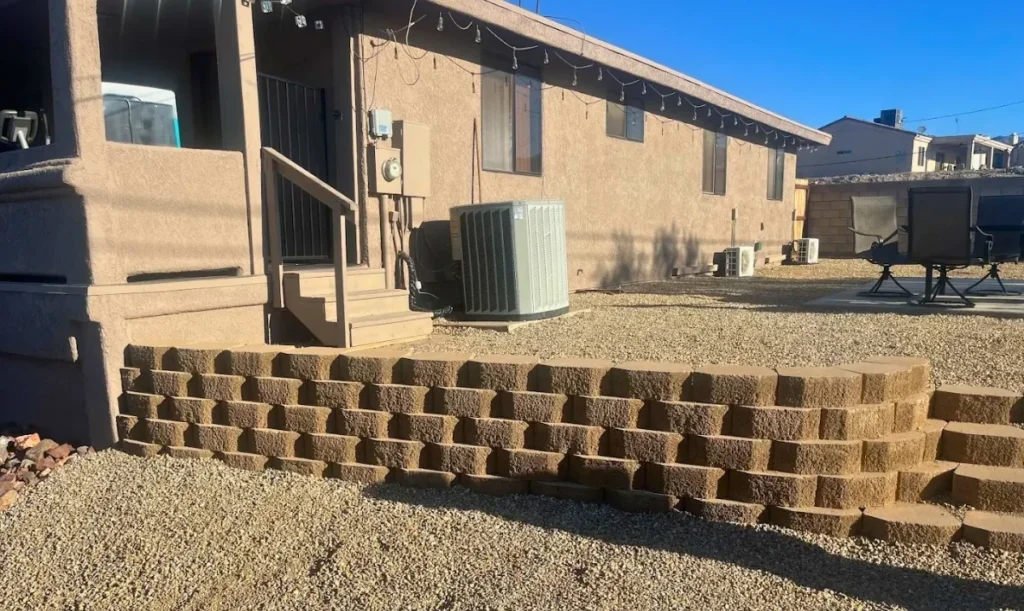
- Reflected Heat Zones: Areas adjacent to south-facing stucco walls, concrete driveways, or large unshaded rock beds. Radiated temperatures can exceed 130°F. Best suited for: Cacti, Agaves, Bougainvillea, and Ocotillo.
- Full Sun Open Zones: Open lawn replacement areas receiving 8+ hours of direct overhead sunlight. Best suited for: Palo Verde, Brittlebush, Globemallow, and Lantana.
- Partial Shade & Canopy Zones: Areas along northern home walls or underneath the canopy of larger mesquite trees. Best suited for: Elephant Food, Coral Bells, Desert Willow understory, and delicate Salvias.
- Wind-Exposed Borders: Perimeter fences and elevated lots in Parker or Golden Shores subject to dry desert gusts. Best suited for: Deep-rooted shrubs, Leucophyllum sage, and native grasses.
For guidance on managing local conditions, review efficient irrigation desert gardens Lake Havasu and consult regional plant resources.
Hydrozoning Strategies for Efficient Irrigation
Hydrozoning is the practice of grouping plants with identical water requirements onto dedicated irrigation valves. Combining low-water cacti on the same drip valve with moderate-water flowering shrubs leads to disaster: either the cactus rots from overwatering, or the shrub dies from drought.
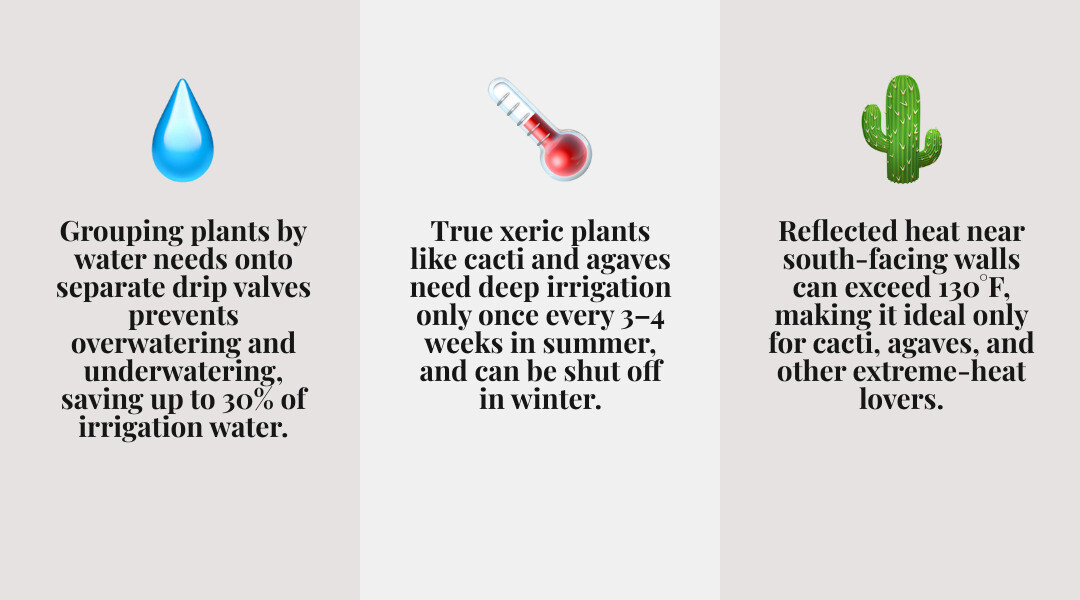
To hydrozone effectively:
- Valve Zone 1 (Xeric / Low Water): Cacti, Agaves, Yuccas, and native Ocotillo. Irrigated deeply once every 3 to 4 weeks during peak summer, and turned off during winter.
- Valve Zone 2 (Moderate Desert Water): Flowering shrubs like Brittlebush, Sage, and Globemallow. Irrigated every 10 to 14 days during summer heat.
- Valve Zone 3 (Canopy Trees): Palo Verde, Mesquite, and Acacia. Equipped with high-gallon-per-hour emitters spaced out at the outer dripline, receiving long, deep soakings once every 14 to 21 days in summer.
Implementing clean valve segregation is essential when maximizing your landscape with desert landscaping to avoid wasted water and plant root rot.
Navigating Caliche, Reflected Heat, and Soil Drainage
Mohave County soil is notorious for caliche — a dense, concrete-like layer of soil cemented by calcium carbonate sitting anywhere from a few inches to a couple of feet below the surface. Caliche prevents water from draining downwards, trapping plant roots in stagnant pools during irrigation cycles.
When installing low-water plants in caliche-heavy soils:
- Perform a Drainage Test: Dig a hole 18 inches deep, fill it with water, and let it drain completely. Fill it a second time and measure the water drop. If the water drops less than 1 inch per hour, a impenetrable caliche layer is present.
- Break Through the Layer: When planting trees or deep-rooted shrubs, use a breaker bar or jackhammer to punch drainage chimney holes through the caliche layer into loose soil underneath.
- Avoid Over-Amending Soil: Native desert plants adapted to low-nutrient soils develop weak, floppy foliage and root rot if planted in pure potting mix or heavy organic compost. Backfill planting holes with native soil mixed with no more than 10-15% crushed aggregate or light compost.
Additionally, pay close attention to ground surface materials. While decomposed granite and rock mulch reflect high radiant heat back onto lower plant stems, organic bark mulch decomposes rapidly under desert heat. Utilizing coarse 1/2-inch to 3/4-inch crushed rock allows water infiltration while keeping root crowns dry.
Master Checklist for Low Water Plant Selection
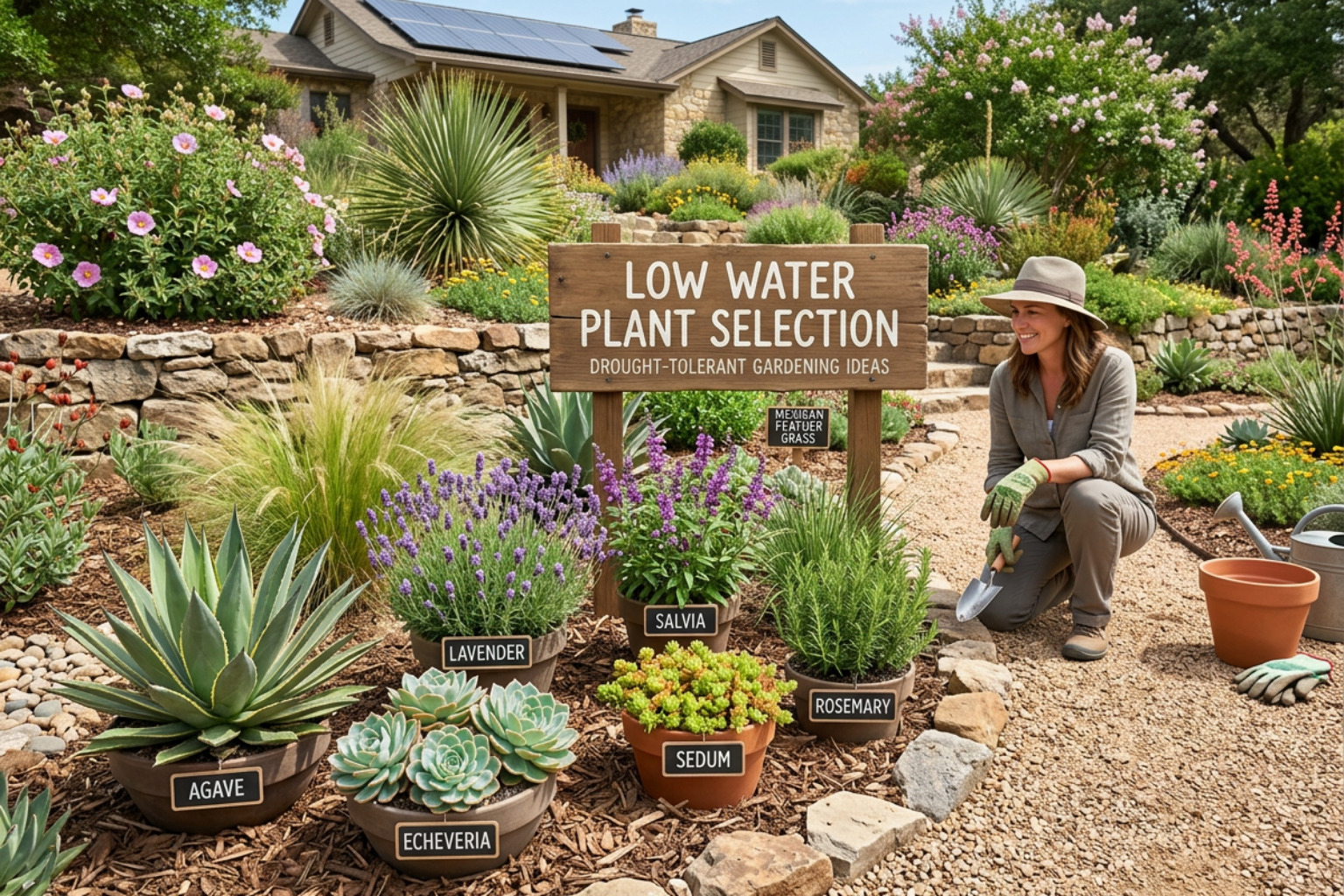
Before driving to the garden center, run through this practical checklist to ensure every plant purchase fits your site conditions and long-term design goals.
Four-Step Low Water Plant Selection Evaluation
Use this evaluation method at the nursery to prevent buyer’s remorse:
- Perform the Nursery Cart Test: Load all prospective plants onto a single cart. Look at them together from 10 feet away. Do the colors, textures, and structural forms complement each other, or do they look like a random collection of individual choices? Repeat 3 to 5 key filler species across your plan to establish harmony.
- Audit the Root Ball: Pull plants gently from nursery pots to inspect root systems. Avoid root-bound plants with thick circling roots, as well as soggy, waterlogged soil that signals poor nursery drainage.
- Confirm Mature Dimensions: Check the plant tag for mature height and spread — not current container size. Ensure a 6-foot-wide Leucophyllum sage is not placed 18 inches away from a concrete walkway.
- Verify Cold and Heat Hardiness: Lake Havasu City experiences high summer heat along with occasional light winter freezes down to 28°F. Choose plants rated for USDA Zone 9b/10a and Sunset Zone 13.
Applying a disciplined framework ensures every selection aligns with the complete guide to desert landscaping ideas.
Common Plant Selection Mistakes to Avoid
Avoid these frequent design and planting traps made by homeowners across Mohave County:
- The “Zeroscape” Heat Trap: Replacing all lawn with bare rock and zero vegetation creates an intense heat sink that raises home cooling bills. Smart xeriscaping uses heat-adapted foliage to cool the site.
- Impulse Plant Shopping: Buying plants without knowing their microclimate role or water needs leads to poor plant placement and high mortality rates.
- Over-Planting Tight Spaces: Spacing young plants according to their small nursery size causes severe overcrowding within 2 to 3 years, forcing constant heavy pruning.
- Mixing Thirsty and Dry Species: Placing high-water exotics next to low-water natives results in overwatered natives or scorched exotics.
Best Practices for Establishing Low-Water Plants
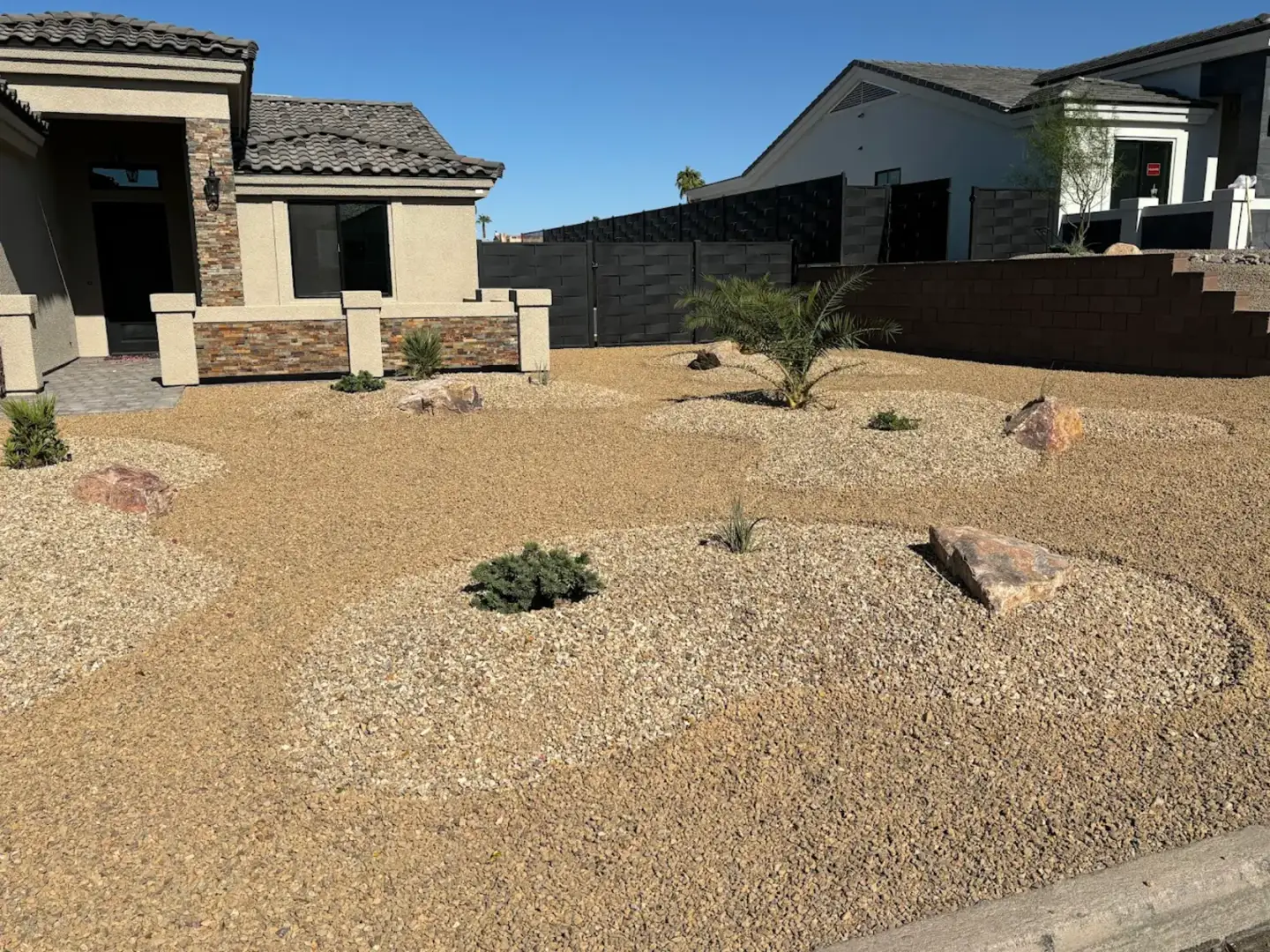
A common misconception is that low-water plants can be planted in bare desert soil and left without water. In reality, newly installed drought-tolerant plants require consistent establishment watering during their first season while their roots expand out of the nursery potting ball into surrounding native soil.
Follow this established watering protocol for low desert plantings:
- Weeks 1 to 3 (Initial Root Settlement): Irrigate every 2 to 3 days, soaking the root ball directly to prevent transplant shock.
- Months 2 to 4 (Root Expansion): Transition watering to once every 5 to 7 days, extending drip emitters outward toward the drip line to encourage roots to spread deep and wide.
- First Summer (Active Establishment): Deep soak every 7 to 10 days during summer heat.
- Year 2 and Beyond (Established): Taper watering back to normal low-water hydrozone schedules (every 14 to 21 days for shrubs, monthly for cacti).
When applying fertilizer, use caution. Excessive high-nitrogen fertilizers force rapid, weak leaf growth that demands high water input and attracts desert pests like aphids. Instead, feed lightly in spring with low-nitrogen, slow-release organic fertilizers. Finally, align seasonal pruning with natural bloom cycles: prune spring-blooming shrubs like Brittlebush immediately after their flower cycle finishes to avoid cutting off next season’s buds. Reviewing proper xeriscape guidance for native species keeps your investment thriving year after year.
Frequently Asked Questions About Low Water Plant Selection
How long do desert plants take to fully establish?
Most low-water perennials and small shrubs require one full growing season (approximately 12 months) of regular establishment irrigation to build a deep root system. Larger desert trees like Palo Verde or Velvet Mesquite typically take two to three full years to become completely self-sufficient and drought-resilient.
Are native desert plants always better than adapted species?
While native Sonoran and Mojave Desert species offer exceptional ecological benefits for local pollinators, adapted non-native species from dry Mediterranean or Australian climates (such as Eremophila or Trailing Lantana) can perform just as well. The key is choosing plants adapted to low desert heat, cold hardiness, and low humidity—regardless of geographic origin.
Where can Lake Havasu homeowners find reliable local plant lists?
Reliable plant selections vetted for Mohave County climates can be found through the Arizona Municipal Water Users Association (AMWUA) online plant database, local University of Arizona Extension offices, and licensed desert landscape contractors who understand regional soil and climate conditions.
Conclusion
Building a stunning, low-water landscape in Lake Havasu City, Golden Shores, or Parker does not mean settling for a barren yard full of rock. By choosing climate-appropriate species, assigning clear structural design roles, hydrozoning your irrigation, and properly managing caliche soils, you can create a vibrant outdoor space that delivers curb appeal while conserving water.
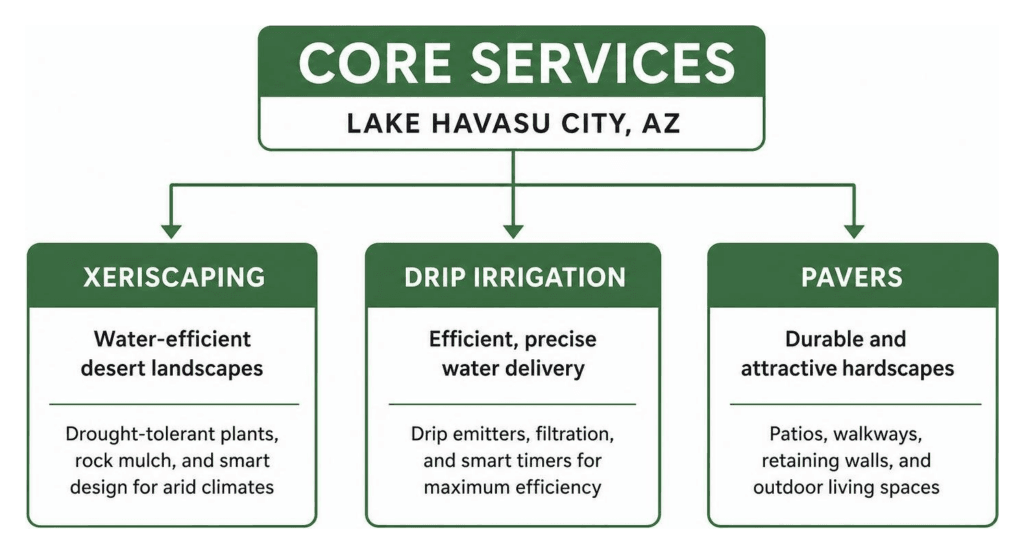
Since 2003, River Palm Landscaping has designed and installed durable, climate-appropriate landscapes tailored to the unique heat and soil realities of Mohave County. As a licensed, experienced local contractor specializing in full landscape construction, engineered irrigation systems, custom hardscaping, and professional plant placement, River Palm Landscaping turns outdoor spaces into water-efficient retreats.
Ready to upgrade your property? Transform your yard with custom Desert Landscaping and explore the cost of desert landscaping to plan your project today.