What to Know About Concrete Retaining Wall Repair Near Me
If you’re searching for concrete retaining wall repair near me, here’s the short answer:
- Act fast. A leaning, cracking, or crumbling wall won’t stabilize on its own — it will get worse.
- Common repair methods include wall anchors, helical tiebacks, epoxy crack injection, and drainage retrofits.
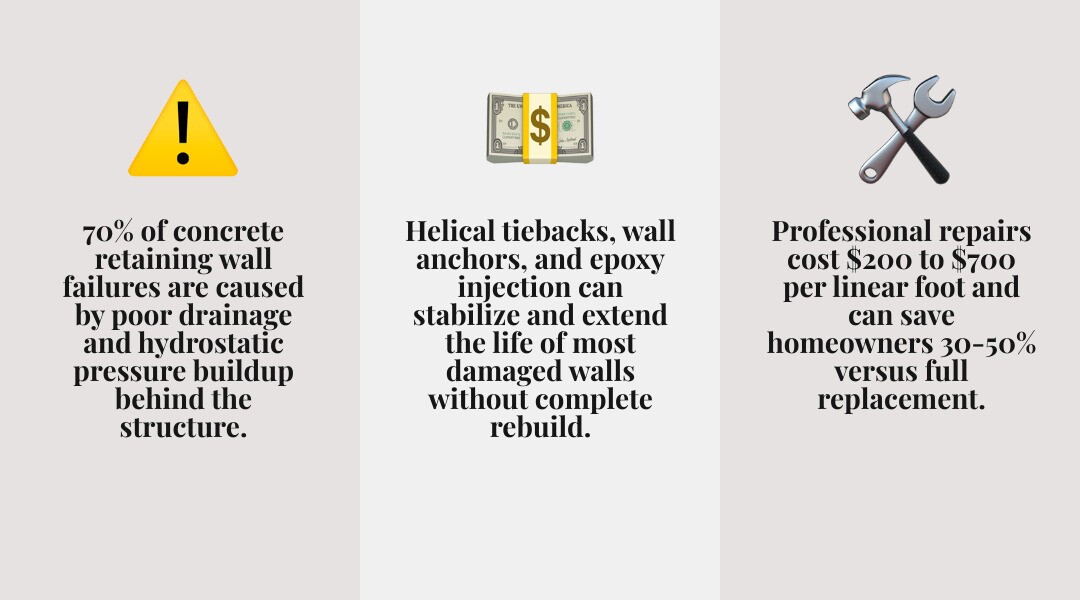
- Repair costs typically range from $200 to $700 per linear foot, depending on damage severity, wall height, and site conditions.
- Most walls can be repaired without full replacement if the footing is still structurally sound.
- Hire a licensed contractor — in Arizona, verify ROC (Registrar of Contractors) licensing before signing anything.
A failing retaining wall is one of those problems that’s easy to ignore until it becomes impossible to. In Lake Havasu City and the surrounding Mohave County area, that window closes fast. Monsoon rains arrive suddenly, water has nowhere to go behind poorly drained walls, and the combination of rocky caliche soil and extreme summer heat puts constant stress on concrete structures year-round.
The result? Walls that tilt, crack, and separate from adjacent structures — sometimes within just a few seasons of first showing warning signs.
Whether your wall is holding back a sloped yard behind a pool deck, stabilizing an RV parking pad, or protecting a hillside lot from erosion, a structural failure isn’t just an eyesore. It’s a safety hazard and a potential source of serious property damage.
The good news is that most concrete retaining walls — even significantly damaged ones — can be stabilized and repaired without tearing everything out and starting over. Up to 70% of wall failures trace back to a single root cause: poor drainage and water pressure building up behind the structure. Fix the drainage, reinforce the wall, and you can often add decades of life to an existing structure.
This guide walks you through everything you need to know: how to spot the early warning signs, what causes walls to fail in desert climates, which repair methods actually work, and how to find a qualified contractor in the Lake Havasu area.
Important concrete retaining wall repair near me terms:
- artificial grass installation Lake Havasu
- best yard drainage company near me
- full service landscape company near me
Signs Your Retaining Wall is Failing and Why You Must Act Quickly
When a concrete retaining wall begins to fail, it rarely collapses overnight. Instead, it sends out subtle, progressive warning signs that homeowners often overlook. Knowing how to identify these indicators early can mean the difference between a straightforward restoration project and an emergency replacement.
The most common signs that a concrete wall requires professional attention include:
- Tilting or Leaning: If the top of the wall is leaning forward, even by just an inch or two, the lateral earth pressure behind it has exceeded its structural capacity. This is a clear indicator of structural movement.
- Horizontal and Vertical Cracking: Hairline cosmetic cracks are common as concrete cures, but deep horizontal cracks, stair-step cracks in concrete block walls, or wide vertical fissures indicate that the wall is bending under extreme load.
- Crumbling or Spalling Concrete: If the surface of the concrete is flaking, crumbling, or exposing the interior steel rebar, moisture has likely penetrated the structure. This structural deterioration weakens the entire core of the wall.
- Separation from Adjacent Structures: When a retaining wall begins to pull away from steps, patios, pool decks, or adjacent walls, it is undergoing significant lateral displacement.
On sloped desert lots in Mohave County, these warning signs are amplified by soil erosion. Without strong Erosion Control Retaining Walls, sudden rainstorms can quickly wash away the supporting soil beneath or behind a wall, leaving it completely vulnerable to collapse.
Ignoring these early signs is a costly mistake. If a wall collapses, it can take down nearby structures, rupture underground utilities, damage pool shells, or ruin expensive RV parking pads. Addressing a bowing or cracking wall early allows professionals to stabilize the structure, saving homeowners an average of 30% to 50% compared to the high cost of a complete demolition and rebuild.
What Causes Concrete Retaining Wall Failure in Desert Climates?
Desert climates present a unique set of challenges that can accelerate the failure of even the most robust concrete retaining walls. While a wall in a milder climate might last for decades without issues, structures in Lake Havasu City, Golden Shores, and Parker, AZ, must contend with harsh environmental forces.
Hydrostatic Pressure and Monsoon Rains
Although the desert is dry for most of the year, sudden summer monsoons dump massive volumes of water in a matter of minutes. When water accumulates rapidly behind a retaining wall, it creates immense hydrostatic pressure. Because water is heavy, this trapped moisture pushes outward against the back of the wall. In up to 70% of all retaining wall failures, poor drainage and the resulting water accumulation are the primary culprits.
Caliche and Dense Clay Soils
The native soil in Mohave County is notorious for containing caliche—a hardened, cement-like layer of calcium carbonate. Caliche does not absorb water easily, acting instead as a solid barrier that traps water behind your retaining wall. When water cannot drain downward naturally, it pools directly behind the concrete, multiplying the lateral pressure and forcing the wall to tilt or slide forward.
Extreme Thermal Expansion
In July 2026, summer temperatures in the Lake Havasu region regularly soar past 115°F. This intense heat causes concrete and internal steel reinforcement to expand. At night, as the temperature drops, the materials contract. This daily cycle of extreme thermal expansion and contraction puts constant internal stress on the concrete, eventually leading to structural cracking and crumbling if the wall lacks proper expansion joints.
Inadequate Steel Rebar and Footer Failure
A concrete retaining wall is only as strong as its foundation and internal skeleton. If the original builder did not use enough steel rebar, or if the concrete footer was poured too shallow or too small to resist the weight of the sloped soil, the wall will eventually succumb to gravity. Shifting desert soils require deep, heavily reinforced footings to keep the structure anchored permanently.
Professional Concrete Retaining Wall Repair Near Me: Best Methods
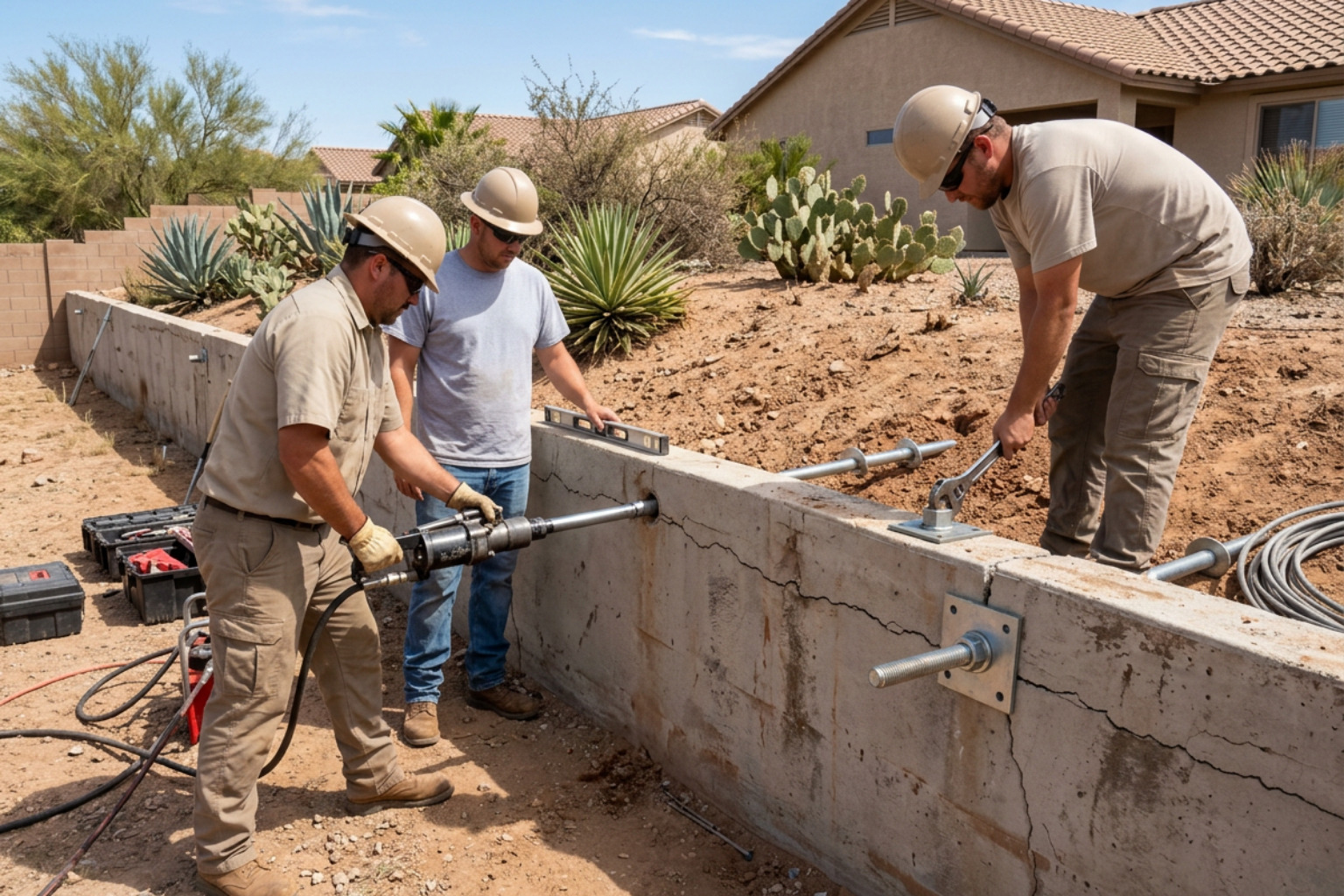
When a concrete retaining wall begins to fail, temporary DIY fixes like patching cracks with basic mortar or stacking heavy rocks against the base will not solve the underlying structural issues. To restore a wall’s integrity, engineers and professional contractors rely on permanent, proven structural methods. Choosing a professional repair over a temporary band-aid ensures the safety of your property and complies with local building standards.
To understand the scope of what goes into these structural systems, homeowners can read about Everything You Need to Know About Erosion Control Retaining Walls. Depending on the type of failure, professionals typically utilize two primary engineered repair strategies: structural stabilization and drainage retrofitting.
Structural Stabilization with Helical Tiebacks and Wall Anchors
For walls that are tilting, bowing, or sliding, structural stabilization is required.
- Wall Anchor Systems: This method involves drilling a small, 1-inch hole through the face of the concrete wall. A steel anchor rod is driven through the wall deep into the stable soil behind it. An earth anchor is then secured in the yard, and a heavy-duty steel plate is bolted to the front of the wall. As the assembly is tightened, it braces the wall and stops further movement.
- Helical Tieback Anchors: When space is limited or the soil is exceptionally rocky, helical tiebacks are the preferred solution. These screw-like steel shafts are drilled deep into the hillside at an angle using specialized hydraulic equipment. The torque is monitored in real-time to ensure they reach stable load-bearing soil layers. Once secured, they provide immense pull-back resistance, stabilizing walls that support heavy loads like driveways or pool decks.
Over time, progressive tensioning of these anchor systems can actually pull a leaning wall back closer to its original plumb position.
Drainage Retrofitting and Crack Repair
Because water pressure is the leading cause of failure, no structural repair is complete without addressing drainage.
- Drainage Retrofits: Technicians excavate the soil directly behind the wall to install a perforated SDR-35 drainage pipe wrapped in a protective geotextile fabric sock. The excavation is backfilled with clean #57 angular drainage stone, which allows water to flow freely down to the pipe and away from the structure, completely relieving hydrostatic pressure.
- Epoxy Crack Injection: For structural cracks, professionals use high-pressure ASTM C881 structural epoxy injection. This specialized epoxy re-knits the fractured concrete, restoring its original tensile strength and preventing moisture from reaching the internal steel rebar, which would otherwise rust and expand.
Repair vs. Replacement: Making the Right Decision for Your Property
One of the most common questions homeowners face is whether they should repair their failing wall or replace it entirely. Tearing down a wall and building a new one is a major construction project that disrupts your landscaping, takes weeks to complete, and requires extensive permitting. In contrast, professional repairs are minimally invasive and can often be completed in a fraction of the time.
To help evaluate your options, consider this comparison of the two approaches:
| Factor | Professional Structural Repair | Full Wall Replacement |
|---|---|---|
| Average Cost | $200 – $700 per linear foot | $150 – $300 per square face foot |
| Project Timeline | 2 – 5 working days | 1 – 3 weeks |
| Disruption to Yard | Minimal (small excavation or drilling) | Extensive (full excavation, soil removal) |
| Lifespan | Decades (with galvanized steel systems) | 50+ years (with proper engineering) |
| Permit Requirements | Often localized or minimal | Mandatory engineered plans & inspections |
To determine if your wall is a candidate for repair, a professional must evaluate the stability of the footer. If the concrete footer is still intact, level, and structurally sound, the wall can almost always be saved using helical tiebacks or wall anchors. However, if the footer has cracked, buckled, or washed away entirely, a complete rebuild is necessary.
For properties with severe slope management challenges, reading about The Best Retaining Wall for Slope Management and Stability can help you understand what type of replacement structure would perform best under extreme desert loads if a repair is not feasible.
Understanding the Cost of Concrete Retaining Wall Repair
The cost to repair a concrete retaining wall varies widely depending on the extent of the damage, the height of the wall, and the accessibility of the site. On average, homeowners can expect to invest between $200 and $700 per linear foot for professional repairs.
Several key factors drive these costs:
- Labor and Equipment: Professional retaining wall repair requires specialized equipment, such as hydraulic drills for helical anchors or high-pressure epoxy injection pumps. Labor rates for skilled structural repair crews typically range from $50 to $150 per hour.
- Access Challenges: If your failing wall is located in a tight side yard, on a steep hillside with a lake view, or behind a pool deck where heavy machinery cannot easily reach, the labor costs will increase due to the manual effort required.
- Engineering and Permits: For walls over 4 feet tall, or those supporting a “surcharge” load (like a driveway or pool), Mohave County building codes require a structural engineer to design and stamp the repair plan. Engineering fees and municipal permit costs must be factored into the overall project budget.
- Soil Conditions: Hard caliche or extremely rocky soil requires specialized heavy-duty drilling equipment to install earth anchors, which can affect the overall cost of structural stabilization.
How to Choose a Reputable Concrete Retaining Wall Repair Near Me Contractor

Because a retaining wall is a critical structural element, choosing the right contractor is paramount. Hiring an unlicensed handyman or a general landscaper without structural engineering experience often leads to repeat failures and wasted money.
When searching for concrete retaining wall repair near me, use objective criteria to evaluate potential contractors.
Key Credentials to Verify for Concrete Retaining Wall Repair Near Me
Before hiring any contractor in Arizona, always verify their credentials:
- Arizona ROC License: Ensure the contractor holds an active license with the Arizona Registrar of Contractors (ROC) for commercial or residential dual licensing. You can check their license status and complaint history online. For related concrete work, you can also research local expertise through Lake Havasu City Concrete Contractors or a verified Concrete contractor – Lake Havasu City, Arizona .
- Specialized Experience: Ask if they have specific experience with structural retaining wall repairs, soil mechanics, and helical anchor installations. If you are near the southern border of Mohave County, you can find qualified professionals through resources like Find Concrete Contractors in Parker, AZ – Procore or connect with a local Concrete Contractor In Parker, AZ .
- Insurance and Bonding: Verify that the company carries comprehensive general liability insurance and worker’s compensation to protect your property in the event of an accident.
Evaluating Warranties and Estimates for Concrete Retaining Wall Repair Near Me
A reputable contractor will always provide a detailed, written estimate. Avoid contractors who offer vague verbal quotes or lack clear specifications.
When reviewing an estimate, look for:
- A detailed scope of work outlining exactly how the wall will be stabilized.
- Material specifications, such as the use of hot-dip galvanized steel for anchors to prevent corrosion.
- Clear structural warranties (many professional anchor manufacturers offer a 25-year warranty on their hardware).
For homeowners considering how a repaired or newly stabilized wall integrates with their overall landscape, reading about Building Better Borders with Havasu Retaining Wall Installation provides excellent insights into material choices and long-term durability.
Preventive Measures to Extend the Lifespan of Your Retaining Wall
Once your concrete retaining wall has been repaired, taking proactive steps to maintain the surrounding landscape will prevent future issues and extend the structure’s lifespan. Implementing these preventive measures is a smart investment in your property’s long-term value.
- Proper Surface Grading: Ensure the ground at the top of the wall slopes away from the structure. This encourages surface runoff during heavy monsoon storms to flow away from the backfill zone rather than pooling directly behind the concrete.
- Smart Irrigation Management: Keep drip irrigation lines, bubblers, and high-water zones well away from the retaining wall. Constant water from irrigation leaks is a silent killer of retaining structures in sandy or clay soils.
- Select Desert-Hardy Plants: When planning your landscape, choose low-water, desert-hardy plants with non-invasive root systems. Excellent choices for the Lake Havasu area include Lantana and Totem Pole cactus. Avoid planting trees or large shrubs with aggressive roots close to the wall, as they can crack the concrete or disrupt the footer.
- Keep Weep Holes Clear: If your wall has weep holes, inspect them annually. Clear out any dirt, debris, or desert pests that might clog them, ensuring water can escape freely.
For creative inspiration on how to design a beautiful, functional yard around your protective structures, check out these Backyard Retaining Wall Ideas.
Frequently Asked Questions about Retaining Wall Repair
Can a leaning concrete retaining wall be fully straightened?
Yes, in many cases. By excavating the heavy, saturated soil from behind the wall, installing heavy-duty helical tiebacks or wall anchors, and using progressive tensioning techniques, professionals can often pull a leaning wall back toward its original plumb position. For structural ideas, homeowners can look at Retaining Wall Solutions in Phoenix – Ram Jack or explore engineered structures like Retaining Wall Installation in North Phoenix AZ to see how heavy-duty anchor systems perform.
Do I need a permit for concrete retaining wall repair?
In Mohave County and Lake Havasu City, minor cosmetic repairs or simple crack sealing do not typically require a permit. However, if the repair involves structural stabilization (such as installing helical anchors), partial rebuilding, or if the wall is over 4 feet in height, a building permit and engineered plans are required to ensure safety and code compliance.
How long does a professional retaining wall repair last?
When performed by a licensed professional using hot-dip galvanized steel anchors, proper drainage systems, and high-strength concrete or epoxy, a retaining wall repair can easily last for several decades. Relieving the hydrostatic water pressure is the key to ensuring the repair stands the test of time.
Conclusion
A failing concrete retaining wall is a serious structural concern, but it doesn’t always require a complete, expensive replacement. By identifying the warning signs early—such as tilting, cracking, or crumbling—and addressing the root cause of the failure, you can save your hardscape and protect your property. In the desert climate of Mohave County, where monsoons and caliche soils present tough challenges, engineered solutions like helical tiebacks and proper drainage retrofits are the only ways to ensure long-term stability.
River Palm Landscaping has been serving homeowners in Lake Havasu City, Golden Shores, and Parker, AZ since 2003. As a licensed, bonded, and insured local contractor, the team specializes in durable, climate-appropriate hardscaping and structural solutions designed to withstand the extreme heat and unique soil conditions of the Arizona desert.
If you are concerned about the stability of a wall on your property, visit Landscaping Lake Havasu to learn more about professional hardscaping services, or contact River Palm Landscaping today to schedule a professional hardscape evaluation.