Why Lake Havasu Homeowners Are Rethinking Their Lawns
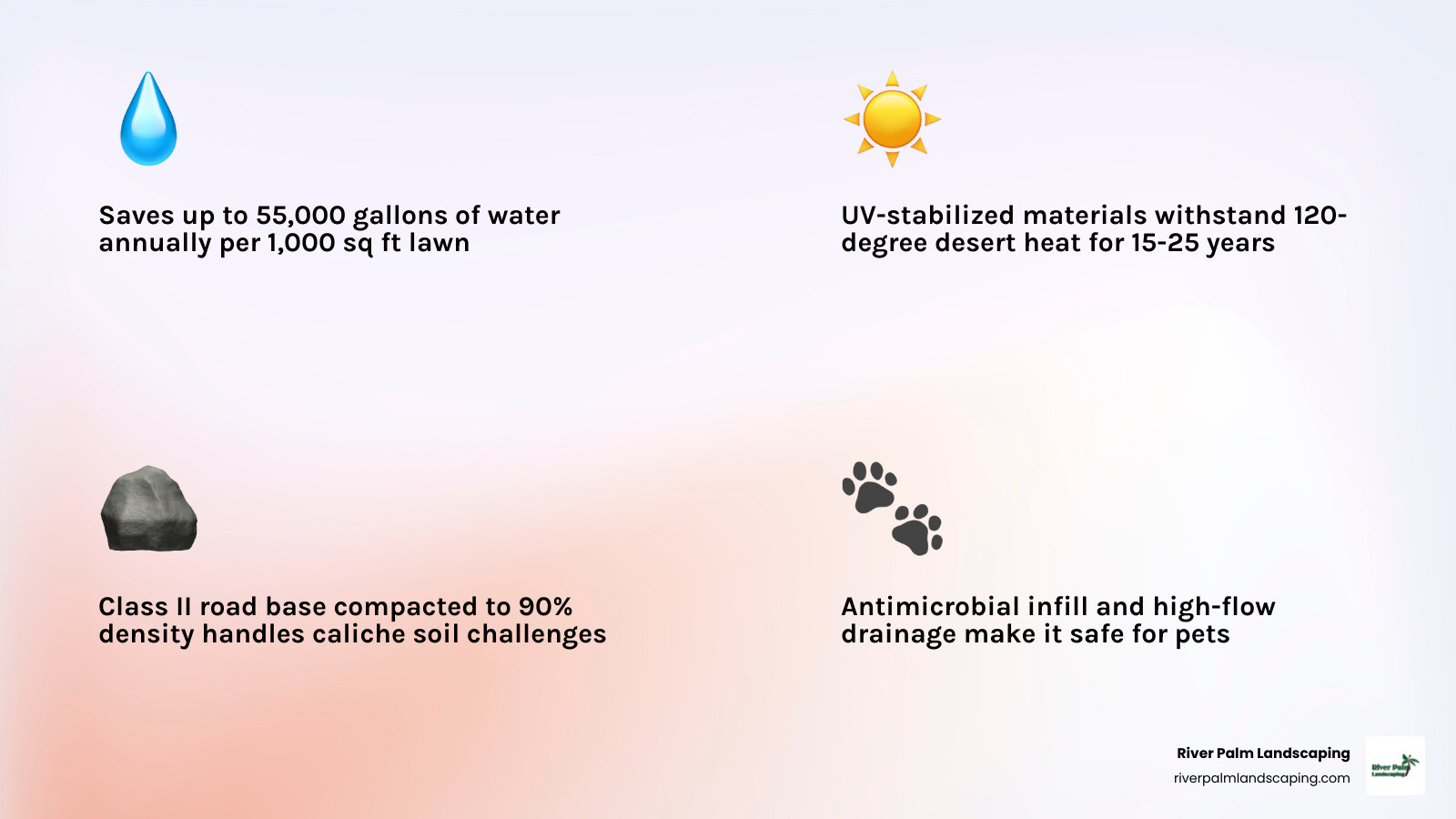
Maintaining a green lawn in the harsh Mojave Desert is an ongoing struggle that drains both water resources and household budgets. Traditional grass simply cannot survive the intense summer heat without constant, expensive watering, yet many homeowners find that alternative landscaping attempts fail due to poor soil preparation. Professional artificial grass installation in Lake Havasu City offers a durable solution, typically costing between $12 and $22 per square foot, lasting 15 to 25 years with quality materials, and saving a typical household up to 55,000 gallons of water per year on a 1,000 sq ft lawn. The process involves excavating existing soil, engineering a compacted sub-base, and securing UV-stabilized turf with precision seaming and drainage grading suited to Mohave County conditions.
Here is what most homeowners need to know at a glance:
| Factor | What to Expect in Lake Havasu |
|---|---|
| Cost range | $12 – $22 per sq ft installed |
| Lifespan | 15 – 25 years (UV-stabilized materials) |
| Water savings | Up to 55,000 gallons/year per 1,000 sq ft |
| Best materials | UV-stabilized polyethylene or nylon |
| Sub-base requirement | Class II road base compacted to 90% density |
| Key challenge | Rocky caliche soil requiring commercial excavation |
| Pet suitability | Yes, with antimicrobial infill and high-flow drainage backing |
| Permits/HOA | Architectural review often required; check permeable surface rules |
Natural grass was never built for this desert. Water bills climb fast in summer, caliche soil fights every attempt at healthy root growth, and by July most traditional lawns in Lake Havasu City are patchy, stressed, or completely dead. What looks like a simple landscaping swap — pulling out turf and laying synthetic grass — is actually an engineered system that depends on proper excavation, drainage grading, and sub-base compaction to hold up through 120-degree heat, monsoon rains, and years of daily use.
Done right, it transforms a demanding yard into a clean, durable outdoor space that holds up year-round. Done wrong, it buckles, wrinkles, and smells — usually within the first summer.
This guide walks through everything Lake Havasu homeowners need to evaluate before committing: materials, costs, site engineering, HOA requirements, and how to choose a contractor who understands desert conditions specifically.
Why Desert Homeowners Choose Synthetic Turf in Lake Havasu
The decision to transition to synthetic turf in Mohave County is rarely just about aesthetics. In places like Lake Havasu City, Golden Shores, and Parker, AZ, managing a residential landscape is an ongoing battle against the environment. Traditional grass demands constant watering, chemical fertilizers, and seasonal overseeding just to survive, let alone look presentable.
Water conservation is the primary driver for this shift. A standard 1,000-square-foot natural lawn in our arid climate can require up to 55,000 gallons of water annually to stay green. By eliminating the need for regular irrigation, property owners significantly reduce their monthly utility expenses while relieving pressure on local water resources. For broader Arizona guidance on water-conscious desert landscapes, the Arizona Municipal Water Users Association offers practical planning resources through its desert landscape guidance.
Furthermore, synthetic turf eliminates the need for mowing, edging, fertilizing, and treating for lawn pests. This saves homeowners hours of labor in the blistering heat and removes the need for storing gas-powered equipment and chemicals. To understand how a professional installation integrates these benefits into a comprehensive property plan, homeowners can consult your local guide to professional turf installation.
Mitigating Extreme Heat and Sun Exposure
The extreme summer sun in the Mojave Desert presents a unique challenge for synthetic materials. Standard, lower-grade turf products purchased from big-box retailers can absorb significant thermal mass, making them uncomfortably hot to the touch or even causing them to melt when exposed to reflected sunlight from double-pane windows.
To combat this, modern professional installations utilize advanced synthetic turf options engineered with UV stabilizers and heat-reflective technology. These specialized fibers are designed to bounce ultraviolet rays away rather than absorbing them.
Additionally, the choice of infill plays a crucial role in temperature regulation. High-performance options like evaporative cooling infill utilize patented technology to lower the surface temperature of the turf by up to 30 to 50 degrees compared to traditional black rubber infill. When moisture from dew, rain, or a quick hose rinse hits the infill, it slowly evaporates, creating a cooling effect that makes the yard usable even on mid-summer afternoons.
Integrating Turf with Desert Landscaping and Hardscapes
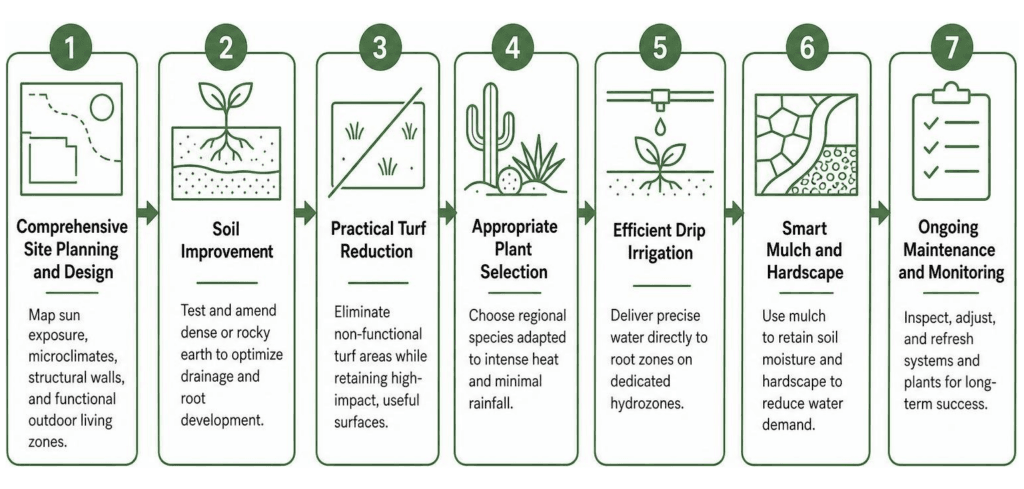
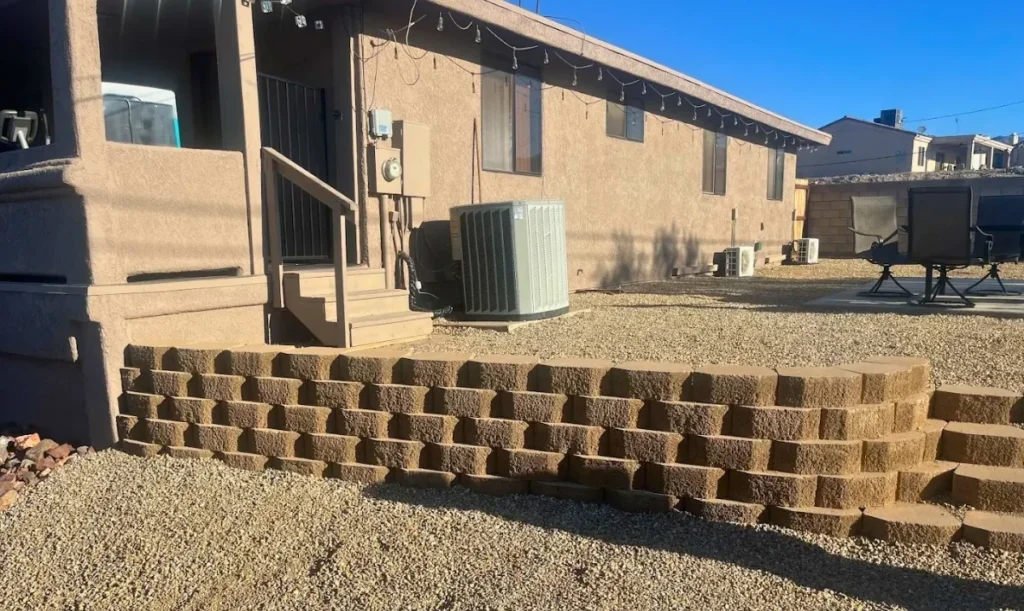
A well-designed desert yard uses synthetic turf as a strategic design element rather than a wall-to-wall carpet. Integrating turf with hardscaping materials like pavers, decorative river rock, and gravel creates a visually striking contrast that enhances the property’s overall curb appeal.

When planning these transitions, professional contractors pay close attention to grading and drainage. In Lake Havasu, unexpected monsoon storms can drop inches of rain in a matter of minutes. If the transition between a paver patio and a turf area is not properly graded, water can pool at the seams, leading to sub-base erosion.
Using flexible hardscape layouts allows homeowners to dedicate specific zones to high-use turf, such as pet areas or putting greens, while surrounding them with decorative rock and desert-hardy plants like Lantana and Totem Pole cactus. This balanced approach keeps significant portions of the yard dedicated to hardscape, reducing both water use and upkeep requirements across the entire property.
Selecting the Right Synthetic Turf Materials for Mohave County
Not all synthetic grass is manufactured to withstand the intense environmental pressures of Mohave County. Selecting the wrong material can lead to premature fading, flattened fibers, and rapid degradation under the intense western sun. Homeowners must understand the basic material science behind turf selection to make an informed investment.
- Polyethylene: This is the industry standard for residential lawns. It offers a highly realistic texture, excellent durability, and natural movement. When treated with quality UV inhibitors, polyethylene holds up exceptionally well against the Arizona sun without becoming brittle.
- Nylon: As the strongest fiber available, nylon is highly resistant to extreme heat and heavy foot traffic. It retains its shape exceptionally well and will not melt under high thermal loads. However, because nylon is highly absorbent, it is rarely used for pet areas, as it can retain odors.
- Polypropylene: While cost-effective, polypropylene has a lower melting point and is less durable than polyethylene or nylon. It is best suited for indoor applications or shaded, low-traffic decorative borders rather than expansive outdoor installations in Lake Havasu.
When evaluating turf quality, homeowners should look at face weight (the weight of the turf fibers per square yard, excluding the backing) and pile height (the length of the blades). For high-traffic family yards, a heavier face weight (70 to 90 ounces) with a shorter, denser pile height (1.5 to 1.75 inches) prevents the grass from matting down over time.
| Turf Application | Recommended Material | Ideal Face Weight | Key Feature to Look For |
|---|---|---|---|
| Pet Areas | Polyethylene | 60 – 80 oz | Non-perforated permeable backing |
| Putting Greens | Textured Nylon / Polypropylene | 40 – 50 oz | Low pile height for consistent ball roll |
| High-Traffic Play | Polyethylene Blend | 80 – 90 oz | High-density, resilient blade shapes (e.g., W-shape) |
| Decorative Borders | Polyethylene | 50 – 70 oz | Multi-toned green blades with tan thatch |
For those evaluating materials, consulting with local installation experts can provide valuable hands-on experience with different fiber shapes, face weights, and backing technologies to ensure the selected product matches the specific demands of the property.
Pet-Friendly Synthetic Grass Solutions
With over 80% of Arizona homeowners inquiring about synthetic turf being pet owners, designing a system that handles pet waste is a top priority. A poorly designed pet turf installation will quickly become a source of unpleasant odors and bacteria.
To prevent odor buildup, professional pet-friendly installations avoid standard rubber infill, which traps heat and absorbs ammonia. Instead, they utilize antimicrobial acrylic-coated sand or natural zeolites. Natural zeolite is a volcanic mineral that acts as a molecular sieve, trapping ammonia ions from pet urine and preventing them from turning into a gas until a heavy rain or hose rinse flushes them away safely.
Equally important is the backing system. Standard turf utilizes punched holes for drainage, which can easily clog with fine desert dust. Pet-friendly turf features a fully permeable, non-perforated backing (often referred to as high-flow backing) that allows liquids to drain instantly through any point of the carpet, ensuring that pet waste is washed down into the sub-base immediately.
Custom Putting Greens and High-Traffic Play Areas
For golf enthusiasts in Lake Havasu, a backyard putting green provides a dedicated space to practice their short game without leaving home. These installations require specialized, highly engineered turf, which features a short, dense, textured nylon pile designed to deliver a true, consistent ball roll.
For children’s play areas, safety and durability are the primary concerns. High-traffic play zones require turf with a resilient blade structure (such as U-shaped or W-shaped fibers) that bounces back after being stepped on. Additionally, installing a closed-cell foam shock pad beneath the turf provides essential fall protection, ensuring a soft landing for kids while maintaining excellent drainage characteristics under the intense western sun.
The Professional Engineering and Installation Process
A beautiful synthetic lawn is only as good as the engineering beneath it. While laying the green carpet is the final step, the vast majority of the labor, expertise, and specialized equipment goes into preparing the ground.
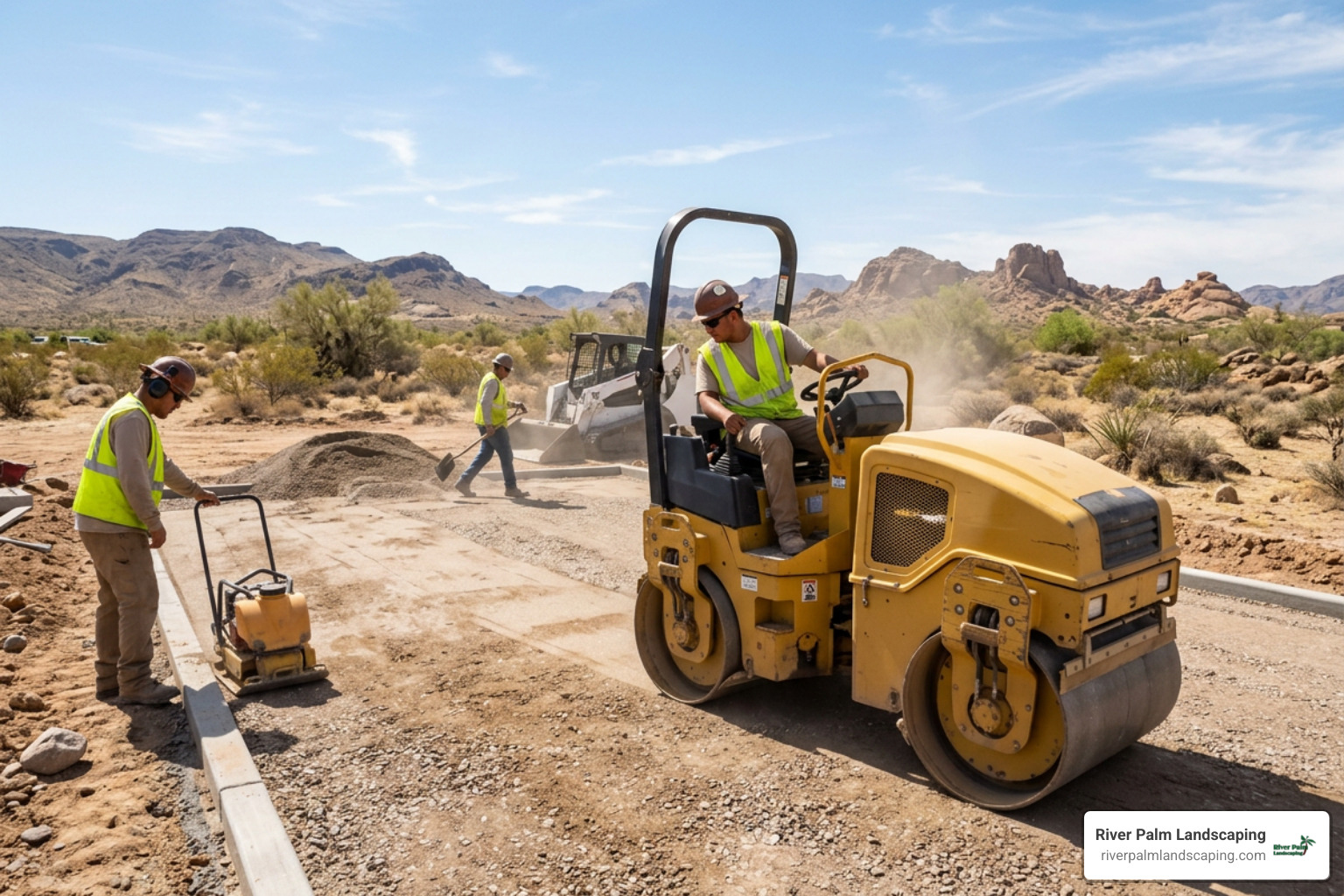
The process begins with addressing the specific challenges of Mohave County’s terrain:
- Excavation and Caliche Mitigation: The existing sod, weeds, and topsoil must be excavated to a depth of 3 to 4 inches. In Lake Havasu, this step often reveals caliche — a concrete-like layer of calcium carbonate. Excavating caliche requires commercial jackhammers and heavy machinery, as hand shovels cannot penetrate it.
- Sub-Base Engineering: Once excavated, the native soil is graded to ensure water flows away from home foundations and hardscapes. Next, a dual-layer sub-base is constructed. A 2-inch layer of drain rock is laid down, followed by a 1.5-inch layer of Class II road base or decomposed granite.
- Compaction: Each layer of the sub-base must be thoroughly hosed down and compacted to a minimum of 90% density using a commercial vibrating plate compactor. Proper compaction prevents the sub-base from shifting, settling, or developing dips and bubbles over time.
- Monsoon Drainage Management: Because our region experiences intense monsoon storms, the sub-base must be engineered to handle high-volume water flow. Proper grading ensures that hydrostatic pressure does not build up beneath the turf, which could otherwise lift the carpet or erode the sub-base.
Why DIY Turf Projects Fail in Lake Havasu’s Soil
Many homeowners consider installing synthetic turf as a do-it-yourself weekend project, only to realize they are in over their heads once they hit the native soil. The physical demands of manual caliche excavation without commercial equipment are enough to halt most DIY attempts before they even begin.
Furthermore, DIY projects frequently suffer from sub-base settling. Without commercial-grade plate compactors, the base layer will eventually divot and sag, creating hazardous tripping zones and pooling water.
Another common DIY failure point is failing to account for thermal expansion. Synthetic turf expands and contracts significantly when temperatures swing from cool desert nights to 120-degree summer days. If the turf is not properly stretched, secured, and seamed with professional-grade materials, it will develop unsightly wrinkles, bubbles, and split seams within its first year. Hiring a professional contractor protects your investment by ensuring the installation is engineered to handle these extreme temperature shifts.
Professional Standards for Synthetic Turf Installation
Professional contractors adhere to strict, proven standards to ensure the longevity of your synthetic lawn. This includes precision grading to direct water runoff safely, using heavy-duty seaming tape, and reinforcing seams mechanically with 11-gauge steel staples spaced exactly 4 inches apart.
To secure the perimeter, installers drive 5-to-6-inch 40D or 60D Bright Common nails every 3 to 4 inches along the outer edges, anchoring the turf firmly into the compacted sub-base. Additionally, while weed barriers are optional in inactive desert soils, professionals evaluate the site’s biological activity to determine if a commercial-grade weed barrier is necessary to prevent persistent desert weeds from pushing through the turf backing. To learn more about these technical requirements, read about professional artificial turf installation standards.
Cost Factors, HOA Rules, and Long-Term Maintenance
Investing in synthetic turf requires an understanding of both the upfront installation costs and the long-term variables that influence overall project pricing.
Professional installation costs in Lake Havasu City typically range from $12 to $22 per square foot. This pricing varies based on several project-specific factors:
- Site Accessibility: Yards with narrow gates or steep slopes prevent the use of heavy machinery, requiring manual labor for excavation and base hauling, which increases labor costs.
- Soil Conditions: Encountering thick veins of caliche requires specialized excavation equipment, which can add to the initial site preparation costs.
- Design Complexity: Rectangular yards are straightforward to install. Irregularly shaped yards, curved borders, and integrations around existing hardscapes increase material waste by 15% to 25% and require significantly more detailed seaming labor.
To get a detailed breakdown of these regional cost variables, homeowners can review the artificial grass cost guide for Lake Havasu.
Navigating Local Permits and HOA Guidelines
Before scheduling an installation, homeowners must ensure their project complies with local building codes and Homeowners Association (HOA) rules. Most HOAs in Lake Havasu City, Golden Shores, and Parker require an architectural review before any work begins.
When submitting a project for HOA approval, homeowners typically need to provide:
- A detailed site plan showing the exact dimensions of the proposed turf area.
- A physical sample of the synthetic turf showing the color, pile height, and blade density.
- A description of the border materials (e.g., pavers, concrete curbing, or decorative rock) that will contain the turf.
Additionally, city codes often dictate permeable surface requirements to manage stormwater runoff. Professional contractors ensure that the engineered sub-base meets or exceeds these local drainage standards, avoiding potential code violations or fines.
Desert Maintenance and Heat Mitigation
While synthetic turf requires far less upkeep than natural grass, it is not entirely maintenance-free. The dusty desert environment requires occasional care to keep the lawn looking vibrant and performing optimally.
Over time, fine desert dust can settle into the turf fibers, dulling its color and potentially slowing drainage. Homeowners should perform basic care by occasionally rinsing the turf with a garden hose to wash away dust and pollen.
For high-traffic areas, an annual power brushing is recommended. This specialized tool uses rotating nylon bristles to lift flattened grass blades back to an upright position while redistributing the infill material. If you have pets, applying a turf sanitizer occasionally will neutralize bacteria and keep the outdoor space smelling fresh.
Frequently Asked Questions About Lake Havasu Turf
How long does synthetic grass last in the Arizona sun?
High-quality, UV-stabilized synthetic turf installed by a professional contractor typically lasts between 15 and 25 years in the harsh Arizona sun. Lower-grade materials without proper UV inhibitors may begin to fade, crack, or become brittle within 5 to 7 years. Choosing a reputable product with a strong manufacturer warranty ensures your investment is protected against premature sun damage.
Is artificial grass safe for pets in 120-degree summer heat?
Yes, provided the system is designed with heat-mitigating materials. Utilizing cooling infills and selecting lighter-colored turf blades helps keep surface temperatures manageable. However, on days when temperatures exceed 115°F, the turf can still become hot to the touch. It is highly recommended to give the turf a quick 2-to-3-minute rinse with a hose before letting pets play on it, which instantly cools the surface through evaporative cooling.
Does installing synthetic turf reduce desert pests and bugs?
Yes. Natural lawns provide moisture, organic food sources, and loose soil that attract insects, scorpions, and rodents. By removing the organic soil, capping the ground with a compacted rock sub-base, and eliminating standing water, you remove the primary food and water sources for these pests, naturally reducing their presence around your home.
Conclusion
Upgrading your yard with synthetic turf is a highly effective way to combat rising water costs, eliminate exhausting yard work, and create a beautiful, functional outdoor space that thrives in our challenging desert climate. However, the success of the project relies entirely on proper site engineering, caliche excavation, and selecting materials designed to withstand the intense Mojave sun.
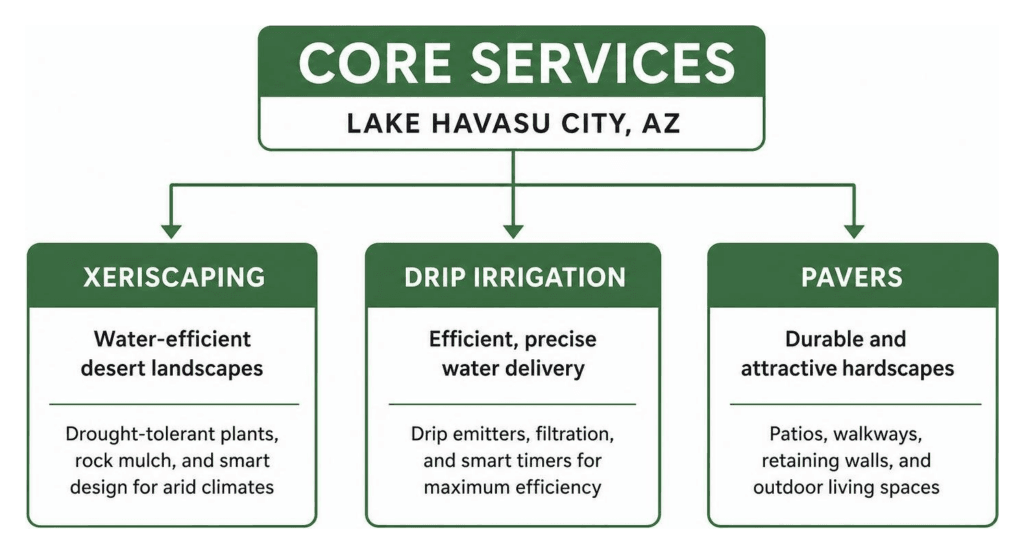
Partnering with an experienced, licensed local contractor ensures that your lawn is built to last. River Palm Landscaping has been serving Lake Havasu City, Golden Shores, and Parker, AZ since 2003, specializing in durable, climate-appropriate outdoor spaces that stand up to the elements while enhancing your home’s long-term usability.
Ready to transform your demanding yard into a clean, green desert oasis? Contact the team at River Palm Landscaping today to schedule a professional site evaluation and take the first step toward your new landscaping in Lake Havasu.