How Much Does Artificial Grass Cost and Installation Run in Lake Havasu?

Artificial grass cost and installation in the Lake Havasu City area typically ranges from around $12 to $22 per square foot, depending on materials, site conditions, and project complexity. Here’s a quick snapshot to orient your budget:
| Project Size | Estimated Total Cost Range |
|---|---|
| 100 sq ft | $1,200 – $2,200 |
| 300 sq ft | $3,600 – $6,600 |
| 500 sq ft | $6,000 – $11,000 |
| 1,000 sq ft | $12,000 – $22,000 |
Costs vary by site prep, turf quality, and labor. These are general ranges, not fixed quotes.
If you own a home in Lake Havasu City, Golden Shores, or Parker, you already know what natural grass demands in this climate: constant water, relentless upkeep, and still ending up with a patchy, stressed lawn by July.
Synthetic turf is a practical answer to that problem. But it’s also a real investment — and the pricing can feel confusing when you start comparing quotes.
The total cost depends on more than just the turf itself. Site preparation, base material, drainage, labor, and the shape of your yard all affect what you’ll pay. A simple rectangular backyard costs less to install than an irregular lot with slopes, tree roots, or existing hardscape to work around.
This guide is built for Lake Havasu homeowners who want a clear, honest picture of what a turf project actually costs — and what drives those costs up or down. Clear, realistic ranges based on real project variables.
Understanding Artificial Grass Cost and Installation in Arizona
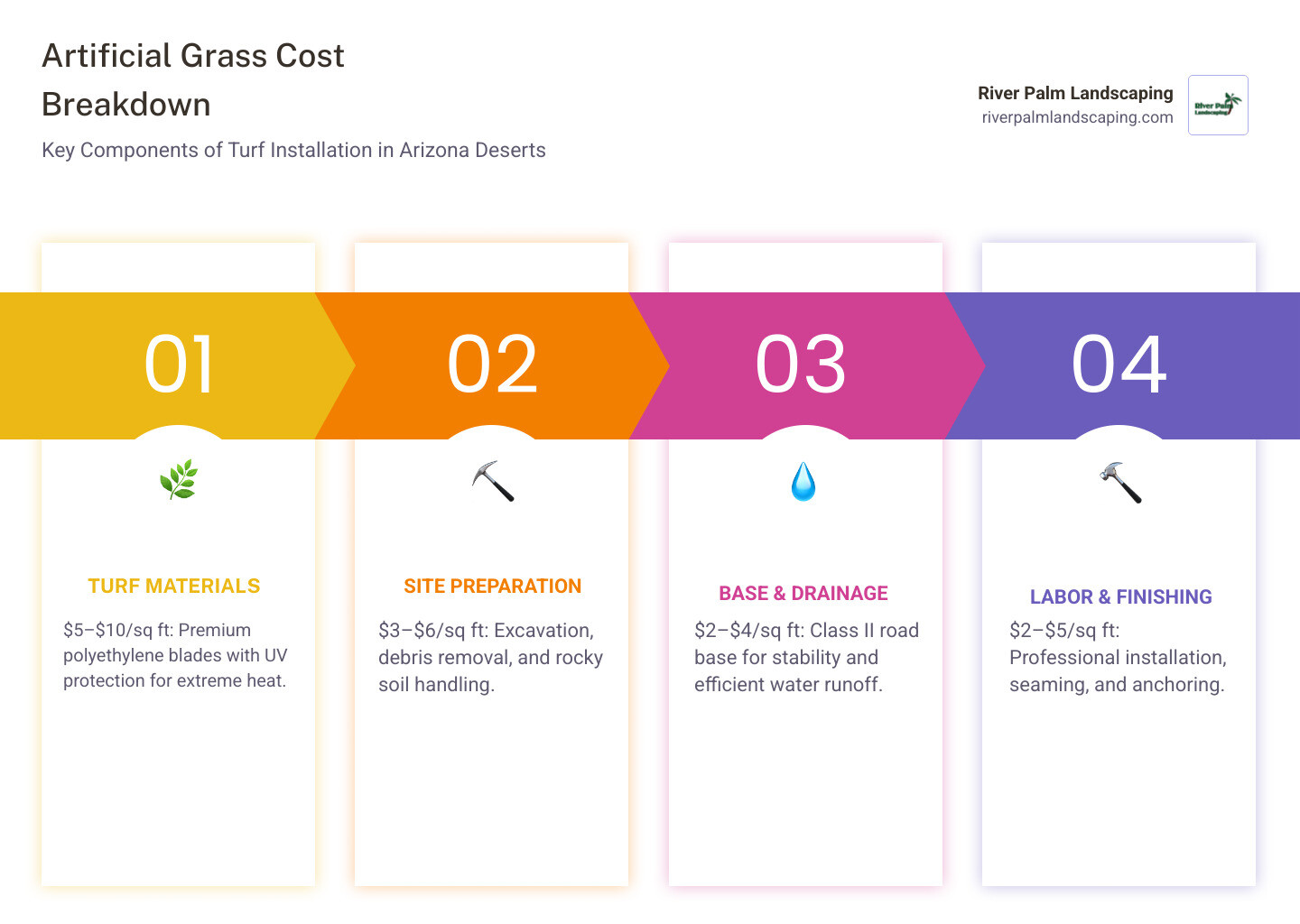
When planning a desert landscape, the first question is usually about the bottom line. In 2026, the national average for turf installation sits around $5,700 to $6,000, but in the Southwest, regional factors like rocky soil and extreme heat play a significant role in local pricing.

In Arizona, homeowners often see a broad range of $5 to $20 per square foot for the total project, though premium installations in cities like Lake Havasu more frequently land in the $12 to $22 range for high-quality, heat-stabilized materials. According to 2025 Artificial Turf Installation Cost data, the specific turf grade you choose—whether it is budget-friendly or a premium nylon—is one of the biggest variables in your initial quote.
Factors Influencing Artificial Grass Cost and Installation
The price on a turf roll is only one part of the equation. To get an accurate estimate of total project expenses, you have to look at the “hidden” variables of your specific yard:
- Yard Shape: A perfect rectangle is easy to measure and has minimal waste. If your yard has curves, circles, or irregular borders, expect a 15% to 25% increase in labor and material waste.
- Site Accessibility: Can a Bobcat or a dump truck get into your backyard? If the crew has to move tons of rock and soil by hand through a narrow side gate, labor costs will rise.
- Existing Landscape Removal: Clearing out old sod, weeds, or desert broom isn’t just about digging; it’s about hauling. Disposal fees for several tons of dirt and organic matter add up.
- Irrigation Capping: You can’t just lay turf over an active sprinkler system. Existing lines must be capped or rerouted to planters to prevent future leaks under your new lawn.
Reducing Your Artificial Grass Cost and Installation Expenses
While you shouldn’t cut corners on the quality of the turf itself, there are strategic ways to manage your budget:
- Off-Season Scheduling: In the Mojave Desert, winter is often the “low season” for landscaping. Scheduling your project during cooler months can sometimes lead to more flexible pricing from local contractors.
- Simple Geometric Designs: Stick to straight lines. Not only does this reduce material waste (turf usually comes in 15-foot wide rolls), but it also speeds up the installation time.
- Site Prep DIY: Some homeowners consider handling early demo work themselves, but in rocky caliche soil, improper prep often leads to costly rework later.
- Strategic Plant Grouping: Instead of turfing your entire lot, use turf as a functional “island” surrounded by desert-hardy plants like Lantana or Totem Pole cacti. This reduces the total square footage of turf needed while maintaining high curb appeal.
Material Selection and Performance in Extreme Heat
In Lake Havasu, the sun is your turf’s biggest enemy. Standard “big box” turf can literally melt or become painfully hot to the touch in 120-degree weather. Choosing the right material is a necessity for longevity.
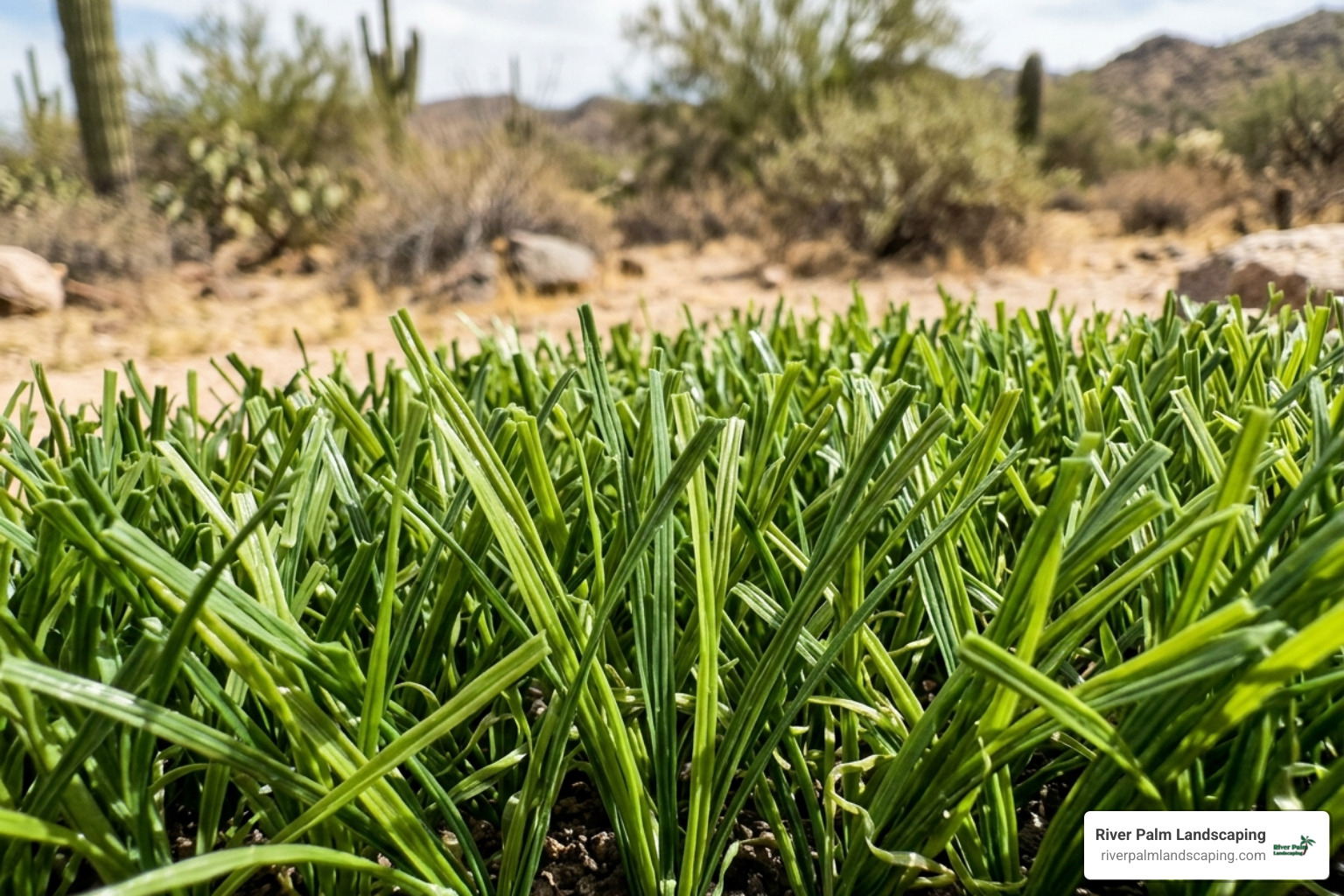
Synthetic Turf Material Comparison
There are three primary materials used in the industry, each with different price points and performance levels:
- Polypropylene: The most affordable option. It is great for low-traffic decorative areas but has the lowest melting point and can lose its shape in extreme heat.
- Polyethylene: The “gold standard” for residential yards. It looks the most realistic, is soft to the touch, and offers a good balance of durability and heat resistance.
- Nylon: The strongest and most heat-resistant material. It is often used in commercial settings or high-end putting greens. While it is more expensive (often adding 20% to the material cost), it won’t wilt under the Arizona sun.
When comparing options, look at the face weight (the weight of the yarn per square yard). A higher face weight usually means a denser, plusher lawn that can withstand more foot traffic. For more detail on these options, explore more info about synthetic turf options.
Specialized Applications for Havasu Homes
Not all turf is created equal. Depending on how you use your yard, you may need a specialized system:
- Pet-Friendly Turf: This requires a 100% permeable backing (often a mesh style) rather than just punched holes. This allows urine to drain instantly, preventing odors.
- Backyard Putting Greens: These require a shorter pile height and a very specific sub-base compaction to ensure a true “roll” for the ball.
- Rooftop and Patio Applications: These often require a drainage tile system underneath the turf to prevent water from pooling on the hard surface.
Professional vs. DIY Installation: Labor and Hidden Expenses
It is tempting to look at the How Much Does Artificial Grass Cost in 2025? data and think, “I can save $8 a square foot by doing this myself.” While possible, DIY installation in Lake Havasu is a massive undertaking.
A professional installation involves much more than just rolling out a green carpet. It requires:
- Excavation: Removing 2 to 4 inches of native soil.
- Base Layer: Bringing in and leveling tons of Class II road base.
- Compaction: Using a vibratory plate compactor to create a rock-hard, flat surface.
- Seaming: Using industrial adhesive and tape to make joints invisible.
The Importance of a Proper Sub-Base
In our rocky Arizona soil, the sub-base is the most critical part of the project. We typically use Class II road base—a specific mix of crushed rock and fines that compacts perfectly while still allowing for drainage. Without this, your turf will eventually develop “bubbles,” wrinkles, or low spots where water pools. A proper base also acts as a secondary weed barrier, preventing desert growth from pushing through your lawn.
Professional Installation Benefits
The main reason to hire a professional is the warranty and the seams. If a seam fails on a DIY project, you have a tripping hazard that is very difficult to fix. Professionals use specialized tools like power brooms and turf kickers to ensure the lawn is taut and the blades are standing upright. For those who want to keep their investment looking new, you can find more info about professional maintenance to see what goes into long-term care.
Long-Term Maintenance and Desert Landscaping Value
One of the biggest myths about artificial grass is that it is “zero maintenance.” While you won’t be mowing or fertilizing, you still need to care for it to ensure it lasts the full 15 to 20 years.
Seasonal Maintenance Tasks
To keep your yard looking its best in the Mojave Desert, follow this simple checklist:
- Monthly: Use a leaf blower to remove organic debris (leaves, pods from Palo Verde trees).
- Quarterly: Give the turf a deep rinse with a hose to wash away fine desert dust that can clog the drainage.
- Annually: Have the turf professionally power-brushed to pull the blades back up and redistribute the infill.
- As Needed: Replenish infill (the sand or acrylic granules between the blades) to protect the backing from UV rays.
Environmental Impact in the Mojave Desert
In Lake Havasu City, water conservation isn’t just a trend—it’s a necessity. In this climate, an average Arizona lawn can require tens of thousands of gallons of water per year. For a 1,000-square-foot lawn, that is 55,000 gallons of water saved annually. Beyond water, you are eliminating the need for chemical fertilizers and gas-powered mowers, significantly reducing your home’s carbon footprint.
Return on Investment for Arizona Homeowners
While we don’t promise a specific dollar-for-dollar increase in home value, artificial turf is a massive selling point in the Parker and Lake Havasu markets. It transforms a dusty, unusable backyard into a “year-round room.” When you factor in the saved costs of water, monthly landscaping services, and seed/fertilizer, most homeowners find the system pays for itself in roughly 5 to 8 years.
Frequently Asked Questions
Do I need a permit or HOA approval for artificial turf in Lake Havasu?
Most HOAs in Lake Havasu City and Golden Shores allow artificial turf, but they almost always require an architectural review. You will likely need to submit a sample of the turf, a site plan showing where it will be installed, and a description of the border materials (like pavers or rock). Some local building codes may also have “permeable surface” requirements, so it is always best to check with the city before digging.
How long does synthetic grass last in the Arizona sun?
High-quality, UV-stabilized turf installed by a professional typically lasts 15 to 25 years. Lower-end products may begin to fade or become brittle after 5 to 7 years. The key is the “UV inhibitor” mixed into the plastic during manufacturing—it acts like a permanent sunscreen for your grass.
Is artificial grass safe for pets in high temperatures?
Yes, but it requires specific choices. We recommend using antimicrobial acrylic-coated sand infill rather than standard rubber crumbs, as rubber absorbs significantly more heat. Additionally, pet owners should ensure their turf has a high-flow drainage backing. On the hottest days in Havasu (115°F+), it is always a good idea to give the turf a quick 2-minute “cooldown rinse” before letting pets out to play.
Conclusion
Investing in artificial grass cost and installation is about more than just aesthetics; it is about reclaiming your time and your water bill. For homeowners in Lake Havasu City, Golden Shores, and Parker, it is a practical way to enjoy a lush, green environment without the struggle of maintaining natural sod in a desert climate.
River Palm Landscaping has been a part of the Lake Havasu community since 2003. We specialize in durable, heat-ready outdoor spaces that are built to last in our unique environment. Whether you are looking for a small pet run or a full backyard transformation, our team focuses on the technical details—like proper grading and sub-base compaction—that ensure your investment looks great for decades.
Ready to see what a professional turf system could look like in your yard? Request a quote for synthetic turf installation from the local experts at River Palm Landscaping today.