Why Professional Desert Planting Is Different in Lake Havasu City
Establishing a vibrant landscape in the Mojave Desert is exceptionally difficult due to extreme heat, poor soil, and intense winds that quickly kill standard plants. Homeowners who attempt DIY planting often face immediate transplant shock and wasted investments. Hiring a professional desert plant installation service is the most reliable way to design and install a resilient landscape that actually survives Lake Havasu City’s harsh climate.
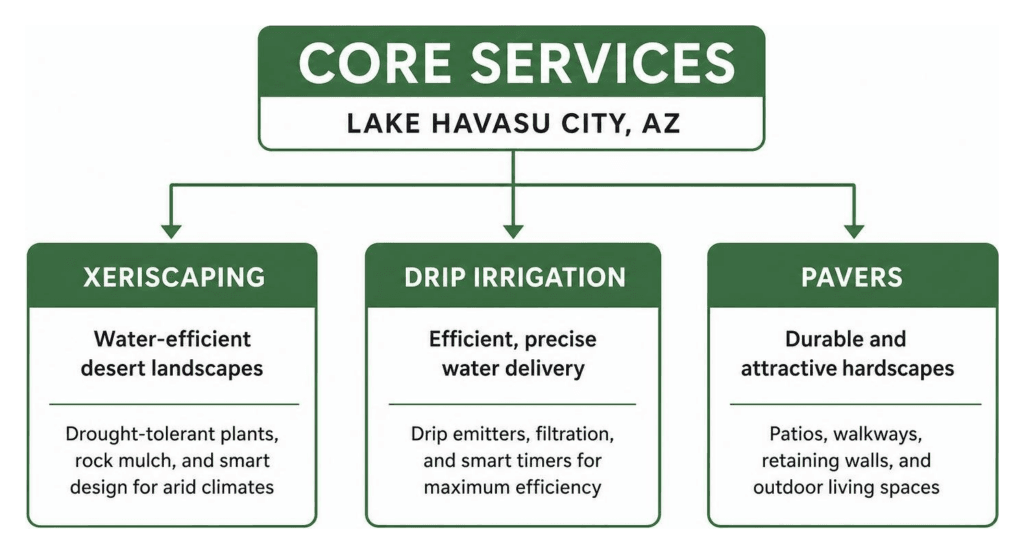
- What’s included: Plant delivery, in-ground planting, drip irrigation setup, decorative rock, boulders, and low-voltage lighting
- Best plants for the area: Palo Verde, Mesquite, Red Yucca, native sage, native cacti, and succulents
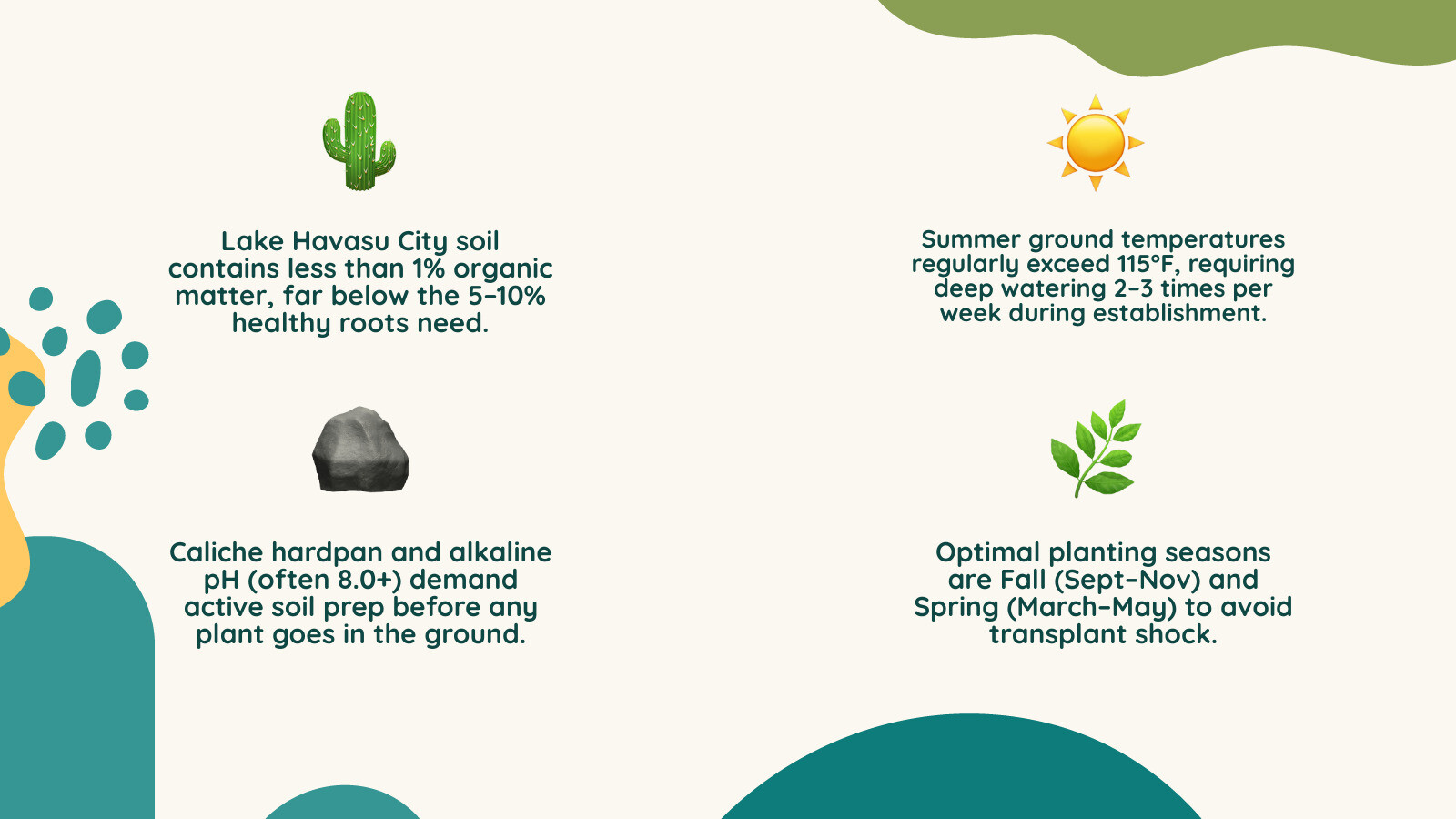
- Key soil challenge: Caliche hardpan and alkaline pH (often 8.0+) require active soil prep before any plant goes in the ground
- Optimal planting seasons: Fall (September–November) and Spring (March–May) to avoid transplant shock
- Watering after install: Deep watering 2–3 times per week during the establishment period
- Pricing: Varies by plant size, site conditions, and complexity — container size is the biggest cost driver
Lake Havasu City soil contains very little organic matter, far below what healthy plant roots typically need. Summer ground temperatures regularly exceed 115°F, and the rocky, compacted soil often hides a layer of caliche that acts like concrete just below the surface. Without proper soil preparation, drainage work, and a calibrated irrigation plan, even hardy desert plants struggle to establish.
That’s exactly why a correctly planned and installed desert landscape is worth getting right the first time.
Quick desert plant installation service terms:
- desert garden design in Lake Havasu
- efficient irrigation for desert gardens
- cost of desert landscaping
What to Expect from a Specialized Desert Planting Service
Attempting to transport and install desert plants without professional equipment is a recipe for property damage and painful physical injuries. Transporting mature, thorny desert plants like agave or ocotillo in a personal vehicle often results in a ruined car interior and severe pricks. A professional desert plant installation service eliminates these risks by utilizing specialized transport vehicles, heavy-duty safety gear, and experienced crews.

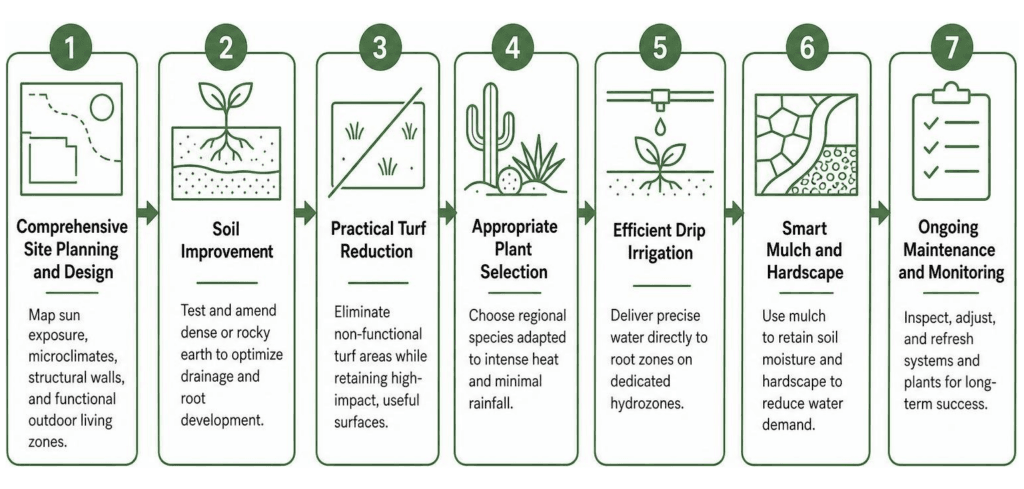
A comprehensive installation service covers much more than just digging holes. It is an integrated process that transforms your yard into a cohesive, functional ecosystem:
- Delivery and Handling: Transporting delicate, heavy, or highly thorny specimens safely from the nursery to the planting site.
- Excavation and Heavy Machinery: Utilizing specialized equipment to handle larger container sizes, such as 30-inch and 36-inch boxes, which are far too heavy for manual labor.
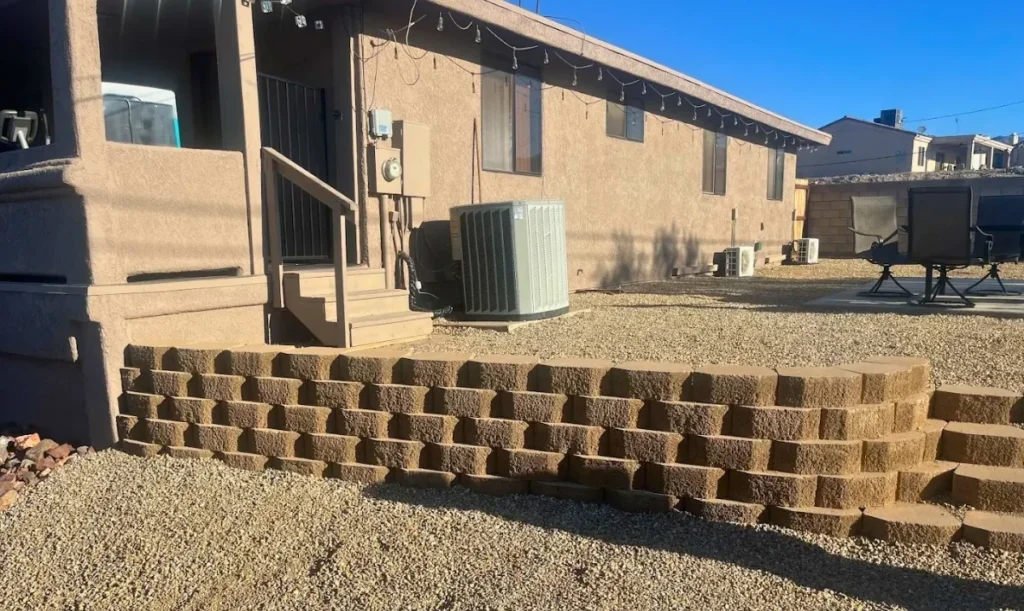
- Decorative Rock and Boulders: Integrating local rock varieties like Decomposed Granite (DG) or Pea Gravel as a ground cover, along with larger accent boulders to create depth.
- Low-Voltage Lighting Setup: Installing path lights, uplights, and accent fixtures to highlight plant textures at night, ensuring the existing low-voltage transformer has the capacity to support any added wattage.
- Irrigation Integration: Connecting new specimens to existing lines or building out a fully engineered drip system.
Whether you are starting from scratch or upgrading an existing yard, hiring a team with local expertise ensures your landscape is built to last. For a closer look at comprehensive design principles, read our guide on desert landscaping. You can also explore options for sourcing and setup through specialized services like those detailed in professional nursery delivery and setup.
Overcoming Desert Soil Challenges: Caliche, Alkalinity, and Compaction
The geology of Lake Havasu City, Golden Shores, and Parker, AZ, presents severe obstacles for plant roots. Native desert soils are primarily composed of sand, heavy clay, gravel, and a concrete-like subsurface layer of calcium carbonate known as caliche.
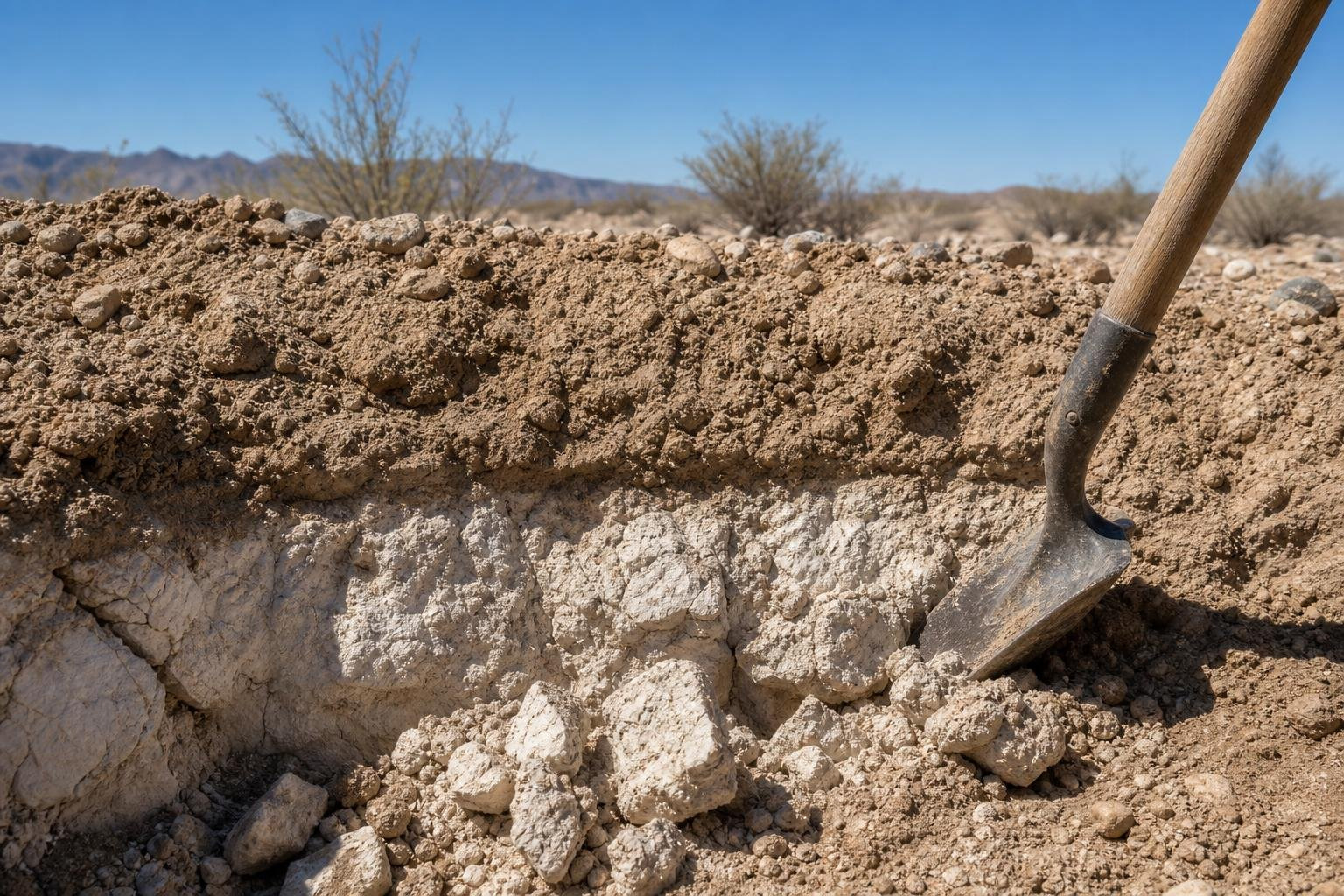
To protect your landscaping investment, three primary soil issues must be addressed during installation:
- Extremely Low Organic Matter: While healthy plants typically require soil rich in organic matter to absorb nutrients, local desert soils are highly deficient.
- High Alkalinity: Most local soils are highly alkaline, with pH levels ranging between 7.5 and 9.0. This high pH chemically locks up essential nutrients like iron, zinc, and manganese, making them unavailable to plants.
- Caliche Hardpan: This rock-hard subsurface layer physically blocks root penetration and prevents water drainage, drowning root systems during rare heavy rains or regular irrigation.
To overcome these challenges, professional installers do not simply dig a hole and drop the plant in. Doing so creates a “bathtub effect” where water pools in the compacted hole, rotting the roots. Instead, crews must physically score or jackhammer through the caliche layer to establish proper drainage.
Furthermore, soil amendments must be handled scientifically. A common mistake is adding a shallow, unmixed layer of organic matter to the topsoil. This causes “soil layering,” which severely restricts the downward movement of water. To avoid this, organic amendments should be mixed thoroughly with the native soil at a deep level.
Installers often use a “coffee can drainage test” and apply gypsum to reclaim sodium-heavy soils, or use ammonium sulfate to simultaneously supply nitrogen and lower the soil pH. Learn more about local soil prep and xeriscaping strategies in our guide on professional xeriscaping in Golden Shores.
Engineering Water Efficiency: Irrigation and Smart Plant Grouping
A significant portion of residential water use is directed outdoors. In the arid climates of Lake Havasu City and Parker, conserving water while keeping plants healthy requires a highly engineered irrigation system.
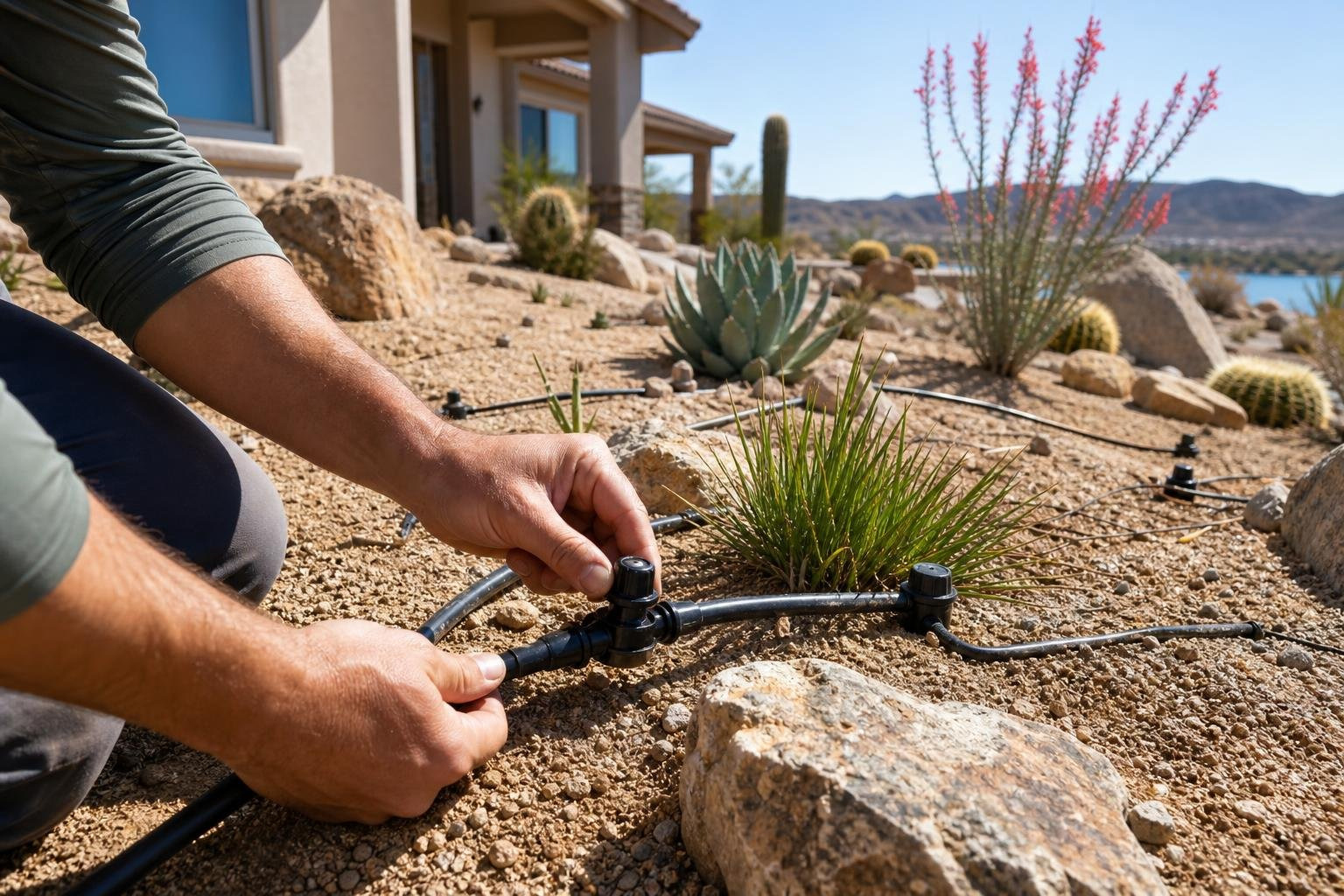
A well-designed desert plant installation service relies heavily on grouping plants with similar water, soil, and sun requirements onto the same irrigation valve. For example, deep-rooted desert trees like Mesquite should never be on the same zone as shallow-rooted succulents, as their watering frequencies and volumes are completely different.
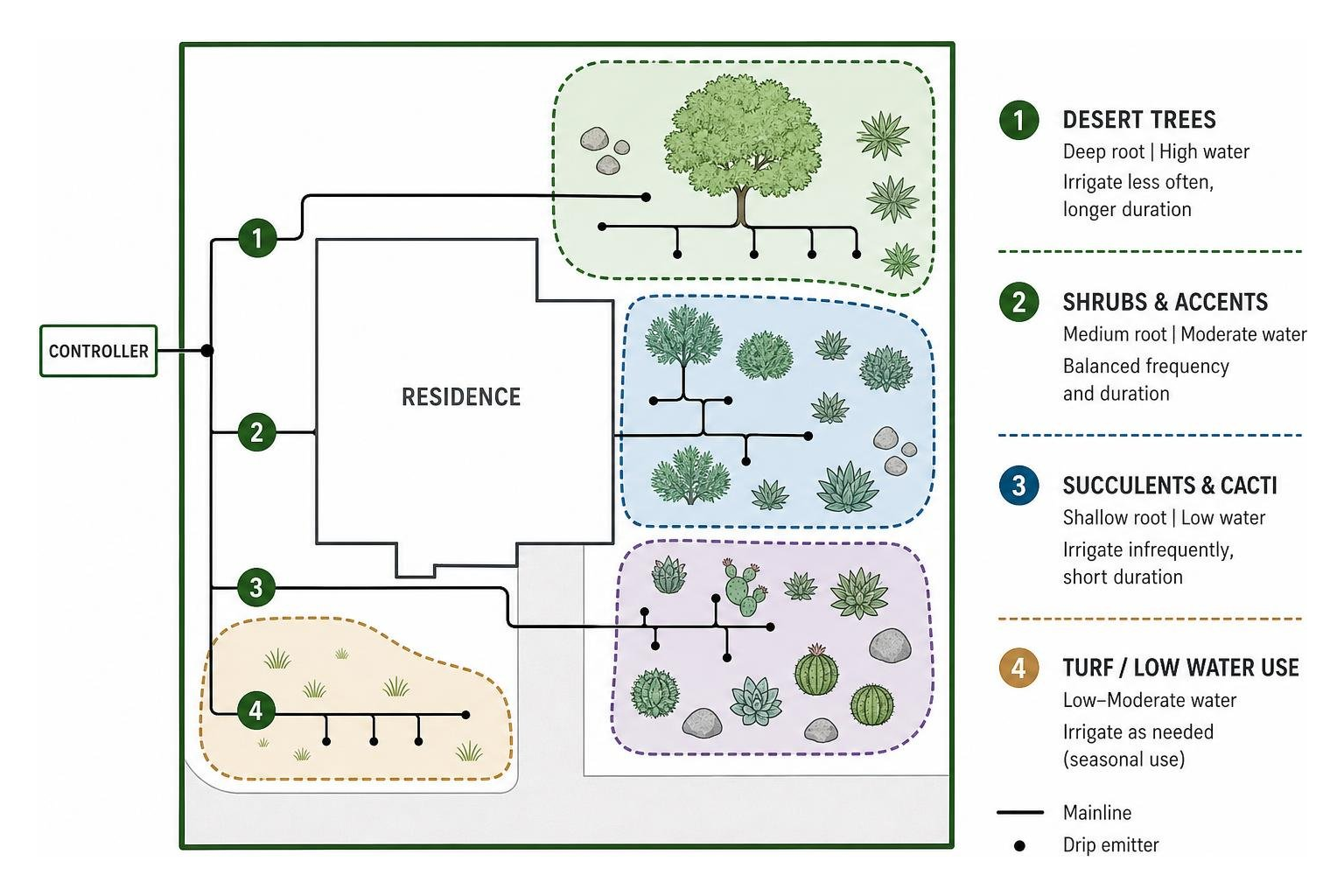
Irrigation scheduling must also adapt dynamically to the seasons. In our region, temperature swings are extreme:
- Peak Summer (July): Plants require more watering in the month of July alone than they do for the entire four-month winter block of November, December, January, and February combined.
- Late Fall (November): By November, irrigation requirements drop to approximately one-third of peak summer needs.
Using smart controllers and dedicated drip irrigation systems ensures water is delivered directly to the root zones, minimizing evaporation from the dry desert winds. Homeowners can choose between full-service irrigation design or add-on systems integrated into existing setups, provided the current hardware is evaluated for capacity first. For more technical insights, read about efficient irrigation for desert gardens.
Designing for the Extreme Arizona Climate
Designing a sustainable landscape in the tri-state area requires planning for intense environmental forces. Local temperatures can fluctuate wildly, with historic winter lows dropping near freezing and summer highs soaring up to 117°F or more. Additionally, seasonal desert winds can reach speeds of 60 mph or higher, rapidly drying out unestablished foliage and physically destabilizing newly planted trees.
To combat these factors, installers analyze the unique microclimates of your property. Placing deciduous desert trees on the south and west sides of a home blocks intense summer heat while allowing the winter sun to naturally warm the structure. High-wind areas require proper tree staking and the strategic placement of wind-resistant shrubs to prevent damage during monsoons.
Choosing the Right Flora for Your Desert Landscape
Selecting species that are biologically adapted to our specific climate is the easiest way to ensure long-term survival. Native and desert-adapted plants balance beautiful aesthetics with extreme drought tolerance. Excellent choices include:
- Desert Trees: Palo Verde, Mesquite, and Desert Willow provide dappled shade, which lowers ground temperatures for smaller plants underneath.
- Hardy Shrubs: Chihuahuan Sage (Leucophyllum) offers vibrant purple blooms and incredible wind resistance.
- Succulents & Accents: Red Yucca (Hesperaloe parviflora), Agaves, and native cacti provide structured, modern architectural lines with minimal water requirements.
For a comprehensive list of recommended species, check out our list of highly resilient desert species and discover creative layout options in our guide to desert landscaping ideas. You can also read about professional xeriscaping methods and maximizing your landscape with desert landscaping to plan your layout.
Protecting Native Species During Installation
In certain parts of the Mojave Desert, protected native species like the Joshua Tree (Yucca brevifolia) require strict adherence to local regulations. If you have native Joshua Trees on or near your property, landscape installation must proceed with extreme caution:
- Root Protection: Never build walls, patios, or dig trenches within ten feet of the base of a Joshua Tree, as their shallow root systems are highly sensitive to disruption.
- Watering Methods: Unlike typical desert plants that prefer basin watering, recently transplanted Joshua Trees should be watered every 2 to 4 weeks during spring and summer using a top-down method (sprinkling the fronds and trunk).
- Permitting: Always verify local municipal codes before attempting to relocate or alter any protected desert species.
To learn more about hardy, drought-tolerant options that pair well with native flora, view our guide on drought-proof garden plants.
Cost Breakdown and Warranty Considerations
The cost of a professional desert plant installation service depends on several variables, including site accessibility, the presence of caliche, and the overall complexity of the project. However, the primary cost driver is always the container size of the plants being installed. Larger plants require more labor, deeper excavation, and often heavy machinery to plant safely.
The table below outlines typical industry planting fees by container size, along with equipment and material expectations:
| Container Size | Average Installation Fee | Equipment & Labor Requirements |
|---|---|---|
| 1-Gallon | $5 | Manual hand tools; quick installation |
| 5-Gallon | $20 | Manual digging; basic soil amendment |
| 15-Gallon | $50 | Two-person manual excavation; standard amendment |
| 25-Gallon | $125 | Heavy manual labor or light machinery; soil prep |
| 30-inch Box | $250 | Compact utility loader/excavator required |
| 36-inch Box | $350 | Heavy machinery (excavator/crane); extensive site prep |
| Decorative Rock | $150 per ton (labor) | Heavy equipment, wheelbarrows, and manual spreading |
Note: These are generalized labor and installation fee ranges. Total project costs will vary based on specific site conditions and material selections. For a broader look at budgeting, read our guide on the cost of desert landscaping.
Warranty Terms and Exclusions
Reputable installation services typically offer a standard 90-day warranty on professionally installed plants. This warranty ensures that if a plant fails due to improper handling or installation errors during its initial establishment phase, it will be replaced.
However, certain conditions will immediately void this warranty:
- Owner Negligence: Overwatering or underwatering contrary to the provided irrigation schedule.
- Pest Damage: Failure to protect plants from local pests, rabbits, or insects.
- Acts of God / Extreme Weather: Damage caused by unpredictable natural phenomena, including unexpected hard frosts, extreme windstorms, flooding, or unseasonal heatwaves.
For more details on professional standards and what to look for in local services, check out the resources provided on industry standards for plant establishment.
Frequently Asked Questions About Desert Landscaping
How often should newly installed desert plants be watered?
Newly installed desert plants are not yet drought-tolerant; they require consistent moisture to build deep root systems. During their first season, they should receive deep watering 2 to 3 times per week. Once established (typically after one full year in the ground), watering frequency can be significantly reduced according to seasonal demands.
Can I add new low-voltage lighting to my existing landscape transformer?
Yes, but you must first calculate the unused wattage capacity of your existing transformer. If the total wattage of your existing lights plus the new fixtures exceeds 80% of the transformer’s rated capacity, you will need to upgrade the transformer or install a secondary power unit to avoid system failures.
What is caliche and how do installers break through it?
Caliche is a concrete-like layer of soil cemented together by calcium carbonate. It is incredibly common in local desert soils. Professional installers break through caliche using heavy-duty excavation tools, such as jackhammers, digging bars, or heavy excavators, to ensure proper root growth and drainage.
Conclusion
Creating a beautiful, durable desert landscape that stands up to the extreme heat of Lake Havasu City, Golden Shores, and Parker, AZ, requires specialized horticultural and engineering expertise. From breaking through stubborn caliche to designing highly efficient drip systems, getting the installation right the first time is the only way to protect your outdoor investment.
Established in 2003, River Palm Landscaping is a licensed, experienced local contractor specializing in desert-appropriate landscape design and construction. Our team understands local soil chemistry, water conservation requirements, and extreme weather patterns. We build durable, functional, and visually striking outdoor spaces that enhance your property’s long-term value.
Ready to transform your property into a resilient desert paradise? Please contact River Palm Landscaping today to schedule your professional consultation.