What Qualifies a Landscaper as Licensed and Experienced in Lake Havasu?
To find a qualified licensed landscaper in Lake Havasu, start by verifying the contractor’s Arizona ROC license, confirming at least 15 years of local operating history, reviewing completed local landscaping projects, and asking how they handle caliche soil, irrigation, grading, drainage, and drought-tolerant design. A strong candidate should be able to show real experience with Lake Havasu-area properties, not just general landscaping knowledge.
This matters because landscaping in western Arizona is different from landscaping in milder climates. Rocky soil, hillside lots, lake-view properties, RV parking areas, monsoon drainage, and extreme summer temperatures all affect how a yard should be designed and installed. Homeowners should look for a contractor who can explain how those conditions influence plant selection, drip irrigation, rock placement, paver installation, drainage planning, and long-term maintenance.
While several licensed landscapers serve the Lake Havasu area, publicly available information does not always verify years in business or specialization in desert landscaping. Rather than relying on incomplete online directories, this guide explains how to identify experienced contractors and what qualifications to verify before requesting estimates.
How to Evaluate Licensed Landscapers in Lake Havasu
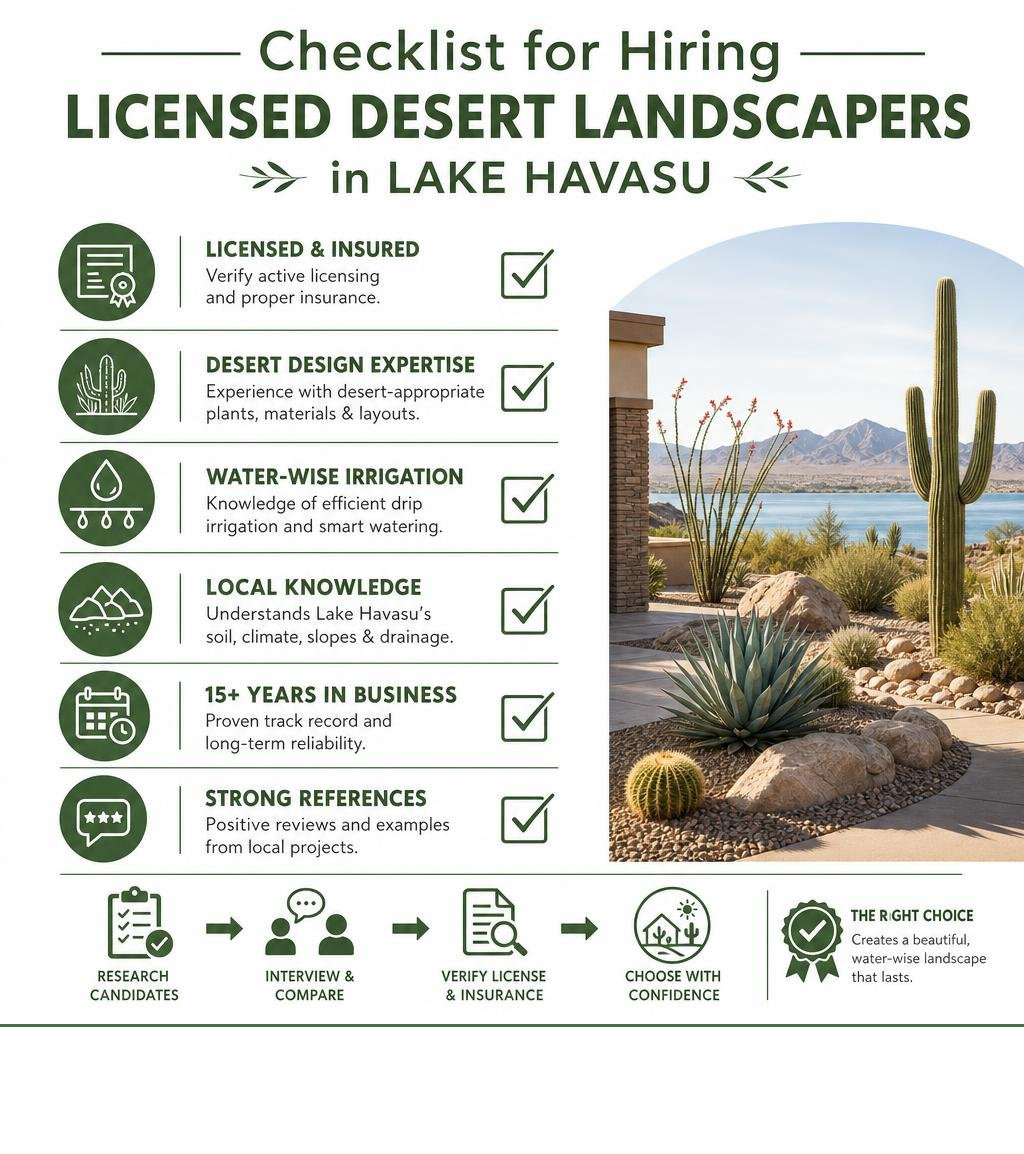
Use this checklist before hiring a landscaper for a desert-appropriate project:
- Verify the company’s Arizona ROC license through the Arizona Registrar of Contractors.
- Confirm how long the company has operated locally, especially whether it has 15+ years serving Lake Havasu-area properties.
- Review recent desert landscaping projects, including front yards, hillside lots, lake-view homes, artificial turf areas, and rock-based designs.
- Ask about experience with caliche soil, grading, drainage, irrigation design, and drought-tolerant plant selection.
- Request local references from homeowners with similar property conditions.
- Confirm insurance, warranties, project timelines, and how changes are handled once work begins.
In Arizona, any contractor performing work that exceeds a certain monetary threshold, currently $1,000 or requiring a building permit, must hold a valid license from the Arizona Registrar of Contractors. An ROC license is not just a formality; it indicates that the contractor has met state requirements and gives homeowners a formal way to check licensing status before signing a contract. You can verify a landscaper’s license by visiting the Arizona Registrar of Contractors website and searching by ROC number or business name.
Fifteen or more years of local experience is a practical benchmark because it demonstrates a contractor has successfully designed and installed landscapes through changing water regulations, extreme weather, and evolving homeowner preferences.
Local knowledge is one of the strongest indicators of an experienced desert landscaper. A qualified contractor should understand how intense sun exposure affects plant placement, how rocky caliche soil changes installation methods, why drainage matters during monsoon storms, and how efficient irrigation protects both the landscape and the homeowner’s water budget.
Established firms also tend to adapt as homeowner needs change. In local desert communities, that may mean more xeriscape conversions, artificial turf designed for high heat, RV-friendly layouts, better drainage around retaining walls, and water-conscious plant palettes. These are the kinds of practical details homeowners should listen for when comparing contractors.
Why is Desert-Appropriate Design Essential When Choosing a Landscaper?
Many homeowners initially envision lush, green lawns or tropical-inspired oases, only to face the harsh reality of high water use, constant maintenance, and plants struggling to survive in Lake Havasu’s arid environment. When choosing a landscaper, the key question is whether the contractor can design for the desert from the beginning rather than forcing a generic landscape plan into a harsh climate.
A qualified desert landscaper should be able to explain how their designs reduce water use, limit maintenance, and protect long-term property value. Instead of simply recommending plants or rock colors, they should connect every choice to Lake Havasu conditions: extreme summer heat, reflected sun from hardscape, rocky soil, drainage during monsoon storms, and the need for durable materials around patios, driveways, pool areas, and RV parking spaces.
Key features of desert landscaping include gravel, river rock, decomposed granite, boulders, drought-tolerant plants, and efficient irrigation. When evaluating a contractor, ask why they recommend specific materials and plants for your property. The best answers should account for sun exposure, slope, soil conditions, drainage patterns, and how the finished yard will be used.
Experienced desert landscapers should understand how to design efficient drip irrigation systems that perform well in Lake Havasu’s climate. Drip irrigation delivers water directly to plant root zones, helping reduce evaporation and runoff. A knowledgeable contractor should also explain watering zones, plant groupings, controller settings, and repair access so the system remains practical after installation. For homeowners comparing bids, this level of detail is often more valuable than a simple promise of a “water-efficient yard.”
Adapting to local conditions is where true expertise becomes clear. Contractors should know how to address rocky caliche soil, grade changes on hillside properties, lake-view lots exposed to wind and sun, and drainage around patios or retaining areas. Without this specialized knowledge, even an attractive design can fail prematurely.
Beyond functionality, there is also a distinct aesthetic appeal to intentional desert design. Strong contractors create clean lines, balanced rock and plant groupings, and outdoor spaces that feel connected to the desert environment rather than copied from another region. If you want to see how these choices come together in finished landscapes, River Palm’s guide to desert landscaping offers additional examples, while its article on efficient irrigation for desert gardens in Lake Havasu explains how watering strategy supports long-term landscape performance.
What Key Services Should Experienced Desert Landscapers Offer?
When homeowners attempt to manage complex landscaping projects themselves or hire inexperienced contractors, they often encounter mismatched materials, inefficient layouts, drainage problems, and systems that break down under the desert sun. A strong desert landscaping partner should offer connected services rather than treating design, grading, irrigation, hardscape, plant selection, and long-term functionality as separate afterthoughts.
Start by asking whether the contractor develops complete landscape plans and manages the installation sequence from concept to completion. Full landscape installation experience matters because site preparation, grading, material sourcing, drainage planning, irrigation layout, and installation timing all affect the finished yard. For Lake Havasu-area homeowners, that coordination is especially important on rocky lots, sloped yards, and properties where outdoor living areas must work around RV parking, pool decks, or lake-view patios.
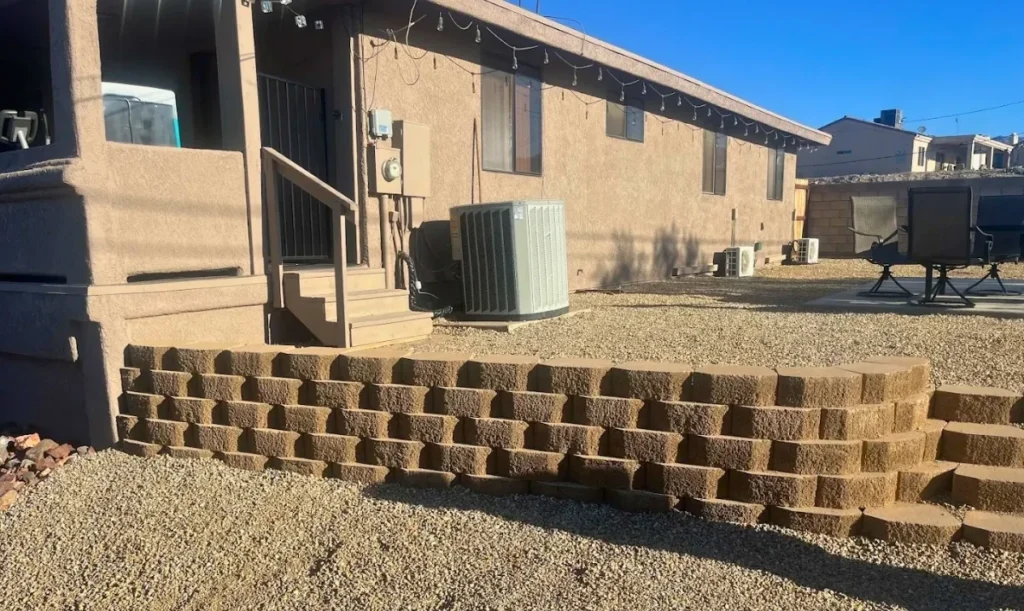
Ask how the contractor handles hardscaping. A qualified contractor should be able to explain paver installation, retaining walls, walkways, patios, and other features designed to withstand heat, movement, and drainage pressures. Certifications and documented hardscape experience can help homeowners evaluate whether a company follows durable installation practices. For more context, River Palm’s desert hardscape installation guide for Lake Havasu homes explains why material choice and installation methods matter in this environment.
Ask whether water features are designed with desert performance in mind. If a contractor recommends one, they should explain how they limit evaporation, manage recirculation, and place the feature so it complements the design without creating unnecessary maintenance.
Ask detailed questions about artificial turf installation before comparing turf bids. Experienced landscapers should discuss base preparation, drainage, heat exposure, traffic patterns, pet use, and whether cooler turf options make sense for the property. If you are comparing turf options, River Palm’s artificial grass cost guide for Lake Havasu can help explain which factors influence the overall investment.
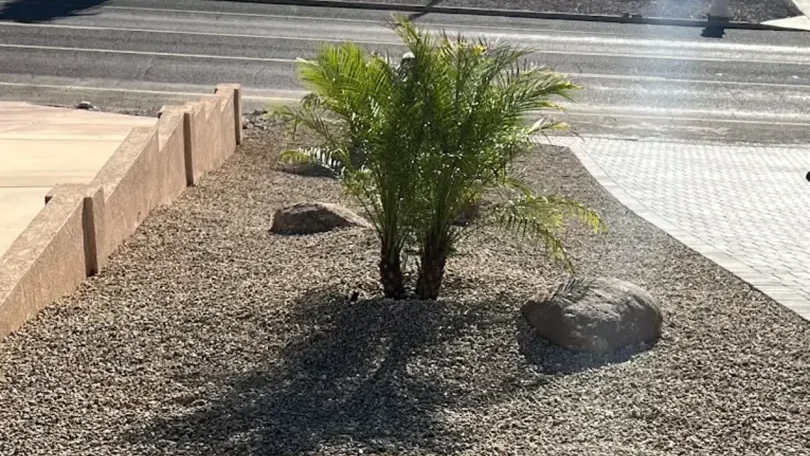
Ask how plant and rock selections are made for the specific property. Contractors should choose desert-hardy plants, position them for sun and irrigation needs, and select rock, gravel, river rock, or boulders that support drainage, soil retention, and visual balance.
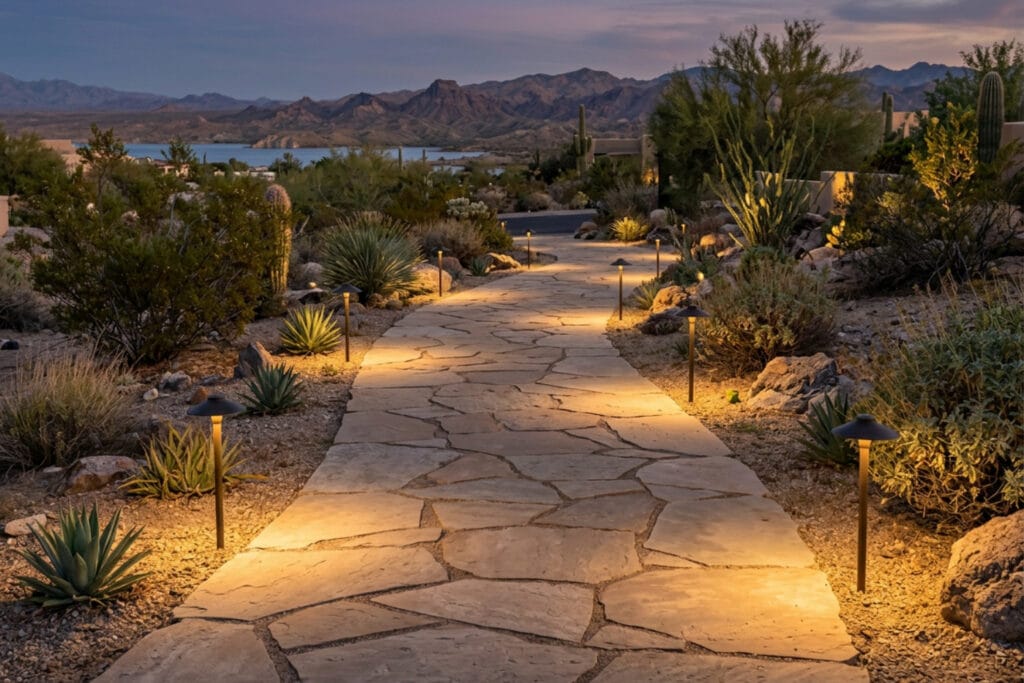
Ask whether low-voltage landscape lighting is included in the overall design plan. A contractor who understands outdoor living in Mohave County should know how to light walkways, patios, retaining areas, and focal plants without creating glare or excessive energy use.
Finally, ask whether the contractor designs irrigation systems in-house, performs grading and drainage work, installs hardscaping, and develops complete landscape plans rather than subcontracting each phase without clear coordination. Specialists should be able to design water-saving drip systems, separate plant zones by water needs, identify leaks, and plan repairs in a way that protects both plant health and water efficiency.
How Can Homeowners Choose the Right Long-Term Desert Landscaping Partner?
A common pitfall for homeowners is selecting a landscaper based solely on the lowest bid, often leading to substandard work, unexpected additional costs, and a landscape that doesn’t meet expectations or withstand the desert climate. Selecting a landscaper for a significant investment like desert landscaping requires careful consideration beyond just a price quote; look for a partner who demonstrates expertise, reliability, and a commitment to your long-term satisfaction.
The first crucial step is verifying credentials. Always check for a valid Arizona ROC license, bonding, and insurance. These are non-negotiable protections for homeowners. Additionally, ask for proof of longevity in business. A company like River Palm Landscaping, established in 2003, has a verifiable history that speaks volumes about their stability and experience.
A thorough portfolio and references are invaluable. Review before-and-after examples of desert-appropriate projects to gauge the quality and style of their work. More importantly, speak with past clients about their experience regarding reliability, quality of work, and how the company handled any challenges or problem-solving. This direct feedback can provide insights that a portfolio alone cannot.
Ensure the company’s specialization in desert design aligns with your needs. Their portfolio and expertise should clearly demonstrate a focus on xeriscaping, drought-tolerant plants, and water-efficient solutions specific to Lake Havasu’s unique environment. This specialization ensures they understand the nuances of the local climate and soil.
Communication and transparency throughout the process are vital. Evaluate the clarity of their proposals, contracts, and project timelines. A good partner will ensure open communication from the initial design phase through installation, keeping you informed and involved.
Understanding warranties and guarantees is also critical. Inquire about what warranties are offered on plants, irrigation systems, and hardscaping installations. This shows a company’s confidence in their work and provides you with recourse should issues arise.
Experienced landscapers excel at avoiding common pitfalls that newcomers often overlook. This includes proper grading to prevent water pooling, selecting the right plants for specific microclimates within your yard, and designing efficient irrigation systems that truly conserve water. Their long-term experience means they’ve learned from past projects and can proactively address potential problems.
To further guide your selection process, consider this resource on how to choose Arizona desert landscape contractor. For ideas specific to your property’s entrance, explore front yard landscaping desert homes Lake Havasu.
What Are the Investment Considerations for Desert Landscaping Projects?
Many homeowners compare landscaping bids by looking only at upfront cost, but in Lake Havasu, the better question is which contractor will create the strongest long-term value. A lower bid can become expensive if poor grading causes drainage problems, irrigation is inefficient, plants fail in extreme heat, or materials shift because the base preparation was rushed.
Experienced contractors often provide greater long-term value because they understand how the entire landscape system works together. Proper grading helps move water away from patios, foundations, retaining areas, and RV parking surfaces. Efficient irrigation reduces waste while supporting plant health. Durable plant selection lowers replacement costs. Thoughtful drainage planning helps prevent erosion during monsoon storms. Correct hardscape installation reduces settling, cracking, and repair needs.
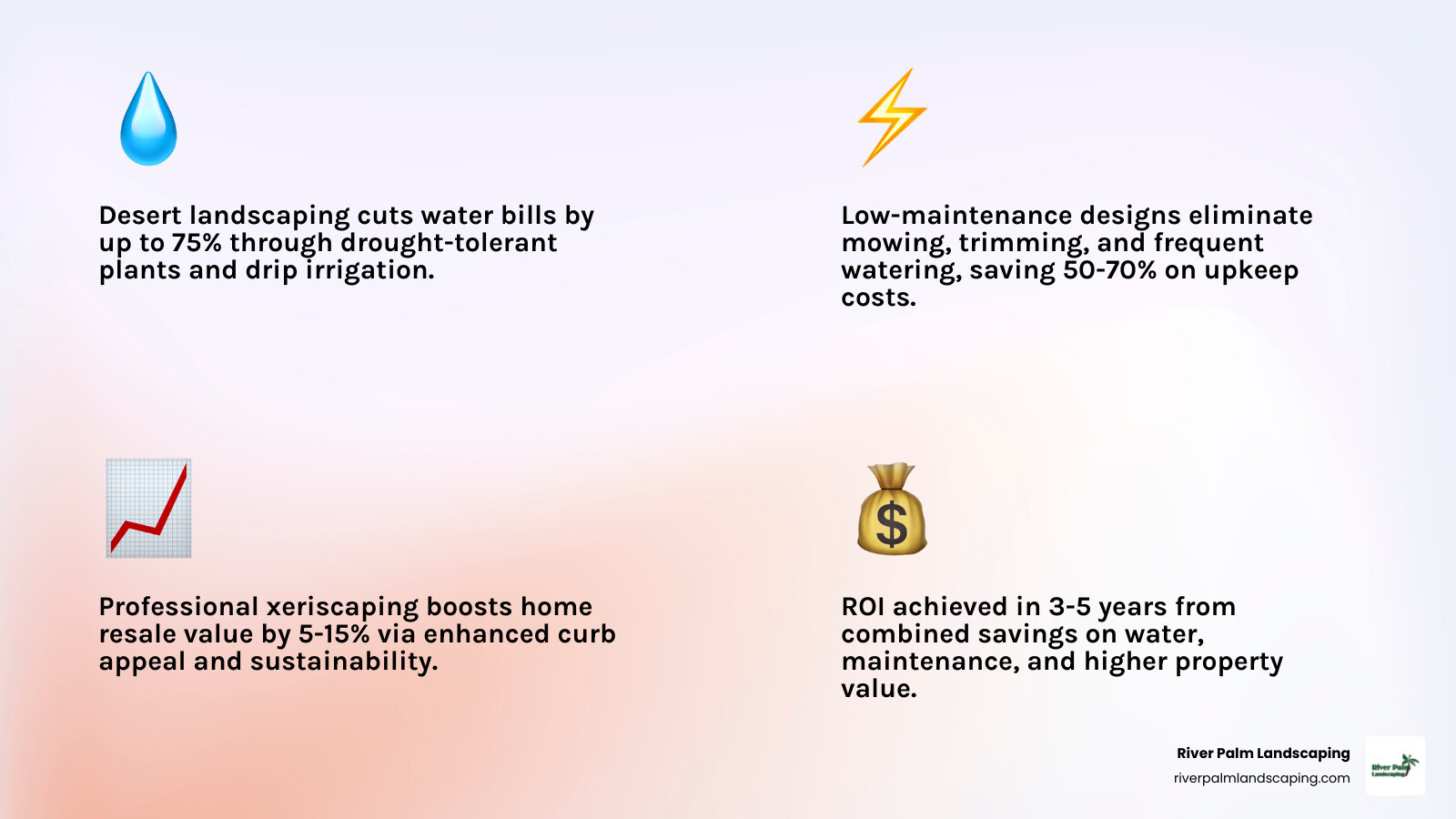
Project costs still vary based on the size of the yard, the amount of hardscape, the quality of artificial turf, the complexity of irrigation, drainage needs, slope, access, and chosen materials. A lake-view lot with grade changes, a Golden Shores property with wide open sun exposure, or a Parker-area yard designed around vehicle access may require different planning than a flat front-yard refresh.
A qualified landscaper should provide a clear estimate that explains the scope of work, materials, preparation steps, irrigation details, and any assumptions that could affect pricing. This transparency helps homeowners compare bids based on value rather than choosing the lowest number without understanding what is included.
To get a precise understanding of what your specific project might entail, request an on-site consultation from an experienced local provider. River Palm Landscaping offers landscaping services in Lake Havasu and can evaluate the property conditions that affect design, installation, and long-term maintenance. Homeowners ready to discuss a project can also contact River Palm Landscaping for a consultation.
Frequently Asked Questions About Hiring a Licensed Landscaper in Lake Havasu
What is xeriscaping, and why is it important for Lake Havasu?
Xeriscaping is a landscaping method focused on water conservation through the use of drought-tolerant plants, efficient irrigation, and appropriate design principles. It’s vital for Lake Havasu due to the arid climate, extreme heat, and the critical need to conserve precious water resources. Implementing xeriscaping helps homeowners create beautiful, sustainable outdoor spaces that thrive in the local environment while significantly reducing water consumption.
How can I verify a landscaper’s license in Arizona?
You can verify an Arizona landscaper’s license by checking their ROC (Registrar of Contractors) number on the Arizona Registrar of Contractors website. A valid license ensures they are bonded, insured, and meet state standards for technical competence and consumer protection. Always ask for the ROC number and confirm its validity before engaging a contractor for significant landscaping work.
What are the best low-maintenance plants for a desert landscape in Lake Havasu?
The best low-maintenance plants for Lake Havasu include a variety of cacti, succulents, agave, and native shrubs such as Lantana, Palo Verde, and the Totem Pole cactus. These plants are well-adapted to the local climate, require minimal water once established, and contribute to the authentic beauty of a desert landscape. Selecting the right plants for your specific yard’s sun exposure and soil conditions is key to a successful, low-maintenance design. For more ideas, consult the best low-maintenance desert plants.
Conclusion
Finding licensed landscapers in Lake Havasu with 15+ years of experience starts with verifying objective qualifications rather than comparing price alone. Verify the Arizona ROC license, confirm long-term local operating history, review completed desert projects, ask about caliche soil and drainage challenges, compare irrigation and grading recommendations, and speak with local references before choosing a contractor.
Homeowners across the Lake Havasu area should prioritize contractors who understand extreme summer heat, hillside lots, lake-view exposure, RV parking needs, monsoon drainage, drought-tolerant planting, and long-term maintenance. Those details separate true desert landscaping expertise from generic landscape installation.
River Palm Landscaping is one established local contractor that meets many of the qualifications discussed throughout this guide, including Arizona ROC licensing, long-term local experience, and specialization in desert landscaping. Established in 2003 and operating under ROC #188555, the company works on desert-appropriate landscape design, irrigation, hardscaping, artificial turf, and full landscape installations. If you are ready to compare options or plan a project, contact River Palm Landscaping for a free consultation.