Common Yard Drainage Problems in Lake Havasu City
Many homeowners in Lake Havasu City discover too late that their property’s original grading cannot handle the intense, localized downpours typical of Arizona’s monsoon season. When water pools against a stem wall or washes away expensive desert landscaping, it creates immediate risks for structural settling and costly plant loss. Professional yard drainage solutions havasu residents rely on must account for the unique challenges of rocky soil and extreme elevation shifts found in Lake Havasu City, Golden Shores, and Parker.
In the desert, we often joke about the heat, but the rain is what really keeps local contractors busy. Many properties in the Tri-State area suffer from “legacy drainage” issues—systems installed decades ago that were never designed for the increased hardscaping and roof surface areas of modern homes. When the clouds open up over the Mohave Mountains, that water has to go somewhere. If it isn’t managed, it becomes a destructive force.
One of the most frequent calls we receive involves standing water near the home’s base. Because our soil is often “compacted” or contains heavy layers of caliche—a natural cement-like rock common in the Southwest according to the University of Arizona Cooperative Extension—water doesn’t soak in; it sits. This standing water creates a hydrostatic pressure nightmare, pushing against your home’s stem wall and potentially leading to foundation cracks or settling. Furthermore, stagnant water in our heat is a dinner bell for mosquitoes, turning a beautiful backyard into an unusable swamp within hours.
Soil erosion is another major concern. Without erosion control retaining walls, a single monsoon can carve deep “grand canyons” through your expensive rock mulch and topsoil. If you’ve noticed your decorative gravel migrating toward the street or your neighbor’s yard, you are witnessing a drainage failure. Understanding everything you need to know about erosion control retaining walls is often the first step in stabilizing a sloped Havasu lot.
Signs of Poor Water Management
You don’t always need a downpour to spot trouble. Keep an eye out for “salt crusting”—white, powdery deposits on the surface of your soil or the base of your walls. This indicates that water is pooling and evaporating, leaving behind minerals that can eventually eat away at masonry. Muddy patches that stay damp for days after a storm are also a red flag, suggesting subsurface saturation that could be rotting your home’s wooden framing from the ground up.
Impact on Desert Landscaping
Even desert-hardy plants have their limits. While Lantana and Totem Pole cacti love the Havasu sun, they cannot survive “wet feet.” Poor drainage leads to root rot, where the roots literally suffocate because they can’t access oxygen through waterlogged soil. Additionally, heavy runoff often washes away the vital nutrients your plants need to thrive. If your garden looks peaked despite regular watering, you might actually be fixing your broken desert irrigation system for good only to find that drainage was the real culprit all along.
Effective yard drainage solutions havasu homeowners need
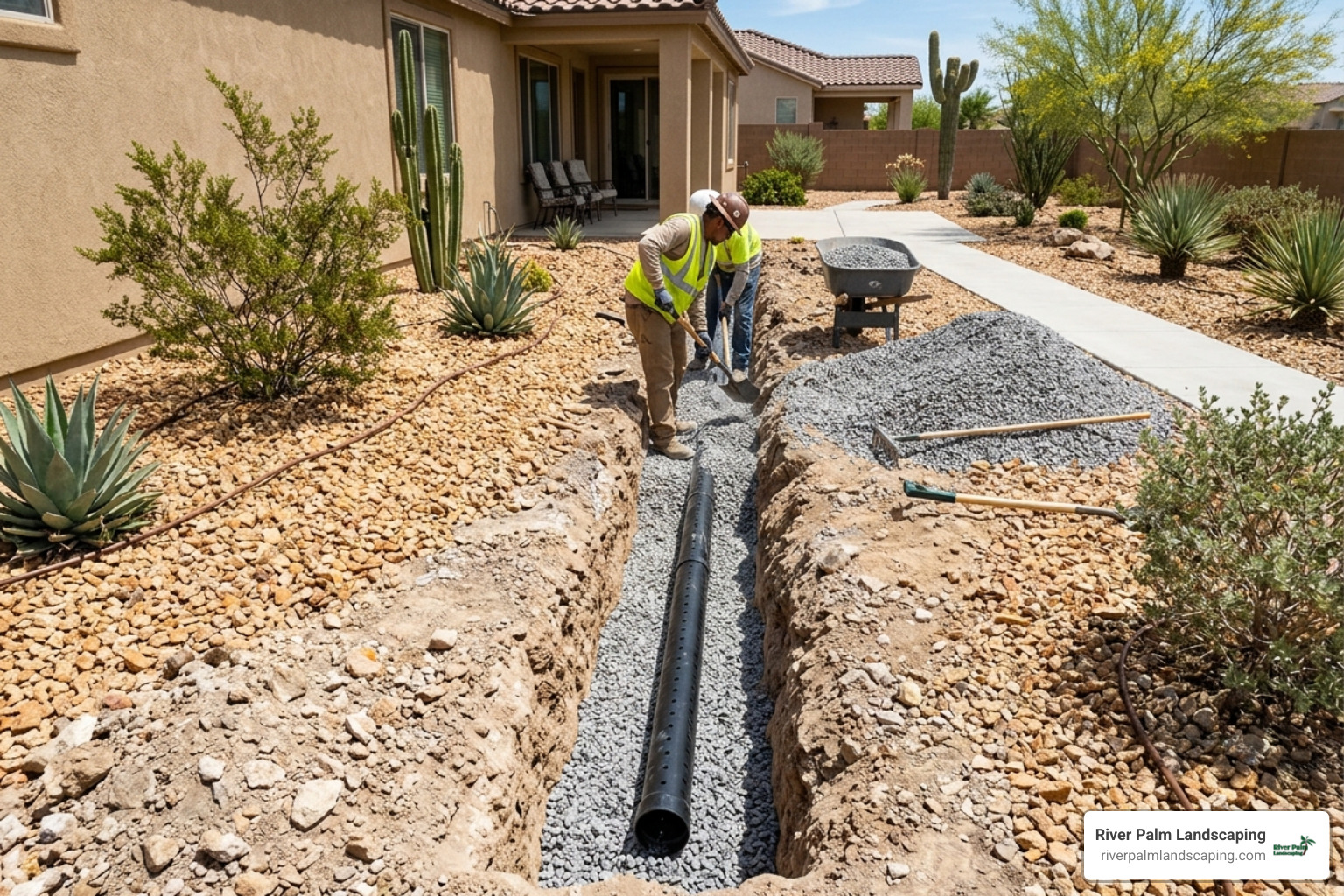
When it comes to yard drainage solutions havasu properties require, there is no one-size-fits-all fix. The solution must be tailored to the specific “micro-topography” of your lot.
Subsurface Systems for Discreet Water Removal
For many residential yards, subsurface systems are the gold standard because they work behind the scenes without ruining your curb appeal.
- French Drains: These consist of a trench filled with a perforated pipe and surrounded by clean gravel. They are designed to “intercept” water moving through the soil and give it a path of least resistance away from your foundation.
- Dry Wells: Think of these as underground storage tanks for rainwater. In areas where there isn’t a natural slope to run water to the street, a dry well collects the surge and allows it to slowly percolate back into the deep soil layers.
- Catch Basins: These are the grated boxes you see at low points in a yard. They catch surface water before it can pool and route it through solid underground pipes to a safe discharge zone.
Surface Management with Swales and Basins
Sometimes, the best way to handle water is to let it stay on the surface but control its speed and direction.
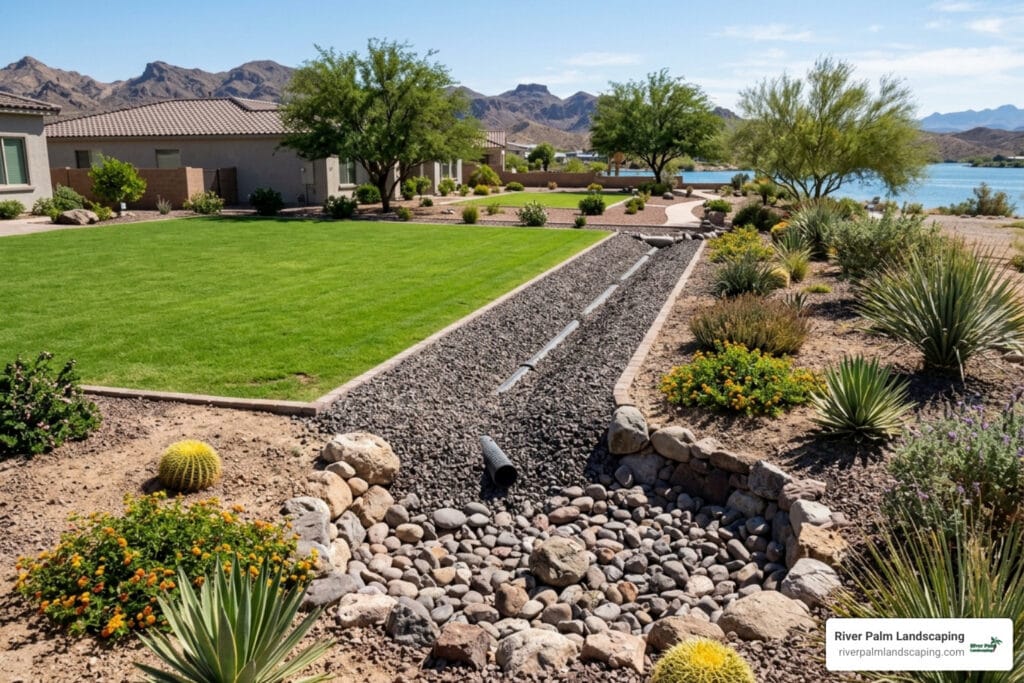
- Riprap Swales: By creating shallow “riverbeds” lined with larger rocks (riprap), we can guide monsoon surges safely around your home. These can actually become beautiful landscape features when integrated correctly into a desert design.
- Channel Drains: These are essential for Havasu driveways and pool decks. They are long, thin grates that catch sheets of water moving across flat, hard surfaces, preventing your garage or patio from flooding.
Why Professional Installation Beats DIY for Desert Terrain
It is tempting to grab a shovel and a roll of black corrugated pipe from a big-box store, but Havasu’s terrain is notoriously unforgiving. Most DIY drainage projects fail here because they underestimate the “caliche” factor. In Lake Havasu, you often hit a layer of soil that is essentially as hard as concrete just six inches down.
Professional contractors like River Palm Landscaping use specialized equipment—including mini-excavators and laser-leveling tools—to ensure that a 1% or 2% slope is maintained over the entire run of a pipe. If your slope is off by even a fraction of an inch, the water will sit in the pipe, silt will build up, and the system will fail within a year. Hiring a licensed professional through the Arizona Registrar of Contractors (look for ROC# 325354 or similar credentials) ensures that your system is code-compliant and built to withstand the unique hydrostatic pressures of Arizona soil.
Custom grading and yard drainage solutions havasu assessment
A professional assessment involves more than just looking at the yard. We calculate the “catchment area” of your roof and the permeability of your soil. By using laser leveling, we can identify high and low spots that are invisible to the naked eye. Proper grading is often the most cost-effective part of erosion control retaining walls and drainage planning, as it uses gravity to do the heavy lifting.
Long-Term Durability and Code Compliance
Local regulations in Lake Havasu City are specific about where you can and cannot “dump” water. For example, you generally cannot redirect your property’s runoff directly onto a neighbor’s lot. Professionals handle the “Blue Stake” process to mark underground utilities and ensure that your new drainage system doesn’t accidentally pierce a water line or electrical conduit.
Protecting Your Investment: Foundation and Landscape Benefits
Investing in yard drainage solutions havasu isn’t just about stopping puddles; it’s about protecting the single largest investment you own: your home.
Integrating downspout extensions and yard drainage solutions havasu
Your roof is a massive water collector. During a typical storm, thousands of gallons of water pour off your eaves. If your downspouts drop that water right at the base of your walls, you are asking for foundation trouble. We recommend extending downspouts at least 4 to 6 feet away from the foundation. Better yet, we can “tie in” your downspouts directly to buried drain lines that carry the water all the way to the street or a dry well, keeping your stem wall bone-dry. This type of efficient irrigation desert gardens lake havasu and drainage integration is the hallmark of a well-engineered property.
Enhancing Curb Appeal with Functional Hardscaping
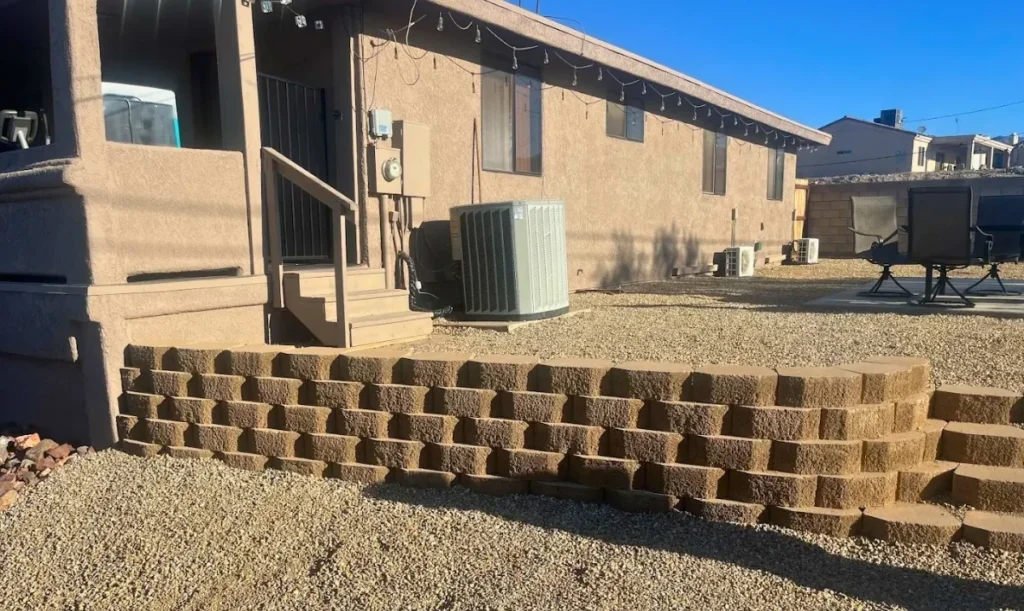
Drainage doesn’t have to be ugly. We often use decorative rock, pavers, and boulders to disguise functional drainage elements. A well-placed retaining wall can stop erosion while providing a beautiful tiered space for desert-hardy plants. By stabilizing the soil, you ensure that your rock mulch stays put, preserving the clean, professional look of your home for years to come. For more on this, see everything you need to know about erosion control retaining walls.
Frequently Asked Questions about Havasu Drainage
How much does yard drainage installation cost in Lake Havasu City?
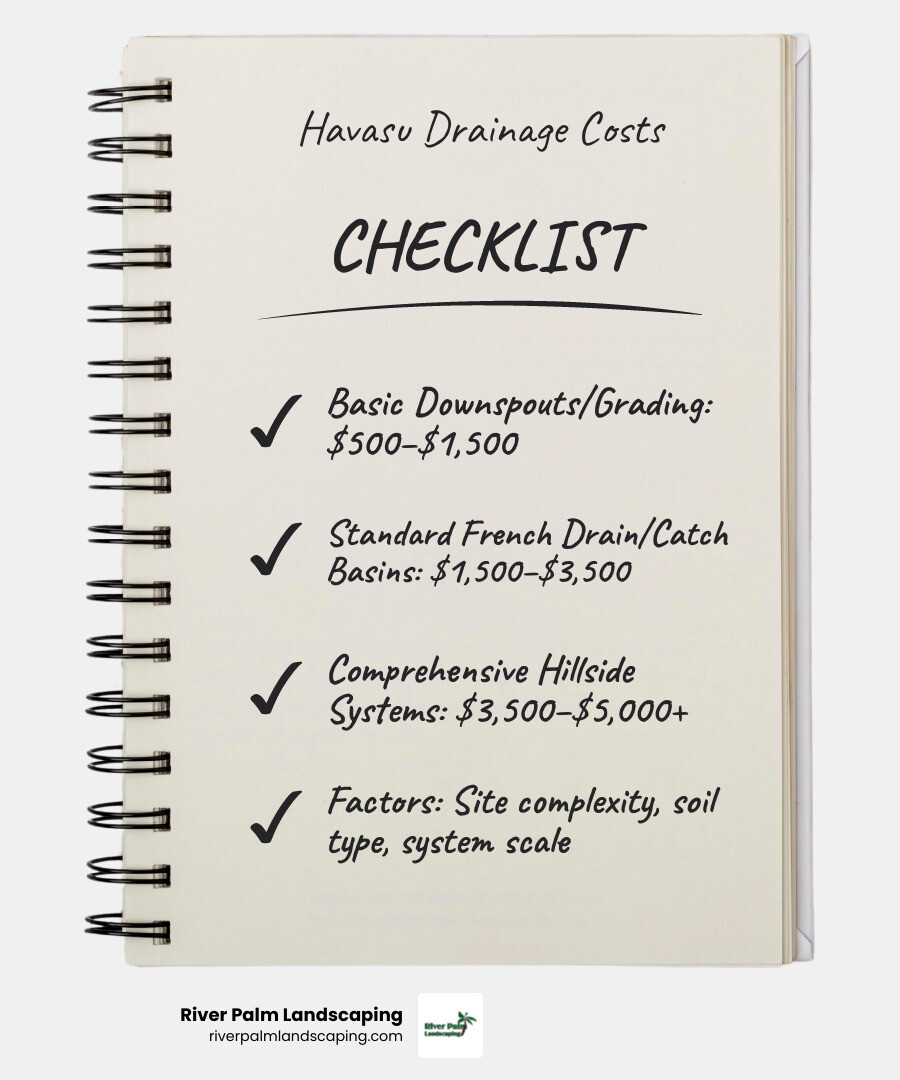
Pricing for drainage work varies significantly based on the complexity of the site and the materials required. A simple downspout rerouting might be a small investment, while a comprehensive multi-tier French drain and retaining wall system for a hillside lot will be higher.
How long does the installation process typically take?
Most residential yard drainage solutions havasu projects are completed within 1 to 3 days. This includes the initial site preparation, trenching through our rocky soil, laying the pipe, backfilling with gravel, and restoring your landscape rock to its original (or better) condition.
What maintenance is required for these systems?
While professional systems are built to last decades, they aren’t “set it and forget it.” After a major monsoon, it’s a good idea to check your catch basin grates for debris like leaves or trash that might block the flow. Periodically flushing your lines with a garden hose can also help prevent silt buildup, ensuring long-term performance when the next big storm hits.
Conclusion
At River Palm Landscaping, we’ve spent over two decades learning exactly how water moves through the unique terrain of Lake Havasu City, Golden Shores, and Parker. We don’t just “dig ditches”—we design integrated systems that protect your foundation, preserve your landscaping, and increase the usability of your outdoor space. Whether you’re dealing with a swampy side yard or a crumbling hillside, our team has the local expertise and heavy equipment to solve your drainage problems for good.
Don’t wait for the next monsoon to find out where your yard’s weak spots are. Request a professional drainage assessment for your Lake Havasu property today and keep your home dry, safe, and beautiful.