Why Desert Hardscape Installation Services Are the Smarter Choice for Arid Climates
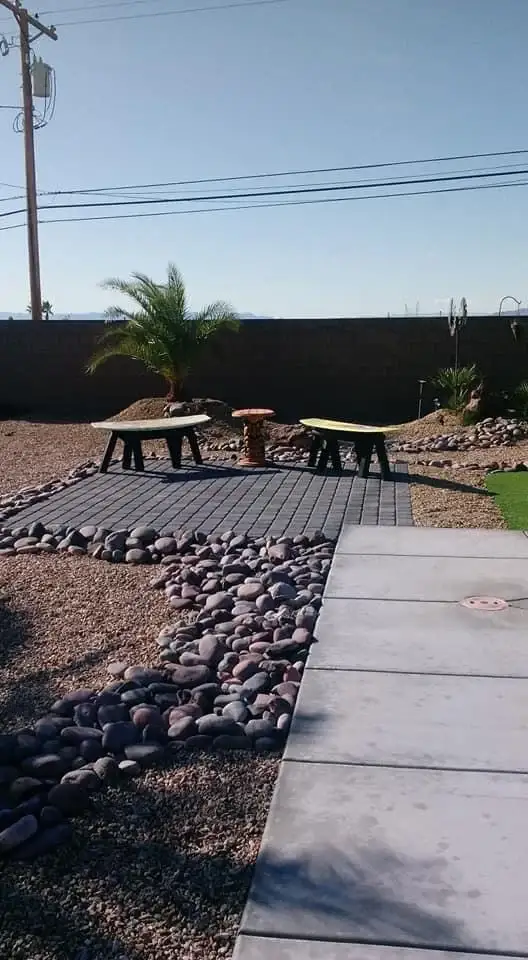
Professional hardscape installation is the most practical way to build a durable, low-maintenance outdoor space in extreme heat climates like Lake Havasu City, Golden Shores, and Parker, AZ.
If you need a quick answer, here’s what to look for:
Top desert hardscape services to consider:
- Paver patios and driveways – interlocking concrete or travertine pavers that handle heat cycling without cracking
- Retaining walls – engineered for desert soil, slope control, and erosion prevention
- Outdoor kitchens and fire pits – built-in features that extend your usable outdoor living area
- Pool decks – slip-resistant, heat-reflective surfaces around pools
- Decorative rock and boulder installation – zero-water ground cover that suits the natural desert palette
- Walkways and stepping stones – functional paths that reduce bare dirt and dust
Pricing varies by project based on materials, site conditions, and complexity – but hardscaping is generally a lasting investment in both usability and curb appeal.
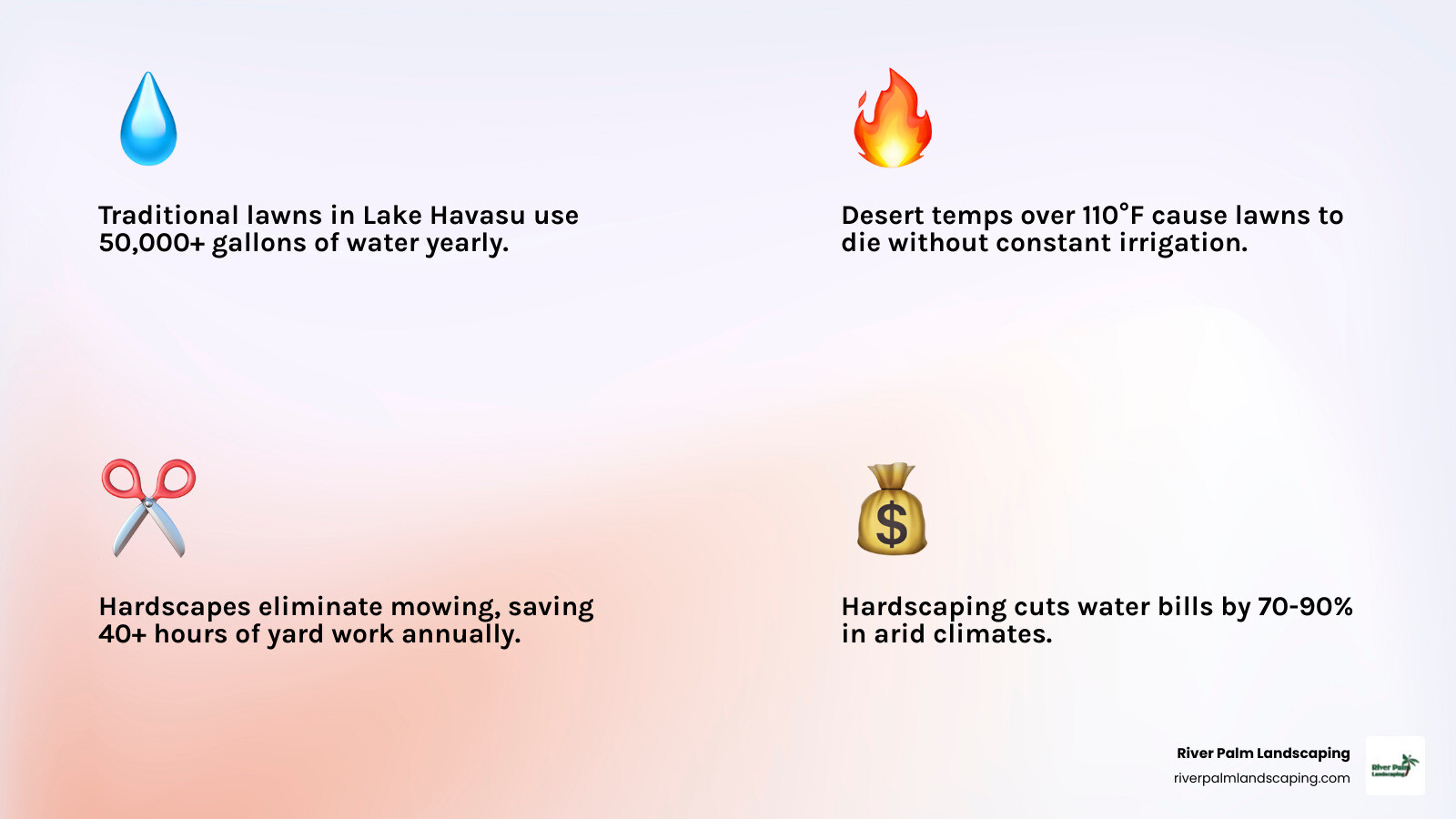
Traditional lawns simply don’t survive in the Mojave Desert without constant irrigation. A conventional lawn in the Lake Havasu area can consume tens of thousands of gallons of water per year – and still struggle in summer heat above 110°F.
Desert hardscaping solves that problem directly. Pavers, rock, flagstone, and concrete replace thirsty turf with surfaces that work with the desert climate instead of fighting it. No mowing. No weekly watering. No dead patches by July.
For homeowners, rental property owners, and commercial managers in the Lake Havasu area, the right hardscape design means a yard that looks clean and functional year-round – with very little ongoing effort.
The sections below cover everything you need to know: materials, engineering, installation timelines, costs, permits, and how to choose a qualified local contractor.
Essential Materials for Desert Hardscape Projects
Choosing the right materials is the foundation of a successful project. In the Arizona desert, materials must withstand intense UV exposure, extreme temperature swings (heat cycling), and monsoon-season flash floods.

Concrete Pavers
Pavers are often the gold standard for desert environments. Unlike solid concrete slabs, interlocking pavers are individual units that can flex with the natural expansion and contraction of the soil. This prevents the unsightly cracking common in the Lake Havasu area. Quality pavers often exceed 8,000 PSI compressive strength, making them significantly more durable than standard broom-finish concrete.
Travertine and Porcelain
For backyards and pool decks, travertine is a premier choice. It is a natural stone that stays remarkably cool underfoot, even when the thermometer hits 110°F. Porcelain pavers are another modern alternative, offering high durability and resistance to the salt and chemicals found in pool water.
Decorative Rock and Boulders
No desert landscaping & xeriscaping in Lake Havasu City project is complete without decorative rock. This serves as the “mulch” of the desert, suppressing weeds and preventing soil erosion.
- Crushed Granite: Packs tightly for paths and driveways.
- River Rock: Rounded stones perfect for dry creek beds that manage drainage.
- Rip Rap: Large, angular rocks used for slope stabilization.
- Boulders: Large focal points that add texture and height to a flat yard.
Flagstone
For a more organic look, mortar-set Arizona flagstone is a classic. While some regions use dry-laid flagstone, professional desert hardscape installation services in our area typically recommend setting it on a concrete slab to prevent the stones from shifting in our sandy or rocky soils.
Desert-Hardy Material Checklist:
- Heat Reflection: Choose lighter colors (Sand, Tan, Light Grey) to keep surface temperatures down.
- UV Resistance: Ensure pavers use integral iron oxide pigments to prevent fading over 20+ years.
- Permeability: Consider joints that allow water to reach the soil, reducing runoff.
- Durability: Materials should handle temperature swings between hot days and cooler desert nights.
For more inspiration on how to combine these materials, check out Arizona landscape ideas for a cool yard in a hot state.
Popular Features in Desert Hardscape Installation Services
Modern patios and outdoor kitchens transform a backyard from a patch of dirt into an extension of the home. In Parker and Lake Havasu, popular features include:
- Fire Pits: Whether gas or wood-burning, these create a focal point for cooler desert evenings.
- Outdoor Kitchens: Built-in grills and pizza ovens allow for cooking without heating up the indoors.
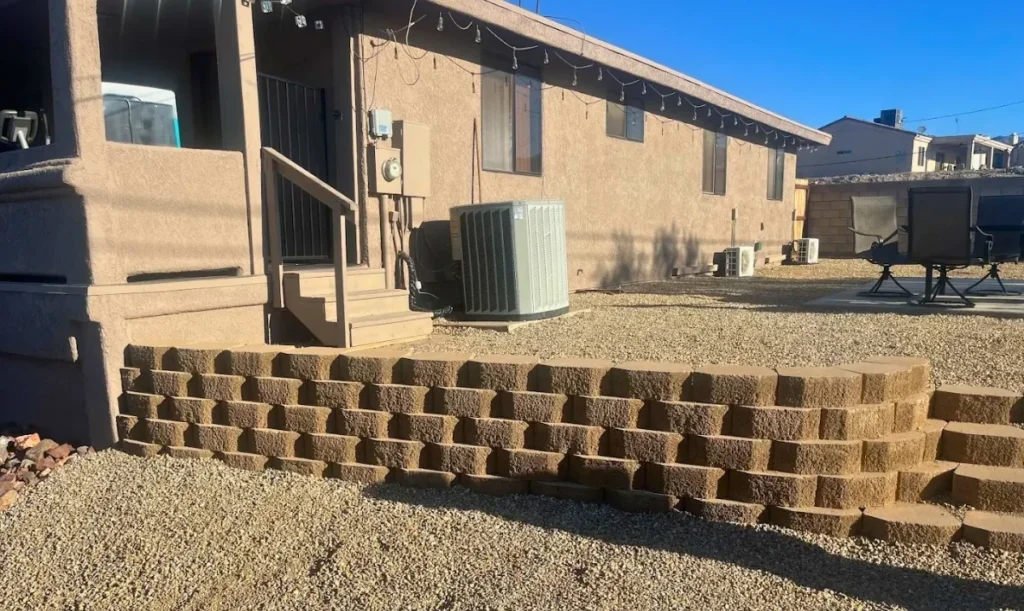
- Retaining Walls: Essential for many front yard landscaping desert homes in Lake Havasu, as they create level tiers on sloped lots.
- Shade Structures: While not always strictly “hardscape,” pergolas and patio covers are vital for making hardscape areas usable during the day.
Engineering for Arid Climates: Caliche, Grading, and Drainage
The desert may look easy to build on, but below the surface lies a contractor’s biggest challenge: caliche.
The Caliche Challenge
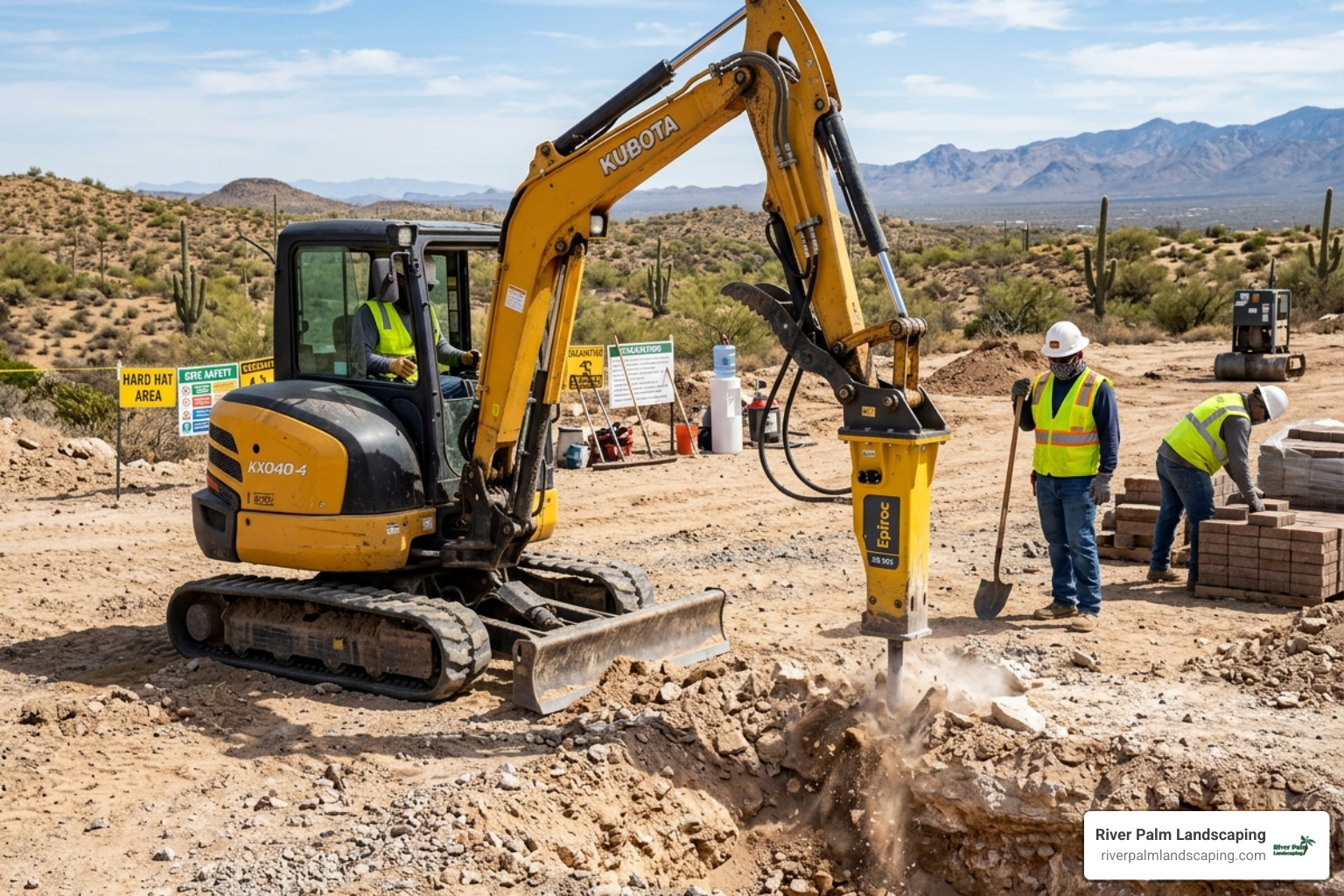
Caliche is a layer of soil where the particles have been cemented together by calcium carbonate. It essentially turns into natural concrete, often found 12 to 36 inches below the surface. Professional desert hardscape installation services must use hydraulic breakers on mini-excavators to penetrate this layer. If you don’t break through it, water will pool on top of the caliche, potentially undermining your new patio or wall.
Grading and Drainage
Proper grading is non-negotiable. Even though it rarely rains, when it does, it pours.
- 2% Minimum Slope: Every hardscape surface must slope at least 1/4 inch per foot away from the home’s foundation.
- French Drains and Channel Drains: These are used to direct heavy rainfall toward the street or a designated drainage area.
- Erosion Control: Erosion control retaining walls are critical for preventing your yard from washing away during a monsoon.
Compaction and Stability
To prevent settling, the “sub-grade” must be compacted to 90-95% Proctor density. This involves adding a layer of crushed road base and using heavy vibratory plates to create a rock-solid foundation. For a deeper dive into these technical requirements, see everything you need to know about erosion control retaining walls.
| Feature | Concrete Pavers | Stamped Concrete |
|---|---|---|
| Durability in Heat | High (Flexes with soil) | Moderate (Prone to cracking) |
| Maintenance | Low (Individual units replaceable) | Moderate (Needs resealing every 2-3 years) |
| Lifespan | 25+ Years | 10-15 Years |
| Slip Resistance | High | Low (Can be slippery when wet) |
| Drainage | Joint sand allows some seepage | 100% Runoff |
The Professional Installation Process and Timeline
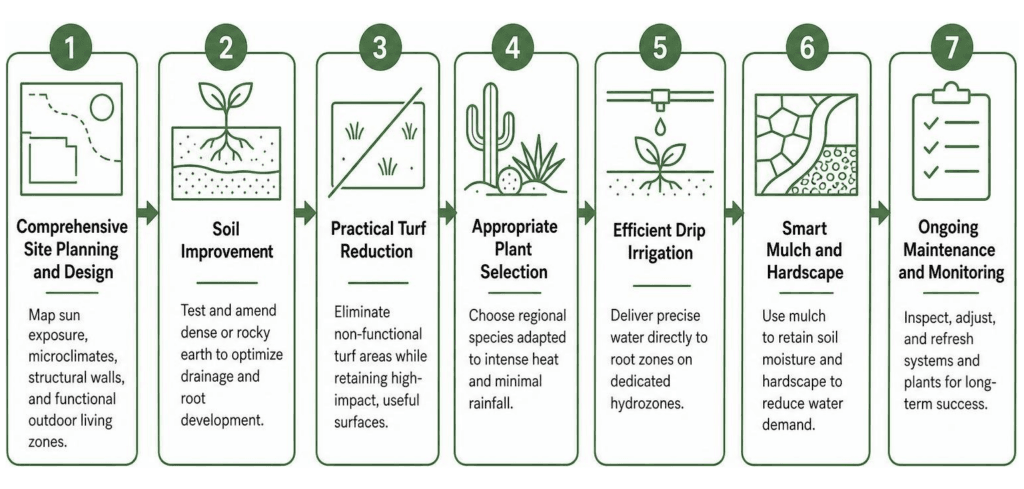
A successful project follows a structured landscape design and installation workflow.
- Consultation and Site Assessment: The contractor evaluates the soil (checking for caliche), measures slopes, and discusses your vision.
- Excavation and Site Prep: Clearing the area of old debris and digging to the required depth for the base material.
- Base Installation: Adding 4 to 6 inches of Class II crushed road base, followed by precision compaction.
- Bedding and Leveling: A thin layer of sand is screeded to provide a perfectly level surface for the pavers.
- Material Installation: Pavers are laid in the chosen pattern (like herringbone for driveways or running bond for patios).
- Edge Restraints and Jointing: Concrete or plastic edging keeps the pavers from spreading, and polymeric sand is swept into the joints to lock everything in place.
- Cleanup and Finishing: The site is washed down, and any surrounding desert landscaping or rock is refreshed.
Project Timelines
While every project varies, here are general expectations:
- Small Paver Patio (300-500 sqft): 3 to 5 days.
- Standard Driveway: 4 to 7 days.
- Retaining Walls: 5 to 10 days, depending on height.
- Full Backyard Transformation: 2 to 4 weeks.
Using professional desert hardscape installation services ensures that these steps follow ICPI (Interlocking Concrete Pavement Institute) standards, which is key to maximizing your landscape with desert landscaping.
Investment, Permits, and Long-Term Maintenance
Investing in hardscape is a way to increase the usability of your property. While costs vary by project based on the specific stone chosen and the amount of excavation required, hardscaping is a durable solution that often pays for itself in reduced water and maintenance bills.
Understanding Costs
- Paver Installation: Generally ranges from $12 to $20 per square foot.
- Retaining Walls: Can range from $25 to $80 per square foot of wall face, depending on whether engineering is required.
- Caliche Removal: This is often an “add-on” fee if the hardpan is particularly thick, typically adding a few dollars per square foot to the excavation cost.
Permits and Regulations
In Lake Havasu City and surrounding areas, certain rules apply:
- Retaining Walls: Walls over a certain height (often 3-4 feet) require engineered plans and city permits.
- HOA Requirements: Most neighborhoods in our region require pre-approval for any major changes to the front or backyard.
- Utility Locating: Professionals always call 811 before digging to avoid hitting underground power or water lines.
Maintenance for Longevity
One of the best parts of our services is the low maintenance required. To keep your hardscape looking new:
- UV Exposure: While pavers are UV-resistant, applying a sealer every 3-5 years can enhance the color.
- Weed Control: A high-quality weed barrier fabric should be installed under all rock areas.
- Joint Sand: Occasionally, you may need to top off the sand between pavers if it washes out during a particularly heavy storm.
Choosing Professional Desert Hardscape Installation Services
Not all contractors are equipped for the desert. When vetting a team for your project, look for the following:
- C-27 Licensing: In Arizona, a landscaping contractor should hold the appropriate ROC license.
- Local Experience: Have they worked in Lake Havasu’s specific soil? Do they know how to handle the heat?
- Warranty: Reputable contractors often offer a 2-year warranty on hardscape workmanship and longer warranties on materials like pavers.
- Reviews: Look for local feedback regarding reliability and the ability to stick to a timeline.
Questions to Ask Your Contractor:
- “How do you handle caliche if we hit it during excavation?”
- “What is your process for ensuring proper drainage away from my home?”
- “Are you an ICPI-certified installer?”
- “Can you provide a 3D landscape rendering before we start?”
Frequently Asked Questions
How long does a typical desert hardscape project take?
Most residential patio projects are completed within a week. Larger transformations involving multiple tiers, outdoor kitchens, and full rock refreshes usually take 2 to 4 weeks.
Do I need a permit for a retaining wall or patio in Arizona?
At-grade patios usually do not require permits. However, retaining walls over 3 or 4 feet (depending on the specific city code in Lake Havasu or Parker) almost always require a permit and engineered drawings to ensure safety.
How do desert hardscapes contribute to water conservation and rebates?
By replacing high-water-use grass with hardscape and xeriscaping, you can reduce your outdoor water consumption by 70% to 90%. Many local water authorities offer “Water Smart” rebates for removing turf and replacing it with desert-friendly alternatives.
Conclusion
Professional desert hardscape installation services are the key to creating an outdoor space that thrives in the unique climate of Lake Havasu City, Golden Shores, and Parker, AZ. By focusing on durable materials like pavers and travertine, and engineering for the reality of caliche soil and flash floods, you can build a yard that is as functional as it is beautiful.
River Palm Landscaping has been a licensed contractor in the region since 2003, specializing in desert-appropriate designs that stand up to the heat. Whether you are looking for a simple paver patio or a complete backyard overhaul, we focus on durable, high-quality installations that improve your home’s curb appeal and usability.
Ready to transform your yard? Explore our desert landscaping solutions and start planning your project today.