What “Landscape Masonry Near Me” Actually Means — and How to Find the Right Contractor
If you’re searching for landscape masonry near me, here’s the short answer:
Landscape masonry combines structural stonework with outdoor design — think paver patios, retaining walls, stone walkways, fire pits, and outdoor kitchens built to last. To find a reputable contractor near you:
- Confirm they hold a valid contractor’s license and liability insurance
- Look for local experience with your specific climate and soil conditions
- Ask for a written estimate, timeline, and warranty before signing anything
- Check reviews and ask to see completed local projects
In Lake Havasu City, Golden Shores, and Parker, AZ, outdoor masonry isn’t just about looks. The desert throws real challenges at every project — caliche-dense soil that resists excavation, monsoon runoff that erodes unprotected slopes, and summer heat that pushes surface temperatures well past 150°F. A patio or retaining wall that works fine in a mild climate can crack, shift, or fail within a few seasons here if it isn’t engineered for those conditions.
That’s why choosing a landscape masonry contractor with genuine local experience matters more than it might in other parts of the country. The right materials, the right base preparation, and the right drainage design make the difference between a project that holds up for decades and one that needs repairs after the first monsoon season.
This guide walks you through everything you need to know — from understanding what landscape masonry actually includes, to evaluating contractors, comparing materials, and budgeting your project realistically.
Landscape masonry near me vocabulary:
- artificial grass installation Lake Havasu
- best yard drainage company near me
- full service landscape company near me
What is Landscape Masonry and Why Does It Matter in Arid Climates?
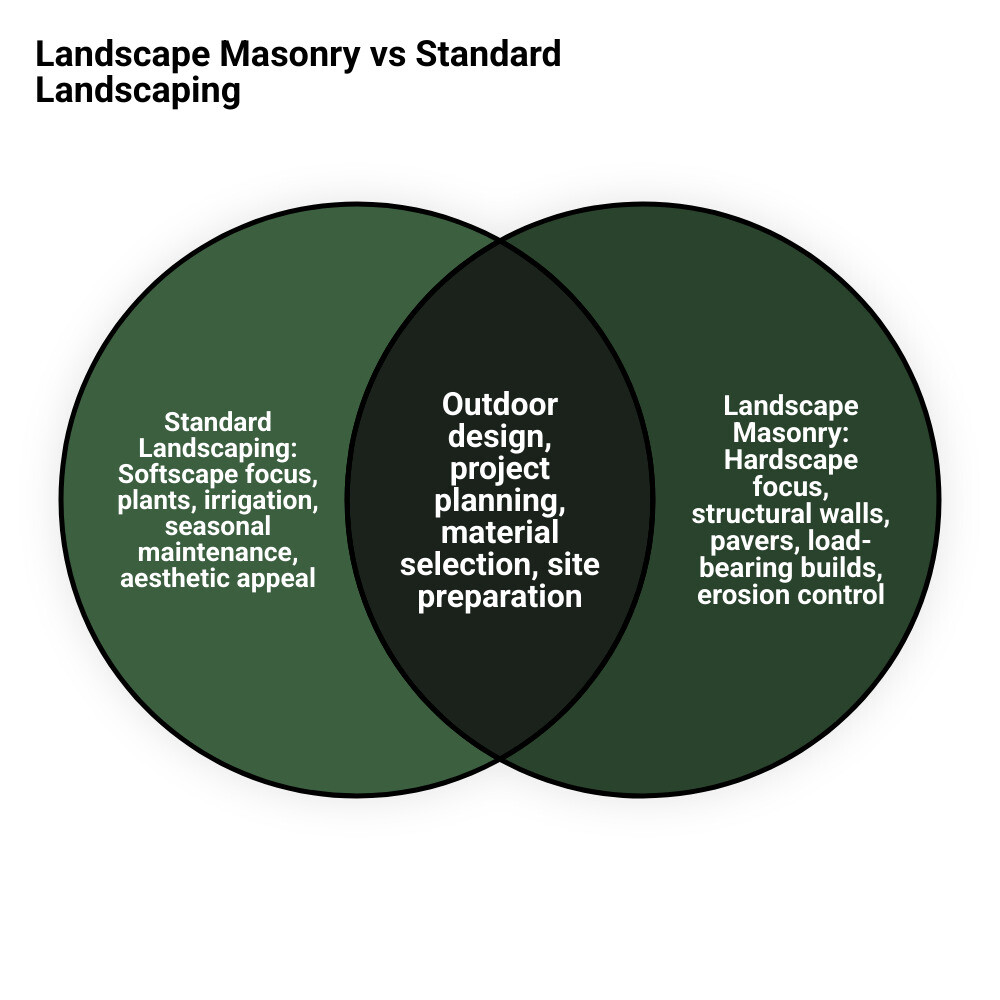
To understand why specialized masonry is vital in the Mojave Desert, it helps to distinguish it from basic softscape landscaping. While general landscaping focuses on living elements like turf, shrubs, and trees, landscape masonry deals with permanent, load-bearing, and structural hardscape features.
In arid regions like Lake Havasu City, Parker, and Golden Shores, landscape masonry provides the structural backbone that keeps the rest of your property secure. The soil in our region is notorious for containing caliche — a hardened natural cement-like layer of calcium carbonate. Excavating this rocky ground requires heavy machinery and experienced operators.
Furthermore, desert masonry must be engineered to withstand severe environmental stressors:
- Thermal Expansion: Extreme temperature swings between blistering summer days and cool desert nights cause masonry materials to expand and contract. Without proper joints and flexible materials, solid concrete surfaces quickly crack.
- Reflected Heat: Standard dark concrete or asphalt absorbs and radiates heat, turning backyards into ovens. Landscape masons select heat-resistant stones and pavers to keep surfaces walkable.
- Monsoon Runoff & Soil Erosion: When heavy monsoon rains hit the dry, compacted desert soil, water doesn’t soak in quickly. It sweeps across the surface, causing severe erosion. Properly designed erosion control retaining walls redirect this water safely away from home foundations.
Essential Services Offered by a Landscape Masonry Near Me
When searching for a local specialist, you will find that comprehensive desert hardscaping goes far beyond pouring a simple concrete slab. Homeowners in our region typically invest in several key masonry installations to maximize their outdoor living space:
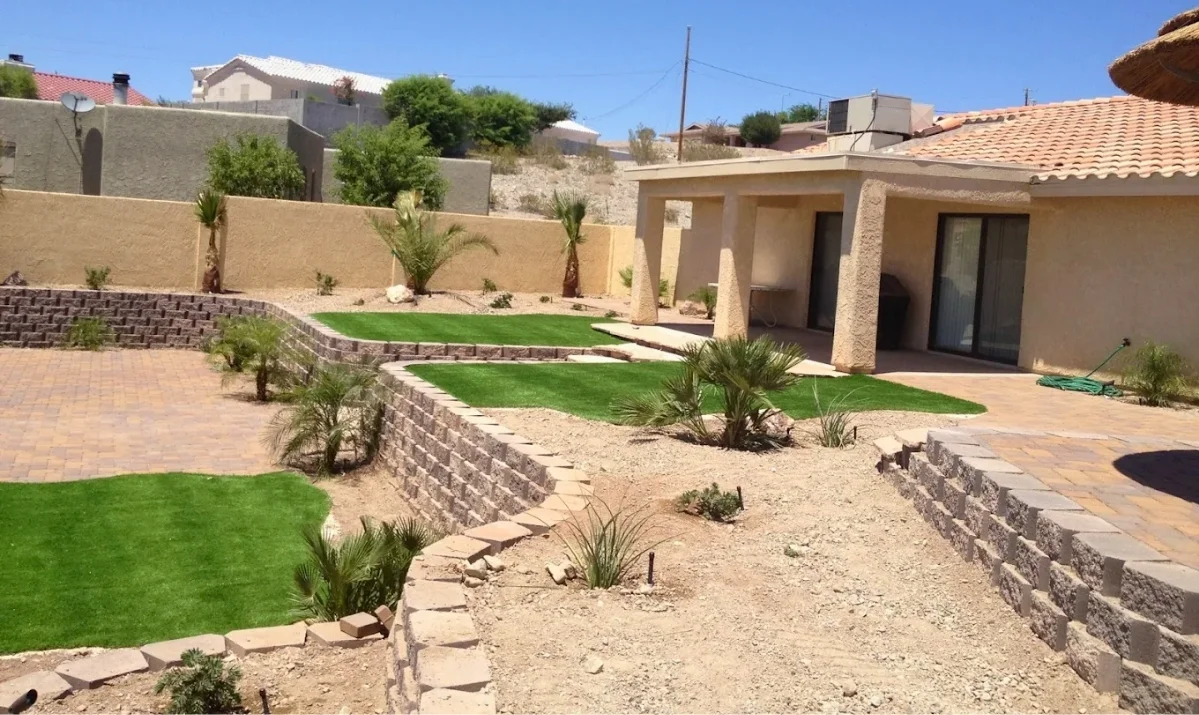
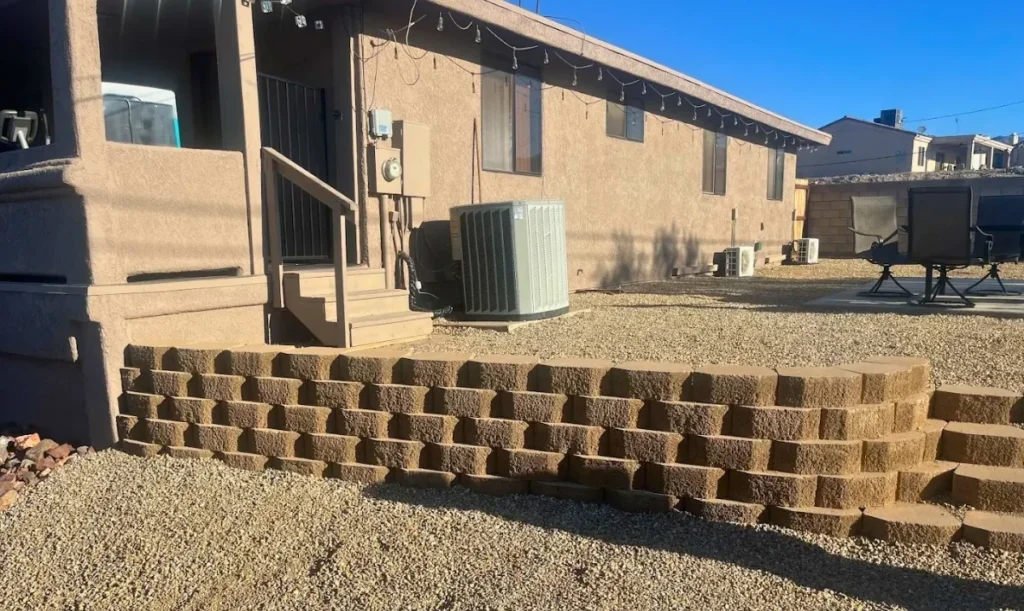
- Engineered Retaining Walls: Essential for leveling sloped yards, managing soil movement, and creating tiered garden beds.
- Paver Patios and Decks: Interlocking concrete or travertine systems that flex with soil movement and resist cracking under the sun. You can learn more about these durable options from a specialized concrete paver contractor Lake Havasu.
- Custom Fire Pits and Fireplaces: Built with fire-rated brick and heat-resistant stone veneers to provide cozy gathering spots during cool desert winters.
- Outdoor Kitchens and BBQ Islands: Finished with durable stucco, stone veneer, or tile countertops that won’t warp or fade in the intense UV light.
- Stone Walkways and Steps: Providing safe, slip-resistant pathways through gravel-scaped yards.
If you are looking for local inspiration, reviewing regional portfolios of completed desert hardscaping can help you visualize how these elements blend with desert architecture.
Engineering Retaining Walls for Slope Management and Erosion Control
A retaining wall in the desert is rarely just decorative. Its primary job is fighting gravity and water. When monsoon storms hit, hundreds of gallons of water can rush down a sloped property in minutes. If a wall is built without proper drainage, water pools behind it, building up immense hydrostatic pressure. This pressure is the number-one reason poorly constructed block walls bow, crack, and eventually collapse.
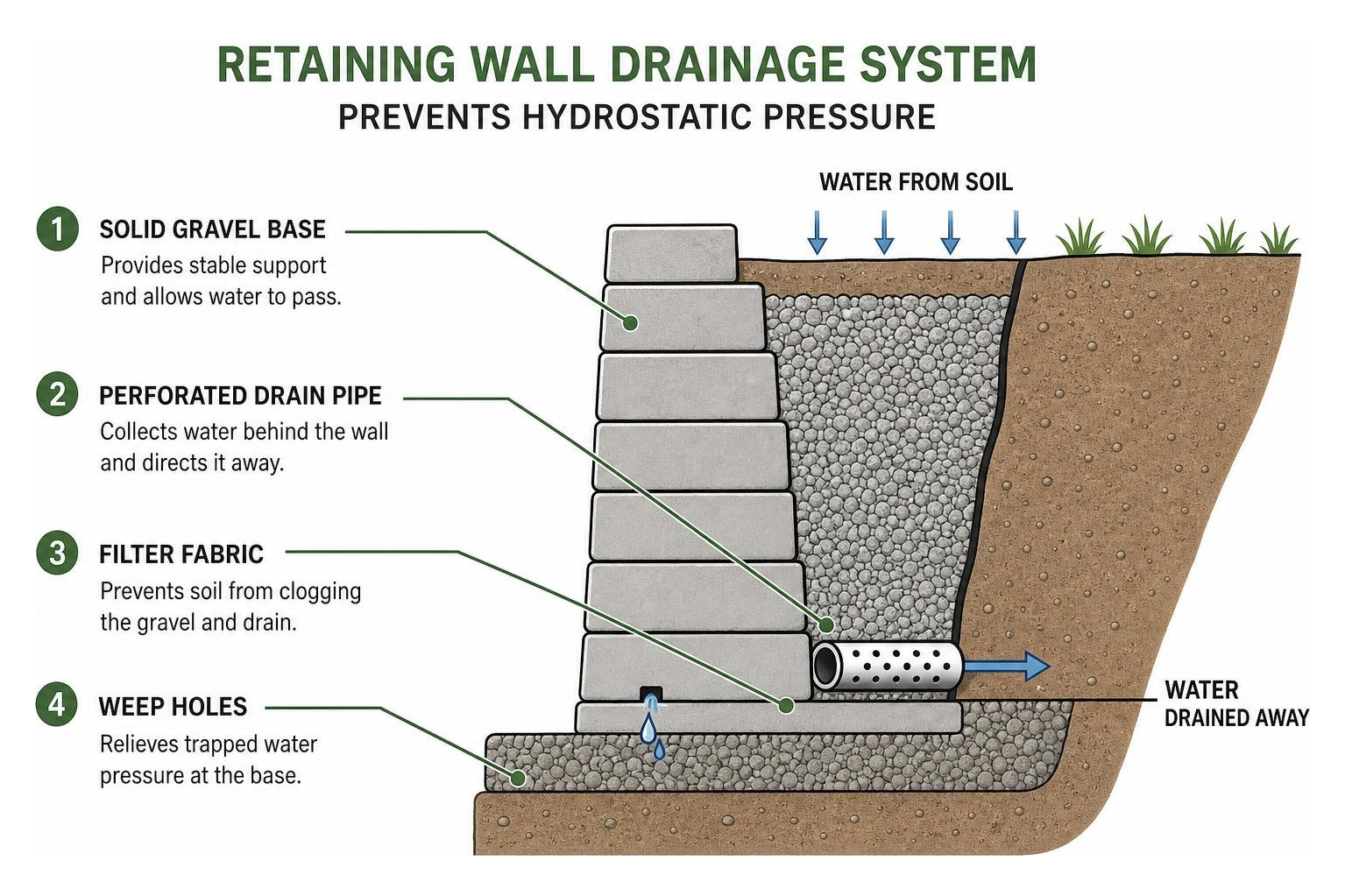
To prevent this, a well-planned retaining wall must include:
- A Solid Gravel Base: A compacted gravel trench that allows the wall to settle evenly without cracking.
- Perforated Drain Pipes: Installed behind the base of the wall to collect and channel water away.
- Filter Fabric: Placed between the soil and the gravel backfill to prevent dirt from clogging the drainage system.
- Weep Holes: Small openings at the front base of the wall to relieve any trapped water pressure.
Whether you are looking to stabilize a steep slope or create flat, usable yard space, choosing the best retaining wall for slope management and stability requires a deep understanding of local soil pressures.
Selecting the Right Materials for Desert Hardscaping
Choosing the right materials is the most critical decision in any desert masonry project. The local climate demands materials that are structurally stable, UV-resistant, and thermally comfortable.
While clay bricks and poured concrete are common in other parts of the country, they present challenges in our region. Poured concrete is highly prone to cracking due to thermal expansion and soil settling. Traditional red clay brick can absorb moisture during rare rains and degrade under intense heat.
Instead, desert homeowners rely on local suppliers to source highly durable materials like concrete pavers, natural travertine, and heavy gravel aggregates. For major structural elements, contractors often work with regional concrete and aggregate suppliers to ensure the base materials can withstand local conditions.
Designing Heat-Resistant Patios with a Landscape Masonry Near Me
If you want a patio that you can actually walk on during a July afternoon, material selection is everything.
- Travertine Pavers: This natural stone is the gold standard for desert patios and pool decks. Travertine contains natural air pockets that prevent it from absorbing heat, keeping it significantly cooler underfoot than concrete or dark stone.
- Interlocking Concrete Pavers: Highly durable and available in light, heat-reflective shades. Because they are individual pieces bound by flexible joint sand, they can shift slightly with soil movement without cracking.
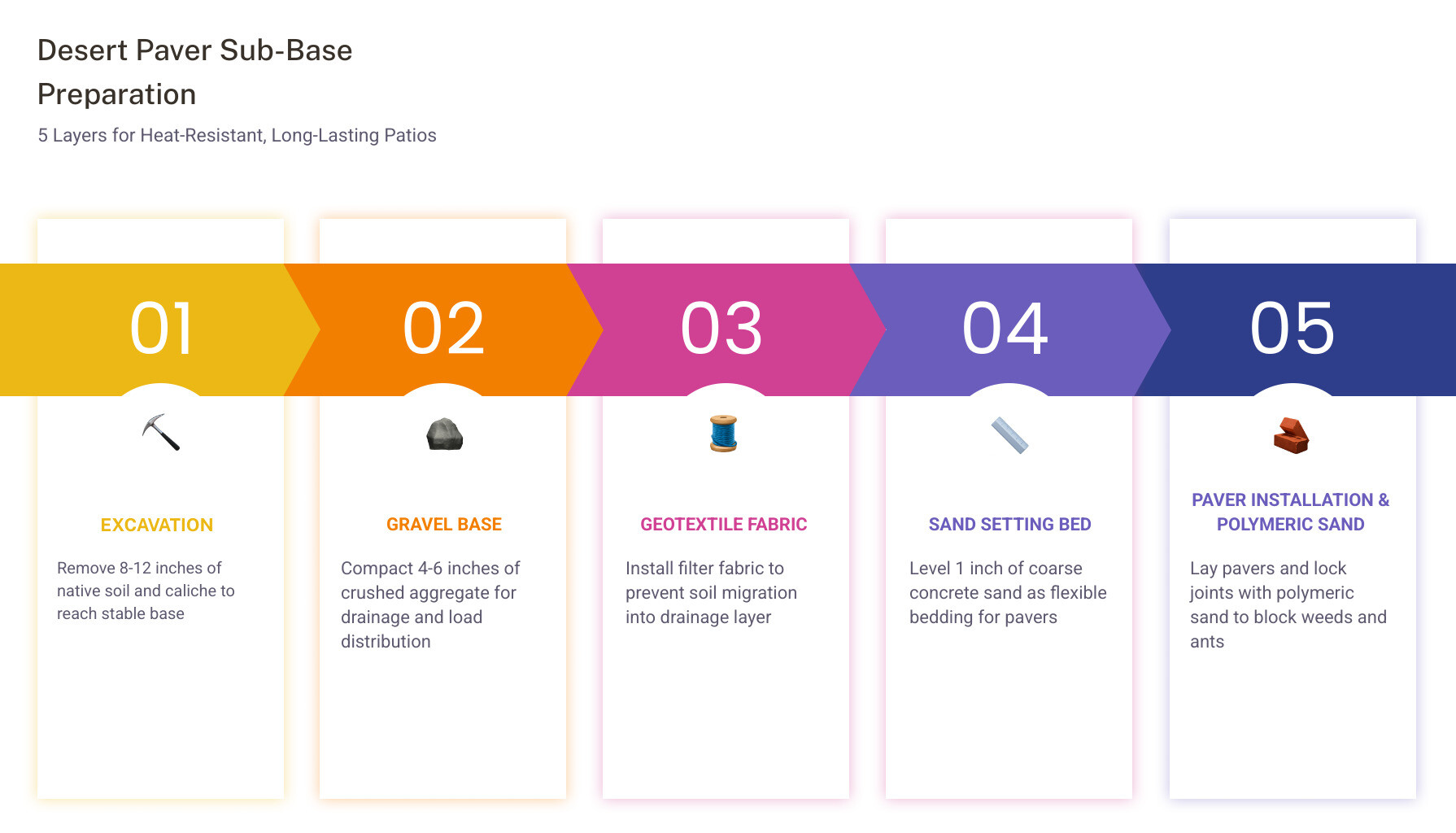
- Polymeric Sand: Unlike standard sand, which washes away during monsoons, modern polymeric sand contains binding agents that lock the Pavers together, preventing weed growth and ant infestations while remaining flexible.
Comparing Pavers, Natural Stone, and Concrete
To help you make an informed decision for your backyard, here is a breakdown of how the most popular desert masonry materials compare:
| Material | Durability | Heat Retention | Maintenance Required | Best Used For |
|---|---|---|---|---|
| Travertine | Excellent | Very Low (Stays Cool) | Low (Occasional sealing) | Pool decks, high-end patios |
| Concrete Pavers | Excellent | Moderate (Choose light colors) | Low (Sanding & sealing) | Driveways, walkways, patios |
| Poured Concrete | Moderate (Prone to cracking) | High | Low to Moderate | Basic utility pads |
| Flagstone | Good | High (Can get very hot) | Moderate (Joint upkeep) | Decorative paths, accents |
While natural stone and interlocking pavers have a higher upfront installation cost compared to poured concrete, they require far fewer repairs over their lifespan, making them a much smarter long-term investment for Arizona homeowners.
Choosing the Best Landscape Masonry Near Me for Desert Properties
Hiring a contractor in the Lake Havasu City, Parker, or Golden Shores area requires careful vetting. Because of our unique soil and weather conditions, hiring an unlicensed handyperson or an out-of-state crew often leads to structural failures.
Before signing a contract, ensure you know how to hire reliable block wall contractors in Lake Havasu by verifying their local credentials.
Key Hiring Criteria: Licensing, Insurance, and ROC Compliance
In Arizona, any commercial or residential contracting work over $1,000 requires a license from the Arizona Registrar of Contractors (ROC).
- Verify the ROC License: A valid license proves the contractor has passed background checks, demonstrated experience, and bonded their business to protect consumers.
- Check Liability Insurance: Ensure the company carries active general liability insurance to cover any accidental property damage during heavy excavation.
- Read Local Community Reviews: Look for feedback from real neighbors in local forums, such as the reliable paver installation companies in Lake Havasu Facebook group, to see how the contractor handles timelines and clean-up.
- Ask About Warranties: Reputable installers should offer a written warranty on both their craftsmanship and the structural integrity of the masonry work.
Cost, Timelines, and ROI of Desert Masonry Projects
The cost of a landscape masonry project varies widely based on several local factors:
- Access and Excavation: If your yard has a steep slope or dense caliche that requires heavy jackhammers and specialized excavators, labor costs will increase.
- Material Choice: Premium travertine or imported natural stone costs more than standard concrete blocks or pavers.
- Permitting and Engineering: Tall retaining walls (typically over 4 feet in Arizona) require professional engineering plans and municipal permits.
On average, a standard paver patio installation can take anywhere from 3 to 7 days, while complex, tiered retaining wall systems may take several weeks. While the initial investment is higher than basic gravel landscaping, high-quality hardscaping significantly boosts your home’s curb appeal and expands your usable outdoor living space. Investing in durable borders and structural walls, such as those detailed in building better borders with Havasu retaining wall installation, protects your property from water damage and increases its long-term market appeal.
Frequently Asked Questions About Landscape Masonry
What is the difference between a landscaper and a landscape mason?
A general landscaper primarily handles “softscape” elements — soil prep, planting desert trees, installing low-voltage lighting, and setting up drip irrigation systems. A landscape mason specializes in “hardscape” structures. Masons are trained in structural engineering, concrete pouring, bricklaying, and stone carving. They build load-bearing structures like retaining walls, outdoor fireplaces, and paved surfaces that must support significant weight and resist shifting soil. If you are planning a complete yard remodel, you will want to work with a comprehensive landscape contractor near me who can seamlessly integrate both specialties.
How long do concrete pavers and retaining walls last in extreme heat?
When correctly installed with a proper sub-base, concrete pavers and structural block retaining walls can easily last 30 to 50 years in the desert. Because interlocking pavers are flexible, they handle thermal expansion far better than solid concrete slabs. To maximize their lifespan, it is essential to use high-quality polymeric sand in the joints and apply a UV-resistant sealer every 3 to 5 years. For a deeper dive into structural lifespan, read everything you need to know about erosion control retaining walls.
Do I need a permit for a retaining wall or patio in Arizona?
In most Arizona municipalities, including Lake Havasu City, you do not need a permit for standard ground-level patios or walkways. However, retaining walls that are over 4 feet tall (measured from the bottom of the footing to the top of the wall) or walls that support a surcharge (like a driveway or slope above them) require engineering plans and a building permit. Always consult with licensed landscapers Lake Havasu to ensure your project complies with all local building codes and HOA regulations.
Conclusion
Investing in landscape masonry is one of the best ways to transform your desert property into a functional, beautiful, and durable outdoor oasis. Whether you want to level a sloped yard with an engineered retaining wall, build a heat-resistant travertine patio, or create a cozy fire pit for winter nights, the key to success lies in choosing a contractor who understands the unique engineering demands of the Mojave Desert.
With over two decades of local experience, River Palm Landscaping specializes in building durable, climate-appropriate outdoor spaces in Lake Havasu City, Golden Shores, and Parker, AZ. From navigating dense caliche during excavation to designing beautiful, water-conscious hardscapes, their team brings structural integrity and craftsmanship to every project.
Ready to upgrade your backyard with masonry built to beat the heat? Transform your outdoor space with River Palm Landscaping today.