The 7 Principles of Water-Wise Landscaping in Arizona
Water-wise landscaping in the desert is built on seven foundational principles designed to conserve resources while maintaining property value and curb appeal. When homeowners look to xeriscape a yard, following these structured concepts ensures the resulting outdoor living space remains visually dynamic, structurally sound, and heat-resilient.
- Comprehensive Site Planning and Design: Mapping sun exposure, microclimates, structural walls, and functional outdoor living zones.
- Soil Improvement: Testing and amending dense or rocky earth to optimize drainage and root development.
- Practical Turf Reduction: Eliminating non-functional turf areas while retaining high-impact, useful surfaces.
- Appropriate Plant Selection: Choosing regional species adapted to intense heat and minimal rainfall.
- Efficient Drip Irrigation: Delivering precise water directly to root zones on dedicated hydrozones.
- Mulch Application: Protecting topsoil from extreme surface evaporation using stone or organic covers.
- Appropriate Landscape Maintenance: Timely seasonal cutbacks, weed management, and regular irrigation checks.
Across Arizona, urban landscape irrigation accounts for 50% to 65% of annual municipal water consumption. Traditional bluegrass lawns consume 30 to 40 inches of water annually to survive in environments that receive only a fraction of that in rainfall. By replacing underutilized grass with engineered hardscapes and climate-appropriate plants, homeowners drastically reduce outdoor water dependence while mitigating heat island effects around the home.
Planning Your Site and Preparing Soil for Low Water Landscape Installation
A successful low water landscape installation begins long before the first plant is placed. Site analysis must evaluate existing slopes, prevailing winds, wall heat reflection, and runoff paths during heavy summer rains. In regions like Lake Havasu City, Golden Shores, and Parker, soil conditions frequently present a dense layer of hardpan known as caliche. Caliche consists of calcium carbonate-cemented soil that blocks water percolation and stops plant root expansion.
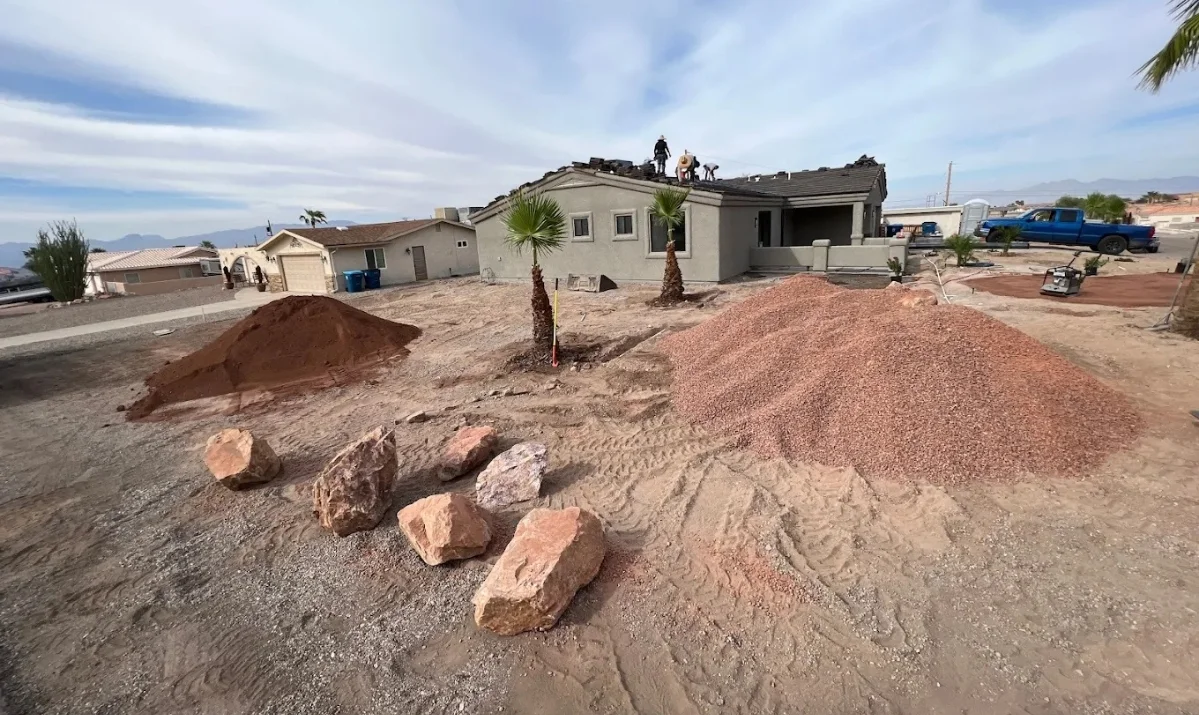
Excavating caliche is essential during site preparation. Where solid caliche layers exist beneath planting locations, workers must break through the hardpan using heavy equipment or mechanical breakers to establish drainage channels. Planting holes should be dug twice as wide as the nursery container but equal in depth to ensure plant crowns remain slightly above the finished grade.
Proper grading manages monsoon runoff by directing heavy rainwater away from building foundations and retaining walls into shallow swales or catch basins. Poor grading leads to standing water, which increases hydrostatic pressure behind retaining structures and saturates subgrades. Incorporating gentle drainage swales stabilizes slopes while harvesting rainwater for deep-rooting trees.
Navigating the WUCOLS Database for Desert Plant Selection
Plant selection must extend beyond visual appeal. The Water Use Classification of Landscape Species (WUCOLS) database categorizes plant species by their specific water needs within regional hydrologic zones. Using this resource prevents the mistake of pairing low-water cacti with moderate-water flowering perennials on the same watering schedule.
When selecting drought-proof garden plants, group species into matched water categories:
- Very Low Water (Zone 0): Native agaves, ocotillos, desert spoon, and red yucca.
- Low Water (Zone 1): Chihuahuan sage, Palo Verde trees, yellow bells, and bougainvillea.
- Moderate Water (Zone 2): Accent containers, dwarf citrus trees, or specialized oasis features.
Matching plant selections to local USDA Hardiness Zones (typically Zones 9b through 11 in low elevation desert regions) ensures species can handle both winter frost snaps and prolonged summer temperatures exceeding 115°F. Combining evergreen structural plants with seasonal bloomers provides year-round color without continuous watering.
Step-by-Step Low Water Landscape Installation Process
Transforming a high-water landscape into an efficient desert design requires careful construction sequencing. Skipping foundational preparation often leads to failing subgrades, weed invasion, and dead plant material.
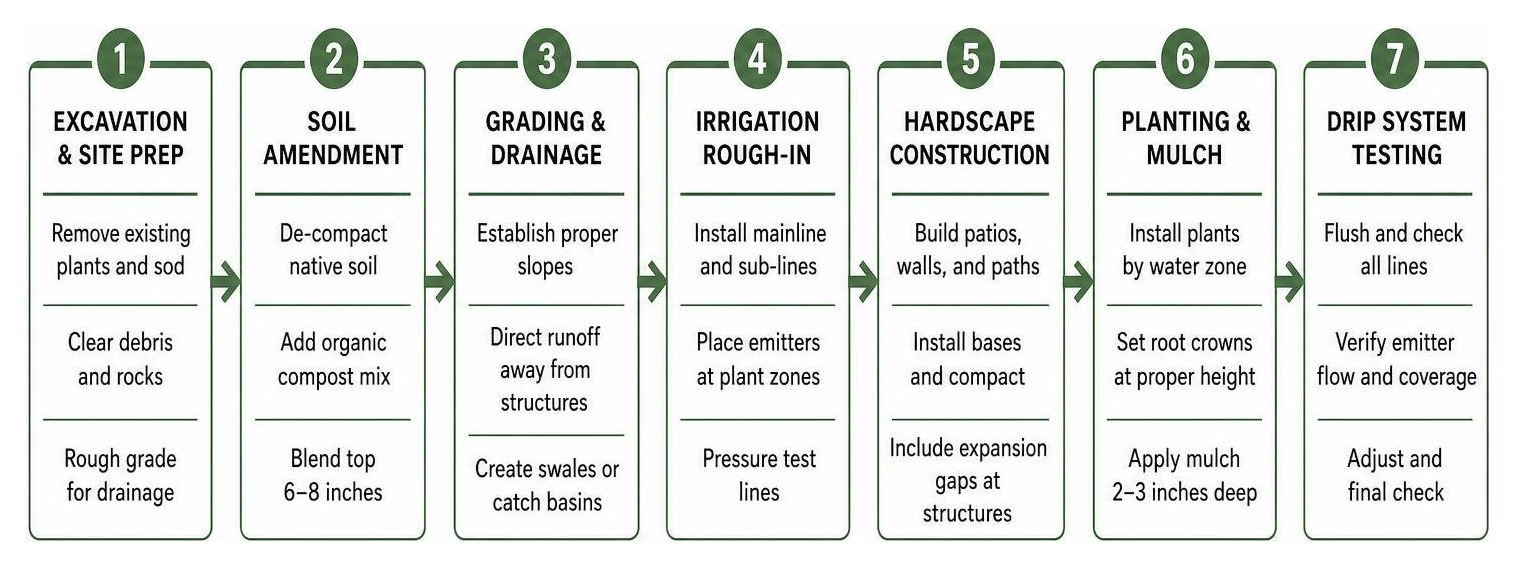
The project begins with clearing existing vegetation and sod. Turf removal can be accomplished through mechanical sod cutting or non-chemical solarization. Once ground cover is cleared, the site is rough-graded to manage drainage paths. Hardscape foundations for patios, retaining walls, and pathways are excavated and compacted prior to installing irrigation sub-lines.
During hardscape construction, thermal expansion gaps must be integrated where concrete pavers or stone borders butt against rigid house foundations or block walls. Desert heat causes pavers and poured borders to expand significantly; without expansion joints, pavers buckle and crack over time.
For structural reference and design inspiration, projects highlighted in serene Arizona wellness garden design show how integrated stone paths and structural desert plants build quiet outdoor retreats.
Hydrozoning Strategies for Efficient Water Distribution
Hydrozoning is the practice of grouping plants with identical water demands and root depth requirements onto separate, dedicated irrigation valves. Placing high-water plants on the same line as desert cacti leads to two outcomes: either the cactus rots from overwatering or the companion plant wilts from underwatering.
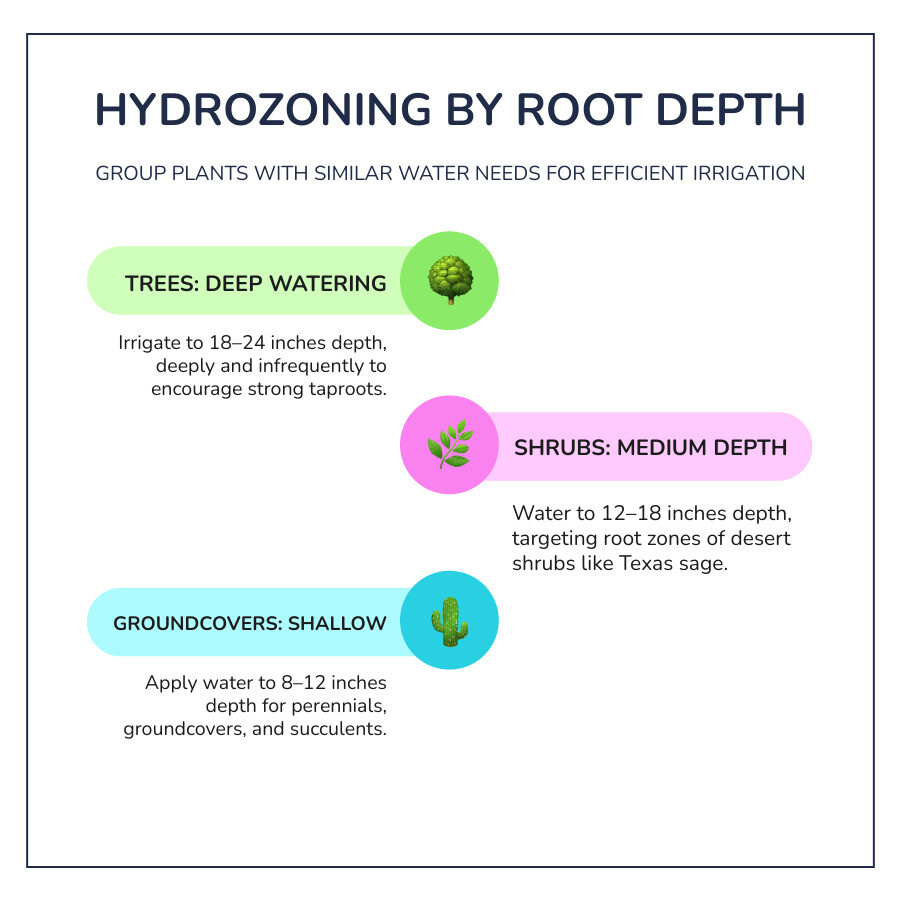
Design hydrozones based on root depth targets:
- Trees (Zone 1): Deep watering to 18–24 inches depth, irrigated deeply and infrequently.
- Shrubs (Zone 2): Medium watering to 12–18 inches depth.
- Groundcovers/Perennials (Zone 3): Shallow watering to 8–12 inches depth.
- Accent/Succulents (Zone 4): Minimal supplemental water once established.
Establishing clear hydrozone boundaries optimizes controller scheduling, eliminating wasted water and protecting long-term plant health.
Converting Sprinklers to Drip Systems During Low Water Landscape Installation
Traditional overhead spray nozzles lose up to 40% to 50% of their output to wind drift and high summer evaporation rates. Drip irrigation systems deliver moisture directly to plant root zones at near 90% efficiency. Upgrading existing spray zones to low-pressure drip systems is a critical technical step during turf conversion.
The conversion process involves retrofitting existing sprinkler risers with pressure regulators and filter assemblies, then connecting distribution tubing throughout planting beds. To maximize irrigation performance in desert climates, follow established best practices for efficient irrigation desert gardens lake havasu.
Using pressure-compensating emitters ensures consistent water volume regardless of elevation shifts across the yard. Integrating smart, weather-based controllers adjusts watering schedules automatically based on real-time temperature fluctuations, preventing overwatering during seasonal shifts as highlighted in modern drought-tolerant landscaping guidelines.
Designing Hardscapes, Mulch, and Shade Elements Without a Barren Look
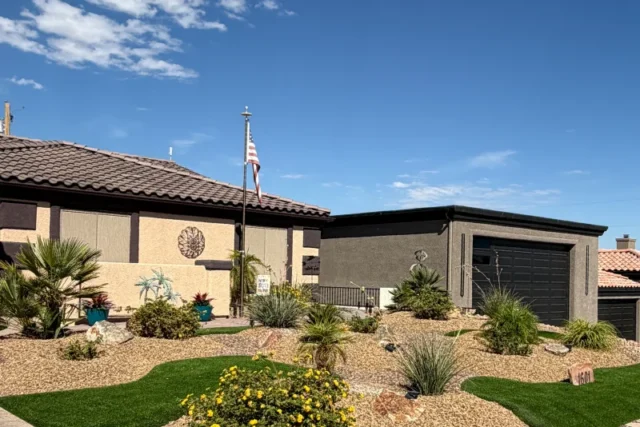
A primary concern among homeowners converting to a low-water landscape is that their property will resemble a desolate gravel pit. A well-engineered landscape balances stone, structural plants, hardscape living zones, and shade elements to build a comfortable outdoor space. Homeowners looking to avoid a stark aesthetic can review guidelines on planning a low-water backyard without a barren appearance.
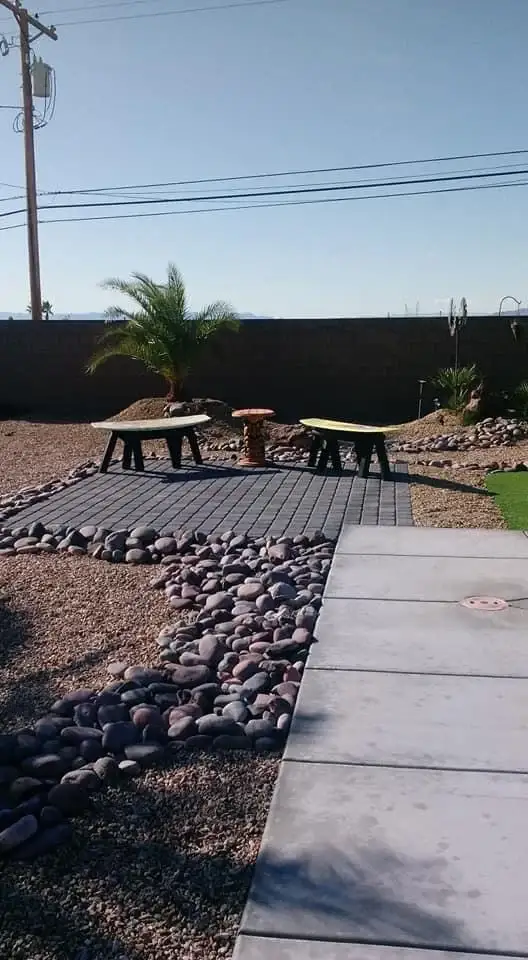
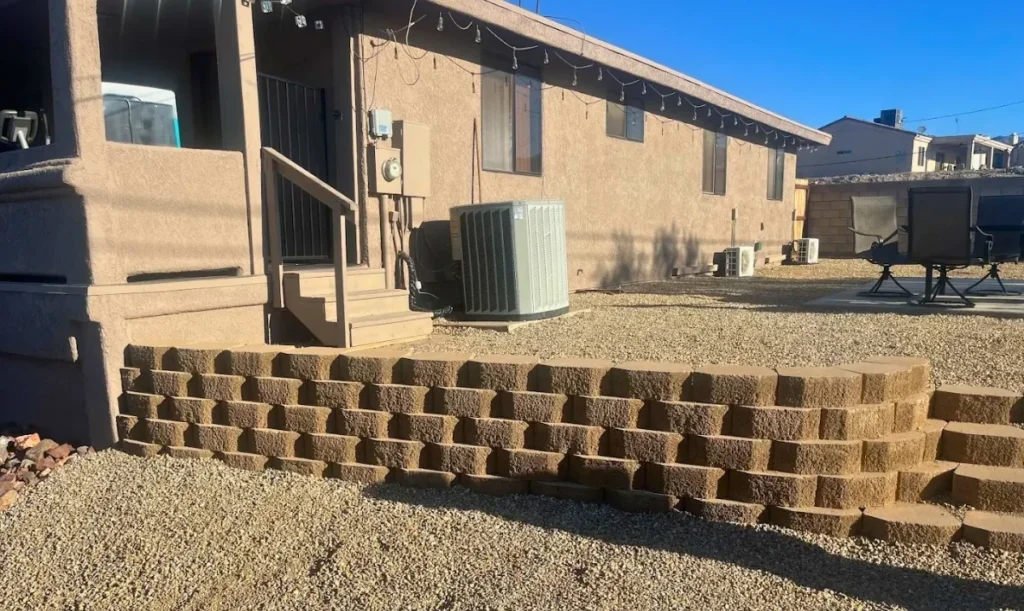
Hardscaping elements—such as paver patios, flagstone walkways, and low seating walls—reduce irrigated area while adding structural framework. Incorporating permeable pavers allows rainwater to infiltrate the sub-base, recharging subterranean moisture levels while preventing surface ponding during heavy rains.
Shade structures, including pergolas, shade sails, and strategically placed desert trees, lower ambient temperatures near hardscape surfaces. Unshaded stone and concrete absorb radiant heat all day, reflecting it back toward the home and raising cooling costs. Combining natural shade with vertical plant layering creates microclimates that keep outdoor living spaces comfortable through hot summer months. Explore additional creative layout concepts with these Arizona landscape ideas for a cool yard.
Organic vs. Inorganic Mulches in the Desert
Mulching plays an essential role in suppressing weeds, regulating soil temperature, and reducing surface water evaporation by up to tenfold. However, selecting between organic bark and inorganic mineral mulch requires evaluating tradeoffs around initial cost, ongoing maintenance, water use efficiency, heat reflection, environmental impact, durability, and total long-term ownership.
| Feature / Trait | Inorganic Mulch (Crushed Rock / DG) | Organic Mulch (Shredded Bark / Wood Chips) |
|---|---|---|
| Ideal Application | Succulents, cacti, xeriscape beds, desert trees | Vegetable beds, non-succulent shrubs, oasis zones |
| Initial Material & Installation Cost | Higher upfront material and freight expense | Lower initial material and application cost |
| Long-Term Ownership Cost | Low lifetime cost; no recurring replacement | High multi-year cost due to replenishment every 1–3 years |
| Application Depth | 2 to 3 inches | 3 to 4 inches |
| Heat Retention & Reflection | High (absorbs heat, reflects ambient radiation) | Low (insulates soil profile, stays cooler) |
| Durability & Breakdown Rate | Permanent (does not decompose or blow away easily) | Decomposes over 1 to 3 years; vulnerable to desert wind |
| Maintenance Needs | Low (occasional weed removal and debris blowing) | Moderate (frequent topping off, raking, and re-spreading) |
| Water Use & Infiltration | Directs irrigation to roots without absorbing water | Holds topsoil moisture; absorbs light rainwater before infiltration |
| Environmental & Soil Impact | Controls surface erosion; does not enrich soil carbon | Adds organic nutrients as it breaks down; enriches microbial soil life |
| Fire Safety | Non-combustible (safe directly against foundations) | Combustible (keep 30 ft from residential structures) |
Before deciding on ground coverage for an Arizona property, homeowners should review how these factors balance across long-term ownership:
- Cost and Long-Term Ownership: Inorganic rock or decomposed granite requires a higher initial investment for excavation, geotextile fabric, and rock delivery. However, because mineral mulch does not break down, long-term ownership costs remain low over a 10-to-20-year horizon. Organic wood bark is cheaper to buy upfront but requires re-application every one to three years, incurring ongoing purchase and labor costs.
- Maintenance and Durability: Rock mulch offers permanent durability against harsh UV exposure and intense desert winds, needing only periodic weed control. Organic mulches break down under extreme heat and can blow out during summer monsoons, requiring frequent raking and replenishment.
- Water Use and Irrigation: Inorganic mulches do not absorb irrigation water, allowing every drop from drip emitters to penetrate directly into the root zone. Organic mulches retain surface moisture near plant crowns, which benefits water-hungry perennials but can absorb light rain before it reaches sub-surface roots.
- Heat and Environmental Impact: Inorganic stone absorbs radiant sun energy during the day and re-radiates heat at night, elevating localized ground temperatures near house walls. Organic mulch insulates the soil profile, keeping roots cooler and feeding soil micro-organisms as it decomposes, though combustible wood poses a fire safety risk near building perimeters.
After weighing these specific tradeoffs, inorganic mulches such as crushed river rock, gravel, or decomposed granite (DG) perform best for main yard coverage under Arizona desert conditions. Their permanent durability, wind resistance, and non-combustible fire safety outweigh higher initial material costs and localized heat retention. Keep rock mulch at a depth of 2 to 3 inches; applying rock too deep traps heat and starves soil microbes of oxygen. Organic wood mulches should be used selectively around non-succulent flowering shrubs in shaded or protected oasis zones, keeping material 3 to 4 inches away from trunk collars to prevent wet stem rot.
To maintain wildfire safety standards around residential homes, combustible organic mulches should be restricted near foundations, relying on non-combustible crushed stone within the immediate perimeter of the house.
Incorporating Turf Alternatives and Hardscape Features
Homeowners who want usable green spaces for pets or children can balance turf utility with water efficiency by choosing between modern synthetic turf options and drought-tolerant groundcovers. Weighing artificial turf vs real grass helps determine which surface fits your outdoor use, budget, and water goals.
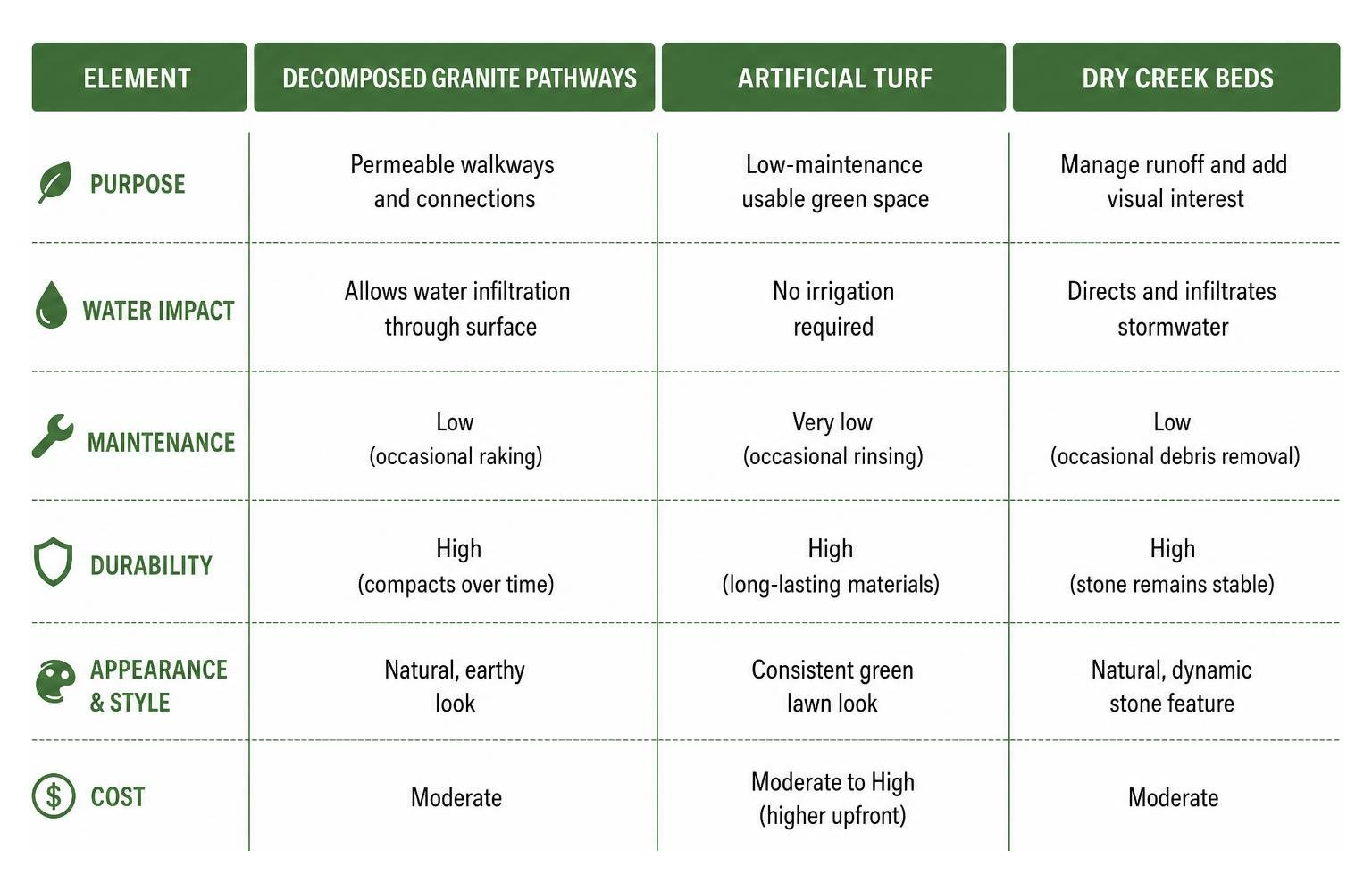
Integrating hardscape features helps break up large areas of rock mulch:
- Decomposed Granite Pathways: Permeable, natural-looking walkways compacted over an aggregate base.
- Specimen Boulder Clusters: Grouping natural boulders in odd-numbered clusters (3, 5, or 7) buried one-third deep to mimic natural rock outcrops.
- Dry Creek Beds: Lined channels filled with mixed river rock that manage monsoon runoff while adding visual depth.
- Retaining Walls: Block or stone walls used for slope stabilization, creating level planting terraces on hillside lots.
Common Installation Mistakes and Long-Term Maintenance Schedules
Even well-funded xeriscape conversions can fail visually or structurally if common installation oversights occur during construction.
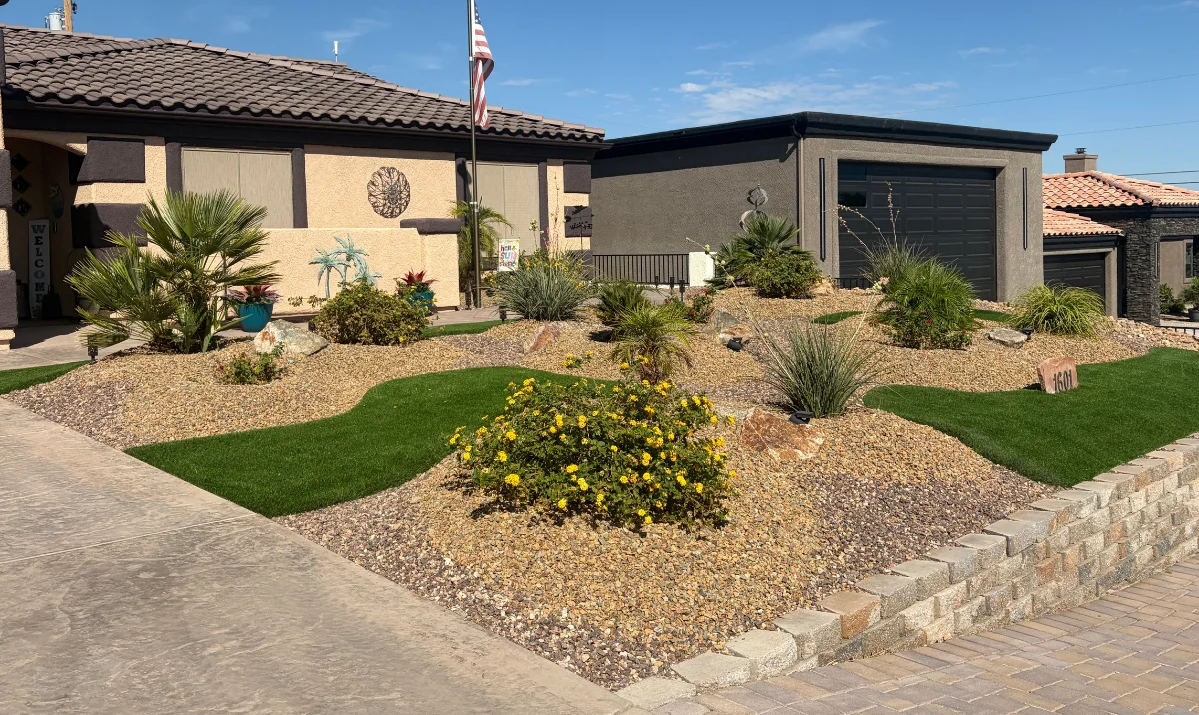
Avoid these frequent installation mistakes:
- Overusing Light Gravel: Spreading bright white or light-colored rock over large expanses reflects blinding light and intense heat back onto house walls and plants.
- Plant Isolation: Placing single plants too far apart creates a sparse, unfinished appearance. Group plants in overlapping clusters of three to seven to create visual balance.
- Ignoring Reflected Wall Heat: Planting heat-sensitive shrubs against south- or west-facing stucco walls causes severe foliage scorch.
- Skipping Weed Barrier Fabrics under Gravel: Omitting heavy-duty geotextile fabric beneath rock mulch allows invasive weeds to break through after summer rains.
To ensure your front yard maintains visual appeal and long-term performance, review tips on xeriscaping a Golden Shores front yard.
Establishing New Desert Plants with Minimal Supplemental Water
Newly installed low-water plants require consistent watering during their initial establishment period before transitioning to low-water survival mode. It takes one to two full growing seasons for native plants to develop root systems deep enough to access subterranean moisture.
After establishment, taper watering frequencies while increasing run times to encourage roots to grow deep into the soil profile.
Seasonal Landscape Maintenance Schedule
While low-water landscapes dramatically cut upkeep compared to turf lawns, they are low-maintenance—not zero-maintenance. A routine checklist keeps systems operating cleanly:
- Spring (March – April): Inspect drip lines and clean filter screens. Prune frost-damaged foliage after the final cold snap. Apply pre-emergent weed controls before spring germination.
- Summer (June – August): Monitor smart irrigation controllers during extreme heat waves. Check emitter flow rates and look for clogged lines. Verify drainage paths clear before monsoon storms arrive.
- Fall (September – October): Cut back spent flowering perennials. Replenish thin rock mulch zones to maintain uniform depth. Plant new desert trees and shrubs while soil remains warm.
- Winter (November – February): Adjust automatic controllers to winter run frequencies. Flush drip lines to remove sediment. Wrap sensitive accent plants during freeze warnings.
Frequently Asked Questions About Low-Water Landscaping
How much water does a xeriscape save compared to traditional turf?
Converting a high-water grass lawn to a low-water desert landscape reduces outdoor water consumption by 50% to 75%. In dry climates, landscape watering accounts for over half of household water usage. Replacing grass with drip-irrigated native plants cuts municipal water utility bills, saving thousands of gallons of water each month during peak summer heat.
Can I install a low-water landscape over rocky caliche soil?
Yes, but site preparation requires proper soil mechanical work. Caliche must be broken up using jackhammers, augers, or excavators at every plant hole to ensure drainage. In areas with solid caliche layers, constructing raised planting beds or building low retaining walls filled with imported soil provides healthy growing room for deep-rooting plants. Gentle surface swales can also be graded across caliche layers to route heavy monsoon runoff away from house foundations.
Do low-water landscapes require zero maintenance after installation?
No. Low-water landscapes cut down on maintenance by eliminating weekly lawn mowing, edging, and high-volume fertilizing, but they still require periodic care. Homeowners must check drip lines for leaks or mineral clogs, trim native shrubs once or twice a year, pull seasonal weeds, and flush irrigation filters to keep the landscape healthy and tidy.
Conclusion: Transforming Your Arizona Outdoor Space
A low water landscape installation combines functional engineering with natural desert aesthetics. By removing thirsty turf, breaking through caliche soil, laying stable hardscape foundations, and installing efficient hydrozoned drip systems, property owners build outdoor spaces that handle extreme heat, fast monsoon runoff, and drought conditions.
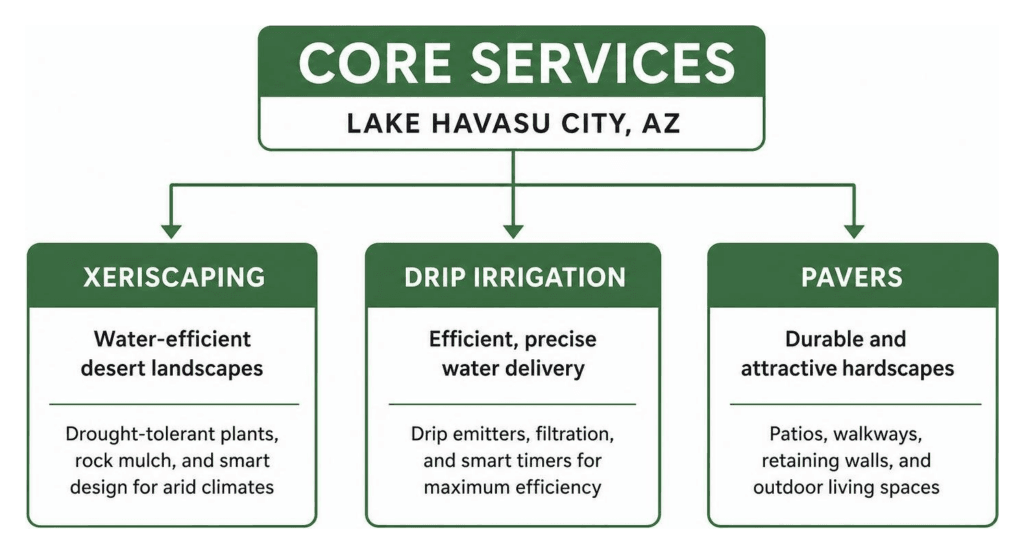
When investing in hardscaping, pavers, retaining walls, artificial turf, or low-voltage lighting, select materials built for extreme heat and high UV exposure to ensure long-term durability. To learn more about customized low-water landscape installations, explore comprehensive desert landscaping services.
Working with an experienced contractor ensures proper grading, durable hardscape construction, and long-term project performance. To transform your outdoor living area into a water-wise feature that enhances property value, contact River Palm Landscaping to start planning your site transformation today. Discover additional ideas for outdoor living by reviewing strategies for maximizing your landscape with desert landscaping.