Why Irrigation System Repair Near Me Matters in the Arizona Desert
When your desert watering system fails, finding a qualified professional quickly is essential to prevent plant loss and high utility bills.
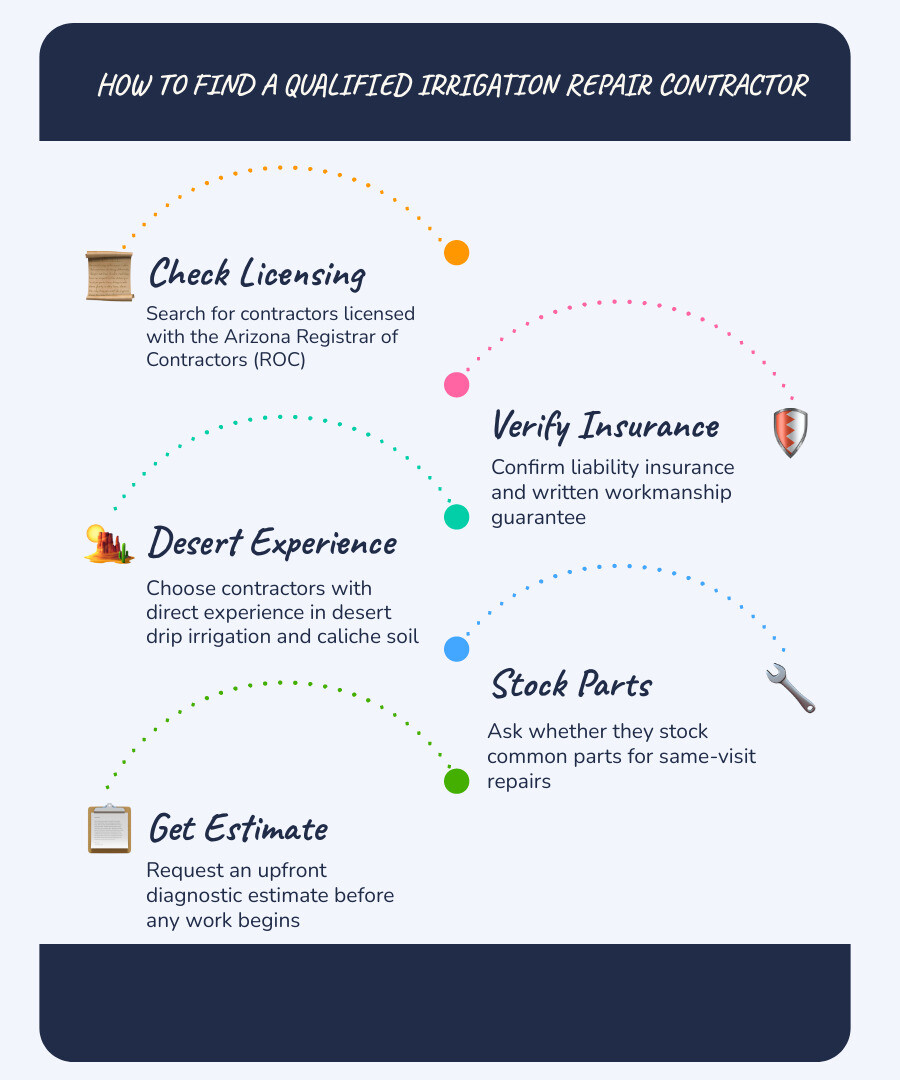
To find a qualified irrigation repair contractor in Lake Havasu City, AZ, you should verify their licensing with the Arizona Registrar of Contractors (ROC), confirm they carry liability insurance, and ensure they have direct experience with local caliche soil conditions. Choosing a technician who stocks common parts like valves and emitters allows for faster, more efficient service.
A broken irrigation system in the Mojave Desert is not just an inconvenience — it is a fast-moving problem. A single stuck-open valve can waste more than 2,000 gallons of water per day. In a region where summer temperatures routinely exceed 110°F and water conservation is a real concern, a malfunctioning system can mean dead plants, eroded soil, and a water bill that climbs quickly before you even notice something is wrong.
The good news is that most irrigation repairs — whether a failed valve, a cracked lateral line, or a malfunctioning controller — can be diagnosed and fixed in a single service visit when you hire the right contractor. The challenge is knowing what to look for, what questions to ask, and how desert conditions in western Arizona change the way irrigation systems are installed, repaired, and maintained compared to cooler, wetter climates.
This guide walks you through everything you need to know: the warning signs of a failing system, what desert-specific challenges to expect, how to evaluate local contractors, and what a professional repair visit should look like from start to finish.
Useful local landscaping resources:
- artificial grass installation Lake Havasu
- best yard drainage company near me
- full service landscape company near me
Common Signs of Desert Irrigation Failure
Recognizing early warning signs of irrigation failure is the best way to protect your landscape investment and avoid catastrophic water waste. Unlike wetter climates where a failing sprinkler system might just result in a slightly brown lawn, the intense heat of western Arizona means plants can perish within days if their water supply is cut off. Conversely, hidden underground leaks can undermine hardscaping, wash away decorative gravel, or cause costly structural damage.
If you suspect your system is failing, reading up on Fixing Your Broken Desert Irrigation System for Good can help you understand how these systems are structured and why quick action is necessary.
Identifying Leaks and Pressure Drops
Underground leaks are among the most insidious irrigation issues. Because most desert systems rely on subterranean lateral lines, a cracked pipe may not immediately create a visible puddle. Instead, look for localized drops in water pressure. If emitters at the end of a drip line are barely dripping, or if pop-up sprinkler heads fail to rise fully, there is likely a break or a severe clog upstream.
Clogged micro-emitters are another frequent culprit. Mineral deposits from hard Arizona water can accumulate inside the tiny pathways of drip emitters, choking off water flow. Meanwhile, lateral line breaks caused by shifting desert soil or tree roots will divert water away from your plants, often leading to soil erosion as pressurized water carves out underground voids beneath your rock mulch.
Recognizing When to Search for Irrigation System Repair Near Me
Some irrigation failures make themselves known with dramatic flair. If you notice bubbling soil or water pooling in areas where there are no plants, you are likely dealing with a ruptured pipe or a stuck-open valve. Sputtering sprinkler heads that hiss or spray unevenly often point to cracked plastic housings or internal seal failures.
When your controller screen goes blank, displays error codes, or fails to activate specific watering zones, the issue lies within your electrical system. In Mohave County, these symptoms should prompt an immediate search for a licensed specialist. Selecting a qualified local contractor ensures that your technician understands how to navigate the unique soils and climate of the region, preventing temporary quick-fixes that fail during the next heatwave.
Desert Irrigation Challenges in Western Arizona
Western Arizona presents a brutal environment for outdoor machinery and plumbing. The combination of intense solar radiation, rocky earth, and extreme seasonal temperature swings means irrigation systems in Lake Havasu City, Golden Shores, and Parker face physical stresses rarely encountered elsewhere. Understanding these challenges helps explain why professional-grade materials and proper installation techniques are non-negotiable.
For a deeper look into designing systems that survive this climate, consult our guide on Efficient Irrigation Desert Gardens Lake Havasu.
Caliche Soil and Rocky Terrain Obstacles
One of the greatest challenges in local irrigation repair and installation is caliche. This naturally occurring, cement-like layer of calcium carbonate lies just beneath the surface throughout much of Mohave and La Paz counties. Digging through caliche requires specialized heavy machinery, such as jackhammers or trenchers with carbide-tipped teeth.
Because trenching is so difficult, some budget installers lay pipes too shallowly. Shallow pipes are highly vulnerable to soil compaction from foot traffic, shifting rocks, and surface heat. Properly designed systems protect these lines by placing them in protective sleeves or burying them beneath the caliche line. When a repair technician works on your system, they must take care to cushion new PVC or poly pipes with clean sand before backfilling to prevent sharp rocks from puncturing the lines under pressure.
Thermal Expansion and UV Degradation
The Arizona sun is exceptionally destructive to plastics. Unprotected PVC pipes and poly tubing exposed to direct sunlight will degrade, turning brittle, chalky, and prone to cracking under minimal pressure.
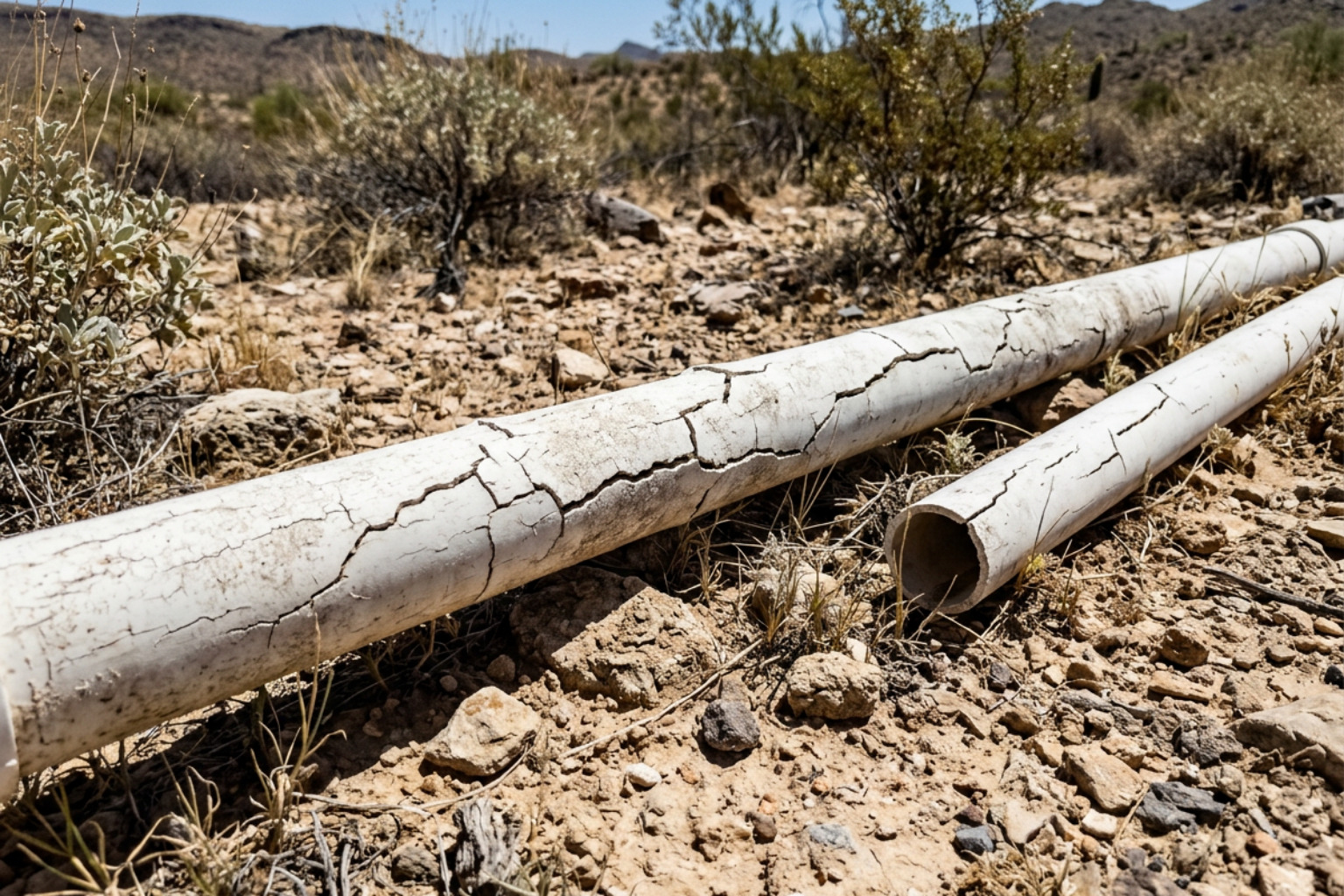
Furthermore, thermal expansion poses a major threat. In July 2026, surface temperatures can swing by 30°F or more between day and night. This causes plastic pipes to expand and contract constantly, putting immense stress on glued joints and compression fittings. Without proper slack in poly lines and professional-grade PVC cement on rigid lines, connections will eventually pull apart, leading to major underground leaks.
Residential vs. Commercial Irrigation Repair Needs
While the core principles of hydraulics remain the same, residential and commercial irrigation systems differ significantly in scale, complexity, and water management requirements.

Drip Irrigation vs. Sprinkler Systems
Residential properties in the desert overwhelmingly rely on low-volume drip irrigation. Drip systems utilize micro-emitters, bubblers, and blank distribution tubing to deliver precise amounts of water directly to the root zones of individual plants, minimizing soil evaporation.
Commercial properties, HOAs, and public parks often feature a mix of drip systems for desert plantings and high-volume sprinkler zones for turfgrass. These sprinkler systems use heavy-duty rotor heads and spray heads designed to cover large areas. Because sprinklers operate at higher pressures and flow rates, a single broken head can waste massive amounts of water in a single cycle, requiring rapid professional intervention.
| Feature | Residential Drip Systems | Commercial Sprinkler Systems |
|---|---|---|
| Primary Water Delivery | Micro-emitters, bubblers, drip tubing | Rotor heads, spray heads, impact sprinklers |
| Operating Pressure | Low (15–30 PSI) | High (40–70+ PSI) |
| Water Efficiency | Very high (minimal evaporation) | Moderate (subject to wind drift and evaporation) |
| Common Repair Issues | Clogged emitters, chewed poly lines, cut tubes | Broken heads, stuck valves, damaged mainlines |
| Regulatory Oversight | Standard residential backflow prevention | Strict commercial backflow testing and HOA compliance |
Backflow Prevention and Water Conservation Regulations
Both residential and commercial systems require backflow preventers to prevent irrigation water—which can contain fertilizers, pesticides, and soil pathogens—from siphoning back into the municipal potable water supply. These safety devices must be installed in accordance with local cross-connection control regulations.
In some commercial developments and public spaces, you will see purple reclaim pipes. These color-coded lines indicate the use of recycled or reclaimed water, which is strictly separated from potable water lines by law. Navigating these systems requires a clear understanding of local water utility guidelines to avoid heavy fines and safety hazards. For properties near pool installations or waterfront areas, coordinating these utility lines is crucial. Homeowners in the region often coordinate these services alongside specialized local contractors, such as Topock and Golden Shores pool service or Topock pool service and Golden Shores pool cleaning service to ensure subterranean lines do not conflict. Additionally, complex plumbing repairs near Parker may require coordinating with local utility service experts like Parker air conditioning, heating, electrical, and plumbing services.
How to Choose a Qualified Contractor for Irrigation System Repair Near Me
Hiring an unverified worker to fix your watering system can lead to recurring problems, ruined landscapes, and wasted money. To protect your property, you should follow a systematic approach when searching for a professional. You can begin by checking local directories like Yelp listings for Lake Havasu City or reviewing local specialty listings such as sprinkler repair in Lake Havasu City to identify active service providers.
For broader advice on selecting a trustworthy partner, read our guide on how to choose an Arizona desert landscape contractor.
Licensing, Bonding, and Insurance Requirements
In Arizona, any contractor performing residential or commercial work over a certain dollar amount must be licensed by the Arizona Registrar of Contractors (ROC). A valid ROC license indicates that the business has met state testing requirements, maintains proper bonding to protect consumers, and carries active worker’s compensation and general liability insurance.
Working with an unlicensed individual carries significant risk. If an unlicensed worker damages your main water line and floods your home’s foundation, your homeowner’s insurance may deny the claim. Always verify a contractor’s credentials directly on the Arizona ROC website before booking an appointment. You can also cross-reference businesses using consumer protection platforms like the Better Business Bureau listings for Parker.
Local Expertise in Mohave and La Paz Counties
An irrigation technician from a wet, humid climate may not understand the nuances of desert xeriscaping. A local expert serving Lake Havasu City, Golden Shores, and Parker knows how local soil conditions affect water movement, how to program controllers for intense summer heat, and how to comply with local water utility restrictions. They will recommend durable, commercial-grade components designed to withstand the harsh local elements.
Cost Factors and Budgeting for Irrigation Repairs
When planning for irrigation repairs, it is important to understand that pricing varies by project based on the materials used, the accessibility of the site, and the complexity of the repair.

Average Repair Costs and Material Lifespans
The cost of a lawn sprinkler system installation varies depending on yard size and layout. Minor fixes like replacing a single drip emitter or a standard sprinkler head are relatively inexpensive. However, replacing a failed zone valve, repairing a buried mainline under hardscaping, or upgrading to a modern smart irrigation controller represents a larger investment.
These costs should be viewed as investments in your property’s usability, water efficiency, and curb appeal. High-quality commercial-grade valves and UV-resistant poly tubing will outlast cheap alternatives, saving you money on repeat repairs over their lifespan.
Preventative Maintenance and Seasonal Tune-Ups
The best way to keep repair costs down is through regular preventative maintenance. A seasonal tune-up should be performed at least twice a year—once in the spring before the extreme summer heat arrives, and once in the autumn.
During a seasonal check-up, your technician will flush the lines to clear out accumulated sediment, pressure-test the system to identify hidden leaks, and adjust your controller programming to match seasonal weather patterns. This simple step prevents overwatering, protects your plants, and extends the life of your equipment.
What to Expect During an Irrigation System Repair Near Me Service Call
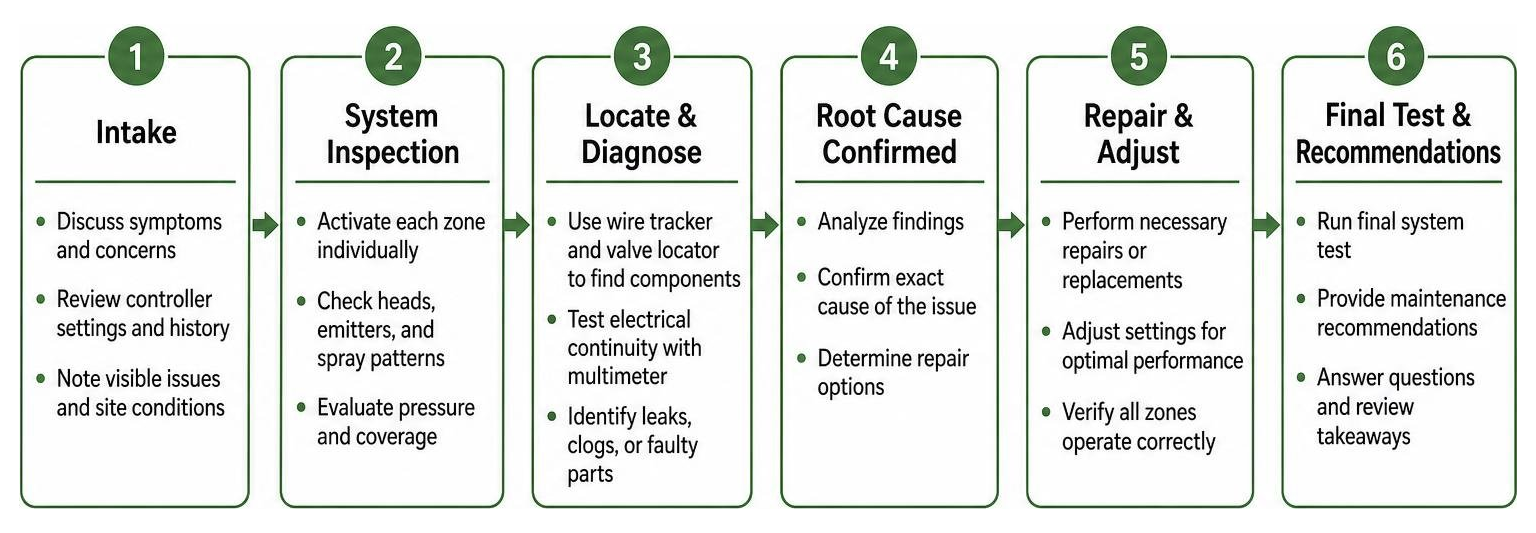
A professional service call should be systematic, transparent, and educational. Rather than guessing where a leak is, a qualified technician utilizes specialized tools to diagnose the exact root cause of your system’s issues.
Comprehensive System Inspection
Your service visit should begin with a thorough walkthrough of every watering zone. The technician will activate each zone individually to inspect emitter outputs, spray patterns, and pressure levels.
To find buried components, professionals use advanced diagnostic equipment. Wire trackers and valve locators allow them to pinpoint the exact location of hidden valve boxes without digging up your entire yard. They will also use multimeters to test electrical continuity at the controller and solenoids, ensuring that wiring issues are diagnosed accurately before any parts are replaced.
Diagnostic and Repair Process
Once the issue is identified, the technician should provide you with an upfront estimate outlining the scope of work and material costs.
With your approval, the repair process begins. This may involve careful trenching to expose a broken pipe, splicing in a new section of schedule 40 PVC with professional-grade primer and cement, or replacing a failed solenoid or valve diaphragm. After completing the repair, the technician will test the zone again to ensure proper operating pressure and coverage before cleaning up the work area and restoring your landscape’s appearance.
Frequently Asked Questions about Irrigation Repair
How much water does a stuck-open irrigation valve waste?
A single stuck-open irrigation valve can waste over 2,000 gallons of water per day. This occurs when the internal diaphragm fails to seal, allowing water to flow continuously through the zone even when the controller is turned off. If left unaddressed, this can lead to massive water bills, soil erosion, and severe root rot that can kill your desert plants.
Should I choose drip irrigation or sprinklers for my desert yard?
For desert landscapes in western Arizona, drip irrigation is highly recommended. Drip systems deliver water directly to the plant’s root zone, virtually eliminating water loss from wind drift and soil evaporation. Sprinklers are best reserved strictly for turfgrass areas, as spraying water into the dry desert air results in significant evaporation loss before the water ever reaches the ground.
How often should I adjust my irrigation controller in Arizona?
Your irrigation controller should be adjusted at least four times a year to account for seasonal temperature shifts. In the extreme heat of summer, plants require more frequent watering cycles. During the winter, watering schedules can be scaled back significantly. Many homeowners upgrade to smart, Wi-Fi-enabled controllers that automatically adjust watering runtimes based on real-time local weather data, taking the guesswork out of seasonal programming.
Conclusion
A properly functioning irrigation system is the lifeblood of any western Arizona landscape. By addressing leaks, clogs, and controller malfunctions early, you preserve water, protect your plants, and avoid expensive emergency repair bills down the road.
If you are looking for a reliable partner to manage your outdoor space, River Palm Landscaping is a licensed, experienced local contractor serving Lake Havasu City, Golden Shores, and Parker, AZ. Since 2003, our team has specialized in durable, desert-appropriate design, expert installation, and reliable irrigation services built to withstand the extreme Arizona heat.
To learn more about how we can help you optimize your outdoor space, explore our services in Landscaping Lake Havasu and Residential Landscaping.
Ready to upgrade or repair your desert watering system? Contact the experts at River Palm Landscaping today to schedule a professional consultation.