Why the Cost of Desert Landscaping Is Worth Understanding Before You Start
If your grass is brown by May, your water bill is climbing every summer, and your yard feels more like a liability than an asset, you are not alone. In Lake Havasu City and Golden Shores, traditional lawns simply weren’t built for this climate. Summer temperatures regularly push past 110°F, Mohave County soils are rocky and caliche-heavy, and water costs here are a real and growing concern for homeowners.
The cost of desert landscaping typically ranges from $5 to $20 per square foot for professional installation, depending on materials, site conditions, and design complexity. Most professionally installed desert landscaping projects fall into predictable pricing ranges based on yard size, although site conditions and material selections can shift the final investment. Here’s a quick snapshot for common project sizes in the Lake Havasu City area:
| Project Size | Typical Cost Range |
|---|---|
| 500 sq ft | $2,500 – $10,000 |
| 1,000 sq ft | $5,000 – $20,000 |
| 1,500 sq ft | $7,500 – $30,000 |
Costs vary based on factors like soil preparation, irrigation, plant selection, and hardscaping. Most full-yard conversions fall somewhere in the mid-range.
Desert landscaping — sometimes called xeriscaping — helps solve all three challenges while reducing long-term maintenance and water use. But before you commit, it helps to understand what drives the cost, what you can expect to spend, and where the real long-term value comes from. This guide breaks all of that down.
Understanding the Cost of Desert Landscaping
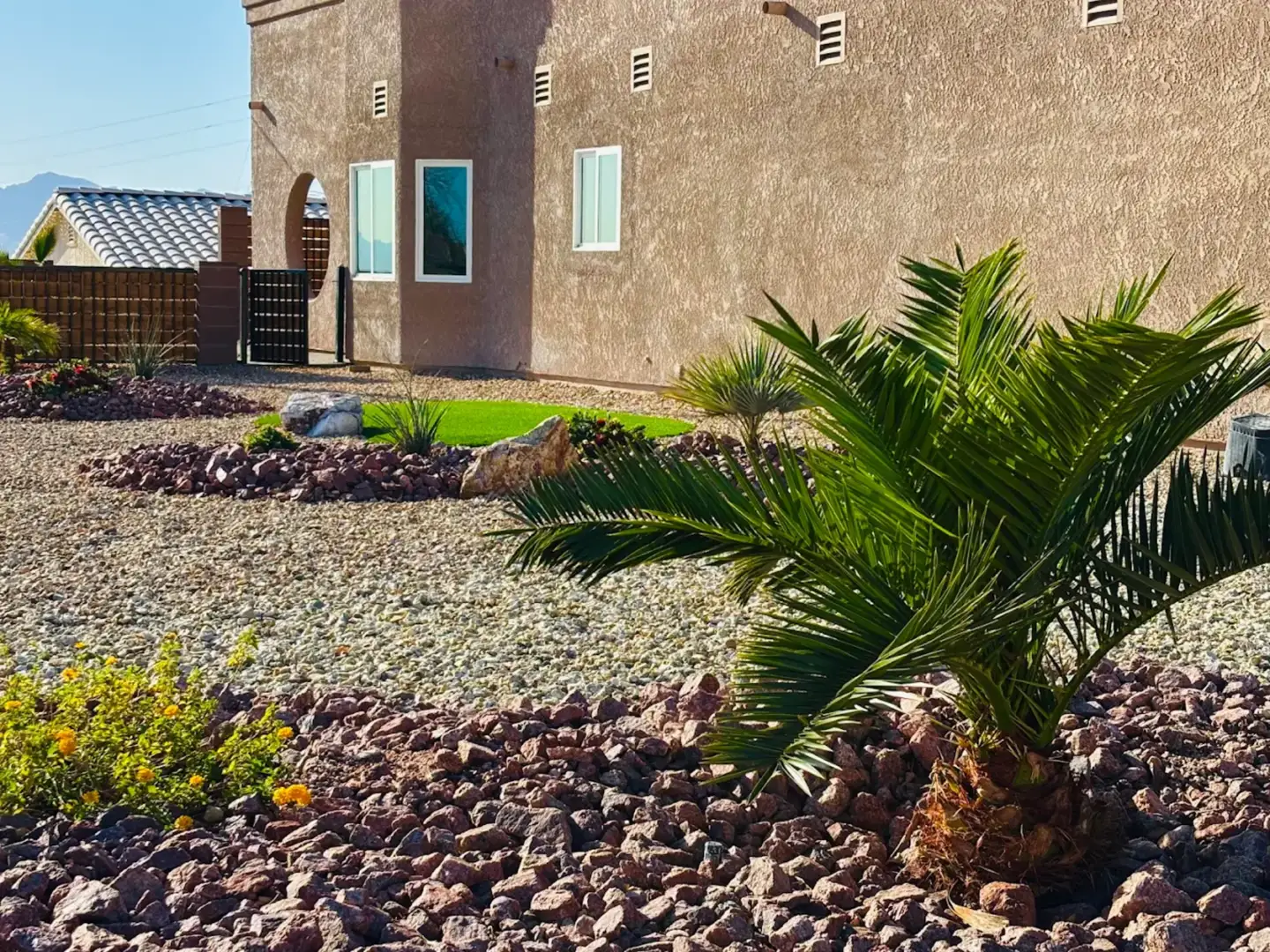
When evaluating the cost of desert landscaping, it is important to realize that no two desert yards in Mohave County are identical. A flat lot near the water in Lake Havasu City requires vastly different engineering and preparation than a steeply sloped parcel in the foothills. The overall investment is determined by the size of the project area, the physical challenges of the terrain, and the level of design detail you choose.
To help you visualize how these variables impact your budget, projects generally fall into three main tiers:
| Design Tier | Typical Cost Per Sq. Ft. | Primary Components Included |
|---|---|---|
| Basic | $5 – $10 | Simple grading, commercial-grade weed barrier, local utility gravel (such as crushed granite), basic drip lines, and small starter desert plants. |
| Mid-Range | $10 – $15 | Enhanced grading, multi-sized decorative rock layers, accent boulders, upgraded smart drip irrigation, and a mix of mature low-water plants (like Lantana and Totem Pole cactus). |
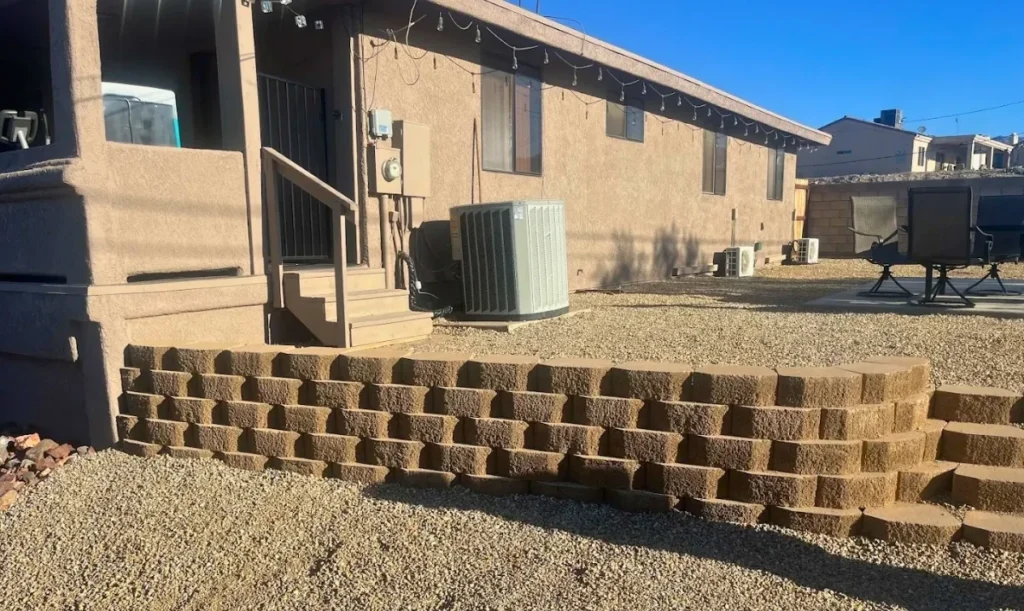
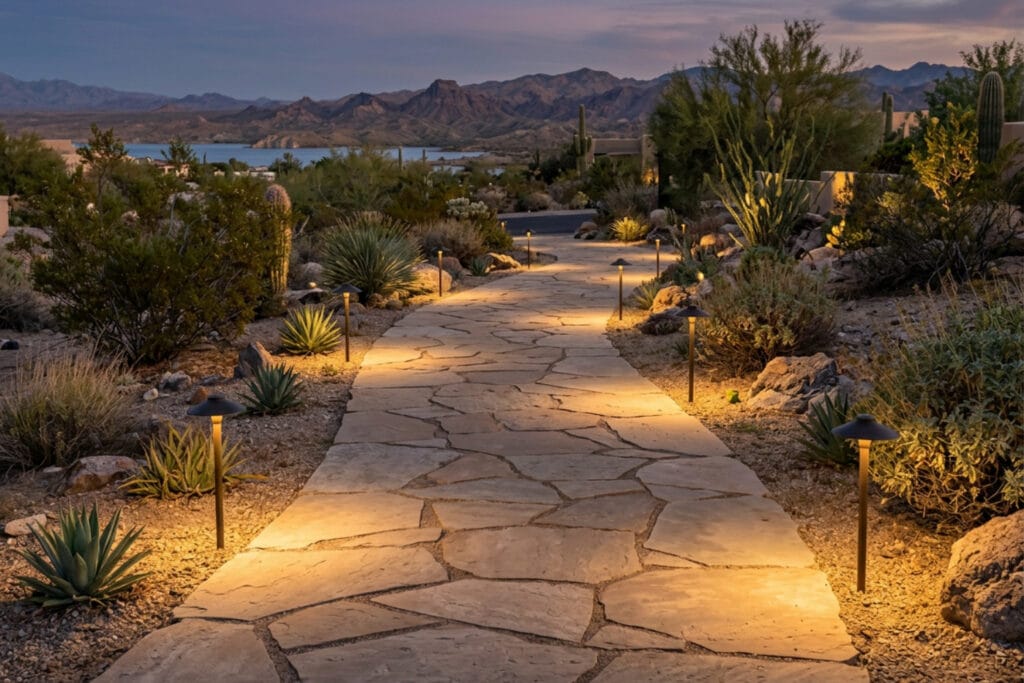
| High-End | $15 – $25+ | Full site engineering, retaining walls for sloped hillsides, premium pavers, integrated low-voltage lighting, mature specimen plants, and custom dry creek beds for drainage. |
Homeowners searching for xeriscaping cost per square foot should expect the final number to depend on the same core variables: how much grading is needed, how deep the rock coverage will be, whether old turf must be removed, and whether the design includes drip irrigation, boulders, pavers, lighting, or retaining walls.
Average Cost of Desert Landscaping by Yard Size
As with most major home improvements, scale plays a significant role in pricing. While a larger yard naturally costs more in total, it often benefits from economies of scale.
- 500 Square Feet (Small Front Yard or Side Yard): Often ranging from $2,500 to $10,000. These compact projects are excellent for high-impact entryways, pool surrounds, or narrow side yards. Because mobilization costs for heavy machinery (like Bobcats and excavators) remain relatively fixed, smaller spaces sometimes carry a slightly higher cost per square foot.
- 1,000 Square Feet (Standard Suburban Yard): Typically ranging from $5,000 to $20,000. This is the average size for many residential properties in Parker and Golden Shores. It offers plenty of space to balance decorative rock beds, accent boulders, and a healthy distribution of desert-hardy plants.
- 1,500 Square Feet (Large Yard or Corner Lot): Generally ranging from $7,500 to $30,000. Larger properties allow for distinct zones, such as an RV parking pad, integrated hardscape pathways, and dry wash features designed to handle heavy monsoon rains.
To explore how to budget strategically and get the most out of your specific square footage, check out our guide on maximizing your landscape with desert landscaping.
Cost by Feature: Which Upgrades Increase the Budget?
Some upgrades affect the budget more than others. Use this quick comparison to see where your money typically goes and which features have the biggest impact on the overall investment.
| Feature | Typical Cost Impact | Why It Changes the Budget |
|---|---|---|
| Decorative rock | $ | Material type, depth, delivery, and coverage area affect total cost. |
| Smart irrigation | $$ | Adds controllers, zoning, pressure regulation, and professional setup. |
| Mature specimen plants | $$ | Larger palms, cacti, and desert-adapted shrubs cost more to source, transport, and install. |
| Retaining walls | $$$ | Require engineering, excavation, drainage, base preparation, and structural materials. |
| Paver patios | $$$ | Add labor-intensive base prep, compaction, edge restraints, and finish work. |
| Lighting | $$ | Requires fixtures, wiring, transformers, layout planning, and installation time. |
| Drainage improvements | $$ | May require grading, dry creek beds, swales, catch basins, or rock stabilization. |
To gain a broader perspective on how regional factors influence these price points across the Southwest, you can read more about desert landscaping in Arizona to see how local climates dictate material standards.
How Material Choices Impact the Cost of Desert Landscaping
The specific materials you select will directly shape your final invoice. In desert landscaping, materials are selected not just for their appearance, but for how they withstand intense UV exposure and thermal expansion.
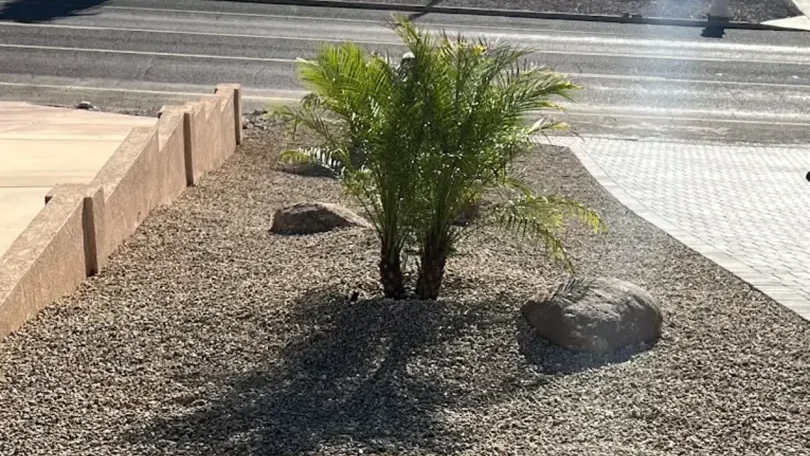
- Decorative Rock and Gravel: Rock is the foundation of any desert yard. Local crushed granite, river rock, and slope rock can vary widely in price. Bulk delivery is far more cost-effective than bagged rock, saving up to 40% to 60% on material costs.
- Boulders: Boulders add essential vertical interest to flat desert yards. Standard landscape boulders typically cost between $100 and $600 per ton. Placement requires heavy machinery, meaning the physical size of the boulder will influence the labor equipment required.
- Desert-Hardy Plants: Plant selection is where many homeowners make costly mistakes. Opting for highly resilient, native, or desert-adapted species is crucial. Plants like colorful Lantana and striking Totem Pole cactus thrive in our extreme summer heat. If you prefer a lush look, you can design “tropical-inspired” zones using hardy palms and deep green desert shrubs without resorting to high-water tropical plants.
To help you choose species that won’t require constant replacement, we have compiled a list of the best low maintenance desert plants that are proven to survive Mohave County summers.
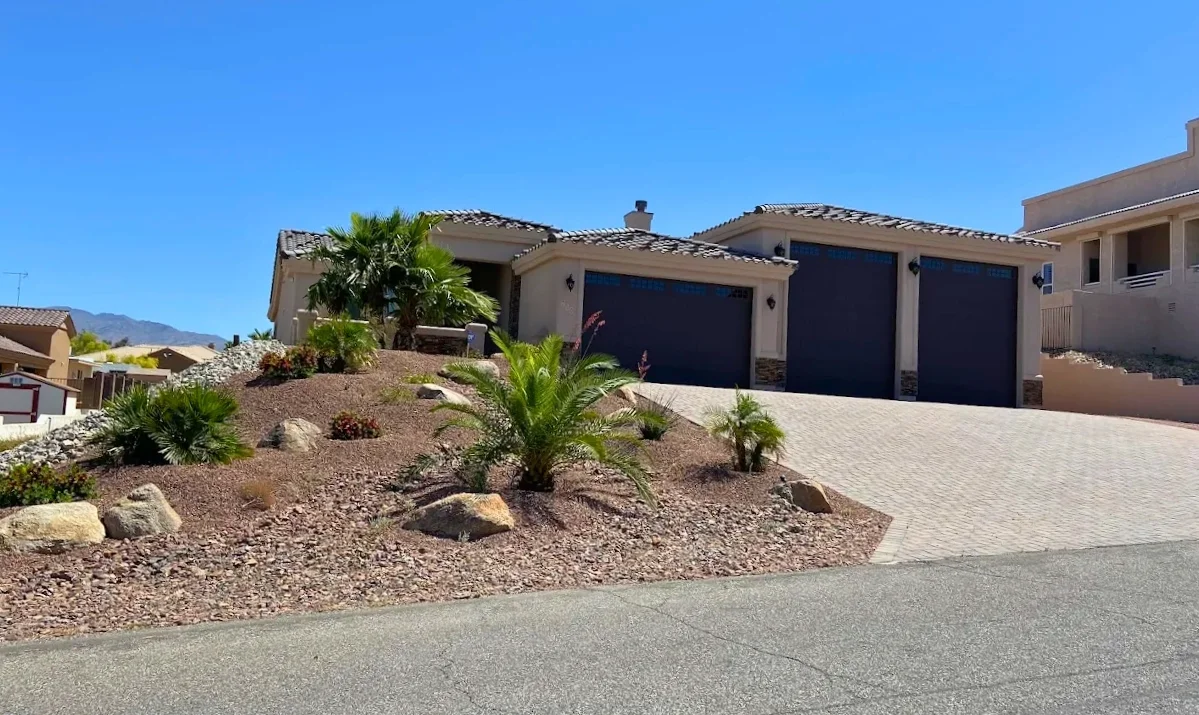
What Does Rock Mulch Installation Cost?
Rock mulch installation cost depends on far more than the price of the rock itself. In Arizona desert yards, the final price is shaped by four main factors:
Many homeowners underestimate how much proper grading and edge preparation affect the finished appearance. Spending slightly more on site preparation usually produces a landscape that lasts longer and requires fewer corrections later.
| Cost Factor | What It Includes |
|---|---|
| Material | Crushed granite, river rock, pea gravel, slope rock, or decorative stone all come at different price points. Color, size, and availability affect the material cost. |
| Hauling and Delivery | Rock is heavy, so dump fees, delivery distance, truck access, and the number of loads can change the final price. |
| Depth and Coverage | Most desert yards need enough depth to suppress weeds, protect soil, and create even coverage. Thin applications may look cheaper upfront but often fail faster. |
| Labor and Site Prep | Removing grass, grading the surface, installing weed barrier, edging beds, and spreading rock evenly all add labor time. |
For many Lake Havasu City homeowners, rock mulch is one of the most cost-effective ways to replace struggling grass, reduce dust, and create a cleaner desert landscape. However, the best results come from installing the right depth over properly prepared soil rather than simply dumping gravel over an uneven yard.
Factors Affecting the Cost of Desert Landscaping
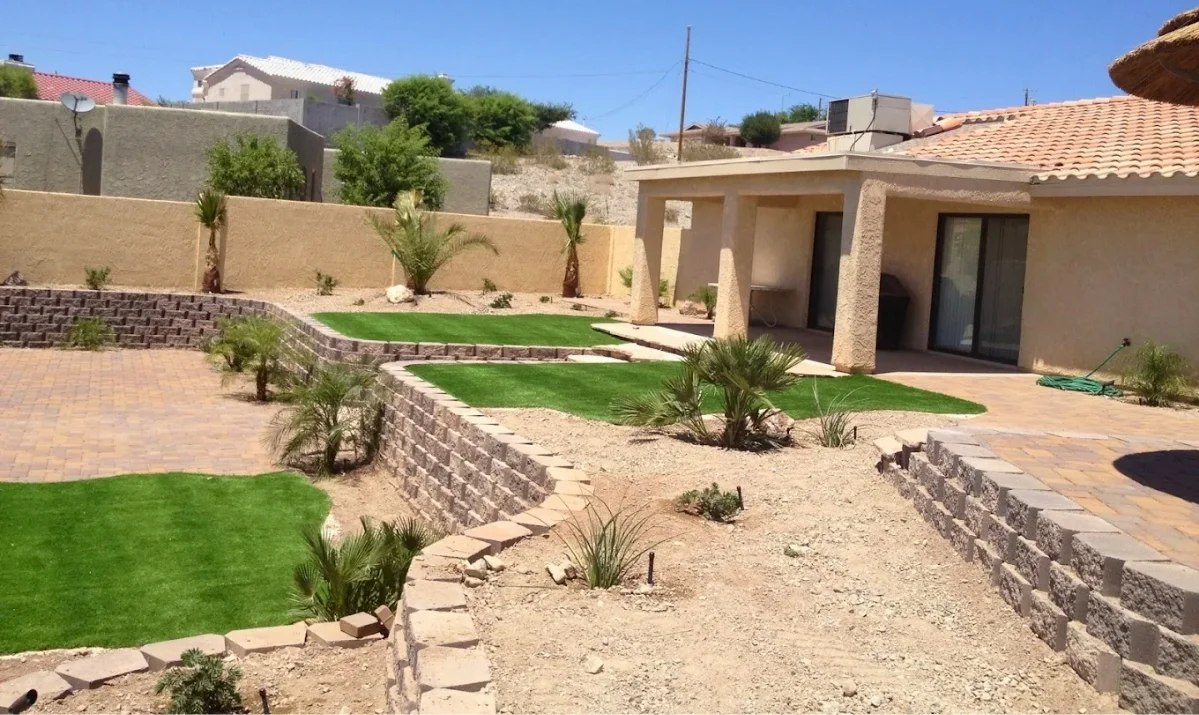
Many homeowners look at a desert yard and assume it is simply a matter of spreading rock and planting a few cacti. In reality, what lies beneath the surface dictates the longevity and ultimate cost of your landscape.
Soil Conditions and Site Preparation
The ground in Lake Havasu City and the surrounding Mohave Valley is notorious for two things: dense rock and caliche. Caliche is a concrete-like layer of calcium carbonate common in our desert soils.
Excavating caliche to plant trees or run irrigation lines requires specialized heavy equipment, such as jackhammers or heavy-duty backhoes, which can quickly add to prep costs. Additionally, sloped lake-view lots and rocky hillsides require careful grading and slope stabilization to prevent erosion. Without proper site preparation, heavy monsoon downpours can wash away thousands of dollars of decorative rock in a single afternoon.
If you want to understand the complete design phase and how site prep fits into the overall plan, take a look at the complete guide to desert landscaping ideas.
Irrigation System Engineering and Efficiency
Water conservation is the driving force behind the transition to desert landscaping, but desert plants still need water to establish their root systems. A professionally designed drip irrigation system is engineered to deliver precise amounts of water directly to the root zones, minimizing evaporation.
An efficient system requires:
- Smart Controllers: Irrigation timers that adjust automatically based on local weather patterns, preventing overwatering during rare rainy periods.
- Proper Emitter Placement: Grouping plants into distinct watering zones so that high-water plants and ultra-low-water cacti are not on the same watering line.
- Pressure Regulation: High water pressure in municipal lines can blow drip emitters right off the tubing, leading to hidden underground leaks.
To learn more about preventing irrigation failures and optimizing your system, read our specialized resource on efficient irrigation desert gardens lake havasu.
Hardscaping and Structural Elements
Hardscaping elements like pavers, retaining walls, and dedicated RV parking zones add immense functional value to a property, but they also represent a larger upfront investment.
In our region, hardscaping must be engineered to withstand intense thermal expansion and high reflected heat. For example, pool decks and patios require materials that remain comfortable underfoot while resisting cracking under the summer sun. Retaining walls must be built with proper weep holes to manage hydrostatic pressure during sudden monsoon runoffs, ensuring the wall doesn’t bow or collapse over time.
Professional Installation vs. DIY: Evaluating the Real Value
With labor typically accounting for 60% to 75% of a professional landscaping budget, it is natural for homeowners to consider a DIY approach. However, desert landscaping involves heavy physical labor, specialized machinery, and strict local regulations.
A full landscape installation in Arizona typically includes grading, turf or debris removal, irrigation planning, hardscape preparation, rock or mulch installation, plant placement, drainage correction, and final cleanup. In Mohave County, those steps often require equipment and local experience because rocky soil, caliche, slopes, and extreme heat all affect how the finished yard performs.
Hiring a professional licensed contractor brings several vital protections:
- Heavy Equipment Operation: Moving tons of rock, grading sloped hillsides, and digging through caliche requires skid steers, dump trucks, and trenchers.
- Technical Expertise: Proper drainage grading, low-voltage lighting design, and hydraulic irrigation calculations are highly technical skills.
- Warranty and Licensing: Licensed contractors carry liability insurance and offer warranties on both plants and hardscape installations.
Before making a decision, it is wise to learn how to choose Arizona desert landscape contractor and understand the legal and financial protections that come with hiring licensed landscapers lake havasu.
The Risks of Improper Desert Installation
When desert landscaping is installed incorrectly, the financial consequences can be severe. One of the most common mistakes is using cheap, non-woven plastic weed barriers. Under the intense Arizona sun, cheap plastic degrades rapidly, tears easily, and traps heat in the soil, which can cook plant roots.
Poorly graded yards can direct water toward your home’s foundation rather than away from it, resulting in costly structural damage. Additionally, improper emitter placement or poor soil prep can lead to high plant mortality rates, forcing you to pay to replace expensive specimens. For a more authoritative look at water-wise landscape planning and desert plant selection, the AMWUA landscape resources offer helpful guidance for Arizona homeowners.
Desert Landscaping vs. Grass: Which Costs Less Over Time?
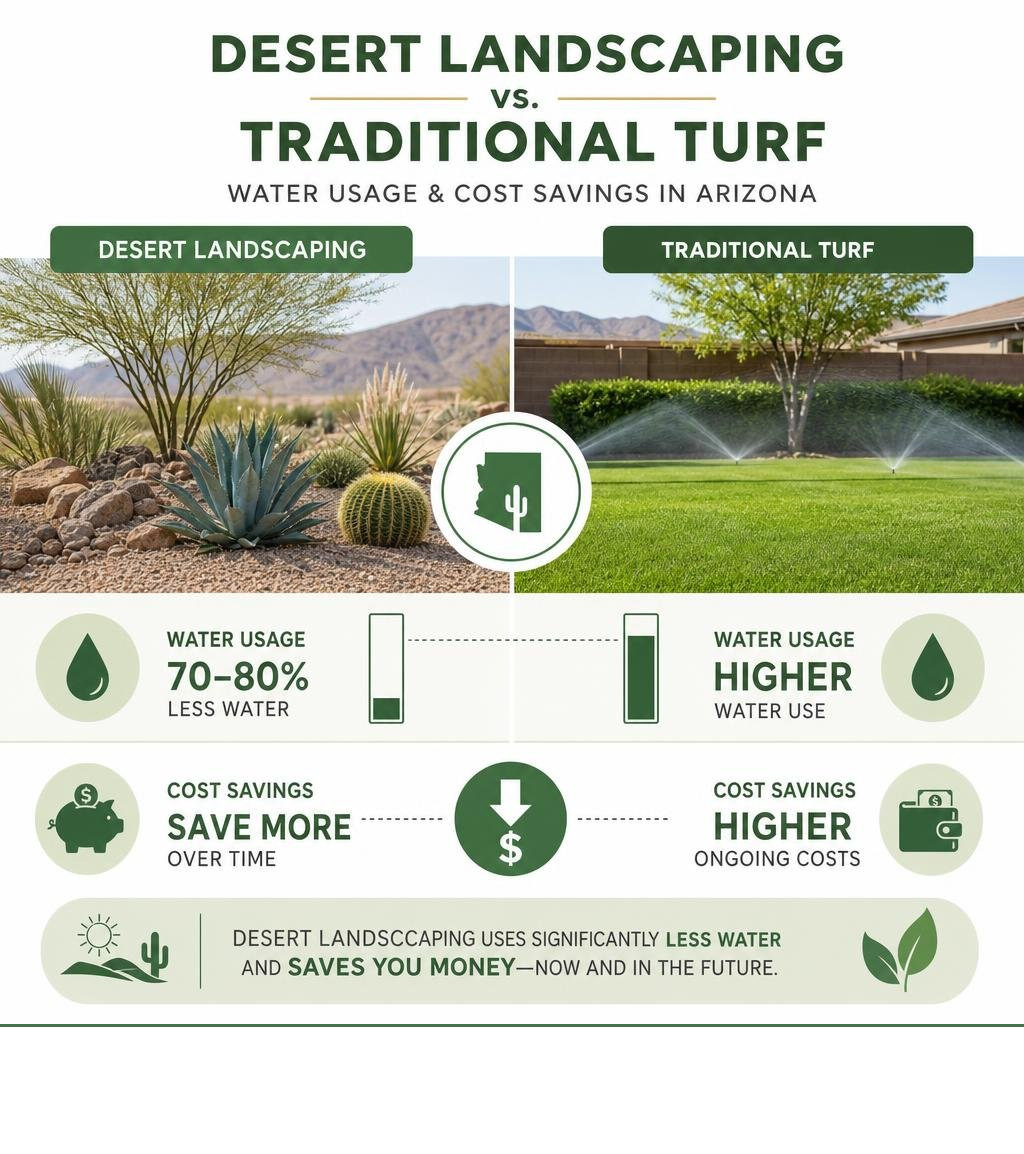
For many Arizona homeowners, the real question is not just what a new yard costs upfront. It is whether grass or desert landscaping costs less over the life of the property. In Lake Havasu City, Golden Shores, and Parker, desert landscaping usually wins long term because it reduces recurring water, maintenance, and replacement expenses.
| Cost Category | Grass | Desert Landscaping |
|---|---|---|
| Water | High, especially during long summer heat waves. | Much lower once plants are established and drip irrigation is tuned correctly. |
| Fertilizer | Requires regular fertilizing to stay green and healthy. | Minimal fertilizer needs for most desert-adapted plants. |
| Mowing | Weekly or frequent mowing is usually required during growing season. | No mowing required. Maintenance is mostly weeding, pruning, and irrigation checks. |
| Irrigation | Sprinklers use more water and are prone to overspray and evaporation. | Drip irrigation targets root zones and reduces waste. |
| Replacement | Turf can thin, burn, or die during extreme heat and may require reseeding or replacement. | Rock, boulders, and hardscape elements last for years with occasional refreshes. |
| Lifetime Cost | Lower upfront in some cases, but higher ongoing maintenance and water costs. | Higher upfront investment, but usually lower lifetime operating costs in the Arizona desert. |
Long-Term Savings, Rebates, and Return on Investment
While the initial cost of converting to a desert landscape requires an upfront investment, the long-term financial benefits are substantial. Unlike a traditional lawn, which requires constant mowing, fertilizing, reseeding, and hundreds of gallons of water daily, a desert yard is incredibly resource-efficient.
- Water Bill Reductions: Converting from turf to xeriscaping typically reduces outdoor water usage by 50% to 75%. In dry desert municipalities, this translates directly to hundreds of dollars saved annually.
- Lower Maintenance Costs: You can say goodbye to weekly lawn services. Desert yards require only occasional weeding, seasonal pruning, and basic irrigation checks.
- Water Agency Rebates: Many water districts in Arizona offer turf removal rebates, sometimes paying up to $3 per square foot to homeowners who replace grass with low-water desert designs. These incentives can offset a significant portion of your initial installation costs.
For a detailed look at how to execute a smart, budget-conscious conversion in our immediate area, see our guide on how to xeriscape your Golden Shores front yard like a pro.
Frequently Asked Questions about Desert Landscaping Costs
How much does it cost to maintain a desert landscape in Arizona?
Ongoing maintenance is incredibly affordable compared to a grass lawn. Homeowners can expect to spend a fraction of what they used to spend on weekly mowing. Typical monthly or bi-monthly professional maintenance packages in Mohave County cover weed control, checking drip emitters for clogs, adjusting irrigation timers for the changing seasons, and light pruning.
Does desert landscaping increase home value in Mohave County?
Absolutely. In our arid climate, prospective homebuyers view large grass lawns as a costly chore and a looming utility bill liability. A professionally designed, low-maintenance desert landscape dramatically enhances curb appeal and functionality. Buyers appreciate knowing they won’t have to spend their weekends maintaining turf or paying high water bills, making homes with durable desert landscaping highly desirable in the local real estate market.
Can I integrate artificial turf with desert landscaping?
Yes, artificial turf is a fantastic way to keep a vibrant green accent in your yard without the water waste. It is highly popular for pet-friendly zones, putting greens, and pool surrounds. When budgeting, keep in mind that high-quality artificial turf is an investment that can last up to 20 to 25 years. It does retain heat in the peak of summer, so strategic placement alongside shaded rock beds and low-water plantings is highly recommended. To see how these elements can be seamlessly combined, explore our page on Desert Landscaping.
Is desert landscaping cheaper than grass over 10 years?
In many Arizona yards, yes. Grass may cost less to install in some situations, but it usually requires more water, mowing, fertilizing, sprinkler maintenance, and seasonal repair over time. Desert landscaping often has a higher upfront cost, but rock, boulders, hardscape features, low-water plants, and properly tuned drip irrigation can reduce long-term expenses across a 10-year period, especially in Lake Havasu City and other hot Mohave County communities.
Conclusion
Investing in desert landscaping is about more than just saving water; it is about creating a durable, functional, and stress-free outdoor space that thrives in our unique Mohave County climate. By choosing local materials, engineered irrigation, and desert-hardy plants like Lantana and Totem Pole cactus, you protect your property from extreme heat and erosion while dramatically cutting down on yard chores.
Although the initial investment varies, many homeowners recover a significant portion of the cost through lower water bills, reduced maintenance, and longer-lasting landscape materials.
At River Palm Landscaping, we have been building durable, climate-appropriate outdoor spaces in Lake Havasu City, Golden Shores, and Parker, AZ, since 2003. We specialize in navigating rocky soils, managing monsoon drainage, and installing irrigation systems that stand the test of time.
If you are ready to ditch the high-maintenance lawn and invest in a beautiful, worry-free yard, contact us today through our River Palm Landscaping page to schedule a professional consultation.