Why Finding the Right Desert Landscaper Matters
If you’re searching for landscaping companies near me in Lake Havasu City, Golden Shores, or Parker, AZ, the stakes are higher than most homeowners expect. Desert soil, extreme heat, and monsoon drainage don’t forgive poor planning — and the wrong contractor can leave you with cracked hardscape, eroded slopes, and a yard that costs more to fix than it did to build.
Here’s what most Lake Havasu homeowners need to know right away:
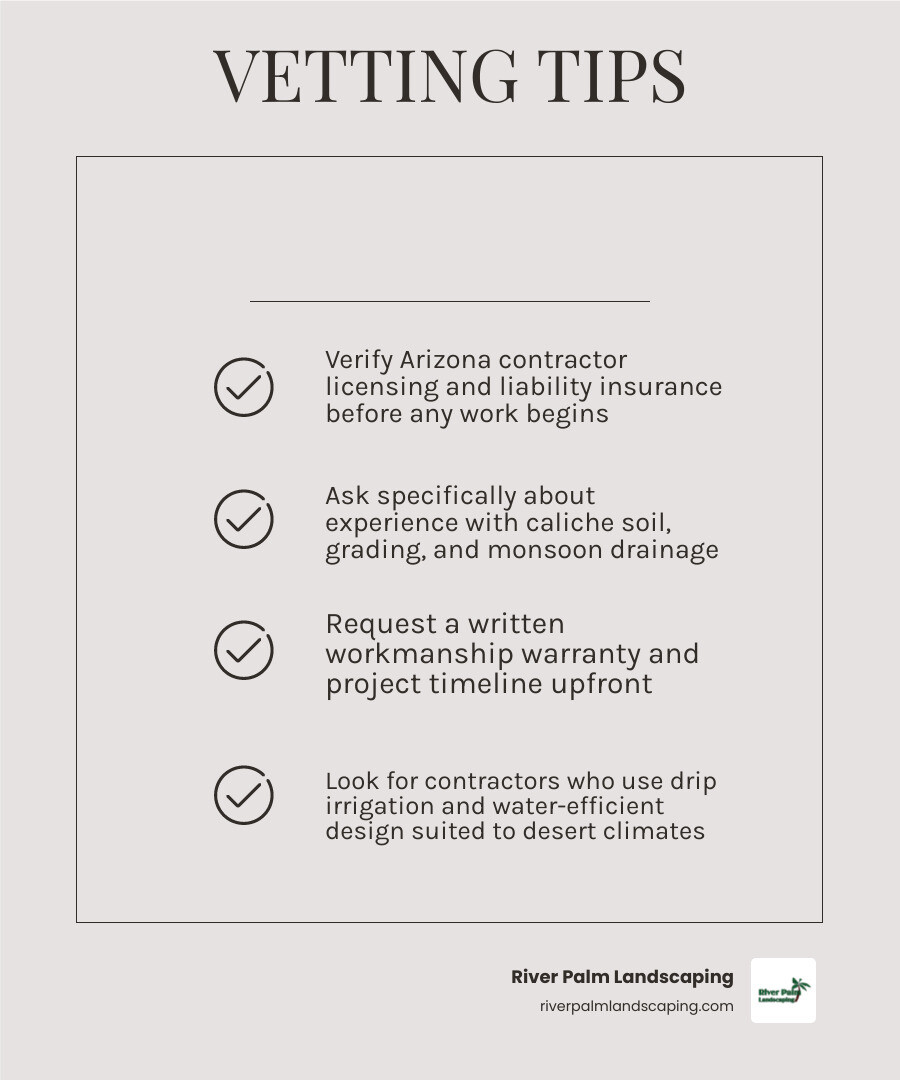
- Verify Arizona contractor licensing and liability insurance before any work begins
- Ask specifically about experience with caliche soil, grading, and monsoon drainage
- Request a written workmanship warranty and project timeline upfront
- Look for contractors who use drip irrigation and water-efficient design suited to desert climates
- Check Google and Yelp reviews from local clients — not just general ratings
In the Mojave desert, the technical demands go well beyond what most general landscapers are equipped to handle. Rocky caliche soil, reflected heat off western-facing walls, and monsoon-season runoff are real engineering challenges — not aesthetic ones.
River Palm Landscaping works specifically in this environment, and this guide will help you evaluate your options the right way.
What to Look for in a Local Landscaping Contractor
Homeowners often discover too late that a newly installed yard starts settling unevenly, causing expensive pavers to shift and sink after the first heavy rain. This structural failure usually traces back to hiring an unlicensed crew who skipped proper soil compaction and sub-grade preparation. In the harsh environment of Mohave and La Paz counties, choosing a contractor requires looking past pretty portfolio photos and focusing on structural expertise.
When vetting local professionals, the first line of defense is verifying their license, bond, and insurance through the Arizona Registrar of Contractors (ROC). Arizona requires specialized licensing for residential landscape contracting, which ensures the company has met minimum experience requirements and passed exams covering safety, trade standards, and local codes. A bonded and insured contractor protects your property from liability if an underground utility line is struck or a retaining wall fails during construction.
Industry standards, such as those published by the University of Arizona Extension, emphasize that desert soil preparation is completely different from other regions. A qualified contractor must understand how to navigate caliche—a concrete-like layer of calcium carbonate common in our local soils—without destroying your yard’s natural drainage pattern. Homeowners can read more about these specific credentials in this guide on choosing an Arizona desert landscape contractor.
Relying on generic nationwide directories often leads to out-of-state leads or companies unfamiliar with desert soil challenges. Instead, consulting regional resources like desert landscape contractors in Lake Havasu City or checking localized business listings for landscaping services in Parker provides a more accurate picture of who actually operates in your neighborhood.
Essential Services Offered by Desert Landscape Contractors
A beautifully planted yard can quickly turn into a graveyard of dried-up shrubs if the irrigation system is designed for a mild climate rather than the searing 120-degree heat of a Parker summer. Without professional slope stabilization and pressure-regulated drip lines, the soil simply washes away, leaving roots exposed and vulnerable. Desert landscape contractors must provide highly specialized services engineered to withstand intense thermal mass and sudden, heavy stormwater runoff.
Professional contractors offer a comprehensive suite of services tailored to these environmental realities:
- Excavation and Soil Grading: Cutting through caliche and establishing proper slope orientation to direct monsoon water away from home foundations.
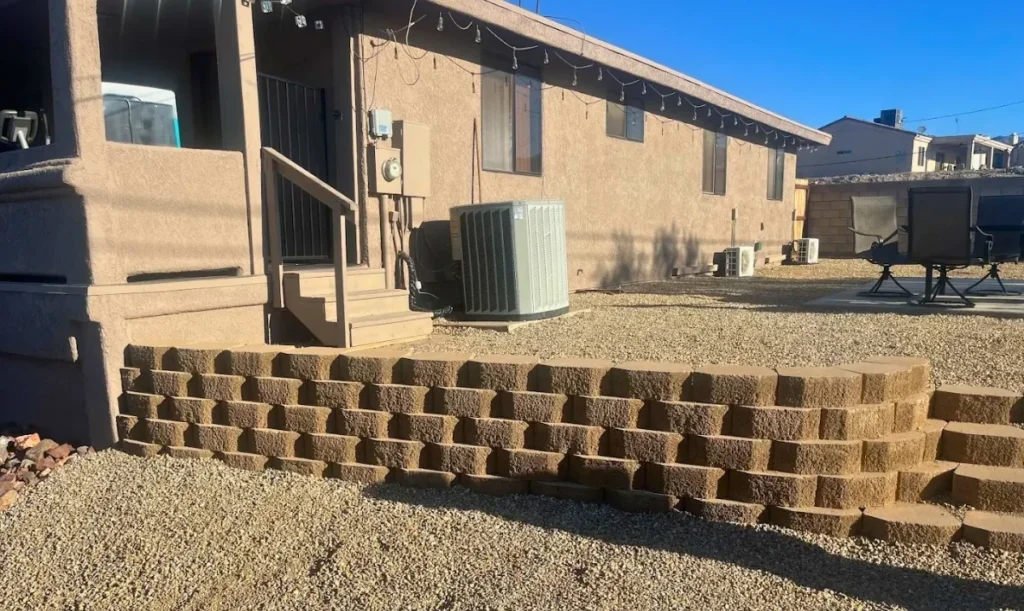
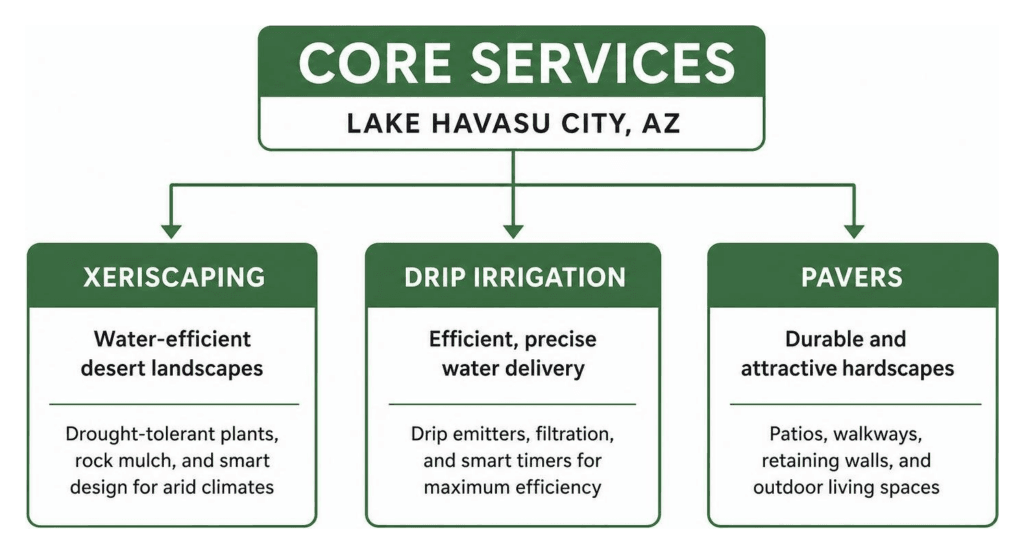
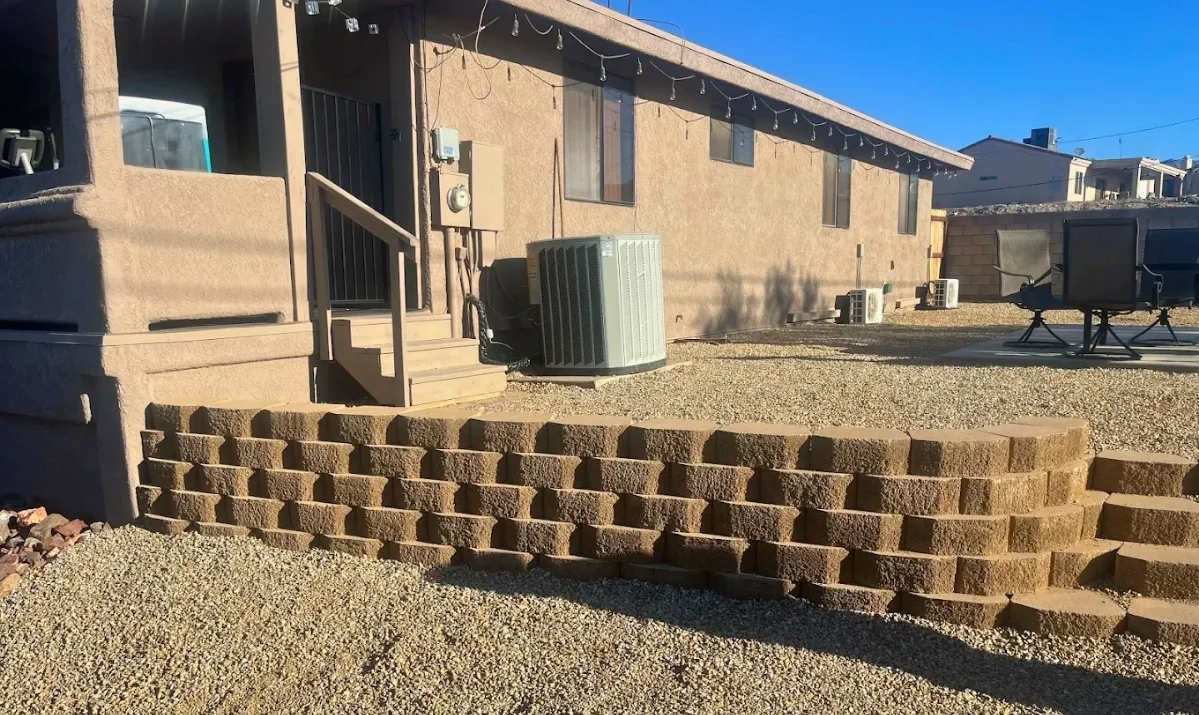
- Engineered Hardscaping: Installing interlocking pavers, decorative rock, and retaining walls designed to manage hydrostatic pressure and resist cracking.
- Custom Drip Irrigation: Designing zoned systems with pressure-compensating emitters to deliver water directly to root zones, minimizing evaporation.
- Artificial Turf Installation: Preparing multi-layered, draining sub-bases to prevent heat retention and odor buildup while providing a green aesthetic without the water bill.
- Low-Voltage Landscape Lighting: Integrating fixtures that highlight architectural features and desert-hardy plants without creating excessive light pollution or overheating.
For residential properties, these services must focus on durability and water conservation. Homeowners can explore tailored options through residential landscaping services. For commercial properties, the focus shifts to minimizing liability from cracked concrete, ensuring clear sightlines, and reducing ongoing water costs, which are detailed further under commercial landscaping solutions.
When choosing a contractor, verify where they source their materials. High-quality bulk materials are essential for preventing weed growth and ensuring long-term stability. Contractors operating near the Colorado River often rely on regional suppliers like bulk landscaping materials in Golden Shores to secure the heavy rock, decomposed granite, and base materials needed for durable installations.
If your property requires significant site preparation, such as clearing dense desert brush or leveling steep slopes, you may also need to consult specialized land clearing services in Golden Shores to collaborate on complex grading plans before planting begins.
Custom Landscape Design Lake Havasu Homeowners Trust
Many homeowners install outdoor living areas that become completely unusable after 10:00 AM because they failed to map the path of the intense afternoon sun. Reflected heat from bare stucco walls can elevate patio temperatures to unbearable levels, baking nearby plants and cracking unshaded hardscaping. Professional landscape design is not just about choosing attractive plants; it is an exercise in microclimate management.
In Lake Havasu, an experienced designer evaluates shade orientation to determine where to place seating areas, hardscaping, and plantings. By utilizing cooling materials—such as light-colored pavers that reflect solar radiation rather than absorbing it—designers can significantly lower the ambient temperature of your outdoor living spaces. They also manage the thermal mass of retaining walls and stone features, ensuring they do not radiate trapped heat back into your home long after the sun goes down.
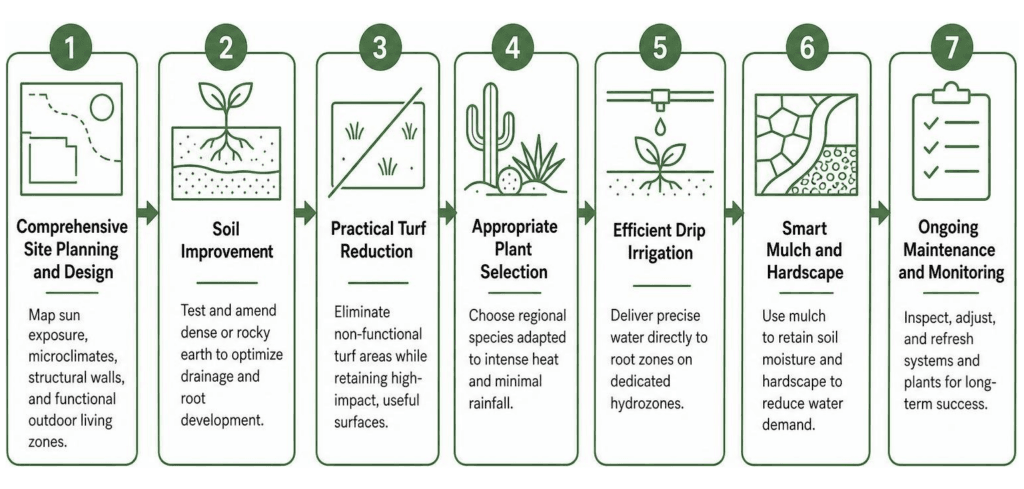
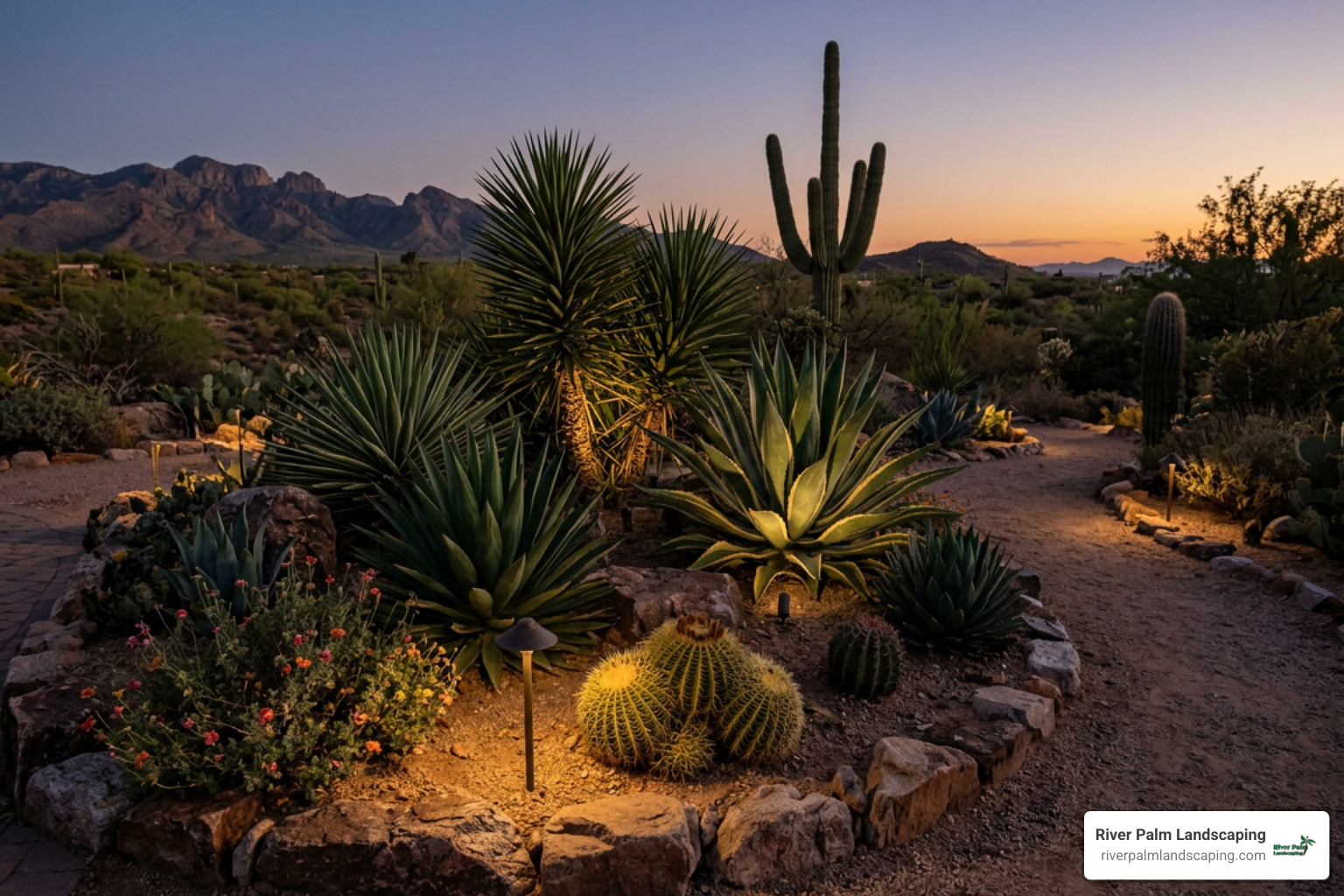
Plant selection must focus exclusively on desert-hardy varieties that thrive in rocky soil and extreme heat. Rather than trying to force high-water tropical plants to survive, designers create stunning, low-water outdoor spaces using arid-adapted species like Lantana, Totem Pole cactus, and agave. If a homeowner desires a softer look, designers can introduce tropical-inspired accents—such as desert wild flowers, yellow bells, or lush artificial turf—to create a vibrant oasis that respects the local water supply. Homeowners looking to plan their layout can read more about these design strategies at landscape design in Lake Havasu.
Hardscape Engineering and Irrigation Systems
Shifting ground and poor base preparation often cause solid concrete slabs to crack right through the middle within a single season. When water accumulates beneath these cracked surfaces, it exerts hydrostatic pressure that destroys the structure from the ground up. This is why professional hardscape engineering is critical in the desert.
Interlocking pavers are highly recommended over solid poured concrete in desert environments. Because pavers are separate units resting on a flexible base of compacted gravel and bedding sand, they can naturally flex during extreme temperature swings without cracking. This resistance to thermal expansion makes them far more durable under the desert sun. Additionally, retaining walls must be engineered with proper gravel backfill, weep holes, and drainage pipes to relieve the hydrostatic pressure that builds up behind the wall during heavy monsoon rains.
Irrigation in the desert must be designed with water-conscious precision. Spray heads and overhead sprinklers lose a massive percentage of their water to evaporation before it ever reaches the soil. Professional contractors install drip irrigation systems that deliver water directly to the plant’s root zone. These systems are designed to meet the strict water-efficiency standards established by the Arizona Municipal Water Users Association (AMWUA), utilizing pressure-regulated valves, backflow preventers, and smart controllers that adjust watering schedules based on local weather patterns.
Evaluating Costs, Warranties, and Timelines
Homeowners who accept exceptionally low, verbal estimates often find themselves facing thousands of dollars in hidden change orders once the contractor hits rock-hard caliche soil. Without a clear, written contract and a solid workmanship warranty, you have no recourse when the project stalls halfway through. Understanding how professional landscaping companies estimate and guarantee their work is crucial to protecting your financial investment.
When evaluating project costs, it is important to understand that pricing varies by project based on materials, site conditions, and complexity. A yard requiring extensive caliche excavation, heavy machinery, and engineered retaining walls will require a higher investment than a flat lot receiving decorative rock and basic drip irrigation. Rather than looking for the cheapest upfront price, homeowners should view professional landscaping as a long-term investment in their property’s usability, structural integrity, and curb appeal.
A reputable contractor will provide a detailed, written estimate that breaks down the scope of work, material specifications, and installation timelines. Most professional desert installations take anywhere from two to six weeks depending on the complexity of the hardscaping and grading. Furthermore, top-tier contractors stand behind their work with written workmanship warranties—often ranging from one to three years—protecting you against settling pavers, leaking irrigation lines, or structural failures.
To help visualize the difference between professional execution and common installation mistakes, consider the comparison table below:
| Installation Element | Professional Engineering Standard | Common DIY / Unlicensed Failure | Long-Term Consequence |
|---|---|---|---|
| Caliche Management | Excavated with heavy machinery; soil amended for drainage. | Left intact; plants placed in shallow, concrete-like pockets. | Root rot, plant death, and standing water. |
| Slope & Grading | 2% minimum slope away from home; integrated drainage channels. | Flat grading or sloped toward the house to save time. | Foundation water damage and flooded living areas. |
| Paver Base Prep | 4-6 inches of compacted aggregate base; proper edge restraints. | Pavers laid directly on native desert sand or dirt. | Sinking, shifting, and uneven tripping hazards. |
| Irrigation Design | Zoned drip lines; pressure-compensating emitters; smart timers. | Single-zone systems; mixed spray and drip; manual operation. | Massive water waste, high utility bills, dead plants. |
Frequently Asked Questions About Desert Landscaping
Many residential properties suffer from water pooling against the home’s foundation because the yard was graded flat without accounting for torrential monsoon downpours. This lack of proper drainage can lead to severe structural damage and costly foundation repairs. To help you avoid these common pitfalls, we have compiled the most frequently asked questions regarding desert landscaping.
How Do I Choose a Desert Landscaping Contractor?
Dealing with desert soil requires specialized heavy equipment and an in-depth understanding of local geology. Caliche soil is essentially natural concrete; attempting to dig planting holes or trench for irrigation lines with standard shovels is practically impossible. Professional contractors utilize excavators, jackhammers, and skid steers to break through this dense layer, replacing it with properly amended soil that allows water to drain and roots to grow.
When researching local companies, look for those with a proven track record of working in Mohave County’s specific soil conditions. Reading local client reviews on platforms like local reviews on Yelp can provide valuable insights into how a contractor handles challenging terrain and navigates the unique soil preparation requirements of the region.
What are the risks of poor drainage during monsoon season?
The desert dry season can make grading and drainage seem like an afterthought, but our intense summer monsoons bring sudden, torrential downpours that can drop inches of rain in a matter of minutes. Without professional grading, this water will pool against your home’s foundation, seep into your crawlspace, or wash away your expensive decorative rock.
Unmanaged stormwater creates immense hydrostatic pressure behind retaining walls and against home foundations. Professional landscape contractors utilize slope stabilization techniques, dry creek beds, and French drains to safely channel water away from your home and toward municipal drainage systems. This prevents soil erosion and protects your hardscaping from being undermined and destroyed by rushing water.
Why do concrete and pavers crack in extreme desert heat?
The extreme temperature fluctuations in the desert—where summer daytime temperatures exceed 115 degrees and drop significantly at night—cause building materials to expand and contract constantly. This process, known as thermal expansion, exerts massive internal stress on solid poured concrete. Without properly spaced expansion joints, concrete will inevitably crack.
Interlocking pavers are much highly resistant to this cracking because the joints between the individual stones are filled with specialized polymeric joint sand. This sand allows each paver to expand and contract independently, absorbing the thermal movement without cracking. To ensure long-term durability, always verify that your contractor follows manufacturer technical data regarding base compaction and joint sand installation.
Conclusion
Investing in your home’s outdoor space is about more than just aesthetics; it is about protecting your property from the harsh realities of desert living. From cutting through stubborn caliche soil to engineering hardscaping that resists thermal cracking and heavy monsoon runoff, professional execution is the key to creating a beautiful, durable yard that lasts. Hiring a licensed, experienced contractor ensures your project is built to local codes, stands up to extreme heat, and enhances your long-term property value.
Since 2003, River Palm Landscaping has established a reputation as one of desert landscape contractors in Lake Havasu City, specializing in durable, climate-appropriate outdoor spaces for homeowners in Golden Shores and Parker, AZ. If you are ready to transform your yard with professional, desert-hardy design and reliable construction, schedule a consultation today to get started on your project.