The Critical Role of Base Preparation in Artificial Turf Installation
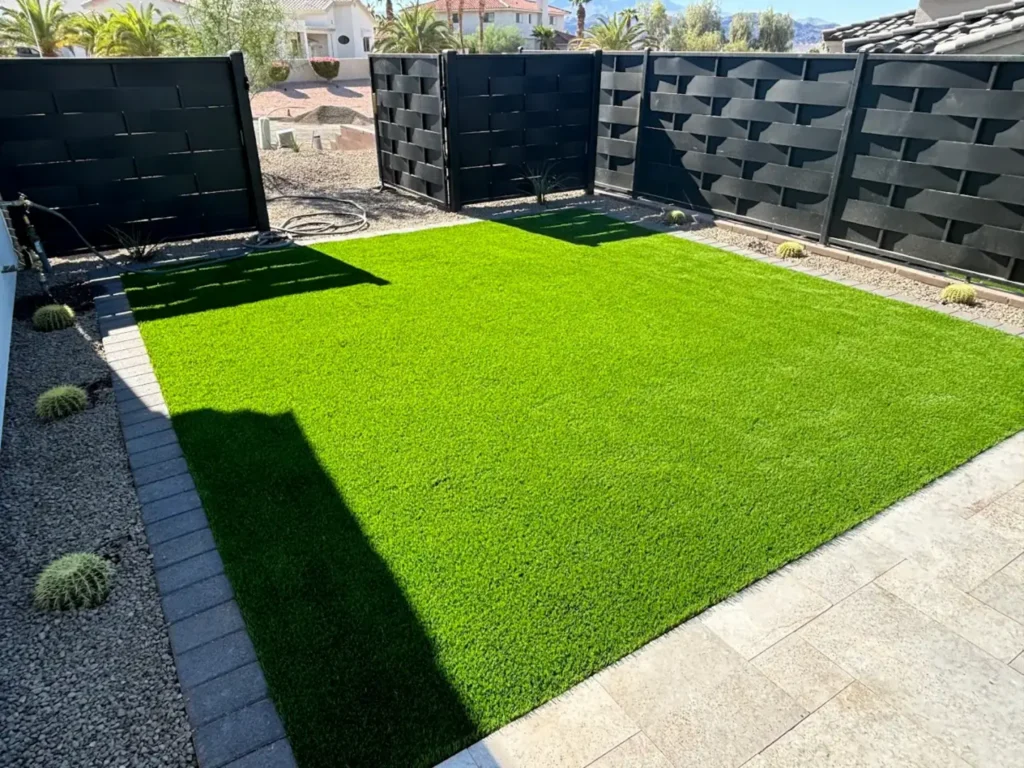
Artificial turf installation done wrong is one of the most common — and costly — landscaping mistakes homeowners in Lake Havasu City make. A base that shifts in extreme heat, seams that gap and curl, or drainage that pools after a monsoon storm can turn a promising investment into a recurring headache within a single season.
Here is what a professional artificial turf installation involves:
- Excavate 4–6 inches of existing soil or organic material
- Compact the sub-grade and install a crushed aggregate base with a minimum 2% drainage slope
- Lay a weed barrier (optional but recommended in desert soil conditions)
- Roll out and position turf with all blade grain pointing the same direction
- Seam multiple pieces using seaming tape, adhesive, and U-nails
- Secure perimeter edges with galvanized nails every 4–6 inches
- Apply infill (silica sand, zeolite, or antimicrobial options) at 2–3 lbs per square foot
- Power broom fibers upright for a finished, natural appearance
In Lake Havasu City and Golden Shores, AZ, the desert environment adds real complexity to every one of those steps. Rocky soil resists compaction. Summer surface temperatures can exceed 160°F. UV exposure degrades low-quality turf fibers in just a few years. These aren’t issues a standard DIY guide accounts for — and they’re exactly why the quality of the contractor you hire matters as much as the quality of the turf itself.
This guide walks you through what a proper installation looks like from the ground up, so you know exactly what to expect — and what to demand — from a professional.
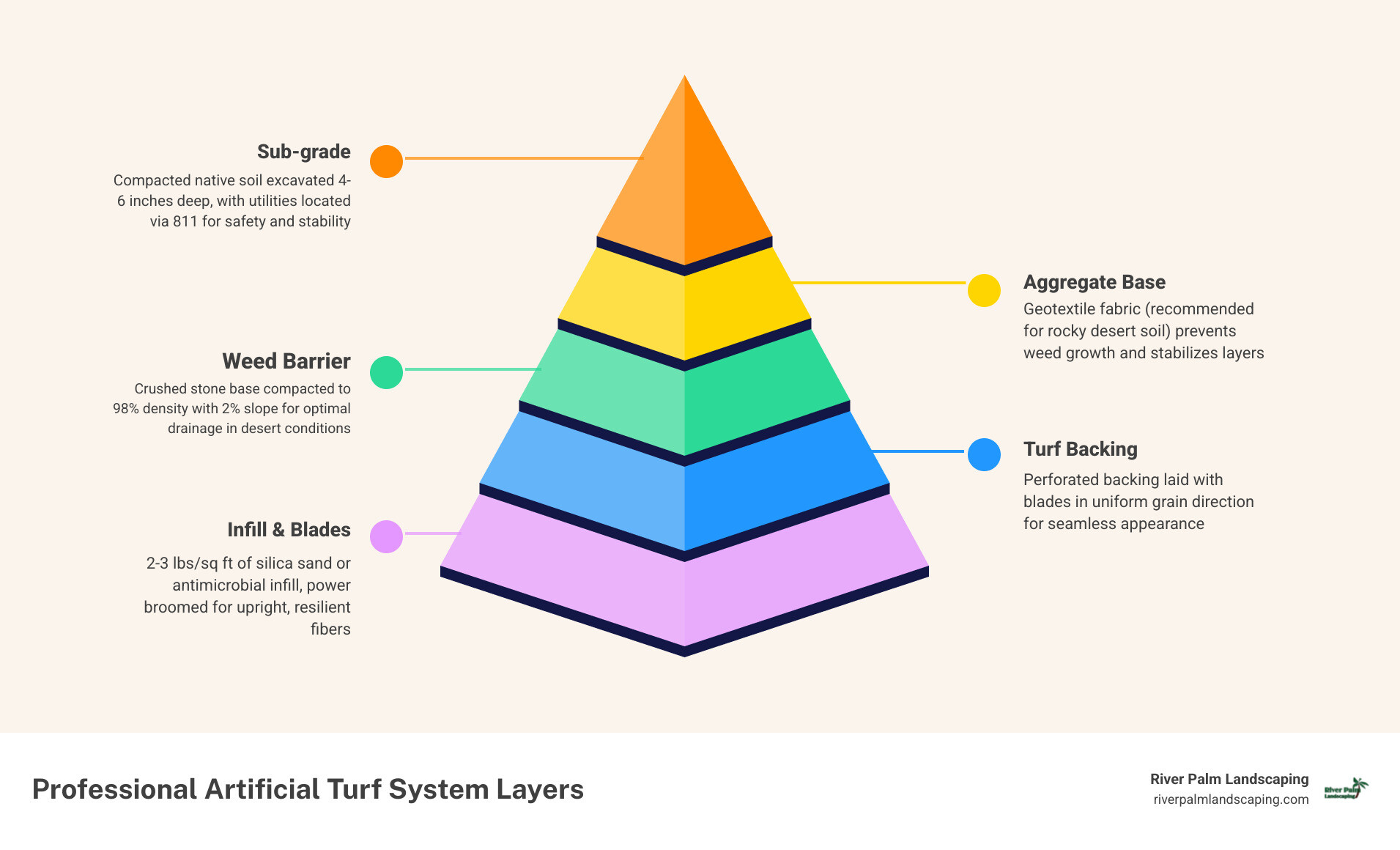
If there is one thing that separates a professional artificial turf installation from a weekend project that fails by July, it is the foundation. In the landscaping world, we often say that the success of a project is 90% preparation. You could buy the most expensive, realistic-looking synthetic grass in the world, but if you roll it out over poorly prepared soil, it will look like a wrinkled rug within months.
In Lake Havasu City, our soil isn’t just “dirt.” It is often a mix of hard-packed clay, loose sand, and stubborn river rock. This combination presents a unique challenge for stability. Before a single shovel hits the ground, a professional contractor will always call 811 to locate underground utility lines. This is a non-negotiable safety step; hitting a water main or an electrical line while excavating for a backyard putting green is an expensive way to ruin a Tuesday.

Excavation and Sub-grade Stabilization for Artificial Turf Installation
The first physical step is the removal of existing grass, weeds, and organic material. Professionals typically excavate to a depth of 4 to 6 inches. While some generic guides suggest 2 inches is enough, that rarely holds up in the extreme temperature swings of the Arizona desert. Organic material left behind will decompose, leading to sinkholes and an uneven surface.
Once the area is cleared, the sub-grade (the native soil) must be stabilized. In Lake Havasu, this often requires heavy-duty compaction equipment. A vibrating plate compactor is used to ensure the soil is dense enough to support the weight of the base materials and the turf itself. If the sub-grade isn’t compacted to at least 90-95% density, the ground will eventually shift, causing the turf to “bubble” or develop low spots where water will pool.
For homeowners evaluating a quote, it is helpful to understand how excavation depths vary based on the intended use of the area:
| Project Type | Excavation Depth | Base Material Thickness |
|---|---|---|
| Decorative Landscape | 3–4 Inches | 3 Inches of Aggregate |
| Pet Areas / High Traffic | 4–5 Inches | 4 Inches of Drain Rock + Fines |
| Putting Greens | 5–6 Inches | 5 Inches of Multi-layered Stone |
| Over Concrete/Hardscape | 0–1 Inch | Drainage Mat or Padding only |
According to A Step-by-Step Guide to Installing Artificial Turf Grass, preparing the base properly is the only way to ensure the turf doesn’t suffer from drainage issues or weed growth later on.
Advanced Drainage Systems for Artificial Turf Installation
Drainage is the silent hero of a long-lasting lawn. Even though we live in an arid climate, when it rains in Parker or Golden Shores, it pours. A professional artificial turf installation includes grading the area to a minimum 2% slope. This means for every 100 feet of yard, the ground should drop about two feet, directing water away from your home’s foundation and toward a proper drainage exit.
On top of the compacted sub-grade, we install an aggregate base. This is usually a combination of crushed stone, such as decomposed granite or a “Class II road base.” This material is spread in layers, wetted down, and compacted again. The goal is a surface that is as hard as concrete but as permeable as a sponge.
This layered system ensures that pet urine and rainwater pass through the turf backing, through the aggregate, and back into the water table without lingering. For homeowners interested in the technical specs of these materials, our page on synthetic turf explains how these layers work together to prevent the bacteria buildup and odors often associated with poor drainage.
Climate-Specific Materials for the Arizona Desert
April 2026 has already shown us that the desert sun is not getting any kinder. In Lake Havasu, the heat is the primary enemy of any outdoor material. This is why material selection is the second most important factor in a professional install.
Standard turf products designed for the Pacific Northwest or the East Coast will literally melt or become brittle under the intense UV radiation of the Mojave Desert. Professional contractors in our region prioritize turf with high-level UV stabilization. This isn’t just a coating; the stabilizers are built into the actual resin of the grass blades to prevent fading and fiber breakdown.
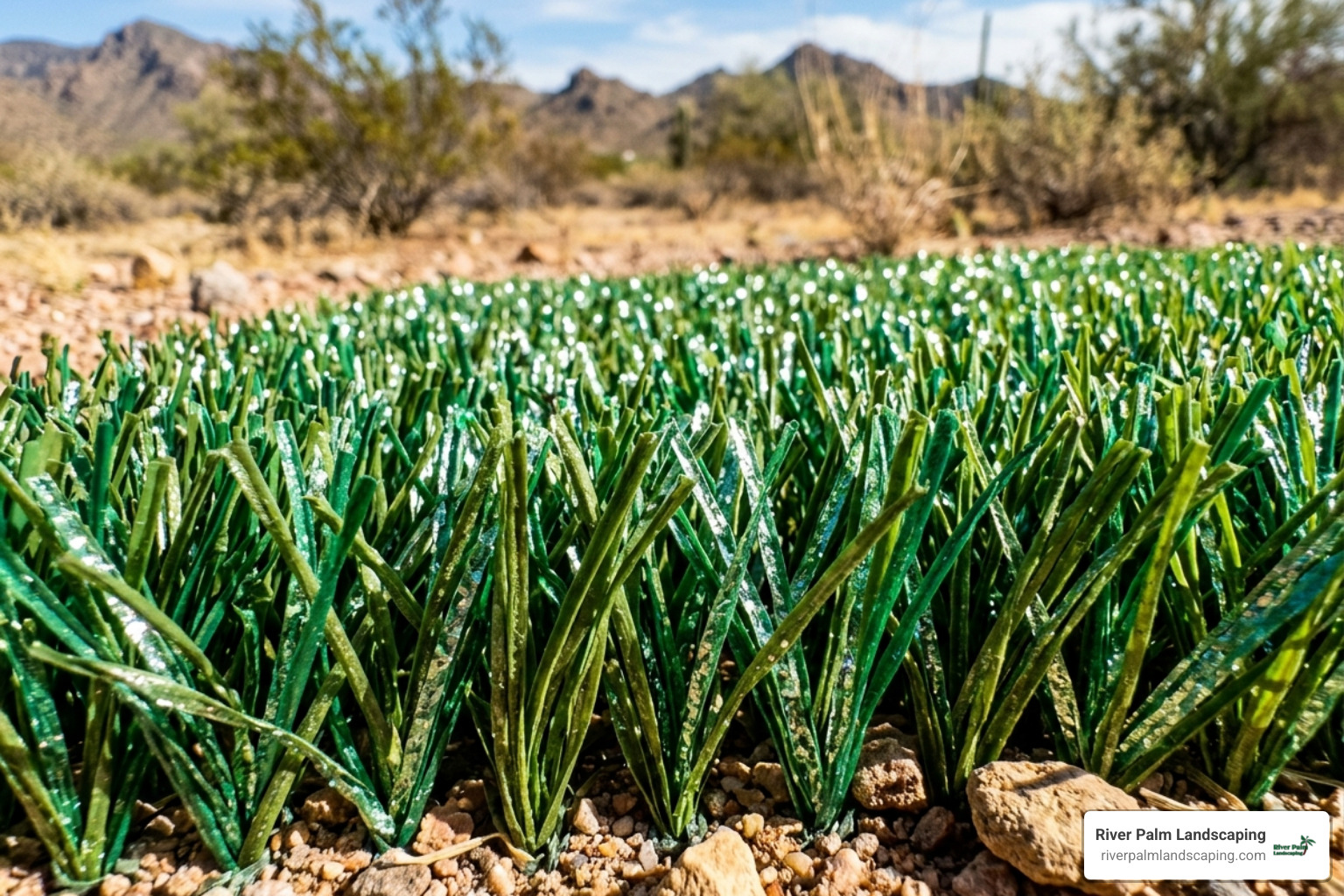
One of the most significant advancements we use today is KoolMax technology. This innovation involves the shape and composition of the turf blade, which allows it to reflect infrared light rather than absorbing it. This can keep the surface of the lawn up to 15% to 20% cooler than traditional synthetic grass. In a city where the thermometer regularly hits 115°F, that difference is the gap between a yard you can actually walk on and one that is off-limits for half the day.
When considering the investment, homeowners should look at the artificial grass cost guide lake havasu to understand how premium features like heat-reflective fibers and antimicrobial backings impact the long-term value of the project. While the upfront cost for climate-specific materials is higher, they prevent the need for a full replacement in five years when a cheaper product would have disintegrated.
Infill is another critical material choice. Infill is the “dirt” of the synthetic world; it sits at the base of the blades to keep them standing upright and provides the weight necessary to keep the turf from moving. In Lake Havasu, we avoid standard silica sand when pets are involved. Instead, we use Zeolite or antimicrobial-coated sand. Zeolite is a natural mineral that captures the ammonia in pet urine, preventing odors from off-gassing in the heat.
Professional Seaming and Finishing Standards
The mark of a truly professional artificial turf installation is that you can’t tell it’s an installation. The yard should look like a single, continuous carpet of green. Achieving this requires mastery over seaming and grain direction.
Every roll of turf has a “grain”—the direction the blades naturally lean. If you install two pieces of turf with the grains facing different directions, they will look like two different colors of grass. A professional always ensures the grain is pointing toward the primary viewpoint (usually the back patio or the street) to give the lawn its most lush, natural appearance.
The S-Cut Technique
For many years, contractors simply butted two straight edges of turf together. The problem? The human eye is incredibly good at spotting straight lines in nature. If the ground shifts even a fraction of an inch, a straight seam becomes a visible gap.
Today, the gold standard is the “S-cut” or “wave-cut” technique. By using a custom stencil to cut the seams in a gentle S-shape, the two pieces of turf interlock like a puzzle. This breaks up the visual line and makes the seam virtually invisible. As noted in the Artificial Turf Installation Guide (Florida 2026) – Artificial Turf of Tampa, while the climate in Florida is different, the technical requirement for invisible seaming remains the same for any high-end project.
Once the pieces are aligned, a professional uses industrial-grade seaming tape and a two-part adhesive. This isn’t a “peel-and-stick” solution; it is a chemical bond that can withstand the 160°F surface temperatures we see in Lake Havasu. The edges are then secured with 5- to 6-inch galvanized nails or landscape staples, spaced every 4 to 6 inches along the perimeter. A pro knows to separate the grass blades before hammering the nail home, ensuring the head of the nail is hidden at the base of the turf and doesn’t create a “dimple” in the surface.
Long-Term Maintenance and Performance
The “low-maintenance” label of artificial turf is often misunderstood as “no-maintenance.” While you can certainly retire your lawnmower and cancel the fertilizer service, a professional turf system still requires a bit of love to reach its 20-year lifespan.
The biggest threat to the appearance of your turf is matting. Over time, heavy foot traffic or furniture can flatten the blades. A professional installation concludes with a power broom session—a motorized brush that pulls the infill deep into the fibers and stands the blades straight up. Homeowners should plan on a light brushing once or twice a year to keep the yard looking fresh.
For pet owners in Parker or Golden Shores, maintenance is slightly more involved but still far easier than managing real grass. Because our air is so dry, pet urine doesn’t always evaporate or wash away naturally. Periodic rinsing and the use of enzyme-based cleaners are essential for keeping the yard smelling like a desert breeze rather than a kennel.
We provide detailed guidance on these routines in our artificial grass maintenance guide, which covers everything from removing organic debris (like leaves and mesquite pods) to managing static electricity during our driest months.
Frequently Asked Questions
How much does professional installation cost in Lake Havasu?
Pricing for artificial turf installation varies significantly based on the size of the area, the amount of excavation required, and the quality of the turf selected. In Lake Havasu City, you can generally expect a professional installation to range from $8 to $15 per square foot.
This range accounts for the heavy equipment needed to handle our rocky soil and the premium, heat-resistant turf products required for our climate. While a DIY approach might seem cheaper at roughly $5 per square foot for materials, the lack of professional-grade compaction and seaming often leads to repairs that quickly close that price gap. For a more detailed breakdown, you can use our artificial grass cost calculator for every yard size to see how different yard dimensions impact the overall investment.
Is artificial turf safe for pets and children in extreme heat?
Yes, provided the right materials are used. Modern synthetic grass is non-toxic and lead-free. To manage the heat, we recommend products with cooling technology and the use of Zeolite infill. On the hottest days in July, the turf will still get warm—much like a pool deck or a paver patio. A quick 30-second spray with a garden hose can drop the temperature of the turf by 20 degrees instantly through evaporative cooling, making it safe for paws and feet.
How long does a professional turf system last?
A high-quality artificial turf installation by a licensed contractor is designed to last 15 to 20 years. Most manufacturers provide a 15-year warranty on the UV stability and fiber integrity of the grass itself. The workmanship warranty from the contractor typically covers the first 2 to 5 years, ensuring that the base and seams remain stable as the ground settles.
Conclusion
At River Palm Landscaping, we have been building desert-hardy outdoor spaces in Lake Havasu City since 2003. We know that a beautiful lawn is more than just a green surface; it is a system of engineering designed to thrive in one of the harshest environments in the country.
Whether you are looking to create a pet-friendly run in Golden Shores, a professional-grade putting green in Parker, or a low-maintenance front yard that boosts your curb appeal, the quality of the installation is what determines your long-term satisfaction. Don’t settle for a “carpet over dirt” approach that will fail when the first monsoon hits.
Invest in a foundation that lasts.
Request a professional consultation for your synthetic turf project today and let our team design a durable, water-conscious landscape that stands up to the Arizona sun.