Is Your Yard Telling You It Needs a French Drain?
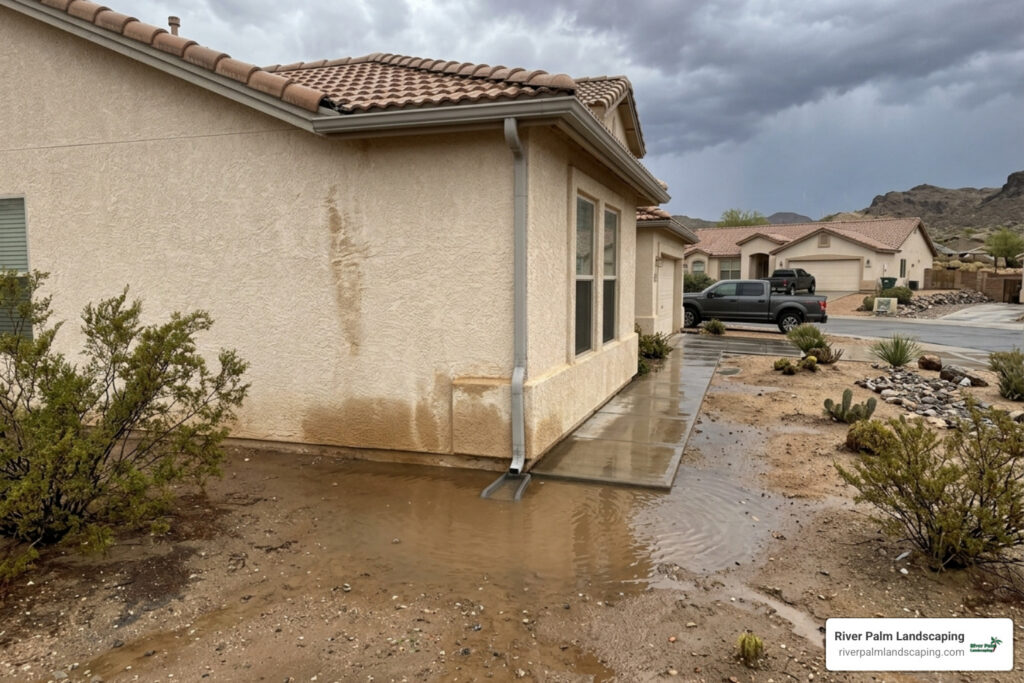
Does my yard need a French drain? Here are the most common signs that the answer is yes:
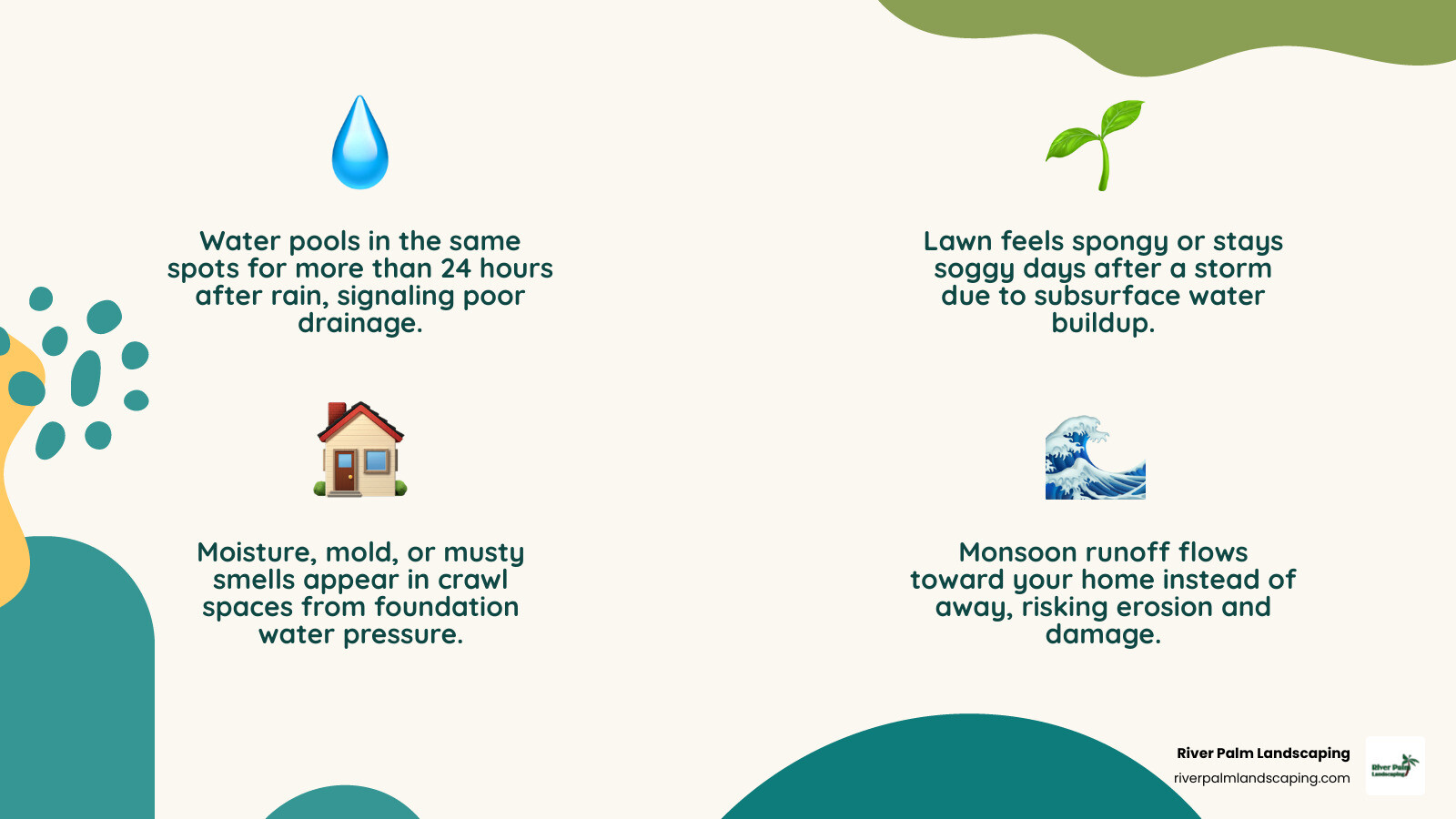
- Water pools in the same spots for more than 24 hours after rain
- Your lawn feels spongy or stays soggy days after a storm
- You notice moisture, mold, or musty smells in your crawl space or along foundation walls
- Soil is eroding around your driveway, patio, or retaining wall
- Monsoon runoff flows toward your home instead of away from it
- You have caliche or clay-heavy soil that prevents water from draining naturally
If two or more of these apply to your property, a French drain is likely worth a professional assessment.
In the Lake Havasu City area, drainage problems are easy to ignore — until monsoon season hits. What looks like a minor puddle in June can become foundation-threatening runoff by August. Rocky desert soil and hardpan caliche layers don’t absorb water the way most people expect, which means excess water has nowhere to go except toward your home.
A French drain is one of the most effective tools for redirecting that water before it causes lasting damage. But it is not always the right solution, and installing the wrong system — or installing one incorrectly — can make things worse.
This guide helps Lake Havasu homeowners figure out whether a French drain is what their yard actually needs, and what to look for when evaluating the job.
How Subsurface Drainage Protects Your Foundation
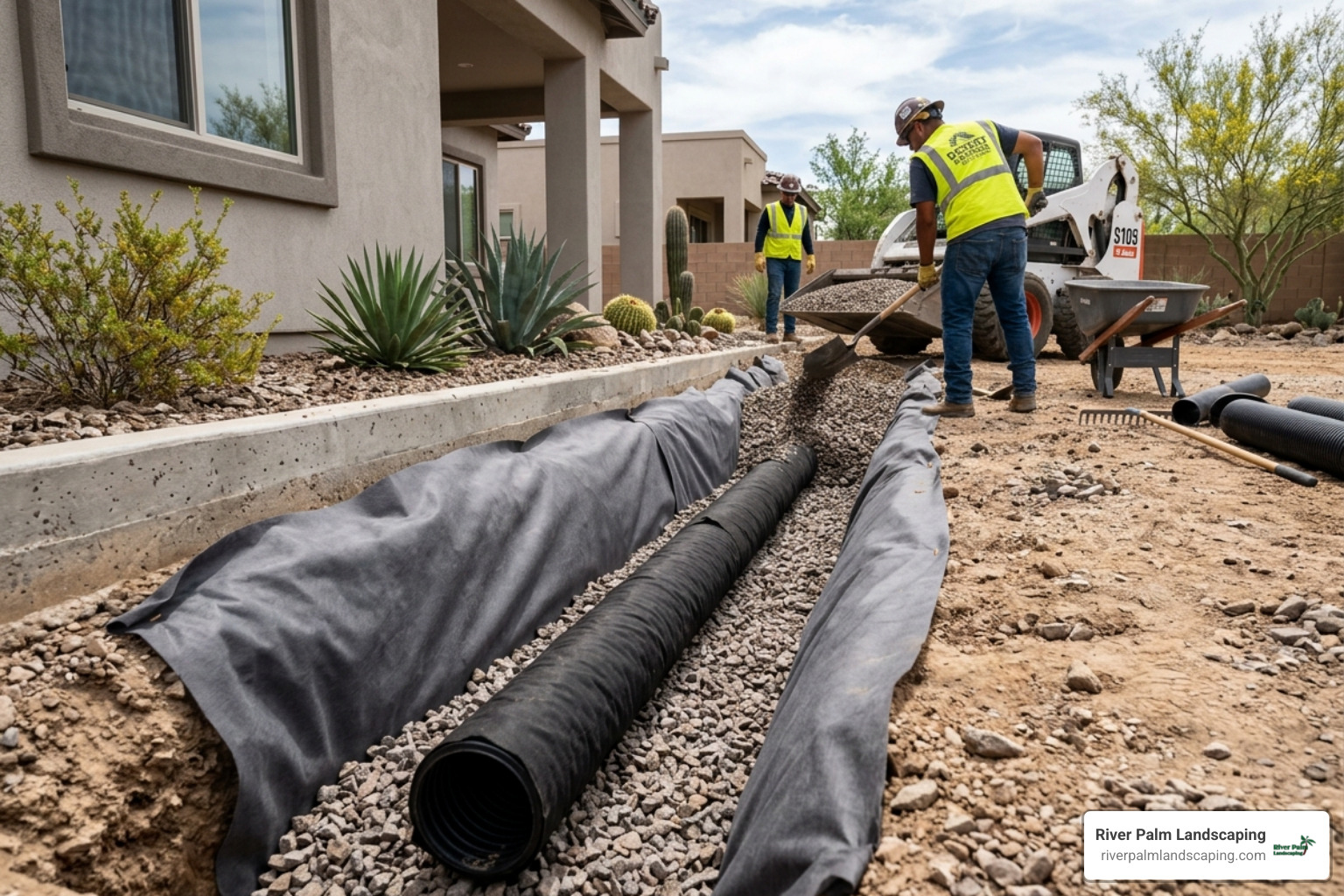
When homeowners ask, “What is a French drain?” they are often surprised to learn it isn’t a complex mechanical device. Invented by Henry Flagg French in the mid-19th century, it is a passive system that uses gravity and the path of least resistance to move water. At its core, it consists of a sloped trench filled with perforated pipe and gravel, often wrapped in geotextile fabric to prevent silt from clogging the works.
The primary goal of a French drain is to manage hydrostatic pressure. This is the technical term for the force exerted by water sitting against your home’s foundation. In our region, when monsoon rains hit the hard-packed earth, the water often settles into the soil immediately surrounding the foundation. As this soil becomes saturated, the pressure builds, eventually forcing moisture through tiny cracks in concrete or masonry.
By installing a subsurface system, you provide that water with an easier “exit strategy.” Instead of pushing against your walls, the water enters the gravel trench, drops into the perforated pipe, and flows safely away to a designated discharge point. This is why what is a french drain and how do i know if i need one? is such a critical question for long-term property maintenance; without it, that hidden pressure can lead to structural failure that costs tens of thousands of dollars to repair.
Does my yard need a french drain? Identifying the Warning Signs

In the arid climate of Lake Havasu City and Golden Shores, we don’t see rain every day, but when we do, it often comes all at once. If you are wondering does my yard need a french drain, you need to look at how your property behaves during and immediately after a storm.
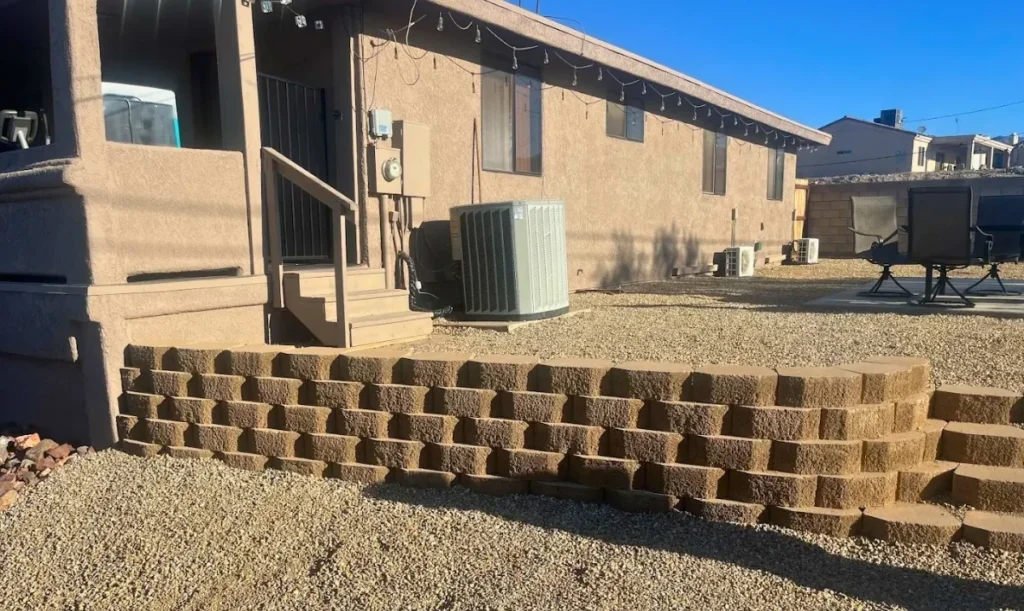
One of the most obvious signs is standing water. If you have “mini moats” forming around your house or puddles that linger for more than 24 hours, your soil isn’t doing its job. This is particularly dangerous near structures. Excess moisture can lead to mold growth in crawl spaces, which triggers respiratory issues and allergies for residents. Furthermore, if you have recently invested in everything you need to know about erosion control retaining walls, pay close attention to the base of those walls. If water is pooling there, it can undermine the structural integrity of the blocks, causing them to lean or collapse.
Determining if does my yard need a french drain for groundwater issues
Not all water problems are visible on the surface. Subsurface water issues occur when the water table rises or when water is trapped beneath the surface layer of soil. If your lawn feels “spongy” or soft underfoot even when the surface looks dry, you likely have a groundwater problem. This trapped moisture can seep into basements or crawl spaces from below, a process known as groundwater heaving. A French drain is the “best bet” for these scenarios because it is deep enough to intercept water before it reaches your home’s footings.
Assessing if does my yard need a french drain based on soil type
In Arizona, our biggest drainage enemy is often caliche. This is a natural, cement-like layer of calcium carbonate found just below the surface. It is virtually non-porous. When you have clay-rich earth or caliche layers, water cannot move downward. Instead, it sits on top of the “hardpan” and moves laterally. If that lateral movement is toward your house, a standard surface drain won’t help much because the water is already several inches underground. A professionally installed French drain cuts through these non-porous layers to create a reliable channel for water to escape.
Comparing French Drains to Surface Drainage Alternatives
Choosing the right system is about understanding where the water is coming from. If the water is flowing across your driveway like a river, you might need a surface solution. If the ground is staying wet and heavy, you need a subsurface solution.
| Feature | French Drain | Swale (Dry Creek Bed) | Catch Basin (Yard Drain) |
|---|---|---|---|
| Primary Target | Subsurface Groundwater | Surface Runoff | High-Volume Surface Water |
| Installation | Deep Trench (18-24″) | Shallow & Wide | Localized Grate & Pipe |
| Aesthetics | Hidden or Decorative Rock | Natural Rock/Plants | Plastic or Metal Grate |
| Best For | Foundation Protection | Sloped Landscapes | Low Spots & Downspouts |
When considering a swale vs french drain: which works best for arizona drainage?, swales are essentially landscaped ditches. They are great for moving surface water around a property, but they don’t address the water that has already soaked into the ground. Similarly, catch basins are excellent for catching water from downspouts, but they won’t dry out a soggy yard. For comprehensive protection, many Lake Havasu properties require a combination of these systems, often integrated into erosion control retaining walls to manage the pressure from uphill neighbors.
When to prioritize a subsurface system over a catch basin
You should prioritize a French drain when the goal is structural protection. While a catch basin is a “point source” solution (it collects water from one spot), a French drain acts like a long sponge. It collects water along its entire length. This makes it superior for protecting a long foundation wall or keeping a large area of synthetic turf from becoming a floating swamp.
Engineering for the Desert: Soil and Slope Requirements
In Lake Havasu City, we don’t just “dig a hole.” The rocky, sun-baked terrain requires specialized equipment and a deep understanding of local geography. A functioning French drain must maintain a minimum slope of 1% — that is a 1-inch decline for every 10 feet of pipe. Without this precise grading, water will simply sit in the pipe, creating a stagnant breeding ground for mosquitoes.
Excavating through caliche often requires heavy machinery, such as a mini-excavator with a breaker attachment. This is why professional installation is so important in our region; the labor-intensive nature of cutting through Arizona hardpan is often more than a weekend project can handle.
Furthermore, a well-designed drainage system should work in harmony with your landscaping. For example, efficient irrigation desert gardens lake havasu relies on proper moisture balance. You don’t want your drainage system to suck all the moisture away from your desert-hardy plants. By placing drains strategically, you can protect your foundation while still allowing plants like Lantana or a Totem Pole cactus to thrive in the surrounding soil. According to University of Arizona Extension data, managing runoff is key to preventing the “salt buildup” that often occurs in desert soils when water evaporates too quickly without proper drainage.
Frequently Asked Questions about Yard Drainage
How long does a professional french drain last?
When installed with high-quality materials like rigid NDS-rated pipe and clean 57s gravel, a French drain can last between 30 and 40 years. However, its lifespan depends heavily on maintenance. In our dusty environment, fine silt can eventually find its way past the filter fabric. We recommend an annual inspection and a professional flushing with a high-pressure hose every few years to ensure the line remains clear of debris and desert critters.
What are the legal risks of discharging water?
This is a major consideration that many homeowners overlook. You cannot simply dump your yard’s water onto your neighbor’s property. In Lake Havasu City and Golden Shores, municipal codes strictly regulate how and where you can discharge stormwater. Typically, water must be directed toward a street’s concrete gutter, a municipal storm drain, or kept entirely on your own property via a dry well. Discharging water improperly can lead to legal disputes, fines, and strained relationships with neighbors.
How much does professional installation cost in 2026?
Pricing for a French drain varies significantly based on site conditions. In May 2026, professional installation typically ranges between $40 and $100 per linear foot. Factors that influence the price include:
- Soil Complexity: Cutting through caliche or large river rocks takes more time and heavier equipment.
- Trench Depth: Foundation-level drains (which may be 4-6 feet deep) cost more than shallow yard drains (18-24 inches).
- Discharge Distance: The further the water has to travel to reach a safe exit point, the more pipe and labor are required.
- Restoration: Replacing pavers, decorative rock, or synthetic turf after the trench is closed adds to the total investment.
While the upfront cost is an investment, it is significantly lower than the cost of repairing a cracked foundation or remediating a mold-infested crawl space.
Conclusion
Determining does my yard need a french drain is the first step toward protecting your home from the unique challenges of the Arizona desert. Whether you are dealing with monsoon runoff, caliche-trapped groundwater, or erosion around your hardscaping, a properly engineered drainage system is essential.
At River Palm Landscaping, we have been serving the Lake Havasu City, Golden Shores, and Parker areas since 2003. We understand the local soil, the extreme heat, and the specific grading requirements needed to make a drainage system last for decades. We don’t just dig trenches; we create integrated landscape design solutions that combine functionality with the aesthetic beauty of the desert.
From installing erosion control retaining walls to managing subsurface water, our team provides the professional assessment you need to keep your property dry and your foundation secure. Don’t wait for the next monsoon to find out your yard has a problem. Contact River Palm Landscaping today for a professional drainage evaluation.