Why Yard Erosion Gets Worse Every Season — and What to Do About It
Many homeowners in Western Arizona watch their valuable topsoil wash away with every passing storm, leaving behind unsightly gullies and compromised foundations. This progressive damage often starts with a small bare patch and quickly escalates into a major structural hazard. Managing this issue effectively requires addressing the movement of water across your property before seasonal rains cause permanent damage.
Here are the most effective ways to stop yard erosion:
- Cover bare soil immediately with straw mulch, coir wattles, or an erosion control blanket to protect against rain impact and surface runoff.
- Fix drainage at the source — redirect downspouts, extend them at least 4–6 feet from your foundation, and address any concentrated uphill runoff.
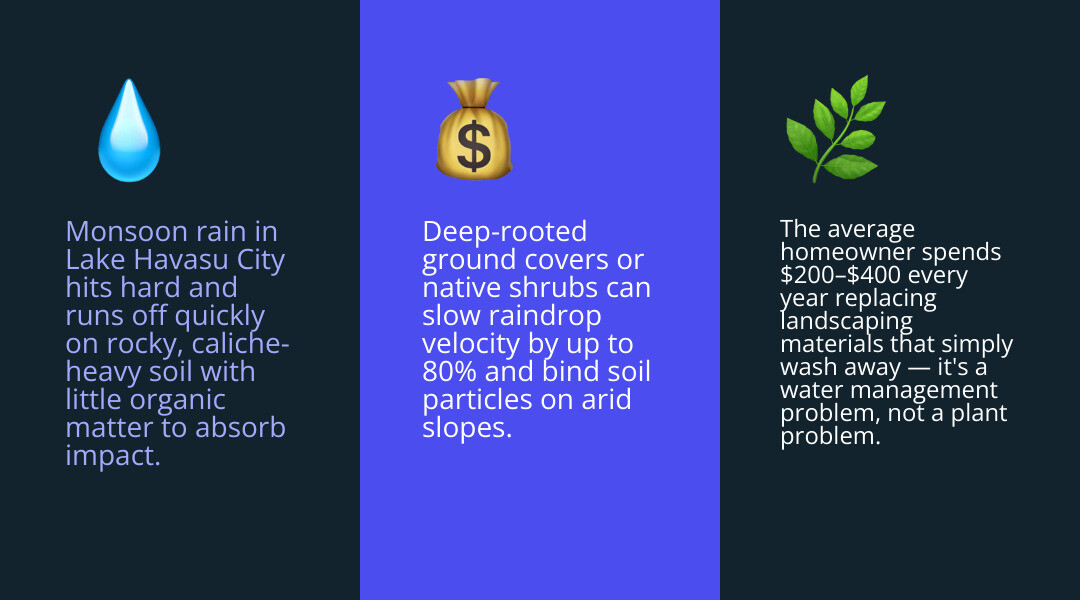
- Plant deep-rooted ground covers or native shrubs to bind soil particles and slow raindrop velocity by up to 80%.
- Build terraces or retaining walls on slopes steeper than 3:1 to break up water velocity and hold soil in place.
- Install geocells, French drains, or dry creek beds for long-term structural protection on actively eroding slopes.
Erosion is easy to ignore — until it isn’t. One season it’s a thin muddy streak after a rainstorm. The next, it’s a deepening gully cutting through your yard, sediment spreading across your driveway, and soil washing toward your foundation. In the Lake Havasu City area, this process is especially fast. Monsoon rain hits hard and runs off quickly on the Mojave’s rocky, caliche-heavy soil. There’s little organic matter to absorb the impact, slopes are common, and bare decomposed granite offers almost no resistance to concentrated flow.
Replacing washed-out landscaping materials year after year is a water management problem, not a soil problem. The fix needs to start at the source, not just the symptom.
This guide covers everything you need to know: how to diagnose your erosion type, which solutions work in desert conditions, what plants actually hold soil on a slope, and when it’s time to stop patching and call in an experienced contractor.
Glossary of key solutions:
Diagnosing the Dirt: How to Identify and Assess Yard Erosion
Before buying products or digging trenches, homeowners must understand how and why their soil is moving. In the desert Southwest, water behaves differently than in wetter climates. Because our ground is often baked dry and lacks a thick organic layer, it acts almost like concrete during a sudden July monsoon. Water cannot sink in quickly, so it sheets across the surface, picking up speed and carrying valuable topsoil with it.
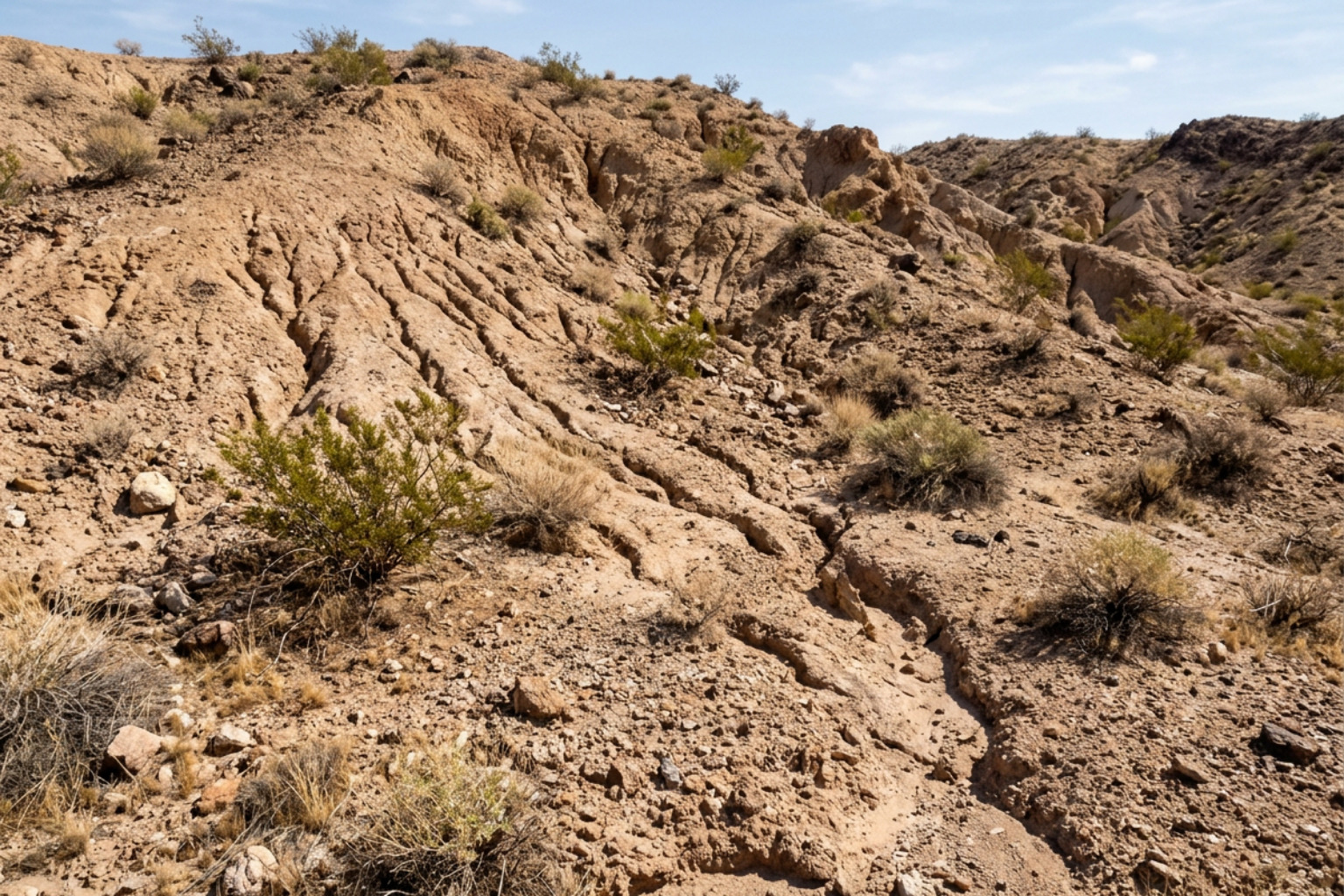
To select the right remedy, homeowners need to identify the specific stage of erosion occurring on their property:
- Splash Erosion: This is the first, most subtle phase. When a heavy raindrop hits bare desert soil, it acts like a tiny explosive charge. It can splash loose soil particles up to 3 feet away. Over time, this breaks down the soil structure, making the surface even less permeable.
- Sheet Erosion: As water accumulates on a slope, it moves downhill in a thin, uniform sheet. This type of erosion is highly sneaky because it doesn’t leave dramatic gouges. Instead, homeowners might notice exposed plant roots, sinking pavers, or muddy sediment fans depositing on walkways and driveways.
- Rill Erosion: When sheet flow begins to concentrate into distinct paths, it carves tiny, parallel channels. These rills are typically 1 to 4 inches deep. If left unaddressed, they act as highways for runoff, accelerating the water’s velocity and cutting deeper into the dirt with every storm.
- Gully Erosion: This is the most severe phase. A gully is defined as a channel deeper than 4 inches. Once a gully forms, simple fixes like loose gravel or seed will wash away in minutes. Gullies can quickly undermine fences, driveways, and even home foundations.
Understanding these stages is key to taking control of your backyard erosion before seasonal storms cause permanent structural damage.
Diagnostic Factors for Desert Yards
To map out a permanent solution, professional contractors assess several critical site factors:
- The Slope Gradient: The steepness of a yard dictates which stabilization methods are required. A slope under 33% (a 3:1 grade) can often be managed with dense plantings and mulch. Slopes between 33% and 50% require a combination of erosion blankets, geocells, or drip-irrigated ground covers. Anything steeper than 50% (a 2:1 grade or steeper) almost always requires engineered structural solutions.
- Water Flow Paths: Tracking where water enters the yard, where it pools, and where it exits helps identify the root cause of the issue. Runoff often originates from a neighbor’s property, a steep driveway, or unguided roof downspouts.
- Soil Compaction and Caliche: In Lake Havasu City, Golden Shores, and Parker, AZ, properties frequently feature caliche — a natural, cement-like layer of calcium carbonate. Caliche acts as a physical barrier to water infiltration. If a yard has compacted rocky clay or caliche near the surface, water cannot sink in, meaning surface runoff and erosion risks will be exceptionally high.
How to Stop Yard Erosion on Slopes and Hillsides
Sloped yards are inherently vulnerable to gravity. When gravity combines with fast-moving storm runoff, soil simply cannot hold its ground without help. Stabilizing a slope requires slowing down the water, spreading it out, and physically confining the soil particles.
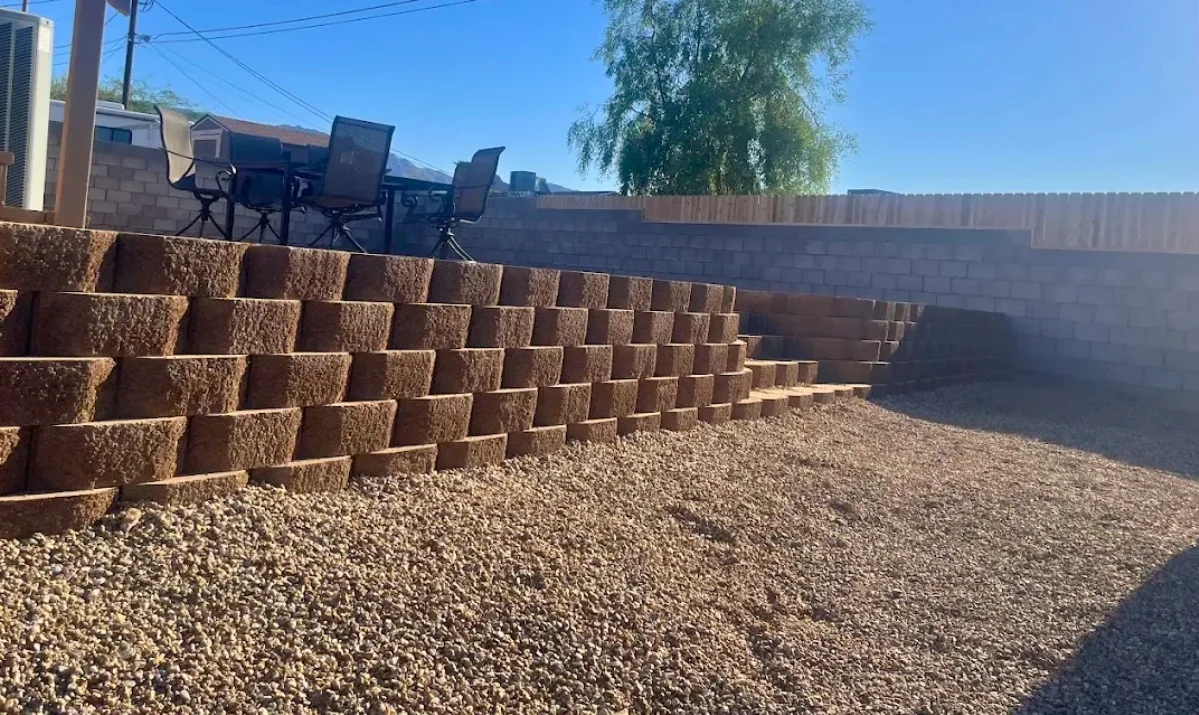
For properties with significant elevation changes, relying on plants alone is rarely enough. Long-term success requires structural support to manage hydrostatic pressure — the physical force exerted by water pooling behind soil. Homeowners can find detailed guidance on managing these forces in our article on the best retaining wall for slope management and stability.
Engineered Retaining Walls and Terracing
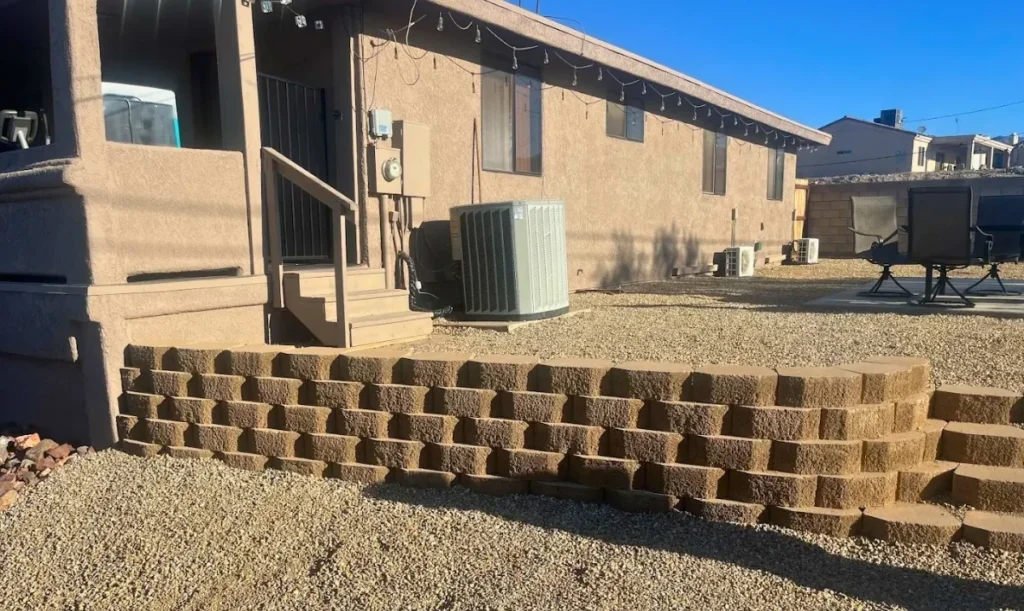
When a slope exceeds a 3:1 grade, terracing is one of the most reliable ways to stop erosion permanently. By breaking a single steep hill into a series of shorter, flat steps, the velocity of downhill water is cut to near zero.
Building these steps is typically achieved using mortarless block walls. These interlocking concrete blocks are designed to flex slightly with ground movement and thermal expansion, which is crucial in our extreme Arizona heat.
When planning a terraced retaining wall system, key contractor-grade principles include:
- The Cut and Fill Technique: This process involves excavating soil from the high side of the slope (the “cut”) and using it to level out the low side (the “fill”). This creates flat, usable garden steps while minimizing the need to haul dirt off-site.
- Proper Drainage Grading: Each terrace step must be graded with a subtle 2% slope (approximately 1 inch of drop per 10 feet of run) pointing away from the wall face. This keeps water from pooling at the back of the lower wall, which could otherwise build up hydrostatic pressure and cause a structural failure.
- Backfill and Weep Holes: Never backfill a retaining wall with raw desert soil or clay. Always use clean, angular crushed rock directly behind the blocks, wrapped in a non-woven geotextile fabric. This allows water to filter down to a perforated drain pipe and escape safely through weep holes at the base of the wall.
For a deeper dive into structural design, explore our guides on erosion control retaining walls and our comprehensive block retaining wall Arizona guide.
Choosing the Right Materials: How to Stop Yard Erosion with Geocells and Blankets
If a retaining wall isn’t practical or budgeted for your slope, modern erosion control products offer exceptional alternative stability.
| Product Category | Best Used For | Slope Limit | Key Advantage |
|---|---|---|---|
| HDPE Geocells | High-traffic slopes, driveways, steep rocky banks | Up to 45° (100% slope) | Provides 3D lateral confinement; keeps gravel or soil locked in place. |
| Coir Wattles | Breaking up long slopes, trapping sediment | Up to 3:1 slopes | Biodegradable log structures that slow water velocity on the surface. |
| Erosion Control Blankets | Broad, bare sloped areas during plant establishment | Up to 2:1 slopes | Protects bare soil from raindrop impact; retains moisture for young roots. |
HDPE Geocells are three-dimensional honeycombs made of high-density polyethylene. The geocell grid is expanded across the slope, pinned down with heavy-duty anchors, and filled with angular crushed stone or soil. This provides absolute lateral confinement, meaning the gravel cannot migrate downhill even during a torrential downpour.
Coir Wattles are dense tubes of compressed coconut fiber. Placing them parallel to the contour lines of a slope acts as a series of mini-dams. They slow down sheet runoff, trap sediment behind them, and allow water to sink gently into the ground rather than cutting rills.
Erosion Control Blankets made of jute or coconut coir are rolled out over freshly seeded or planted slopes. They must be trenched at least 6 inches deep at the top of the hill, overlapped cleanly, and pinned tightly to the ground using metal staples. If a blanket “bridges” or hovers above the soil, water will cut underneath it, rendering it useless. To see how these products perform in real-world scenarios, check out this guide on the best retaining wall for slope management and stability.
Desert-Appropriate Plants and Ground Covers for Soil Stability
While structural solutions handle the heavy lifting, biological solutions provide the long-term, self-healing armor that yards need. Plant roots act as natural rebar, binding soil particles together in a dense underground matrix. Above ground, leaves and branches break the fall of heavy raindrops, reducing raindrop velocity by 50% to 80% and preventing splash erosion.
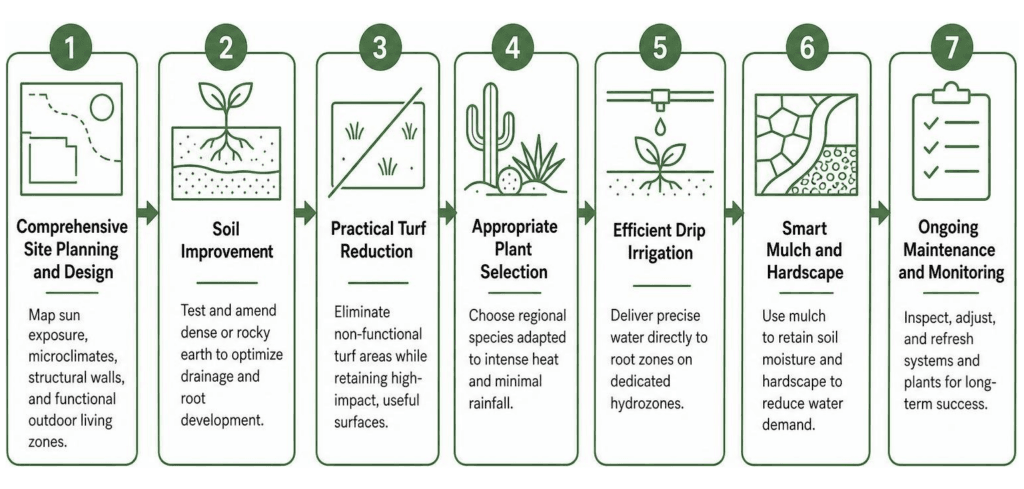
In our arid climate, selecting the right species is critical. Plants must be highly drought-tolerant, capable of handling reflected heat, and adapted to rocky, low-nutrient soils. Homeowners can learn more about designing these resilient systems in our guide to maximizing your landscape with desert landscaping.
Best Plants for Preventing Soil Erosion on Slopes
When selecting plants for erosion control, look for species with two specific root behaviors: deep taproots to anchor deep soil layers, and extensive lateral root networks to hold surface soils.
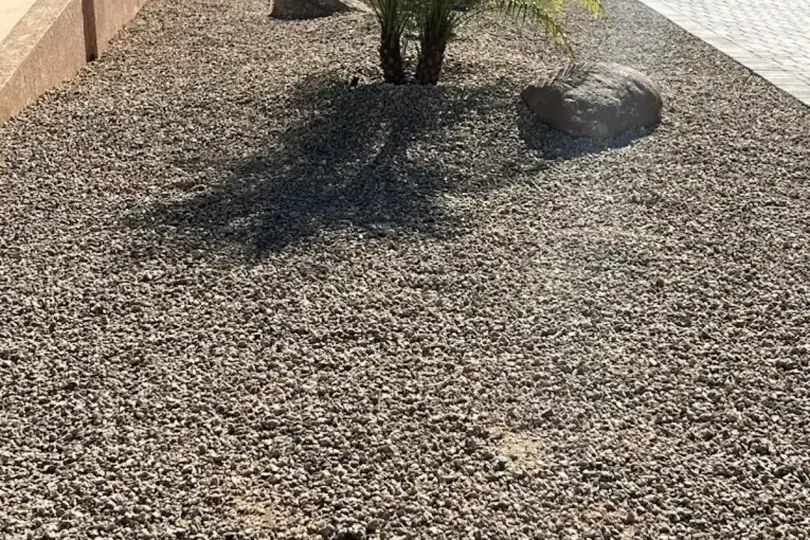
Some of the most reliable desert-adapted plants for erosion control in Lake Havasu City, Parker, and Golden Shores include:
- Creeping Myoporum (Myoporum parvifolium): A dense, low-growing evergreen ground cover that roots wherever its stems touch the soil, creating a tight green carpet that locks down slopes.
- Desert Broom (Baccharis sarothroides): An incredibly hardy native shrub with massive, fibrous root systems that excel at stabilizing loose sandy banks.
- Prostrate Rosemary (Rosmarinus officinalis ‘Prostratus’): A tough, woody ground cover that cascades beautifully over slopes and retaining walls while anchoring the soil.
- Trailing Lantana (Lantana montevidensis): Offers rapid, dense growth and colorful blooms, providing excellent surface coverage and soil binding.
To ensure these plants establish successfully on a slope without causing erosion themselves, they should be watered using a dedicated drip irrigation system equipped with pressure-compensating emitters. On steep slopes, always install check-valve lines. Without check-valves, when the irrigation cycle ends, all the water left in the pipes will drain out of the lowest emitters, creating localized pooling, muddy spots, and erosion gullies.
Fixing the Source: Drainage Solutions for Erosion Control
Erosion is ultimately a symptom of unmanaged water. If water is allowed to run wild across a yard, even the best plants and retaining walls will eventually fail. The key to permanent erosion control is simple: slow it, spread it, sink it.
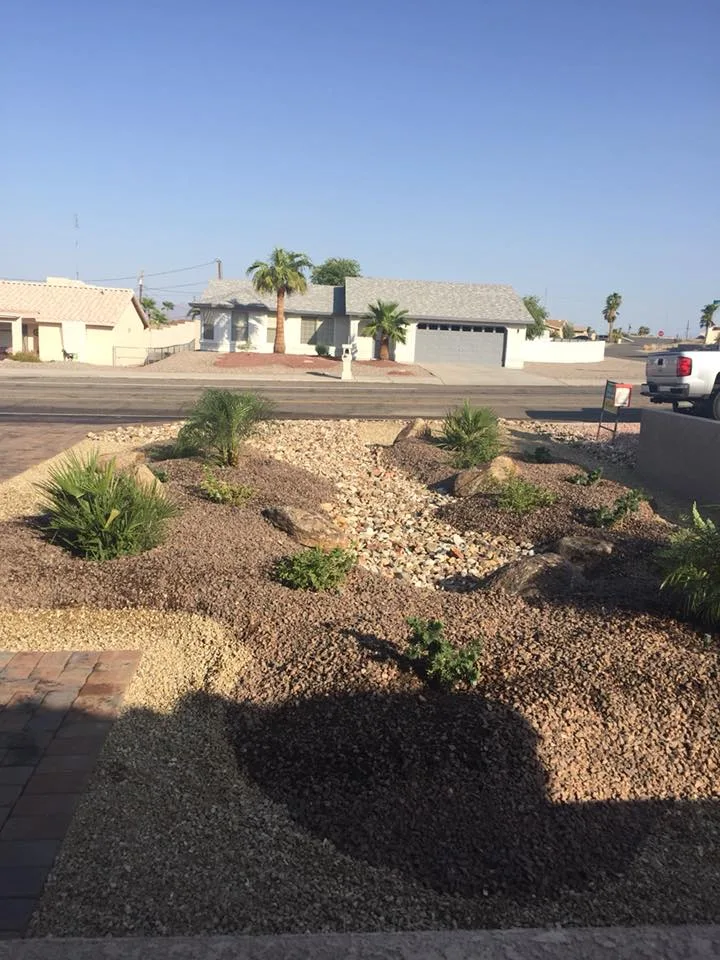
By capturing high-velocity water at the source and guiding it safely through the property, homeowners can eliminate soil washing away entirely. Common solutions include French drains, dry creek beds, and swales. To determine which is right for your property, read our guide on to drain or not to drain: when your yard needs a French drain.
Professional Intervention: How to Stop Yard Erosion Near Foundations
One of the most dangerous places for erosion to occur is right next to a home’s foundation. When water pours off a roof, it gains massive kinetic energy.
Consider this statistic: a single downspout can discharge over 600 gallons of water during a single one-inch rainfall event.
If this water dumps directly onto bare soil next to the house, it will quickly carve out deep depressions, saturate the subgrade, and cause the foundation to settle or crack.
To protect foundations, homeowners should take immediate action:
- Install Downspout Extensions: Run downspouts at least 4 to 6 feet away from the foundation wall.
- Use Splashguards or Catch Basins: Place heavy-duty concrete or plastic splashguards at the outlets, or drain the downspouts directly into subterranean catch basins.
- Grade Away from the Home: Ensure the first 10 feet of soil sloping away from the foundation has a drop of at least 6 inches to prevent water from pooling against the concrete.
For advanced local solutions, explore our guide on how to keep Havasu dry with these local drainage solutions.
Subsurface and Surface Drainage Systems
To handle larger volumes of water across a sloped yard, a combination of surface and subsurface drainage is required:
- Dry Creek Beds: These are functional, beautiful dry riverbeds lined with woven geotextile fabric and filled with a mix of river rock, gravel, and large boulders. They mimic natural desert washes, safely channeling monsoon runoff through the yard without taking the soil with it.
- French Drains: A subsurface trench filled with clean gravel and a perforated pipe. It intercepts sheet flow, pulls it underground, and carries it safely to a daylight outlet or dry well.
- Vegetated Swales: Shallow, wide ditches lined with rock or deep-rooted grass. They are graded with a gentle 1% to 3% slope to slow down water, allowing it to sink into the soil rather than rushing off-site.
When dealing with the tough, rocky earth of Western Arizona, traditional trenching can be a major challenge. Learn more about managing these unique conditions in our article on drainage solutions for rocky soil.
The Cost of Control: DIY vs. Professional Installation
When deciding whether to tackle an erosion problem as a weekend project or hire a licensed contractor, homeowners must weigh the upfront costs against the risk of structural failure.
On gentle slopes with minor sheet erosion, a basic approach using mulch, seed, and coir wattles is highly practical. However, on steep slopes, near foundations, or when building structural retaining walls, professional engineering is critical.
Monsoon storms do not forgive poor math. A retaining wall built without proper drainage or subgrade compaction will quickly turn into a mud-retaining hazard, potentially collapsing and causing thousands of dollars in damage to your property or a neighbor’s.
Budgeting for Erosion Control Projects
Because every yard has unique grading, soil types, and water flow patterns, pricing varies significantly by project based on materials, site conditions, and complexity.
To help homeowners understand the financial scope, here is a realistic comparison of typical project investments:
| Erosion Control Method | Typical DIY Cost Range | Typical Professional Cost Range | Failure Rate | Best For |
|---|---|---|---|---|
| Mulch, Seed & Wattles | $200 – $500 | $1,000 – $2,500 | Moderate to High (DIY) | Gentle slopes (< 3:1), minor surface washing |
| Geocells & Crushed Stone | $800 – $1,800 | $3,000 – $6,000 | Low (When properly anchored) | Moderate slopes, pathways, driveways |
| Terraced Retaining Walls | $1,500 – $4,000 | $5,000 – $15,000+ | Very High (DIY) / < 10% (Pro) | Steep slopes (> 2:1), structural stabilization |
| Dry Creek Bed / Drainage | $500 – $1,500 | $2,500 – $7,500 | Moderate (DIY) / < 5% (Pro) | Managing heavy monsoon runoff, downspout paths |
While a self-installed project might save on labor upfront, temporary fixes often fail, leading to recurring costs to replace washed-out landscaping materials. Investing in a professionally engineered, durable drainage system or retaining wall provides an immediate return on investment by protecting home foundations, preserving expensive hardscaping, and dramatically boosting curb appeal and long-term property usability.
Frequently Asked Questions about Yard Erosion
What is the fastest way to stop yard erosion before a storm?
If a major monsoon storm is forecast and you have bare, vulnerable soil, the fastest emergency fix is to cover the ground immediately with straw mulch or plastic sheeting weighed down with rocks. Laying coir wattles or sandbags across the slope perpendicular to the water flow will slow down runoff and trap sediment. Redirect any heavy concentrated water sources, like downspouts, away from the bare soil using temporary flexible pipe extensions.
Can I use gravel alone to stop yard erosion on a slope?
No. Dumping loose gravel directly onto a bare desert slope is a temporary cosmetic cover-up that usually makes erosion worse. Without a physical barrier or containment system, water will cut under the loose rock, causing both the soil and the expensive gravel to slide down the hill. To use gravel successfully on a slope, it must be paired with a heavy-duty, non-woven geotextile fabric underneath, or confined within a 3D geocell system. For severe slopes, structurally engineered erosion control retaining walls are the only permanent solution.
When should I stop trying DIY fixes and hire a contractor?
You should stop attempting temporary repairs and contact a professional immediately if:
- You notice structural movement, cracking, or bulging in existing retaining walls.
- Erosion is actively undermining or pooling water near your home’s foundation, driveway, or utility lines.
- Monsoon runoff has carved deep gullies (more than 4 inches deep) that reappear after every storm.
- Your previous seeding, mulching, or stone placement has washed away multiple times.
If you are experiencing any of these warning signs, it is time to search for the best yard drainage company near me to secure a permanent, engineered solution.
Conclusion
How to stop yard erosion is not about fighting the natural movement of water — it is about designing a landscape that guides, slows, and tames it. In the unique, rugged environment of Lake Havasu City, Golden Shores, and Parker, AZ, temporary agricultural fixes simply cannot withstand the power of sudden desert downpours on caliche-heavy soils.
Whether your yard needs a beautifully dry creek bed to channel monsoon runoff, strategically placed geocells to lock down a sloped pathway, or engineered erosion control retaining walls to transform a sliding hillside into a stable, terraced masterpiece, River Palm Landscaping has the local experience and equipment to get the job done right.
Since 2003, our team has specialized in building durable, climate-appropriate outdoor spaces that stand up to the desert’s toughest elements. Do not wait for the next heavy storm to wash away your hard-earned property value. Contact River Palm Landscaping today to schedule a site evaluation and protect your home for seasons to come.