Is Artificial Turf or Real Grass the Right Choice for Your Yard?
Many homeowners in Lake Havasu City struggle with high water bills and patchy lawns that burn out by June. Deciding between artificial turf vs real grass depends on your local climate, budget, and how much yard work you want to handle. In our desert environment, synthetic turf offers a green appearance year-round, while natural grass has its own ecological benefits worth considering before you make a decision.
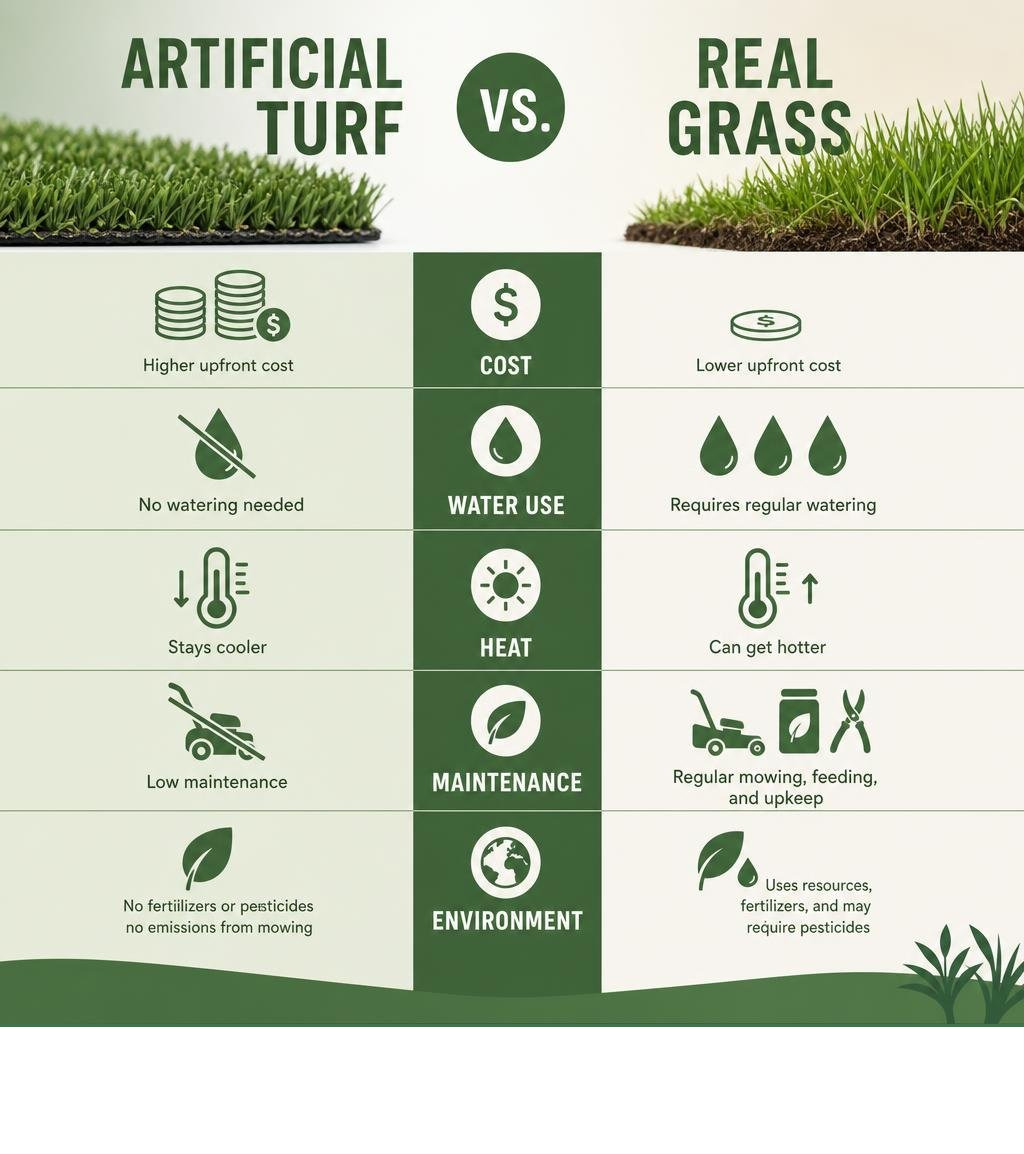
Quick comparison:
| Factor | Artificial Turf | Real Grass |
|---|---|---|
| Upfront cost | Higher ($7–$12/sq ft installed) | Lower ($0.10–$0.40/sq ft sod) |
| Annual maintenance | Low ($100–$350/year) | High ($1,500–$3,000/year) |
| Water use | Near zero | 40,000+ gallons/year for a typical lawn |
| Lifespan | 15–25 years | Indefinite with proper care |
| Surface heat | Gets very hot in direct sun | Stays near air temperature |
| Environmental impact | Eliminates chemical runoff; microplastic risk | Supports biodiversity; carbon sequestration |
| Best for | Desert climates, low maintenance, pets | Mild climates, barefoot use, ecology-focused |
Most Lake Havasu homeowners didn’t set out to become lawn care experts. But between caliche soil that fights you at every turn, water bills that climb every summer, and natural grass that browns out by June, the question of whether to switch to synthetic turf comes up fast.
Across the country, more than 11,000 artificial turf fields have been installed — and the trend has moved well beyond sports stadiums into backyards, pool decks, and dog runs. But synthetic turf isn’t a perfect solution for everyone. It gets hot. It costs more upfront. And there are real environmental trade-offs that deserve an honest look.
This guide breaks down both options clearly — costs, performance, safety, and long-term value — so you can make the right call for your property.
The Core Differences: Artificial Turf vs Real Grass in Desert Climates
In the hyper-arid Mojave Desert environment of Lake Havasu City, Golden Shores, and Parker, AZ, the choice between artificial turf vs real grass is not merely an aesthetic one. In Arizona’s desert climate, the comparison is less about appearance and more about how each system performs under extreme heat, limited water, and challenging soil conditions.
A natural lawn is a living, breathing ecosystem. It relies on continuous biological processes, consistent moisture, and active soil chemistry to survive. Synthetic turf, on the other hand, is a highly engineered outdoor surface system designed to replicate the visual appeal of a healthy lawn without the biological overhead. Homeowners searching for irrigation-free turf in Havasu should understand that turf still needs proper base prep, drainage, and occasional rinsing, but it removes the need for a full lawn irrigation schedule.
In Arizona’s extreme climate, where summer ambient temperatures regularly exceed 110°F, these two systems behave in vastly different ways. Natural grass relies on evapotranspiration—essentially sweating—to keep itself and its surrounding environment cool. Synthetic turf lacks this natural cooling mechanism, meaning it absorbs and retains solar radiation, which directly impacts how and when homeowners can use their outdoor spaces.
Aesthetic and Performance Differences: Artificial Turf vs Real Grass
Early generations of synthetic grass were notorious for looking like cheap, shiny plastic door mats. However, modern manufacturing techniques have transformed the industry. Today’s high-quality synthetic turf uses advanced polyethylene monofilament fibers engineered with varied blade shapes (such as W-blade or hollow blade configurations) to deflect light and eliminate artificial glare.
These modern systems incorporate a multi-toned color palette—blending forest green, olive, and field green with a textured tan thatch layer—to mimic the natural imperfections of live grass.
In terms of performance, synthetic turf offers unmatched consistency. It does not develop bare patches, yellow pet spots, or muddy ruts after a desert storm. It remains uniformly green and level 365 days a year. Many homeowners specifically choose low-water turf in Lake Havasu because it keeps small lawn areas usable and attractive without fighting the desert climate every season.
Conversely, maintaining the aesthetic appeal of natural grass in Arizona is a constant struggle against the elements. Desert homeowners must manage seasonal transitions, often overseeding warm-season Bermuda grass with cool-season ryegrass in the fall to maintain a green lawn through the winter. Without this intensive intervention, a natural lawn will spend several months of the year in a brown, dormant state.
Typical Applications for Residential and Commercial Properties
The practical application of each surface depends heavily on how the property owner intends to use the space:
- Residential Lawns and Play Areas: Families looking to eliminate the weekend chore of mowing and weeding often choose synthetic grass for its easy upkeep. It provides a level, mud-free surface for children’s playsets.
- Dog Runs and Pet Zones: Pets can easily destroy a natural lawn with digging and nitrogen-rich waste. Properly designed synthetic turf with a highly permeable backing and specialized infill provides a durable, easy-to-sanitize alternative that won’t turn into a mud pit.
- Pool Decks: Surrounding a swimming pool with real grass often leads to grass clippings, dirt, and fertilizers blowing into the filtration system. Synthetic turf creates a clean, mud-free border around pool coping, though its surface temperature must be managed.
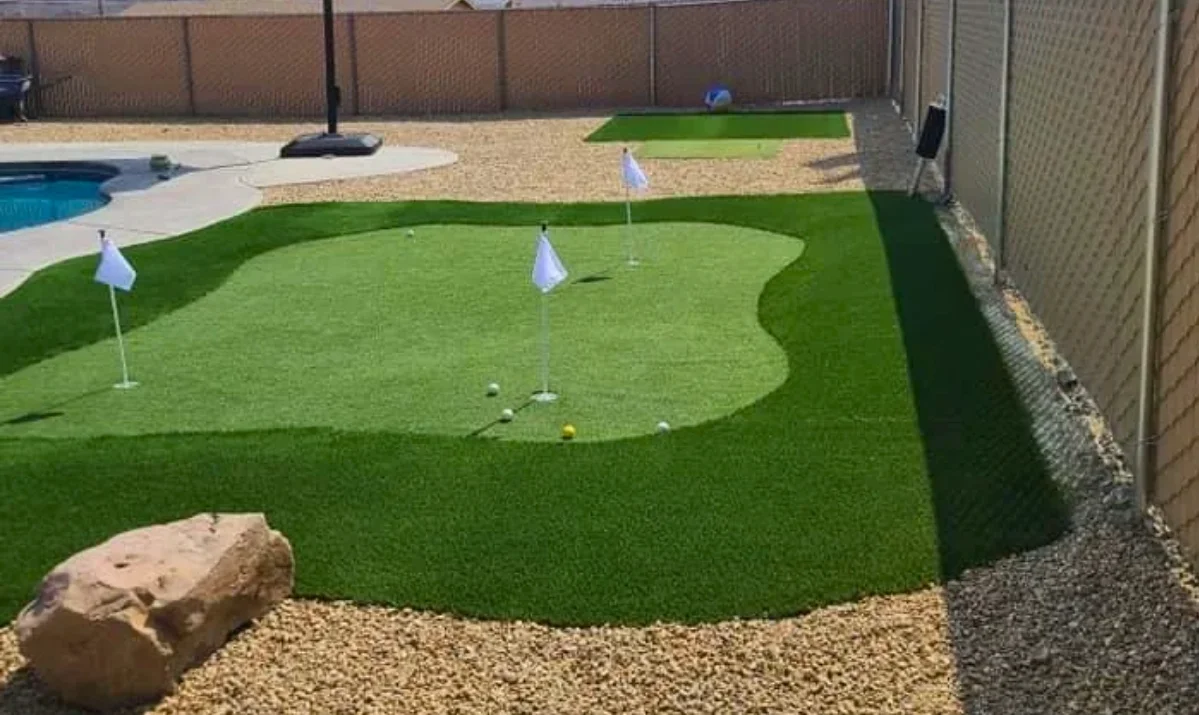
- Backyard Putting Greens: For golf enthusiasts, custom-designed backyard putting greens are a highly popular application in the Lake Havasu area, offering consistent ball roll and zero mowing requirements.
Artificial Turf Pros and Cons at a Glance
Before choosing between synthetic turf and natural grass, it helps to compare artificial turf pros and cons from a homeowner’s point of view.
Artificial turf advantages:
- Uses little to no irrigation compared with a natural lawn
- Stays green year-round without mowing, overseeding, or fertilizing
- Performs well in small yards, pool areas, dog runs, and putting greens
- Reduces mud, grass clippings, weeds, and patchy lawn repair
- Can lower long-term ownership costs in high-water-use desert markets
Artificial turf disadvantages:
- Costs more upfront than sod or seed
- Gets hotter than real grass in direct Arizona sun
- Does not provide the same habitat, cooling, or soil benefits as living grass
- Requires proper drainage, infill, brushing, and pet odor maintenance
- Eventually needs replacement when fibers, backing, or seams wear out
For many Arizona homes, the best answer is not necessarily “all turf” or “all grass.” A balanced design might use synthetic turf for a clean, low-water activity zone while relying on desert plants, shade trees, rock, and hardscape to provide cooling, texture, and ecological value.
Which Option Fits Your Top Priority?
| If you value… | Better Choice | Why |
|---|---|---|
| Lowest upfront cost | Real grass | Sod or seed costs less to install initially. |
| Lowest maintenance | Artificial turf | No mowing, fertilizing, overseeding, or routine irrigation. |
| Lowest water use | Artificial turf | It dramatically reduces lawn irrigation needs. |
| Cooler surface | Real grass | Living grass cools itself through evapotranspiration. |
| Pet durability | Artificial turf | Proper pet turf resists digging, mud, and urine burn spots. |
| Long-term ownership cost | Artificial turf | Water, mowing, fertilizer, and reseeding savings add up over time. |
| Environmental benefits | Real grass | Living turf supports soil life, cooling, and carbon uptake. |
| Desert performance | Artificial turf | It stays green through heat, drought, and poor soil conditions. |
Financial Breakdown: Upfront Costs vs. Long-Term ROI
Evaluating the financial aspect of artificial turf vs real grass requires looking beyond the initial installation check. Homeowners must weigh a high upfront capital investment against ongoing, compounding operational costs.
Initial Installation Costs and Material Quality
Installing a natural grass lawn is relatively inexpensive at the start. Soil preparation, laying sod, and installing a basic automatic sprinkler system typically costs a fraction of a synthetic installation.
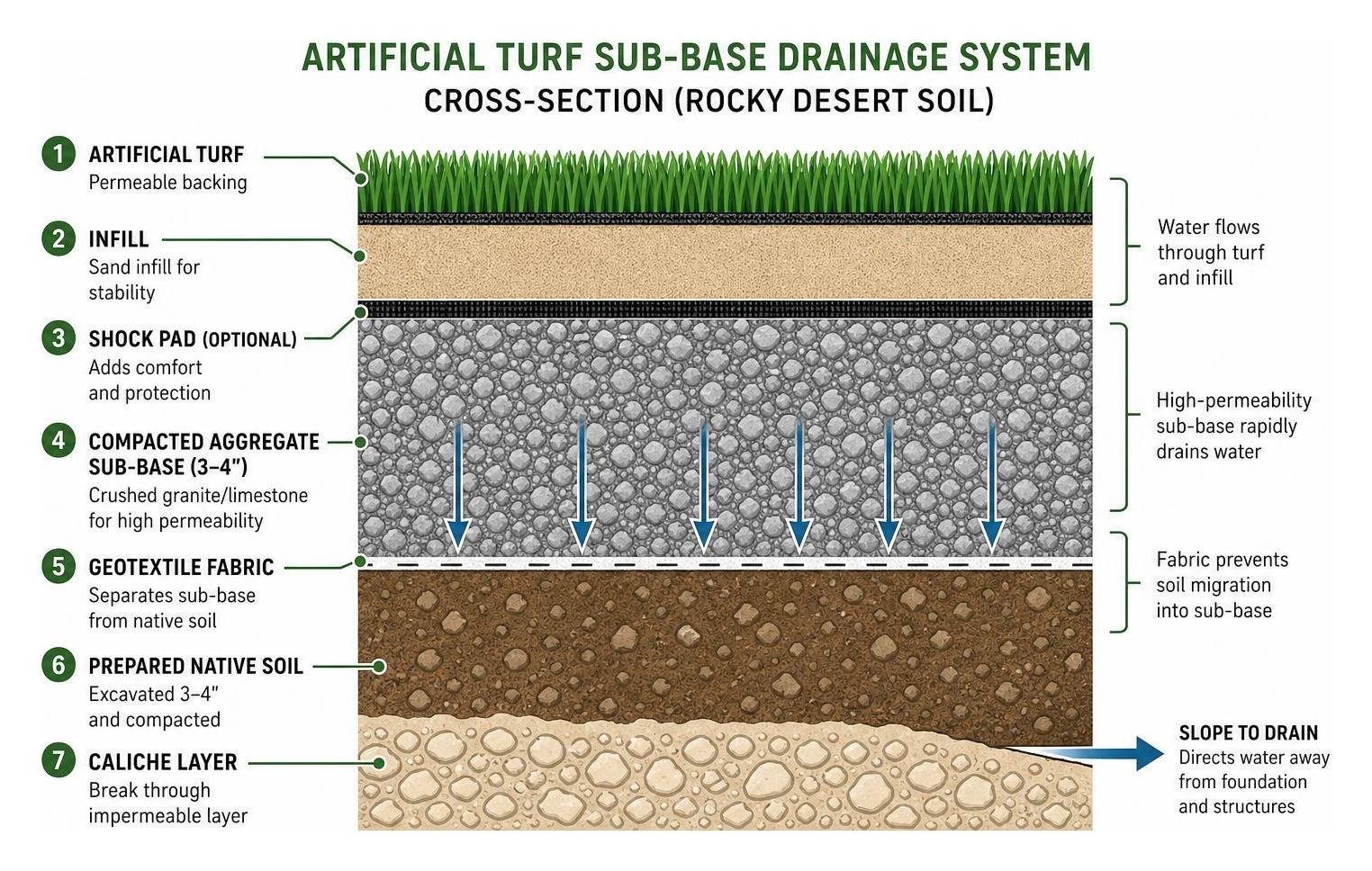
By contrast, a correctly installed synthetic lawn requires extensive ground preparation. Because of the challenging caliche and rocky soil conditions in Lake Havasu City, excavation is labor-intensive. The existing soil must be excavated several inches deep, hauled away, and replaced with a compacted crushed stone sub-base to ensure proper drainage and stability.
Additionally, the cost of the synthetic material itself varies based on pile height, face weight, and advanced cooling technologies. While the initial cash outlay for synthetic turf is significantly higher, it is a one-time structural investment, whereas natural sod represents the beginning of an ongoing financial commitment. For a detailed breakdown of local pricing variables, homeowners can consult our guide to artificial grass costs in Lake Havasu.
Many real estate professionals also report that professionally installed synthetic turf can improve curb appeal and artificial turf resale value, particularly in low-water markets throughout Arizona. The resale impact is strongest when turf looks natural, drains correctly, complements the surrounding landscape, and replaces a lawn that would otherwise be expensive to maintain.
Turf Thickness Comparison
An artificial turf thickness comparison usually focuses on pile height, or how tall the grass blades are above the backing. Shorter 1.25-inch turf works well for putting greens, tight pet runs, and high-traffic utility areas because it is easier to keep firm and clean. A 1.5-inch product is often the best all-around residential choice, giving homeowners a natural lawn look without becoming too floppy under foot traffic. Taller 2-inch turf creates a lush, premium appearance for showpiece lawns, but it may require more brushing and a heavier infill system to keep the blades standing upright in Arizona heat.
10-Year and 25-Year Lifecycle Cost Comparison
Over a decade or more, the financial math shifts dramatically. A natural lawn in Arizona demands continuous water, electricity to run irrigation pumps, seasonal fertilizers, weed control, overseeding supplies, and lawnmower maintenance or professional mowing services.
According to regional water data, a typical 1,000-square-foot natural lawn in a hot, arid climate can consume between 30,000 and 40,000 gallons of water annually. University of Arizona Cooperative Extension publishes turfgrass consumptive water use data for Mohave County, giving Arizona homeowners and irrigation professionals a stronger local reference point for estimating real lawn water demand. With rising municipal water rates, this consumption translates to hundreds of dollars per year. Synthetic turf customers save an average of $800 per year on water bills alone.
When calculating the total cost of ownership over 10 to 25 years, synthetic turf often emerges as the more economical choice. Most homeowners in dry, high-water-cost regions break even on their synthetic turf investment within five to seven years.
| Expense Category (1,000 Sq. Ft. Lawn) | Synthetic Turf (10-Year Total) | Natural Grass (10-Year Total) |
|---|---|---|
| Initial Installation & Base Prep | $7,000 – $12,000 | $1,500 – $3,000 |
| Water Usage Costs | $0 | $6,000 – $12,000 |
| Fertilizers, Pesticides & Seed | $0 | $1,500 – $3,000 |
| Mowing, Trimming & Equipment | $150 (occasional broom) | $4,000 – $8,000 |
| Infill & Specialized Cleaning | $500 – $1,000 | $0 |
| Total 10-Year Investment | $7,650 – $13,150 | $13,000 – $26,000 |
Engineering & Maintenance: Surviving the Arizona Heat and Soil
The rugged terrain of the Colorado River valley presents unique challenges for any landscaping project. From caliche-heavy soil to intense monsoon downpours, both natural grass and synthetic turf need the right preparation to perform well.
Soil Preparation, Caliche, and Drainage Engineering
Caliche is a hardened calcium-carbonate layer common in Arizona desert soils. For natural grass, it can restrict root growth and trap water near the surface, making healthy turf harder to maintain without soil amendment and careful irrigation.
Synthetic turf has a different challenge: it does not need living soil, but it does need a stable, draining foundation. A well-planned installation typically requires excavating 3 to 4 inches of native soil, addressing shallow caliche where needed, and installing a compacted crushed-stone sub-base that moves water away from the home.
Quality synthetic turf features a flow-through backing system capable of draining more than 30 inches of water per hour, helping prevent standing water, odors, and base movement during summer storms.
Thermal Performance and Heat Mitigation in Extreme Summer
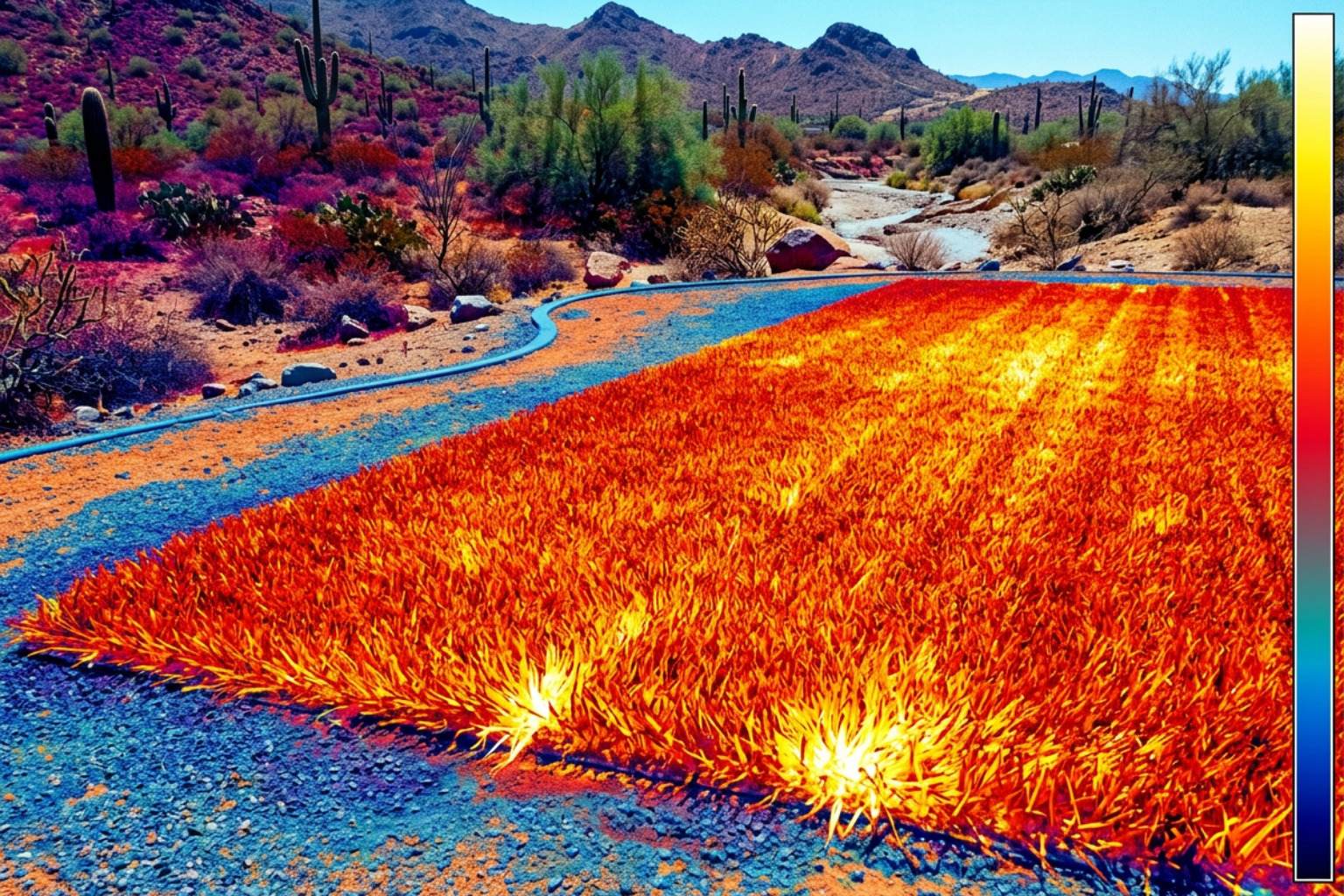
The most notable physical drawback of synthetic turf is heat retention. Because synthetic fibers are made of polymers like polyethylene, they absorb solar radiation.
On a 100°F day, the surface temperature of standard artificial grass can rise 20°F to 50°F higher than natural grass, occasionally reaching temperatures comparable to asphalt pavement. Under direct, intense desert sunlight, unmitigated turf can reach temperatures up to 200°F, posing a burn risk to bare skin and pet paws.
The best turf for Arizona heat usually combines UV-stabilized polyethylene fibers, a realistic medium pile height, light or tan thatch tones, permeable backing, and a cooling infill that does not trap excessive heat. Shade planning matters just as much as product selection, especially near patios, pool decks, and pet areas where bare feet and paws are most exposed.
To address this challenge, modern manufacturing has introduced heat-mitigating technologies. Advanced products feature IR-reflective fibers and specialized blade shapes that dissipate heat more efficiently.
Additionally, using an evaporative cooling infill, such as Zeolite or acrylic-coated sand, helps lower surface temperatures. These infills absorb moisture from night dew or a brief morning hose rinse and slowly release it through evaporation during the heat of the day, lowering the surface temperature by up to 30 degrees.
Long-Term Maintenance Requirements for Desert Lawns
The phrase “maintenance-free” is a common misconception when it comes to synthetic turf. While it eliminates mowing, weeding, and fertilizing, it still requires basic care to maximize its 15-to-25-year lifespan.
Dust, pollen, and organic debris will accumulate on the surface. Homeowners should periodically use a leaf blower or a stiff-bristled broom to clear debris and prevent weed seeds from taking root in the infill.
In high-traffic zones, the synthetic fibers can eventually mat down. Occasional brushing with a power broom is recommended to pull the blades back into an upright position.
For pet owners, regular maintenance is essential to prevent odors. Urine must be rinsed through the turf backing regularly, and pet waste should be removed promptly, followed by an occasional application of an enzyme-based turf cleaner. To learn more about keeping synthetic lawns fresh, refer to our detailed resource on artificial grass maintenance.
Health, Safety, and Environmental Impact
Deciding between synthetic turf and natural grass involves weighing distinct environmental and health trade-offs. Both options have unique impacts on local ecosystems and family safety.
Water Conservation and Environmental Footprint: Artificial Turf vs Real Grass
In the Southwest, water conservation is a critical priority. Replacing high-water-use natural lawns with synthetic turf directly reduces municipal water demand, helping conserve precious Colorado River water resources. Synthetic turf also eliminates the need for chemical fertilizers and chemical pesticides, preventing toxic runoff from entering local waterways and groundwater tables.
However, synthetic turf has its own environmental footprint. It is a petroleum-based product that does not offer the carbon-sequestration or air-purifying benefits of living plants.
Furthermore, synthetic turf is a known source of microplastics. As the plastic blades wear down over a decade of heavy use, tiny plastic fragments can enter the surrounding soil and air. In contrast, natural grass supports local biodiversity, provides a habitat for beneficial soil organisms, and naturally cools the surrounding microclimate through evapotranspiration.
Safety Considerations for Children, Pets, and Athletes
When evaluating safety, the choice of infill and turf quality is paramount. Older synthetic turf systems often relied on crumb rubber infill made from recycled tires, which raised concerns regarding chemical exposure and high surface heat. Modern residential installations avoid crumb rubber entirely, opting instead for rounded silica sand or antimicrobial, acrylic-coated infills.
From a physical safety perspective, high-quality synthetic turf systems installed over specialized shock-absorbing pads offer excellent impact protection, making them popular for playgrounds and backyard play areas. However, for high-intensity sports, traction remains a consideration.
For residential use, choosing a certified lead-free, PFAS-free turf with a professional installation ensures a safe environment for children and pets. Homeowners can find more details in our local guide to professional turf installation.
Frequently Asked Questions About Turf and Grass
Does artificial turf get too hot for dogs and children in Lake Havasu?
Yes, synthetic turf can become exceptionally hot under direct summer sunlight in the Lake Havasu area. To keep the yard safe for children and pets during peak summer afternoon hours, homeowners should utilize shade structures, plant desert trees to block direct sunlight, or install a simple cooling system that allows for a quick hose rinse. Rinsing the turf with water drops the surface temperature by 30 to 40 degrees instantly through evaporative cooling.
How long does synthetic turf last compared to a natural lawn in Arizona?
A high-quality, correctly installed synthetic lawn typically lasts between 15 and 25 years in Arizona, depending on foot traffic, UV exposure, and maintenance. While the intense desert sun will eventually degrade any plastic polymer, modern turf products are manufactured with advanced UV inhibitors to prevent premature fading and fiber breakdown. A natural lawn can technically last indefinitely, but in our harsh climate, it often requires partial or complete re-sodding every 5 to 10 years due to heat stress, soil compaction, and water quality issues.
Will local HOAs in Arizona allow the installation of synthetic grass?
Most Homeowners Associations (HOAs) in Lake Havasu City and surrounding areas now permit synthetic turf, as water conservation has become a regional priority. However, HOAs usually enforce strict aesthetic guidelines regarding pile height, blade color, and professional installation quality to ensure the turf looks realistic and matches the neighborhood’s curb appeal. Always submit a detailed landscape plan to your HOA board for approval before starting any installation.
What warranty should artificial turf include?
Strong synthetic turf warranty info should cover the turf fibers, backing, UV stability, and manufacturer defects. Many quality residential products offer 10-to-15-year manufacturer warranties, but homeowners should also ask what the installer covers separately, including seams, edges, drainage, base compaction, and workmanship. In Arizona, UV protection and heat-related fading language are especially important because intense sun exposure is one of the biggest long-term stressors on artificial grass.
Conclusion
Choosing between artificial turf vs real grass ultimately comes down to finding the right balance for your lifestyle, budget, and property goals. For homeowners seeking a vibrant, year-round green space that eliminates weekend maintenance and drastically reduces water bills, synthetic turf is an incredibly practical investment for desert living. For those who prioritize the natural cooling feel of live grass and enjoy the process of gardening, natural turf remains a classic choice.
For most Arizona homeowners focused on reducing maintenance and water use, professionally installed synthetic turf provides the strongest long-term value, while natural grass remains the better choice for those who prioritize cooler surfaces and living landscapes.
Whichever direction you choose, success in our challenging desert climate requires careful planning, deep soil preparation, and experienced installation. For homeowners in Lake Havasu City, Golden Shores, and Parker, AZ, partnering with a licensed, experienced contractor who understands caliche, local drainage patterns, and heat-resilient materials is the key to creating a durable, beautiful outdoor space.
If you are ready to transform your yard into a low-maintenance desert oasis, explore our A-Z Guide to Artificial Grass Installation Lake Havasu or contact River Palm Landscaping today to discuss your next outdoor project.