Why Finding the Right Landscape Contractor Near Me Matters in the Arizona Climate
If you’ve noticed your concrete patio cracking, water pooling after monsoon storms, or plants struggling in Arizona’s heat, you’re probably searching for a landscape contractor near me who understands the unique challenges of building and maintaining outdoor spaces in the Mojave Desert.
The best landscape contractor near me should be able to connect those problems to practical design decisions. Many landscaping methods that work in cooler or less arid climates often perform poorly in the Mojave environment, so hiring experience matters as much as the design itself.
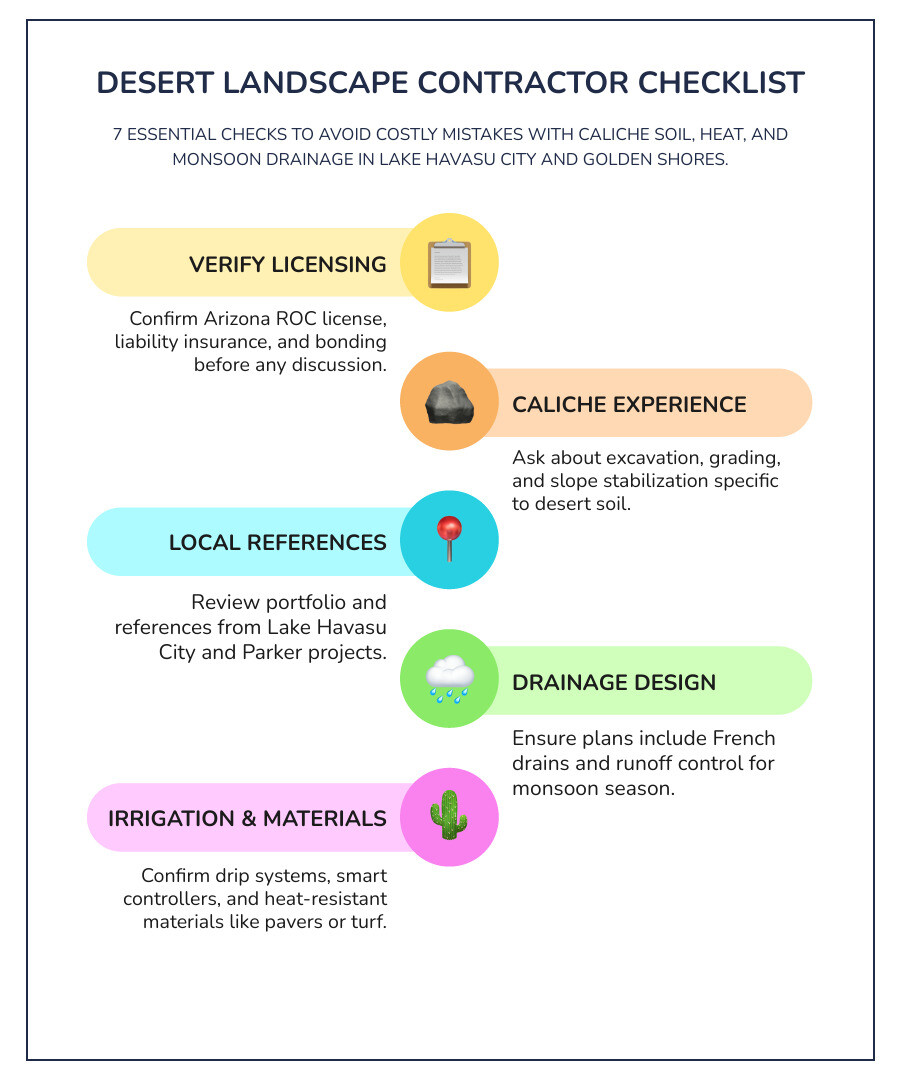
Before requesting estimates, every homeowner should verify these seven qualifications:
- Arizona ROC licensing and insurance before any other conversation
- Caliche excavation and grading experience — this is one of the most important qualifications to verify in western Arizona
- Local references and portfolio work from Lake Havasu City or Parker, AZ projects
- Monsoon drainage planning — not just aesthetics
- Material recommendations — pavers, decomposed granite, and artificial turf all perform differently under extreme heat
- Irrigation efficiency — drip systems, smart controllers, and WaterSense-labeled products can support more water-conscious outdoor spaces
- A clear project timeline that accounts for summer heat delays and seasonal planting windows
The sections below walk through each of these points in detail, so you can hire with confidence and avoid the costly mistakes that come from choosing the wrong contractor.
What Should You Expect From a Landscape Contractor Near Me?
When you search for a landscape contractor near me, you are usually not looking for a vocabulary lesson on landscaping versus hardscaping. You are trying to determine whether a contractor can plan the entire outdoor space correctly—from grading and drainage to plants, pavers, irrigation, lighting, and long-term maintenance needs.
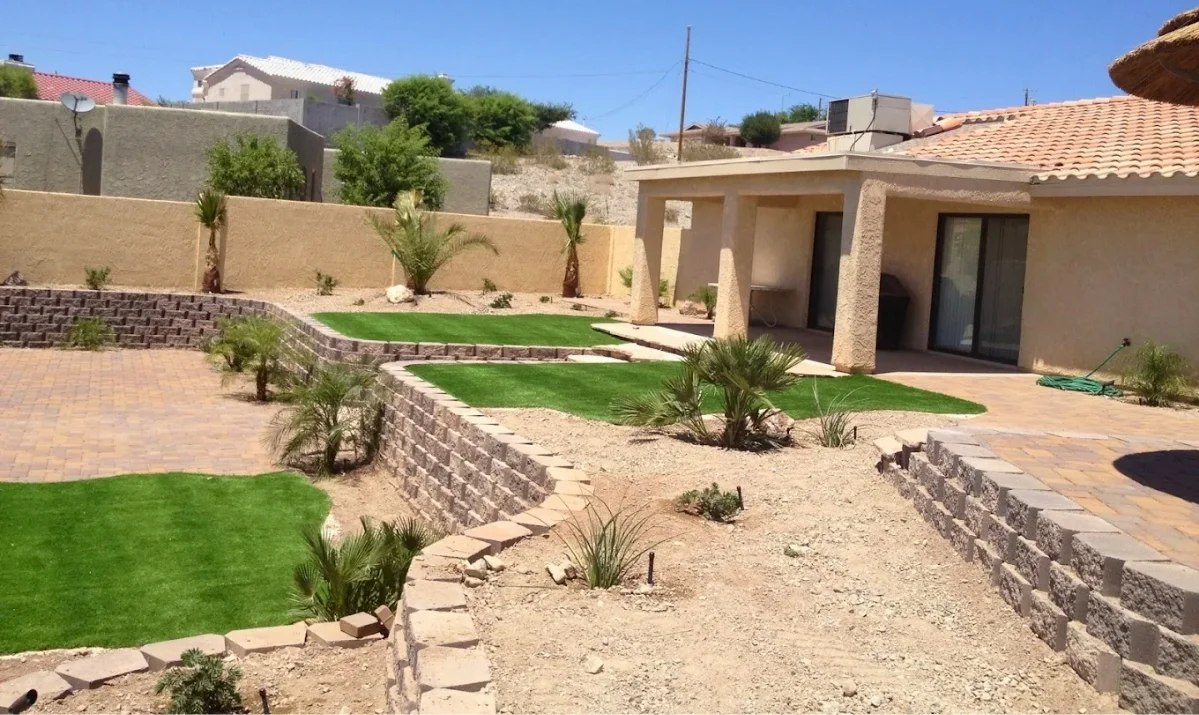
A full-service contractor should understand how landscaping and hardscaping work together. In the harsh climate of western Arizona, plants, rock, turf, patios, retaining walls, and walkways cannot be treated as separate upgrades. If your outdoor space is poorly planned, the hardscape can radiate heat back into your home, the planting areas can struggle, and drainage problems can shorten the life of the whole project.
That is why experienced contractors balance living landscape elements with engineered hardscape. Well-designed landscapes for our region reduce water use and simplify upkeep, but they still require careful material selection, shade orientation, irrigation planning, and drainage design. The goal is not just to make the yard look finished; it is to create an outdoor space that performs in triple-digit heat.
| What the Contractor Should Plan | Landscaping / Softscape Role | Hardscaping Role |
|---|---|---|
| Curb appeal and layout | Heat-tolerant plants, decorative rock, organic mulch, and accent trees soften the design | Pavers, borders, walkways, and walls define usable areas and structure |
| Heat management | Plants and shade can reduce reflected heat around patios and entries | Lighter pavers, proper orientation, and material choices help avoid heat sinks |
| Water efficiency | Drip irrigation delivers water directly to plant root zones | Proper grading and drainage keep runoff moving away from structures |
| Erosion control | Ground cover, rock, and planting zones help stabilize exposed soil | Retaining walls, edging, and stone borders manage slopes and grade changes |
| Long-term durability | Plant selection must account for caliche soil, root-zone heat, and maintenance needs | Materials must withstand UV exposure, thermal expansion, and monsoon runoff |
A qualified landscape contractor should be able to explain how these systems work together rather than recommending landscaping or hardscaping as separate projects. A contractor should also explain why certain recommendations are being made—not simply tell you what products to install. That is one reason homeowners comparing concrete landscape contractors near me should also ask how patios, retaining walls, drainage, and planting areas will function as one system.
What Services Does a Local Landscape Contractor Offer?
A qualified contractor in the Lake Havasu region does far more than simple yard maintenance. Because our local earth is often as hard as concrete, an experienced team must understand excavation, grading, irrigation, and structural masonry.
When you look for a residential landscape contractor near me, comprehensive residential landscaping services should include recommendations that show how each part of the project affects long-term performance:
- Artificial Turf Installation: Proper base preparation and drainage determine long-term performance in extreme heat.
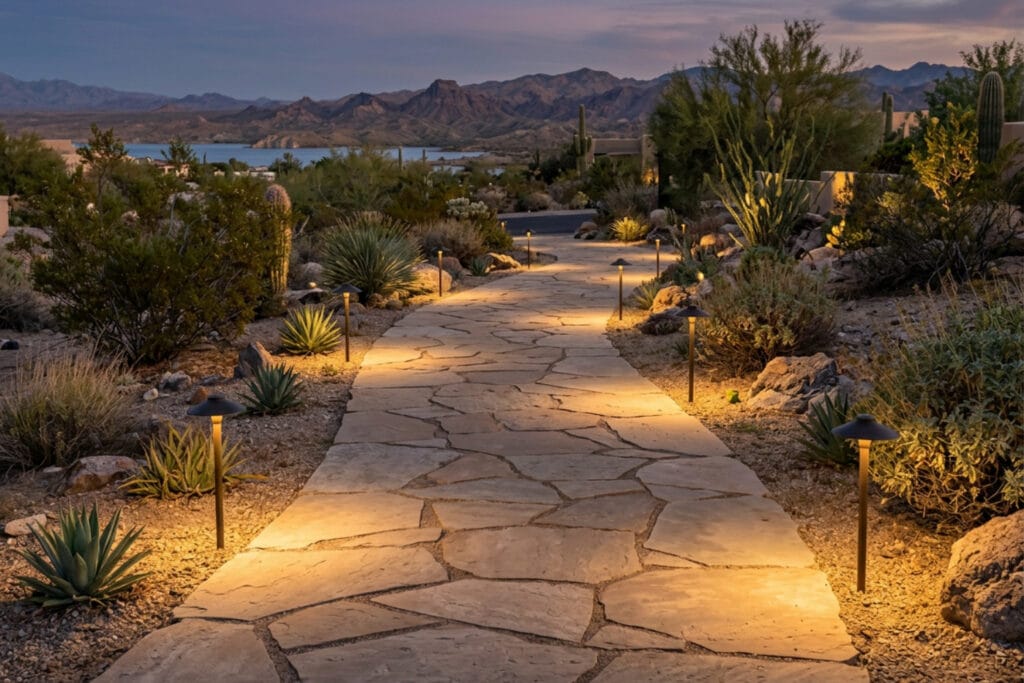
- Low-Voltage Landscape Lighting: Weather-resistant LED systems improve visibility, safety, and nighttime curb appeal without excessive energy use.
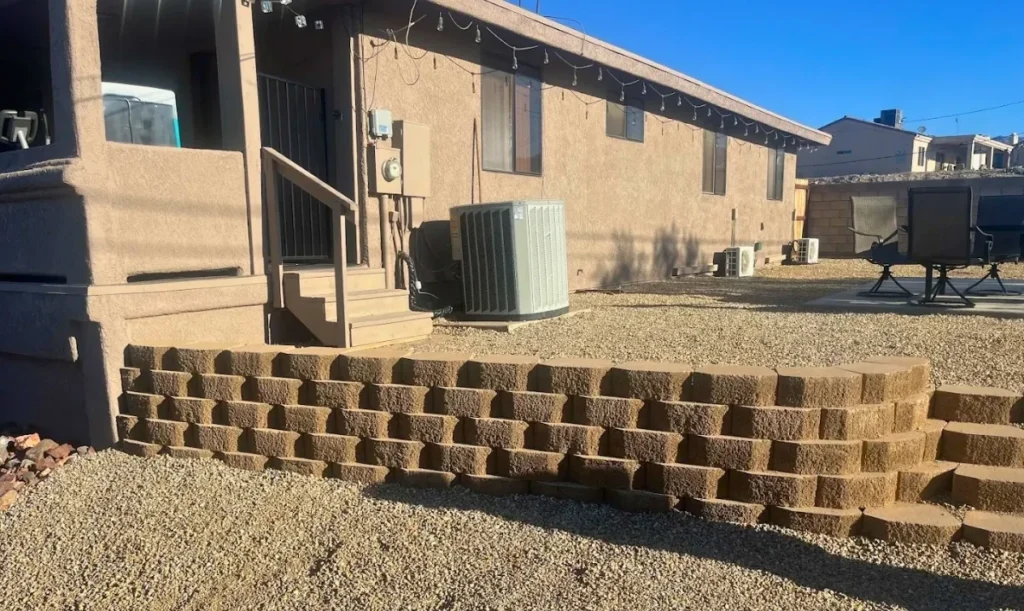
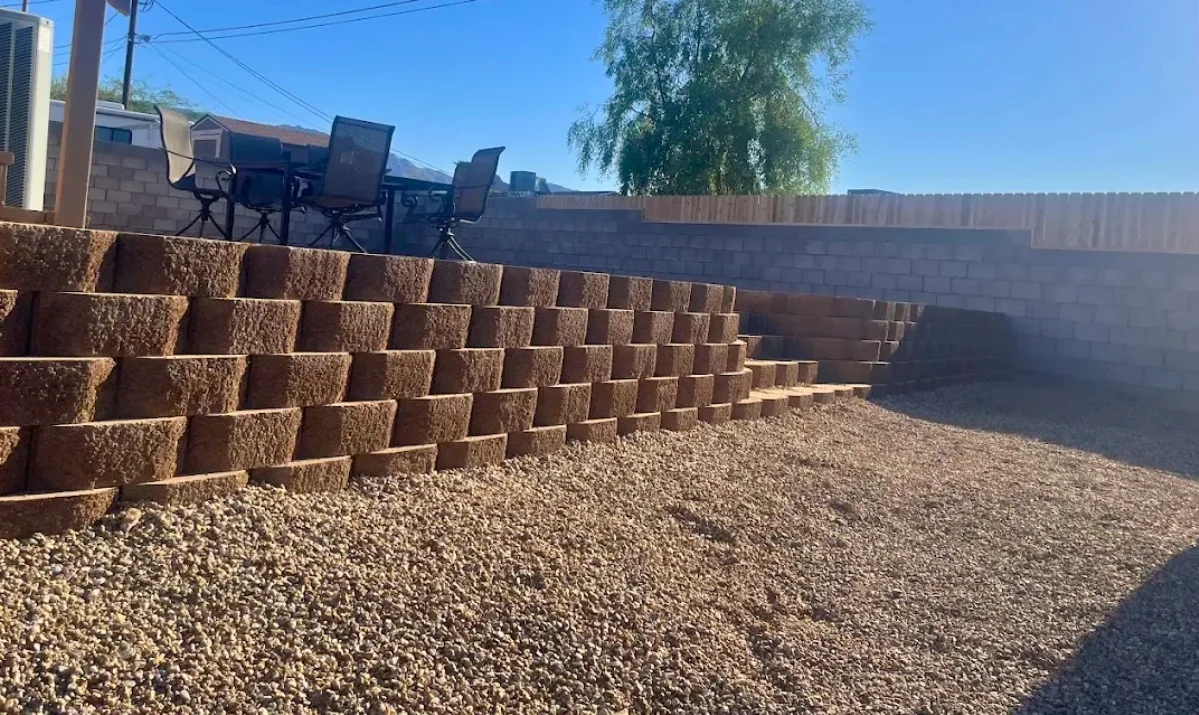
- Retaining Walls and Block Work: Proper engineering prevents erosion, manages slope changes, and reduces the risk of structural failure.
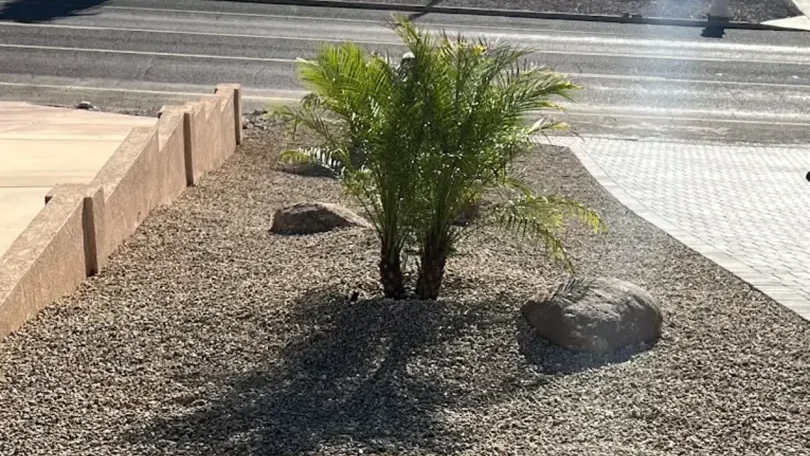
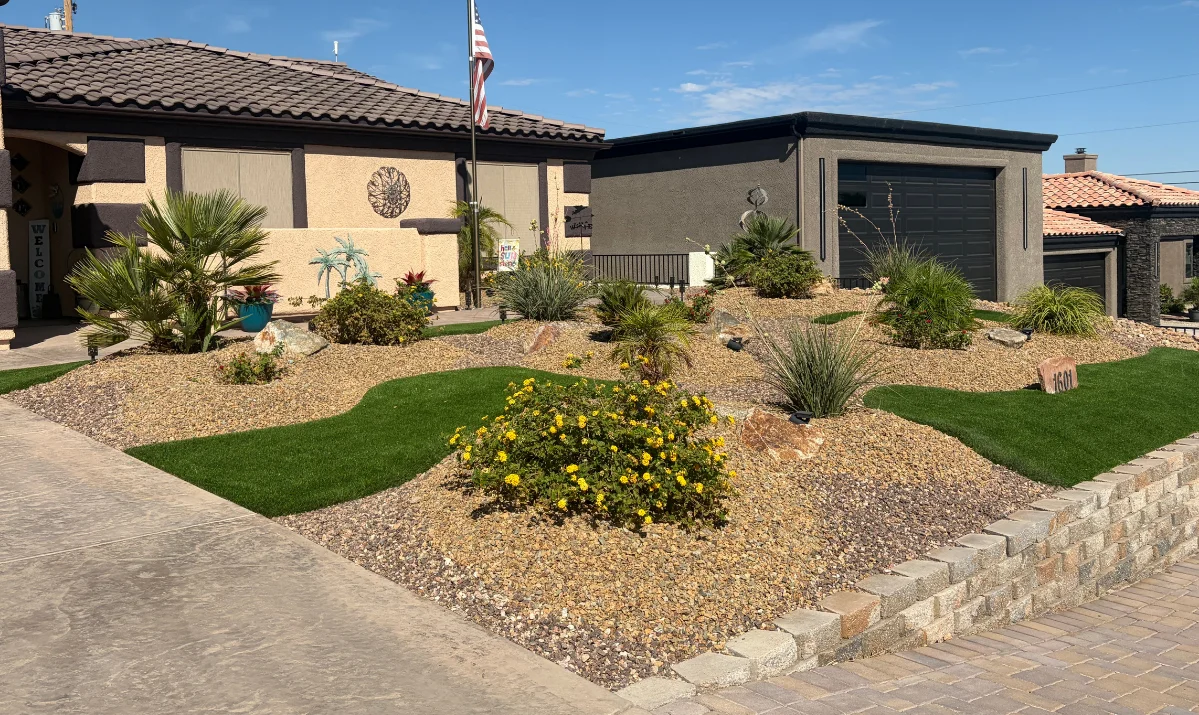
- Rock and Plant Installation: Heat-tolerant plants, decorative gravel, and boulders should be selected for sun exposure, drainage, and long-term maintenance needs.
- Tropical-Inspired Accents: Palm species and deeper watering zones can create a resort feel when they are planned around local water and heat conditions.
For business owners, commercial landscaping services focus heavily on durability, liability reduction, and clean, consistent curb appeal. If you are comparing professional landscaping services near me or broader professional landscape services near me, look for a team that starts with detailed custom landscape design mapping out grading, irrigation zones, and material selections before a single shovel touches the dirt.
How to Choose a Reputable Local Landscape Contractor
Homeowners looking to upgrade their yards often make the mistake of hiring unlicensed operators, only to find their newly laid patios shifting and cracking after the first heavy rain. In Arizona, the extreme climate and challenging soil conditions leave zero margin for error. If a landscaping contractor does not understand local building codes and soil mechanics in our region, your investment can wash away during the summer monsoon season.
When evaluating local landscape contractors in Lake Havasu City, Golden Shores, or Parker, AZ, look past basic search results. A reputable contractor should have a solid standing with the Better Business Bureau (BBB), carry active liability insurance, and hold the proper state-level licensing. To understand the local landscape market, it helps to read up on evaluating Arizona desert landscaping expertise to ensure you are asking the right questions from day one. Additionally, prioritizing proximity by hiring the closest landscaping company ensures the team is highly familiar with your specific neighborhood’s soil profile and wind patterns.
Local experience should also show up in the way a contractor talks through your property. A steep lake-view lot overlooking Lake Havasu may need retaining walls, drainage routes, and paver choices that perform differently than a flatter in-town yard. An RV side yard in Golden Shores may require durable access surfaces, careful grading, and rock placement that can handle vehicle movement without creating runoff problems.
How Do I Verify a Local Landscape Contractor Has the Right Credentials?
Verifying credentials is the most critical step in protecting your property. In Arizona, any commercial or residential contracting work exceeding $1,000 in value requires a license issued by the state. This is especially important when homeowners search for licensed landscape contractors near me, because licensing should be verified through the Arizona Registrar of Contractors rather than assumed from advertising.
To ensure your project is in safe hands, follow this verification checklist:
- Check the ROC License: Visit the Arizona Registrar of Contractors database and search for the company’s name. Verify that the license is active, in good standing, and covers the specific class of work required for your project. This matters because retaining walls, grading, irrigation, pavers, and other landscape improvements may involve different scopes of work, and the wrong license can leave you with less protection if something fails.
- Confirm Bonding and Insurance: Ask for current proof of bonding and general liability insurance before signing a contract. These protections help shield you from financial risk if property damage occurs during excavation, material delivery, irrigation installation, or hardscape construction.
- Verify Worker’s Compensation: Landscaping in western Arizona is physically demanding work that can involve trenching, heavy stone, equipment, and extreme heat. Confirming worker’s compensation coverage helps ensure you are not exposed to liability if a crew member is injured on your property.
- Request Relevant Local References: Ask for references from projects completed within the last two years that are similar in size and scope to yours. A contractor who recently completed retaining walls, paver patios, artificial turf installations, or full landscape design projects in Lake Havasu is more likely to understand current materials, permitting expectations, caliche soil, and local drainage conditions.
- Review Comparable Portfolio Work: Do not just ask whether the contractor has photos. Look for projects that resemble your yard’s slope, sun exposure, access limitations, and desired materials. Similar completed work gives you better evidence that the contractor can solve the same problems your property presents.
- Ask How They Handle Unexpected Site Conditions: Caliche layers, buried utilities, drainage conflicts, and access constraints can change a project quickly. A qualified contractor should be able to explain how they identify issues, communicate changes, and document revised costs before work continues.
Because caliche can restrict root development, limit water movement, and create drainage problems in Arizona yards, it is worth asking how each contractor evaluates soil before excavation, planting, irrigation, or grading work begins.
If you want to find a landscape contractor you can trust, these checks should come before comparing design ideas, materials, or timelines. The goal is not just to verify that a company exists; it is to understand whether the contractor has recent, relevant experience with the same type of outdoor project you are planning.
7 Tips for Selecting the Right Landscape Contractor Near Me
Choosing a contractor requires looking beyond the lowest bid. To ensure your outdoor space is beautiful, durable, and engineered to last, use these seven practical tips to evaluate your options.
1. Evaluate Experience with Caliche Soil and Grading
If your contractor doesn’t ask about your soil conditions during the first five minutes of your meeting, they are likely unprepared for the reality of western Arizona earth. Caliche—a layer of soil where the particles are cemented together by calcium carbonate—is essentially natural concrete. Digging through it requires specialized heavy machinery, such as jackhammers or excavators equipped with rock teeth.
Proper grading is equally critical. Local downpours can dump inches of rain in a matter of minutes. If your yard isn’t graded correctly, water will pool against your home’s foundation or wash away your decorative rock. When building structural features on slopes, you must work with reliable block wall contractors who know how to engineer drainage weep holes and gravel backfills. This prevents hydrostatic pressure from building up behind the wall and causing structural failure.
Homeowners comparing pool and landscape contractors near me should be especially careful here, because pool-adjacent patios, retaining walls, and drainage routes must be planned around both water movement and soil stability.
2. Check Local Reviews and Verify Past Work
Online reviews offer a window into a contractor’s daily business practices, reliability, and communication style. While a company’s website will always showcase their best work, third-party platforms provide an unbiased look at customer satisfaction.
When researching local options, review multiple sources of customer feedback, including Google Reviews, the Better Business Bureau, and reputable third-party review platforms. Pay attention to how contractors communicate, resolve problems, and perform on projects similar to yours. A contractor with a strong local track record will have a consistent history of positive feedback from your neighbors.
Reviewing completed projects also helps you compare landscape contractors in my area based on work that actually reflects Lake Havasu’s climate, soil, and neighborhood conditions.
3. Ask the Right Questions During Your Initial Consultation
The initial consultation is your opportunity to interview the contractor and assess their professionalism. Do not hesitate to ask detailed questions about their operations, material sourcing, and labor policies.
Consider asking these essential questions:
- Do you use your own crew, or do you subcontract the hardscaping and irrigation work?
- What kind of warranty do you offer on labor and plant survival?
- Where do you source your plants and decorative rock? (Sourcing from local growers ensures the plants are already acclimated to our extreme heat).
- How do you handle unexpected underground obstacles, like massive caliche veins?
For a deeper dive into preparing for this meeting, review our guide on choosing a contractor for a full yard remodel to ensure no detail is overlooked.
4. Compare Project Timelines and Seasonal Considerations
A realistic timeline is crucial for a successful project. In our region, weather plays a massive role in construction scheduling. During the peak of summer, when temperatures routinely exceed 110°F, outdoor labor must slow down to protect worker safety. Furthermore, pouring concrete or laying paver bases in extreme heat requires specialized curing techniques to prevent the material from drying out too quickly and weakening.
Planting seasons also require careful planning. According to the University of Arizona Cooperative Extension publication on planting desert-adapted trees and shrubs, the ideal time to install new trees and shrubs for arid landscapes is in the fall or early spring. This gives root systems time to establish before the blistering summer heat arrives. Make sure your contractor provides a clear schedule that respects these seasonal realities.
5. Understand What Drives Landscaping Costs
Project costs vary depending on excavation requirements, grading, drainage work, hardscape materials, irrigation, site access, and overall project complexity. A simple rock refresh or small artificial turf installation is very different from a full landscape design that includes retaining walls, paver patios, lighting, and caliche excavation.
Instead of looking at landscaping costs as a simple expense, view them as a long-term investment in your home’s usability and curb appeal. Established contractors often receive contractor pricing and coordinate deliveries directly, which can simplify scheduling and reduce material delays. Ask every contractor exactly what is—and is not—included in the proposal. Excavation, irrigation modifications, drainage improvements, demolition, haul-away, permits, and material delivery can all affect the final cost. A detailed written estimate should clearly separate labor, materials, excavation, drainage work, irrigation, permits, and optional upgrades so you know exactly what you’re comparing. Warranty coverage should also be compared alongside pricing, since workmanship guarantees vary significantly between contractors. When comparing bids, ask how each contractor handles material sourcing, access constraints, delivery timing, jobsite coordination, and warranty terms so you can evaluate more than the bottom-line price.
6. Ensure Expertise in Irrigation Efficiency and Monsoon Drainage
Water is our most precious resource in this arid climate, and wasting it through an inefficient irrigation system is both environmentally irresponsible and expensive. A professional contractor must design a highly targeted drip irrigation system that delivers water directly to the root zones of your plants, minimizing evaporation.
In addition to watering your plants, your contractor must plan for the moments when the sky opens up. Monsoon storms bring heavy downpours that can quickly overwhelm flat yards. Implementing runoff control measures, such as gravel swales, French drains, and strategic yard grading, ensures that stormwater is directed safely away from your home’s foundation and out toward the street drainage system.
For example, a Parker property near a wash may need different drainage planning than a lake-view yard with a steep slope or an RV side yard where runoff crosses a long gravel access path. A local contractor should be able to explain how those site conditions change the grading, irrigation zones, and material recommendations.
7. Assess Material Longevity and Thermal Mass
The materials you choose for your yard must be tough enough to survive decades of intense UV exposure and thermal expansion. For example, while poured concrete is a common choice for patios, the extreme temperature swings in our region often cause it to crack over time. Interlocking concrete pavers, on the other hand, are highly resistant to cracking because they can flex individually as the ground shifts and expands.
Additionally, pay close attention to thermal mass. Darker stones and concrete absorb significant heat during the day and radiate it back long after the sun goes down. A skilled landscape contractor will guide you toward lighter-colored, heat-reflective pavers and natural stone when those materials fit your property’s layout, budget, and design goals. To learn more about selecting materials that stand up to local conditions, check out our guide on choosing durable materials for Arizona desert landscapes.
Frequently Asked Questions About Hiring a Landscape Contractor
How can I find landscapers near me without choosing the wrong contractor?
To find landscapers near me responsibly, start by checking ROC licensing, insurance, local references, and examples of recent landscaping projects in the Lake Havasu area. If you are trying to find local landscapers, compare how each contractor explains grading, irrigation, plant selection, and material durability for your specific property—not just how their finished projects look online.
How do I compare multiple landscape contractors near me?
When comparing multiple landscape contractors near me, use the same criteria for each bid so you are judging more than price. Verify licensing and insurance first, then compare how each contractor addresses drainage, warranties, references, material recommendations, and communication. A qualified contractor should explain why certain pavers, rock, turf, irrigation, or plant choices make sense for your property, how monsoon runoff will be managed, what warranty terms apply, and who will be responsible for updates if the scope changes. This makes it easier to identify the contractor who understands both your design goals and the practical conditions of western Arizona.
Are the best landscape contractors near me always the lowest-priced option?
Not usually. The best landscape contractors near me are typically the ones who provide clear scope details, explain why certain materials are recommended, and show experience with projects similar to yours. A low bid can become expensive if it overlooks drainage, soil preparation, or long-term maintenance.
Should I hire landscape experts near me or a general yard maintenance company?
If your project involves grading, irrigation, retaining walls, pavers, drainage, artificial turf, or a full redesign, searching for landscape experts near me is usually more appropriate than hiring a basic maintenance provider. Larger installation projects require planning, equipment, material knowledge, and experience with local conditions.
What is the difference between landscaping and hardscaping in arid climates?
Landscaping (or softscaping) refers to the living, organic elements of your yard, such as heat-tolerant plants, trees, and decorative ground cover. Hardscaping refers to the non-living, built structures, including paver patios, retaining walls, block barriers, and gravel pathways. In western Arizona, a local landscape contractor should explain how both systems work together to conserve water, manage drainage, and improve usability.
How long does a typical landscaping project take in western Arizona?
A standard residential landscaping project can take anywhere from a few days to several weeks. A simple rock refresh or artificial turf installation might be completed in two to three days, whereas a full-yard remodel involving caliche excavation, retaining walls, and custom outdoor lighting typically requires two to four weeks of active on-site construction.
How much does professional landscaping or hardscaping usually cost?
Pricing depends on your project’s scope, the materials selected, and the physical condition of your property. Excavation, grading, drainage improvements, retaining walls, irrigation, artificial turf, and premium pavers can all affect the final investment. A qualified contractor should explain which factors are driving the estimate so you can compare bids more accurately.
Conclusion
Choosing the right landscape contractor near me is about more than improving curb appeal—it is about protecting your home, maximizing long-term value, and ensuring every element of the landscape performs well in Arizona’s climate. By the time you’ve compared licensing, experience, drainage knowledge, and project quality, you’ll have a much clearer picture of which contractor is best equipped for your property.
That’s where local experience makes a measurable difference. Since 2003, River Palm Landscaping has worked with homeowners and light commercial properties in Lake Havasu City, Golden Shores, and Parker, AZ, designing outdoor spaces around heat, drainage, rocky soil, irrigation needs, and long-term durability.
If you’re trying to find a landscape contractor who understands Arizona’s unique conditions, look beyond price and choose a qualified contractor that can explain the reasoning behind its grading, irrigation, plant, and material recommendations. To see how local expertise applies to real projects, explore River Palm Landscaping’s work as desert landscape contractors in Lake Havasu City, learn more about landscape design in Lake Havasu, or schedule a consultation with River Palm Landscaping when you are ready to discuss your property.