Why Hiring the Right Concrete Paver Contractors Makes All the Difference
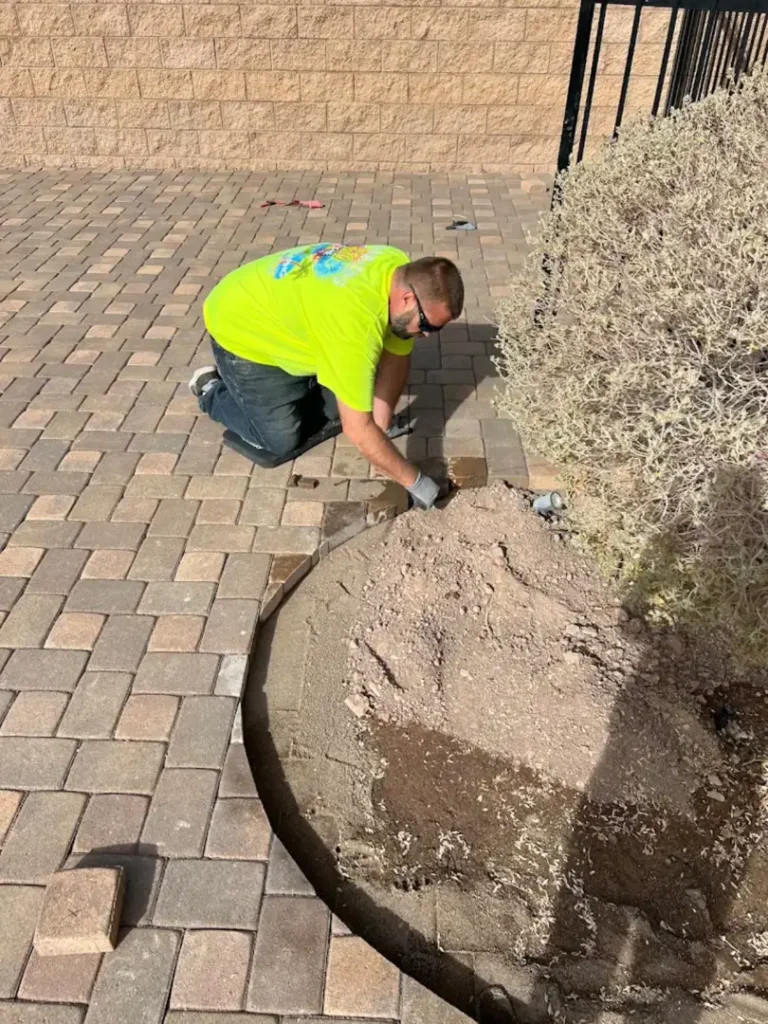
Concrete paver contractors are specialists who design, prepare, and install interlocking paver systems for driveways, patios, walkways, and pool decks — and in a place like Lake Havasu City, AZ, choosing the right one matters more than most homeowners realize.
Here’s what to look for when hiring one:
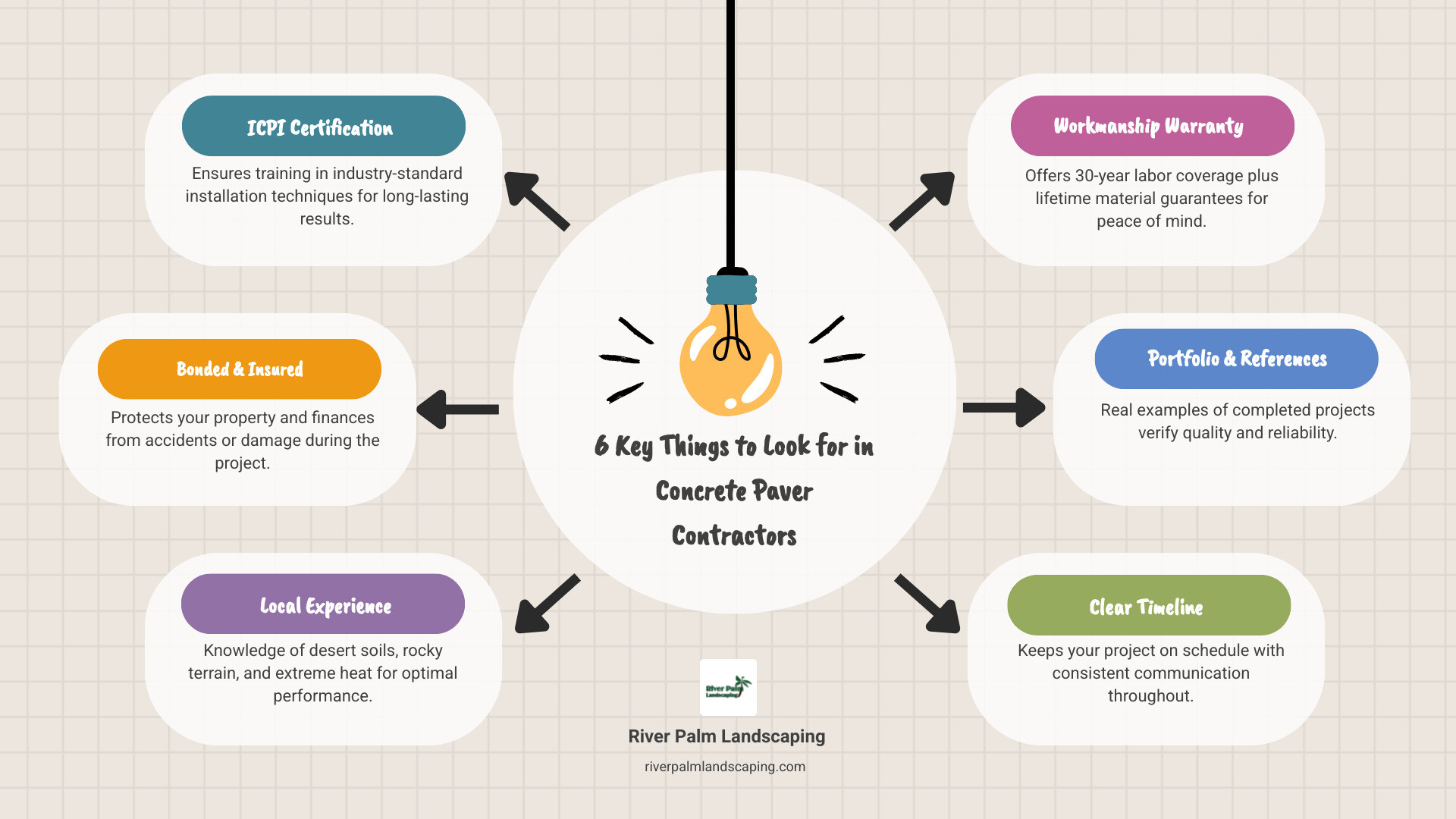
| What to Check | Why It Matters |
|---|---|
| ICPI certification | Proves the contractor is trained in proper installation standards |
| Bonded and insured | Protects you if something goes wrong on your property |
| Local experience | Desert soils, rocky ground, and extreme heat require specific know-how |
| Workmanship warranty | Reputable contractors typically offer workmanship warranties, along with manufacturer-backed material warranties on the pavers themselves |
| Portfolio and references | Verified past work shows real results, not just promises |
| Clear project timeline | Reliable contractors commit to schedules and communicate throughout |
Finding a qualified contractor isn’t just about the best price. It’s about avoiding costly mistakes — like poor drainage, improper base preparation, or materials that fail under vehicular loads and summer heat that regularly pushes past 115°F in the Havasu valley.
Concrete pavers themselves are built tough. They test at 8,000 psi — roughly four times stronger than poured concrete — and their interlocking design handles ground movement without cracking. Installed correctly, they can last 50 years or more with only basic upkeep.
But “installed correctly” is the key phrase. The base preparation, grading, compaction, and drainage all have to be done right from the start. That’s what separates a paver project that holds up for decades from one that shifts, sinks, or floods after the first monsoon season.
This guide walks you through everything you need to know — from what makes a qualified contractor to how the installation process actually works in desert conditions.
Understanding Concrete Pavers vs. Traditional Surfaces
When homeowners in Lake Havasu and Golden Shores consider a new driveway or patio, the choice usually comes down to three materials: pavers, poured concrete, or asphalt. To the untrained eye, they might all seem like “hard ground,” but the engineering behind them is vastly different.
Concrete pavers are individual units manufactured in a controlled environment to achieve incredible density. While standard poured concrete usually sits around 2,500 to 3,000 psi, paving stones are roughly four times stronger, reaching 8,000 psi. This makes them exceptionally resistant to the weight of heavy trucks or motor homes.
| Feature | Concrete Pavers | Poured Concrete | Asphalt |
|---|---|---|---|
| Strength | 8,000+ psi | 2,500 – 3,000 psi | Flexible but low psi |
| Lifespan | 50+ Years | ~25 Years | 15 – 20 Years |
| Crack Resistance | High (Interlocking joints) | Low (Prone to cracking) | Moderate (Softens in heat) |
| Repairability | Easy (Replace one stone) | Difficult (Patching/Demo) | Moderate (Resurfacing) |
| Maintenance | Low (Occasional sealing) | Moderate (Sealing/Patching) | High (Regular seal coating) |
One of the biggest advantages of Pavers is their ability to handle thermal expansion. In the Arizona desert, materials expand and contract significantly as temperatures swing from 120°F in the afternoon to 70°F at night. Poured concrete is rigid; when it expands, it eventually cracks. Pavers, however, are an “interlocking” system. The sand-filled joints act like tiny shock absorbers, allowing the system to flex without breaking.
The Critical Role of Professional Concrete Paver Contractors in Desert Climates
In Lake Havasu City, the environment is a contractor’s greatest challenge. We aren’t dealing with soft, loamy garden soil; we are dealing with “caliche” (hardened calcium carbonate), a common challenge in Arizona desert soils, rocky terrain, and extreme aridity. Professional concrete paver contractors understand that the stones themselves are only as good as the ground they sit on.
Proper grading and drainage are the most critical steps. Even in a desert, when it rains, it pours. Without a calculated slope—typically a 1/8″ to 1/4″ drop per foot—water can pool against your home’s foundation or under the pavers, causing the base to wash out.

What to Look for in Concrete Paver Contractors
Not all “landscapers” are qualified concrete paver contractors. Paving is a structural trade that requires specific certifications and localized knowledge.
- ICPI Certification: The Interlocking Concrete Pavement Institute (ICPI) is the industry standard for education. A certified installer understands proper base preparation, compaction, and installation standards.
- Bonded and Insured: This is non-negotiable. Ensure they carry liability insurance and workers’ compensation.
- Local References: Ask for projects completed at least three to five years ago. Anyone can make a patio look good on day one; you want to see how it looks after five Havasu summers.
- Workmanship Warranties: Reputable firms often provide a labor warranty (sometimes up to 30 years) in addition to the lifetime manufacturer warranty on the stones themselves.
Avoiding Common Mistakes with Concrete Paver Contractors
One potential red flag to ask about is the type of base material being used. While it sounds eco-friendly, recycled concrete often contains “fines” that prevent proper drainage and can lead to efflorescence—that unsightly white, powdery salt that rises to the surface of the stones.
Other common mistakes include:
- Improper Compaction: If the soil isn’t compacted with a vibrating plate at every stage, the pavers will eventually settle and create a “rollercoaster” effect.
- Edge Restraint Failure: Without a solid border—either a concrete “soldier course” or heavy-duty plastic edging—the pavers will eventually migrate outward, causing the joints to open up.
- Pumping Under Load: This happens when the bedding sand is too thick (more than 1 inch), causing the pavers to shift vertically when driven over.
Step-by-Step: How Experts Install Durable Paver Systems
A long-lasting paver system is like an iceberg: most of the important work is hidden underground. Here is the professional process for a standard desert installation:
- Excavation: For a driveway, contractors may excavate up to 14 inches. This allows room for the base, sand, and the paver itself.
- Geotextile Fabric: This is a professional “secret weapon.” Laying a high-quality fabric between the soil and the base rock prevents the rocks from sinking into the dirt while still allowing water to drain.
- The Base (Class II Baserock): This is the foundation. For pedestrian paths, 4 inches is standard. For heavy vehicles or motor homes, 6 to 8 inches of compacted Class II road base is required.
- Bedding Sand: A 1-inch layer of sharp, angled masonry sand is “screeded” (leveled) over the base. This sand should never be compacted before the pavers are laid; its job is to provide a perfectly flat bed for the stones to “seat” into.
- Laying the Pavers: Stones are hand-laid in the chosen pattern. Professionals use string lines to ensure every row is perfectly straight.
- Compaction and Joint Sand: Once the pavers are down, a plate compactor is run over the top. Then, joint sand (often polymeric sand) is swept into the cracks and compacted again to “lock” the system together.
Selecting the Right Materials: From Standard to Permeable Pavers
Concrete pavers come in a wide variety of styles and finishes, so you can match everything from a clean, modern look to a more traditional stone appearance. In our region, choosing the right type of paver is just as important as the color.
- Interlocking Concrete Pavers: The most common choice. They are durable and are a standard option for driveways and patios.
- Permeable Pavers: These have larger joints filled with small stones rather than sand. They allow rainwater to seep into the ground, which can help manage runoff during monsoon season.
- Porcelain Pavers: These are becoming popular for pool decks. They are skid-resistant and tend to stay cooler underfoot than many darker surfaces.
- Thin Veneer Overlays: If you have an existing concrete patio that is structurally sound but unattractive, more info about paver services often includes overlay options. These are thinner stones designed to be laid over concrete to refresh the look without full demolition.
Maintenance and Longevity of Your Paver Investment
One of the best things about pavers is that they are “low maintenance,” not “no maintenance.”
The most important maintenance task is joint stabilization. Using polymeric sand—a specialized sand that hardens like grout when wet—helping prevent weeds from growing in the cracks and stops ants from making homes under your patio.
Sealing your pavers every 3 to 5 years is also recommended. In the intense Arizona sun, a sealer acts like sunscreen for your hardscape, preventing the colors from fading and protecting the surface from oil spills in the driveway.
If a pipe ever bursts under your driveway, pavers offer a unique benefit: they can be “unzipped.” You can remove only the stones needed to reach the pipe, fix the leak, and then put the exact same stones back. You won’t have a mismatched patch like you would with poured concrete.
Frequently Asked Questions about Concrete Paver Contractors
How much does concrete paver installation typically cost?
Pricing for a professional installation varies based on several factors: the type of stone selected, the condition of the existing site (how much dirt or old concrete needs to be hauled away), and the complexity of the design (curves and borders take longer to cut). Generally, pavers represent a higher initial investment than basic poured concrete, but they offer significantly higher long-term value due to their durability and lack of cracking.
How long do concrete pavers last compared to poured concrete?
While poured concrete typically has a service life of about 25 years before cracking and aesthetics become an issue, a professionally installed paver system can easily last 50 years or more. Many manufacturers even provide a Lifetime Guarantee on the product itself.
Can pavers be installed over an existing concrete patio?
Yes! This is a common practice in Lake Havasu for updating pool decks and patios. “Thin” pavers or veneers can be laid over existing slabs as long as the concrete is not sinking or severely crumbling. However, this is generally not recommended for driveways, as the weight of vehicles requires a flexible gravel base to prevent the pavers from shifting.
Conclusion
Investing in a new outdoor space is about more than just aesthetics; it’s about creating a functional, durable area that stands up to the unique demands of the Arizona desert. Whether you are looking to replace a cracked driveway or build a “tropical-inspired” backyard retreat, the quality of the work starts with the concrete paver contractors you choose.
At River Palm Landscaping, we’ve been serving the Lake Havasu City, Golden Shores, and Parker areas since 2003. We understand the rocky soil, the extreme heat, and the importance of proper drainage. As a licensed local contractor, we specialize in desert-appropriate designs that don’t just look good today but remain solid for decades to come.
Ready to transform your property with a surface that’s four times stronger than concrete? Start your project with River Palm Landscaping today and let’s build something that lasts.