Core Principles of Tropical Landscape Design in Arid Climates
To achieve a successful tropical landscape design in Lake Havasu City, one must look beyond the plants themselves and focus on the underlying principles of arrangement. In a natural rainforest, plants grow in a chaotic yet unified struggle for light. In the desert, we recreate this “jungle” feel through intentional design choices that prioritize unity and asymmetrical balance.
Unity is the most critical element. It ensures that your yard feels like a cohesive retreat rather than a random collection of pots. This is achieved by repeating certain textures or colors throughout the space. For example, using the same type of decorative rock or repeating the sword-like shape of an agave in different areas ties the look together.
Asymmetrical balance is another hallmark of the tropical aesthetic. Unlike formal European gardens that rely on perfect symmetry, a tropical-inspired landscape feels more organic. You might balance a large, multi-trunked Mediterranean fan palm on one side of a path with a dense grouping of mid-sized shrubs and boulders on the other. This creates a “wild” but controlled atmosphere that mimics a natural oasis.
Scale and proportion also play vital roles. In the wide-open vistas of Arizona, small plants can get “lost.” Using larger specimen plants and grouping them in tiers ensures the landscape feels lush and substantial.

For homeowners looking to transform their property, understanding these principles is the first step. You can explore more about our landscape design services and how we apply these concepts to residential landscaping projects in the local area.
Achieving a Desert-Friendly Tropical Look with Layering
Layering is the “secret sauce” of any resort-style backyard. It creates visual depth and the illusion of a dense, private forest. In our climate, we use three distinct levels:
- Canopy Trees: These provide the “ceiling” of your garden. While traditional tropical canopies might be mahogany or teak, we use desert-hardy palms or airy trees like the Desert Willow to provide filtered shade.
- Understory Shrubs: This middle layer fills the eye level. Plants like the Mexican Bird of Paradise offer the bold, feathery foliage and bright blooms associated with the tropics.
- Ground Covers: The lowest layer hides the soil and suppresses weeds. Myoporum or trailing lantana can create a “green carpet” effect that mimics a forest floor.
By contrasting textures—pairing the coarse, thick leaves of an agave with the fine, wispy fronds of a palm—you create a rich visual tapestry that feels much more lush than it actually is.
Balancing Bold Foliage and Unity
A common mistake in tropical landscape design is choosing too many different plant varieties, which leads to visual chaos. To maintain a desert-friendly tropical look, it is better to choose a limited palette of plants and use them in “mass plantings.”
Repeating glossy leaves or vibrant accents like red or orange blooms helps guide the eye through the garden. The goal is to evoke a cohesive theme that feels like a single, immersive environment.
| Feature | Coarse Texture (Bold) | Fine Texture (Soft) |
|---|---|---|
| Plant Example | Foxtail Agave, Sago Palm | Purple Fountain Grass, Acacia |
| Visual Impact | Acts as a focal point; feels “heavy” | Fills gaps; adds movement and “lightness” |
| Design Role | Adds structural strength | Softens hard edges and stone walls |
Selecting Desert-Hardy Plants for a Resort-Style Backyard
The key to a long-lasting tropical-inspired landscape in Lake Havasu is selecting “mimic” plants. These are species that look like they belong in a rainforest but possess the “DNA” of a desert survivor.
- Foxtail Agave (Agave attenuata): Unlike many agaves, this one has smooth, curved leaves and no sharp spines. Its lush, green rosettes look incredibly tropical but handle heat well (though it appreciates some afternoon shade).
- Mexican Bird of Paradise: This is a staple for any resort-style backyard. Its bright yellow and orange flowers and fern-like foliage scream “tropics,” yet it is incredibly drought-tolerant once established.
- Purple Fountain Grass: This adds the “movement” every tropical garden needs. It sways beautifully in the breeze and provides a deep burgundy color that contrasts with green foliage.
- Baja Fairy Duster: With its red, “powder puff” flowers, this native shrub attracts hummingbirds and adds a splash of exotic color.
- Yellow Oleander: Often used for privacy hedges, it offers glossy leaves and trumpet-shaped flowers, though homeowners should be aware it is toxic if ingested.
For covered patios, container plants like bromeliads or other tropical accent plants can sometimes be used in shaded areas.
Using Palms and Accents in Tropical Landscape Design
No tropical landscape design is complete without palms. In Lake Havasu and Golden Shores, we focus on varieties that can handle our “alkaline” soil and intense sun.
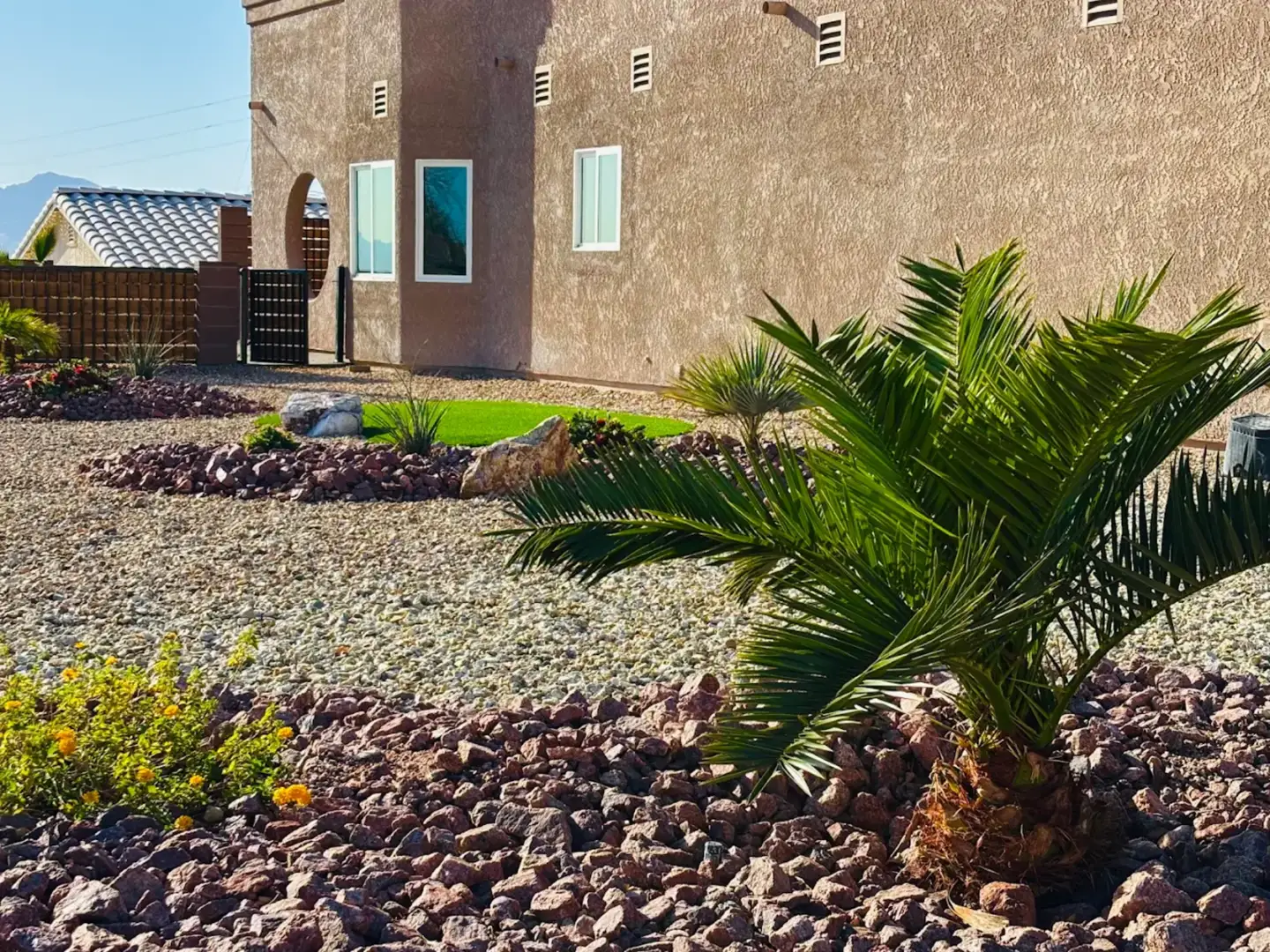
The Pygmy Date Palm is a favorite for small spaces or near entryways. It stays relatively small and has a wonderful, feathery appearance. For a more “architectural” look, the Mediterranean Fan Palm is exceptionally hardy and features blue-green, fan-shaped fronds. These palms serve as vertical interest and natural focal points, drawing the eye upward and breaking up the horizontal lines of a typical desert lot.

Sheltered Microclimates for Sensitive Species
While we prioritize desert-hardy plants, some homeowners want a “touch” of the true tropics. This is where microclimates come in. By planting near a north-facing wall or under the protection of a deep porch, you can successfully grow species like Bird of Paradise or Hibiscus (in protected areas).
These should be treated as selective accent plants. They require protection from our fierce desert winds, which can shred large leaves, and they need extra care during our occasional winter frosts. Providing filtered light is essential, as the direct afternoon sun in Lake Havasu will scorch their foliage. Understanding why tropical landscaping is the perfect choice for your home or business often comes down to how these “statement” plants can transform a standard yard into an exotic escape.
Hardscaping and Water Features for Ambiance
In a tropical-inspired landscape, the “hard” elements are just as important as the “soft” ones. Hardscaping provides the structure that allows the plants to shine.
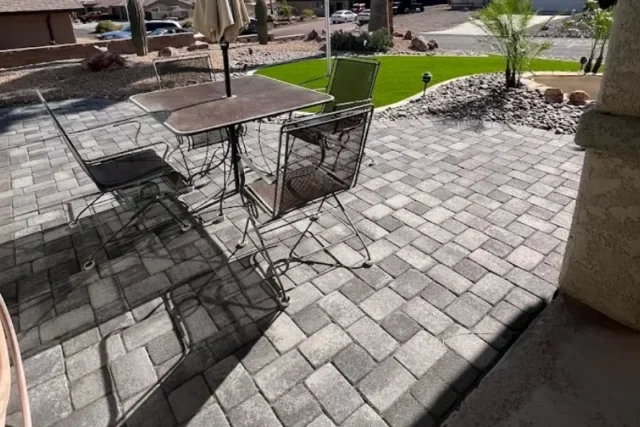
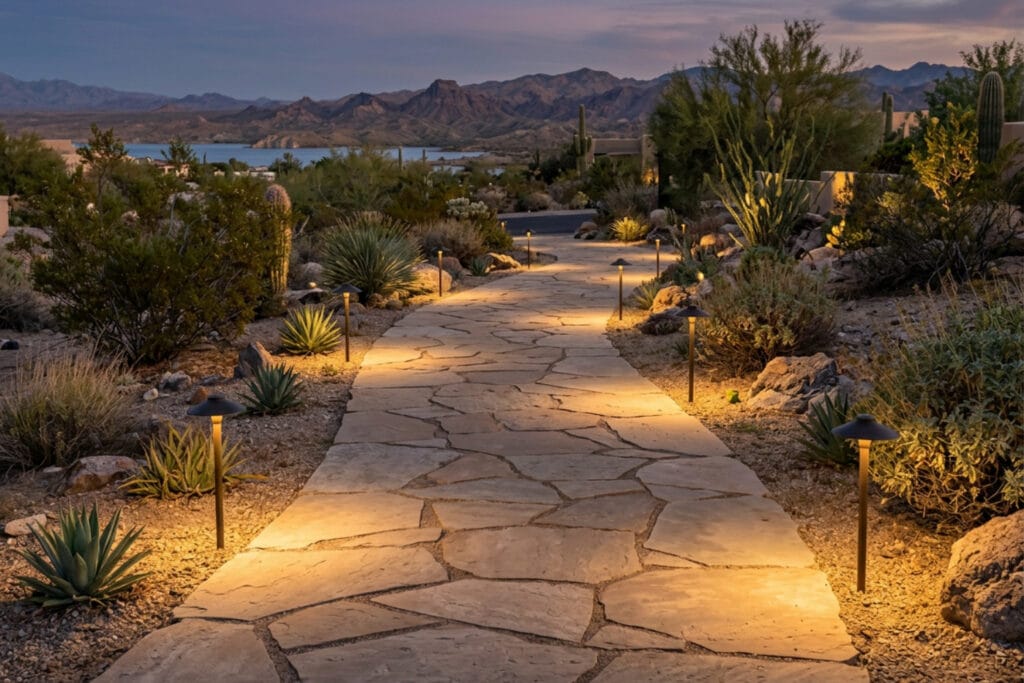
Natural stone, such as flagstone or slate, is a popular choice for patios and paths because it feels more “organic” than standard concrete. Winding pathways made of pavers or decomposed granite encourage a sense of discovery, leading the visitor through different “rooms” of the garden. Bamboo screens can be used selectively to hide equipment or provide a textured backdrop for green plants.
To see how these elements come together, you can view more info about our full range of services, including professional hardscape installation.

Enhancing Tropical Landscape Design with Water and Light
Nothing says “retreat” like the sound of water. In the desert, water features are less about physical cooling (though evaporation does provide a slight, localized effect) and more about perceived comfort and ambiance.
- Rock Waterfalls: A recirculating waterfall built with local boulders fits perfectly into a tropical-inspired landscape. It masks neighborhood noise and creates a serene focal point.
- Modern Fountains: For smaller yards, a simple bubbling urn or a sleek, modern fountain provides that essential water element without a massive footprint.
Lighting is the final touch. Low-voltage landscape lighting can be used to “up-light” the trunks of palms or highlight the texture of a stone wall. This creates night-time drama, allowing you to enjoy your resort-style backyard long after the sun goes down.
Flexible Hardscape Guidelines for Desert Living
Many desert landscapes combine planted areas with patios and pathways, keeping the yard balanced rather than dominated by rock.
In Lake Havasu, we emphasize water-wise landscaping. Using permeable materials for paths allows any rare rainfall to soak into the ground rather than running off. Proper drainage is also essential; even “tropical” looks in the desert need soil that doesn’t hold onto stagnant water, which can lead to root rot in our heat.
Irrigation and Maintenance for a Tropical-Inspired Landscape
To keep a tropical-inspired landscape looking its best in an arid climate, a “set it and forget it” approach won’t work. The goal is to provide enough water to maintain the lush look without wasting a drop.
Drip irrigation is the gold standard for low-water landscape design. It delivers water directly to the root zone, minimizing evaporation. We also utilize hydro-zoning, which means grouping plants with similar water needs together. Your thirsty Bird of Paradise should be on a different irrigation valve than your drought-hardy agaves.
- Organic Mulch: Applying a thick layer of wood chips or bark mulch around the base of “tropical” plants helps retain soil moisture and keeps the roots cool.
- Deep Watering: Instead of frequent, light watering, we recommend deep, infrequent cycles. This encourages roots to grow deep into the soil, making the plants more resilient to extreme heat.
Essential Maintenance for Low-Water Landscape Design
A “lush” look requires regular upkeep. Weed management is vital, as weeds grow surprisingly fast in irrigated desert soil. Pruning schedules should be followed to remove dead palm fronds or spent flower stalks from your Mexican Bird of Paradise.
Maintaining soil health is also important. Our rocky, alkaline soil often lacks the organic matter found in tropical regions. Periodic applications of specialized fertilizers can help keep foliage deep green and vibrant.
Planning Your Project: Costs and Technology
When planning a tropical-inspired landscape, it’s important to view it as an investment. Costs vary significantly based on:
- The size and maturity of the plants (larger palms cost more but provide instant impact).
- The complexity of the irrigation system.
- The choice of hardscape materials (natural stone vs. concrete pavers).
While we don’t offer fixed price estimates, we frame premium materials like natural stone as investments in a premium appearance and curb appeal. These features often make a property stand out in the Lake Havasu market.
We can provide design renderings to help homeowners visualize the finished landscape before installation begins.
Frequently Asked Questions about Desert-Friendly Tropical Looks
Can I have a tropical garden in Lake Havasu’s extreme heat?
Yes, but with a caveat. You cannot grow “true” rainforest plants like Cacao or Mahogany outdoors. However, you can absolutely achieve a tropical-inspired landscape by using desert-hardy plants that mimic that lush, exotic look.
What are the best low-water substitutes for tropical plants?
Foxtail Agave is a great substitute for soft-leaved tropical greens. Mexican Bird of Paradise replaces the need for tender flowering shrubs, and Purple Fountain Grass provides the texture of tropical reeds with much less water.
How do I protect tropical-style plants from desert winds?
The best way is through strategic placement. Use the walls of your home, solid fencing, or “windbreak” plantings of tougher desert trees to create a sheltered area for your more delicate, large-leafed plants.
Conclusion
Creating a tropical-inspired landscape in Lake Havasu City and Golden Shores is about more than just picking pretty plants; it’s about understanding how to balance the lushness of the tropics with the reality of the desert. By focusing on layering, desert-hardy species, and smart irrigation, you can enjoy a resort-style backyard that is both beautiful and durable.
River Palm Landscaping has been a licensed contractor in the Lake Havasu area since 2003. We specialize in building outdoor spaces that are designed for our unique climate—handling the extreme heat and rocky soil with expertise. Whether you are looking for a full installation or a landscape renovation, our team is focused on delivering functional, high-value environments.
Start your tropical-inspired landscape project today and let us help you build a durable outdoor space that brings the vacation home to you.