Why Artificial Grass Maintenance Matters for Your Lawn’s Longevity

Artificial grass maintenance is the regular process of keeping your synthetic turf clean, groomed, and structurally sound so it lasts as long as possible.
Here’s a quick summary of the core tasks:
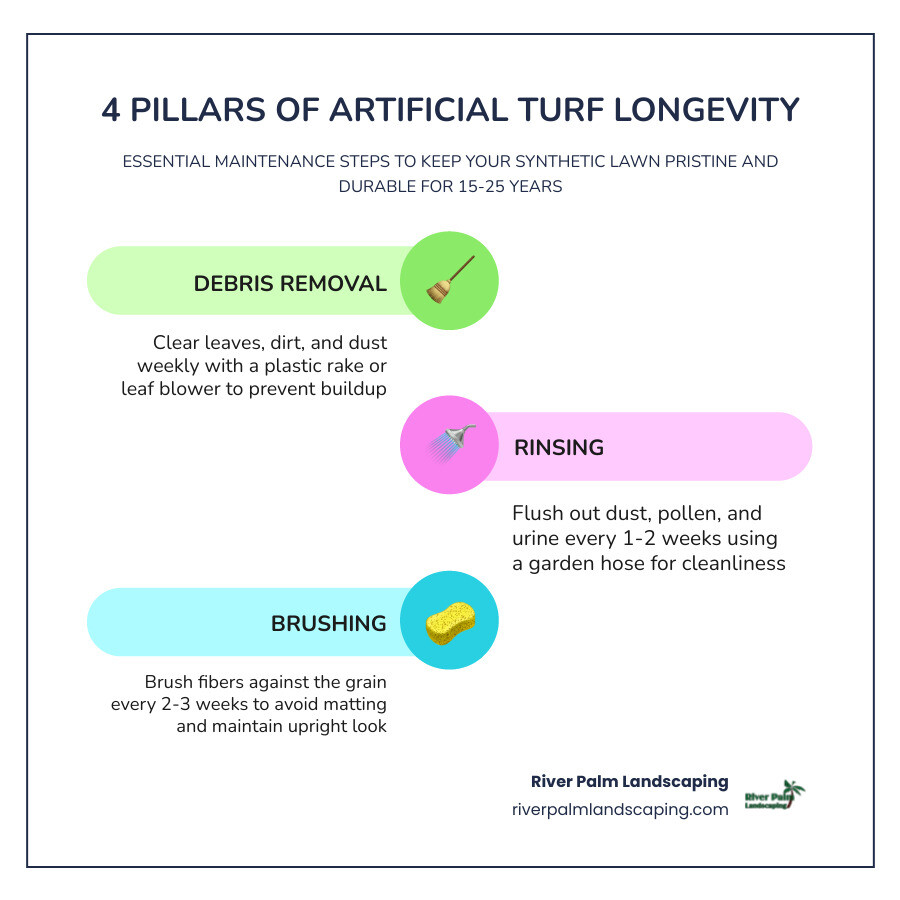
- Remove debris (leaves, dirt, dust) with a plastic rake or leaf blower 1-2 times per week
- Rinse with a garden hose every 1-2 weeks to flush out dust, pollen, and pet urine
- Brush fibers against the grain every 2-3 weeks to prevent matting
- Clean spills immediately with mild dish soap and lukewarm water
- Pick up pet waste daily and apply an enzyme-based deodorizer to affected areas
- Keep an eye on the infill and inspect seasonally for loose seams or drainage issues
Artificial grass is one of the smartest choices for homeowners in Lake Havasu City and Golden Shores, AZ. No mowing. No watering. No fertilizing. In a desert climate where summer temperatures routinely spike and water conservation matters, synthetic turf delivers a green, attractive lawn without the ongoing cost and effort of natural grass.
But here’s what surprises many homeowners: artificial grass is low maintenance — not zero maintenance.
Many artificial turf replacements happen not because the fibers fail, but because routine maintenance was neglected. A little consistent care goes a long way. With the right routine, quality turf can last anywhere from 15 to 25 years.
This guide walks you through everything you need to keep your synthetic lawn looking its best — season by season, mess by mess — right here in the Arizona desert.
The Essentials of Artificial Grass Maintenance
Maintaining your lawn in Lake Havasu City requires a slightly different approach than in other parts of the country. Between the fine desert dust and the intense UV rays, your lawn needs a basic routine to stay vibrant. The goal of Artificial grass maintenance is to preserve the “lush” look while ensuring the backing and infill remain functional.
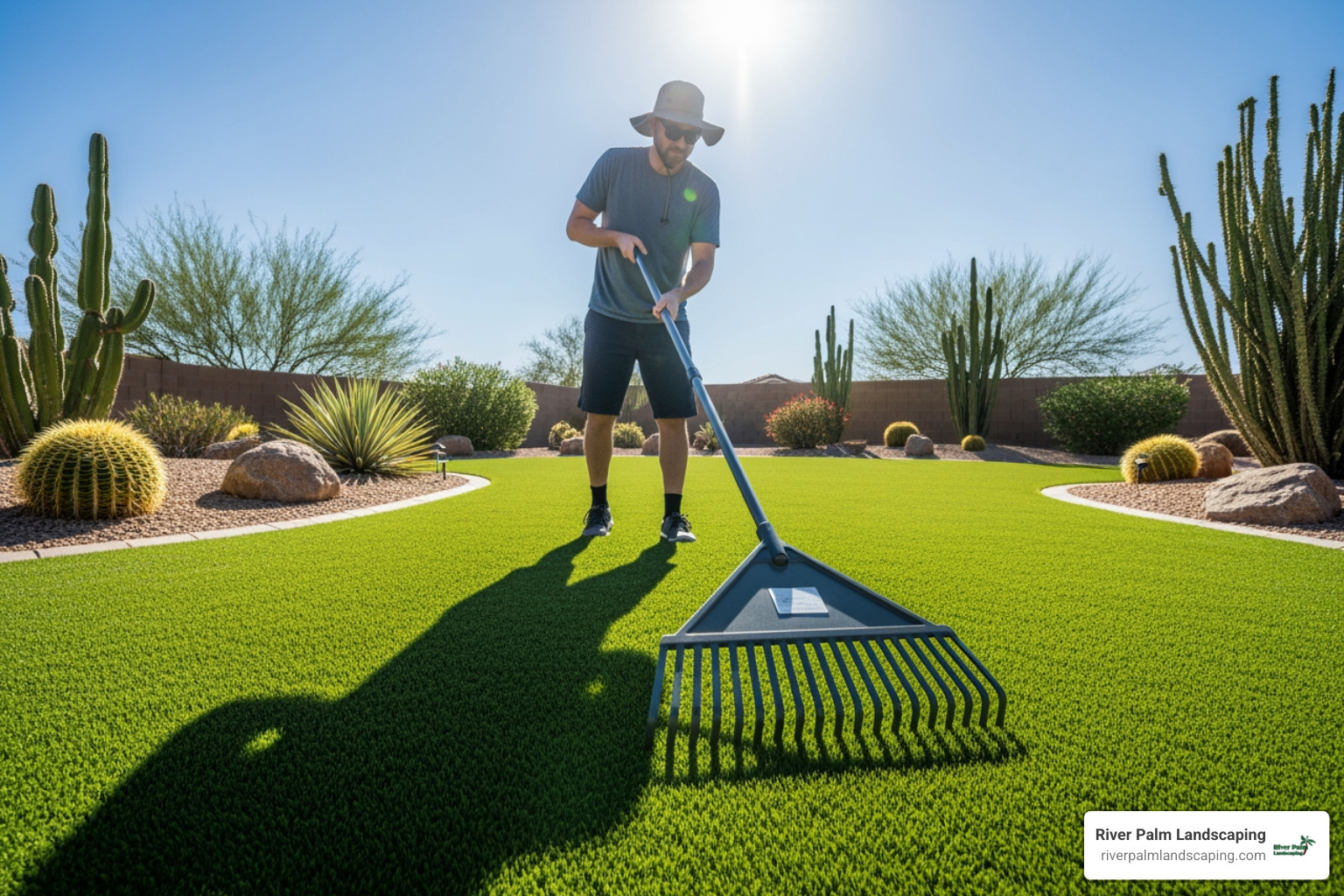
The first rule of thumb is debris removal. Organic matter like leaves, small branches, and even trash can blow onto your yard during a windy afternoon in Golden Shores. If left alone, this debris can break down and settle into the turf fibers, potentially blocking the drainage holes or providing a “soil” base for airborne seeds to sprout.
Using a leaf blower is the most efficient way to clear the surface. For deeper cleaning, a plastic rake is your best friend. Why plastic? Metal rakes are too harsh and can tear the delicate synthetic fibers or damage the backing. For more information on professional installation and care, check out our Synthetic Turf services.
Cross-brushing is another vital technique. Over time, heavy foot traffic or patio furniture can cause the grass blades to “mat” or lay flat. Cross-brushing involves brushing against the grain (the direction the fibers are leaning) to encourage them to stand upright. This doesn’t just make the lawn look better; it helps distribute the infill evenly, which protects the backing from sun damage and keeps the surface soft.
Weekly and Monthly Artificial Grass Maintenance Tasks
In the arid environment of Lake Havasu, dust is your primary enemy. A weekly rinse with a garden hose is often enough to keep the lawn looking fresh. This isn’t a deep soak like you’d give a natural lawn; it’s a quick spray-down to remove dust, pollen, and any lingering pet odors.
Monthly tasks should include a more thorough grooming. This is when you’ll want to get out the turf rake or a stiff-bristle synthetic broom. Focus on high-traffic areas (like the path from the patio to the pool) where the fibers are most likely to compress and the infill can drift. A good rule: brush against the grain in a few directions to stand the blades back up and redistribute infill evenly. Regular grooming helps preserve cushioning and traction, supporting impact performance (Gmax/HIC) so the lawn stays safer for kids and pets. For product-specific do’s and don’ts, follow your turf manufacturer’s care guidance (it’s often included with your warranty paperwork).
Tools Required for Effective Upkeep
You don’t need a shed full of expensive machinery to handle Artificial grass maintenance, but having the right tools makes the job much easier.
- Stiff-Bristle Synthetic Broom: Great for small areas and “fluffing” the grass. Avoid wire or metal bristles at all costs.
- Synthetic Turf Rake: Designed specifically to pull debris out of the fibers without pulling the fibers out of the backing.
- Garden Hose with a Spray Nozzle: Essential for rinsing dust and managing pet areas.
- Leaf Blower: The fastest way to clear dry debris like desert scrub or leaves.
- Enzyme Cleaners: Specifically for pet owners to neutralize odors rather than just masking them.
- Plastic Snow Shovel: While rare in Lake Havasu, if we do get a frost or light dusting of snow, a plastic shovel is the only safe way to clear it without gouging the turf.
Managing Pets, Stains, and Stubborn Messes
Many homeowners choose synthetic grass because it’s incredibly pet-friendly. It doesn’t turn yellow from urine, and dogs are far less likely to dig holes in it. However, pets do require a specific maintenance layer to keep the yard smelling like a desert breeze rather than a kennel.
When it comes to solid waste, the process is simple: let it dry slightly, pick it up, and dispose of it. Once the waste is removed, rinse the area with water. For urine, the key is frequency. In the heat of an Arizona summer, urine can crystallize and create strong odors if not rinsed away regularly. Our Residential Landscaping experts always recommend a dedicated pet-friendly infill during installation to help with drainage and odor control.
Specialized Artificial Grass Maintenance for Pet Owners
If you have multiple pets, a simple water rinse might not be enough. This is where enzyme-based deodorizers come in. These cleaners contain live bacteria that “eat” the organic compounds in pet waste that cause smells.
Weekly rinsing is a must for pet zones, especially in warm weather. If you notice a lingering scent, a simple 50/50 mix of white vinegar and water can work as a gentle, turf-safe neutralizer. For tougher odors, use an enzyme-based cleaner made for pet urine, then rinse thoroughly to push residue through the drainage layer. Quality turf systems are designed to drain quickly, with water moving through the backing and into the base within seconds after a good rinse (assuming the base was installed correctly).
Removing Common Household Stains
Life happens. Whether it’s a spilled soda during a BBQ or a drop of motor oil from a lawn tool, most stains on artificial grass are easy to fix because the fibers are non-absorbent.
- Food and Drink Spills: Blot (don’t rub!) the spill with a paper towel. Rinse with a mix of lukewarm water and a drop of mild dish soap.
- Oil and Grease: For tougher, oil-based stains, use a small amount of mineral spirits on a cloth and gently wipe the fibers, followed by a thorough water rinse.
- Chewing Gum or Tree Sap: This is the “coolest” trick in the book. Use a piece of dry ice or an aerosol “freeze spray” to harden the gum or sap. Once it’s frozen solid, you can simply snap it off the grass blades or gently scrape it away with a plastic knife.
Seasonal Care for the Arizona Desert Climate
Lake Havasu City and Golden Shores present unique challenges. We don’t deal with much mud or heavy snow, but we do deal with intense UV radiation and dust storms.
Our Landscape Design philosophy at River Palm Landscaping focuses on durability. In the desert, your Artificial grass maintenance schedule will peak in the summer (for cooling) and the fall (for debris removal after monsoon season).
Summer Heat and Dust Management
During July and August, the surface temperature of synthetic turf can get quite high. While it won’t “burn” like pavement, it can become uncomfortable for bare feet or paws. A quick 2-minute “cooling rinse” with your hose can drop the temperature of the lawn by 20 degrees or more almost instantly.
Dust management is also a summer priority. Monsoon storms often dump a layer of fine silt across the valley. If this silt isn’t rinsed off, it can clog the drainage pores of your turf. Fortunately, with permeability rates up to 331.3 in/hr, a good hosing will wash that dust straight through the system and into the sub-base.
Winter Frost and Fall Debris
Fall in Arizona is monsoon recovery time. You’ll likely find more organic matter—twigs, leaves, and desert “tumbleweeds”—stuck in your turf. Clearing this quickly prevents it from breaking down into the infill.
In the winter, Lake Havasu can experience overnight frost. The most important tip for winter Artificial grass maintenance is to let the frost melt naturally. Walking on frozen grass blades can cause them to snap or become brittle. Once the sun comes out and the frost turns to water, the lawn will be perfectly fine. If you’re interested in more comprehensive care, see More info about our services for year-round support.
Protecting Your Investment: What to Avoid
While artificial grass is tough, it isn’t indestructible. There are a few “turf killers” that every homeowner in Lake Havasu should know about to avoid voiding their warranty (which can be up to 15 years for high-quality products).
- Reflective Surfaces: This is a big one in Arizona. Energy-efficient windows (Low-E windows) can act like a magnifying glass, reflecting sunlight onto the turf and melting the fibers. If you see a “hot spot” on your lawn, you may need to install window screens or awnings to break the reflection.
- Direct Heat Sources: Never place a BBQ grill, fire pit, or smoker directly on the turf. Even a stray ember can melt a hole in the lawn. Always keep these on a stone or paver patio.
- Sharp Tools: Never use metal rakes, wire brushes, or sharp shovels. These can slice through the backing or pull out the tufts of grass.
- Harsh Chemicals: Avoid using bleach, caustic cleaners, or highly acidic substances. These can discolor the grass and damage the protective UV coating.
For business owners, Commercial Landscaping requires even more vigilance regarding foot traffic and heavy equipment, as more than half of turf issues are caused by overdue maintenance in high-use areas.
Frequently Asked Questions about Turf Care
Can I pressure wash my artificial grass?
Yes, but you must be careful. You should only use a pressure washer if the turf is particularly dirty or has deep-set grime. Keep the pressure under 1500 PSI and use a wide fan nozzle. Hold the wand at least 12 to 18 inches away from the surface.
The biggest risk with pressure washing is infill displacement. If you spray too close or at too sharp an angle, you’ll blast the sand or rubber infill right out of the grass, leaving the fibers unsupported. Also, avoid aiming the stream directly at seams, as the high pressure can lift the turf tape or glue.
How do I prevent weeds and moss?
While weeds can’t grow through the turf backing (especially if a weed membrane was installed), airborne seeds can settle in the infill and sprout.
- Weeds: If you see a stray weed, simply pull it out by hand. You can also use a standard water-based weed killer. A mixture of white vinegar and water is a great eco-friendly alternative.
- Moss: Moss usually only appears in shaded, damp areas with poor drainage. If you spot moss, a mild dish soap solution and a good scrubbing with a synthetic brush will usually clear it up. Ensuring your drainage holes aren’t blocked by debris is the best prevention.
When should I replenish the infill?
Infill is the “soul” of your turf. It keeps the blades upright and protects the backing from the sun. You should consider an infill top-off if:
- The grass fibers look permanently flattened even after brushing.
- You can see the black backing material through the green blades.
- The lawn feels “crunchy” or hard underfoot.
For most residential lawns in Lake Havasu, a professional inspection and minor top-off every 2-3 years is sufficient. High-traffic areas or homes with large, active dogs may need it annually.
Conclusion
Proper Artificial grass maintenance is the difference between a lawn that lasts 10 years and one that stays beautiful for 25. By following a simple routine of clearing debris, rinsing away desert dust, and occasional brushing, you can protect your investment and keep your home’s curb appeal at its peak.
At River Palm Landscaping, we’ve been the local experts in Lake Havasu City and Golden Shores since 2003. We understand the extreme heat and rocky soil of the Arizona desert, and we install every lawn with those challenges in mind. Whether you need a professional deep clean, a seam repair, or a brand-new installation, our licensed team is here to help.
Ready to upgrade your outdoor space or need a professional hand with your current turf? Request a consultation for residential landscaping today and let’s keep your lawn green all year round.