What You Need to Know Before Budgeting a Retaining Wall
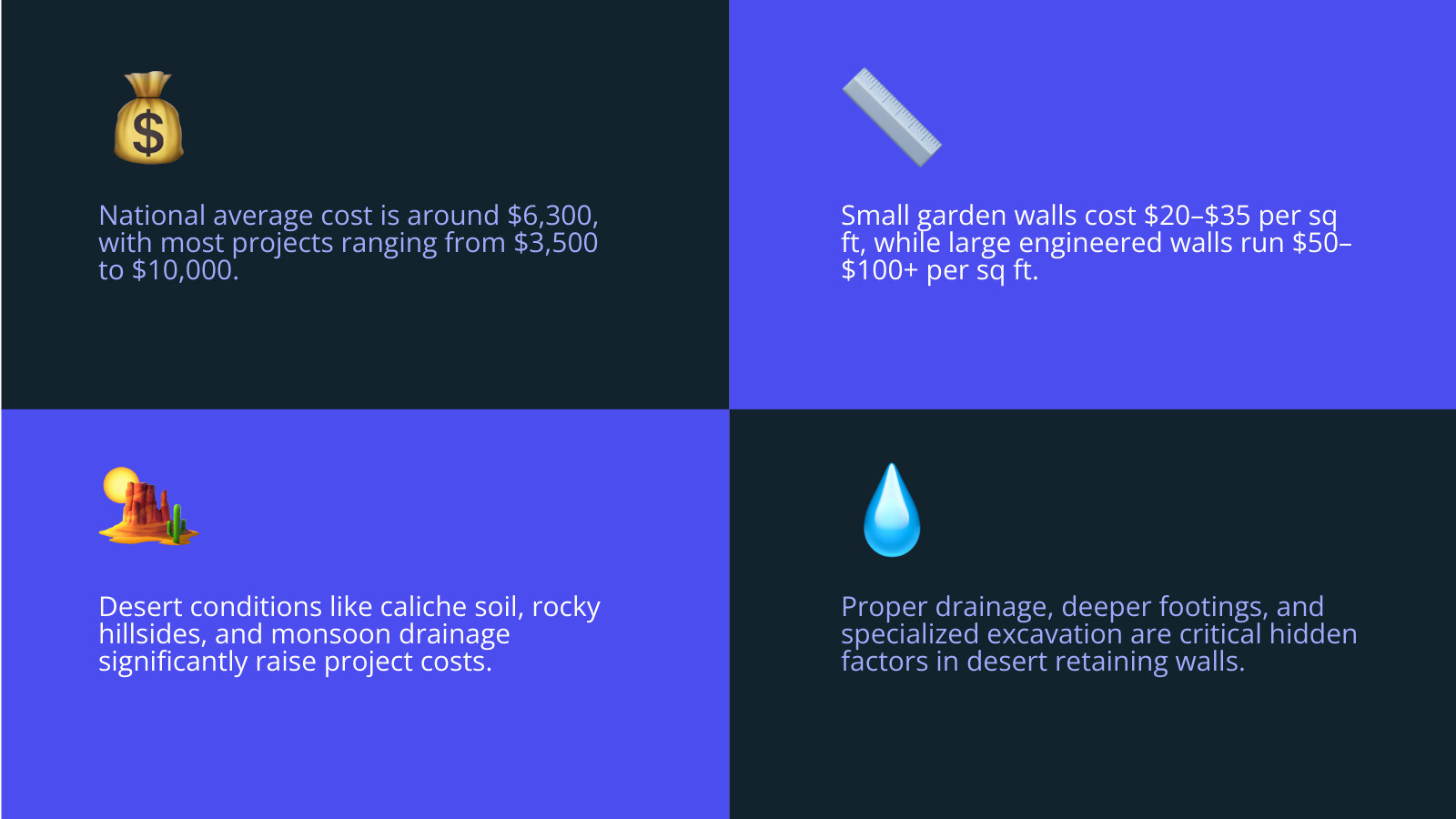
Many homeowners in Mohave County watch their sloped yards slowly wash away during heavy seasonal storms, leaving foundations vulnerable and outdoor spaces unusable. How much does a retaining wall cost? It depends on materials, wall height, and your site conditions — but most homeowners spend somewhere between $3,500 and $10,000, with a national average around $6,300.
Here’s a quick breakdown to orient your budget:
| Project Type | Typical Cost Range | Cost Per Sq Ft |
|---|---|---|
| Small garden/decorative wall | $2,000 – $6,000 | $20 – $35 |
| Medium structural slope wall | $6,000 – $15,000 | $30 – $55 |
| Large engineered/terraced wall | $12,000 – $25,000+ | $50 – $100+ |
In Lake Havasu City and across Mohave County, those ranges can shift significantly. Caliche soil, rocky hillsides, monsoon drainage demands, and extreme summer heat all add complexity that national averages don’t account for. A wall that would be straightforward to build in the Midwest can require specialized excavation equipment, deeper footings, and enhanced drainage infrastructure when you’re working in the desert.
The good news is that a properly engineered retaining wall does more than hold back dirt. It stops slope erosion, creates usable flat space on a graded lot, protects your foundation from soil movement, and manages the kind of heavy monsoon runoff that can undercut a hillside fast.
This guide breaks down everything that drives retaining wall costs — from material choices and wall height to permits, drainage, and site access — so you can plan your project with realistic numbers and avoid expensive surprises.
Terms related to how much does a retaining wall cost:
- backyard retaining wall ideas
- do i need a retaining wall for my yard slope
- erosion control retaining wall
How Much Does a Retaining Wall Cost? Average Pricing and Project Tiers
When planning a hardscaping project in the desert Southwest, understanding the relationship between the scope of the project and the total financial investment is the first step. Homeowners in Lake Havasu City, Golden Shores, and Parker often find that pricing is highly dependent on the tier of the wall being built.
To help visualize these differences, the following table outlines typical cost expectations based on the overall structural demands of the project:
| Wall Tier & Description | Average Height | Common Materials Used | Primary Function | Estimated Cost Range |
|---|---|---|---|---|
| Decorative & Border | Under 2 feet | Segmental block, dry-stack stone | Planters, tree rings, garden borders | $2,000 – $6,000 |
| Mid-Range Structural | 2 to 4 feet | Interlocking block, boulders, concrete | Minor slope management, yard leveling | $6,000 – $15,000 |
| Heavy Structural / Terraced | Over 4 feet (Engineered) | Segmental block, poured concrete, massive boulders | Major slope stabilization, tiering, parking support | $12,000 – $25,000+ |
In our local desert market, these numbers are heavily influenced by site preparation needs, soil density, and local engineering codes. For properties dealing with shifting sandy soils near the Colorado River or steep, rocky inclines overlooking Lake Havasu, installing a wall is more than an aesthetic upgrade. It is a critical infrastructure investment. Homeowners can explore the long-term structural benefits of these installations by reading about erosion control retaining walls.
Small Landscape and Garden Walls (Under 2 Feet)
Small decorative walls under two feet tall are primarily used to define property borders, create raised planting beds for desert-hardy species like Lantana, or build clean rings around specimen plants. Because these walls do not hold back massive amounts of earth, they do not require deep trenching or complex engineering.
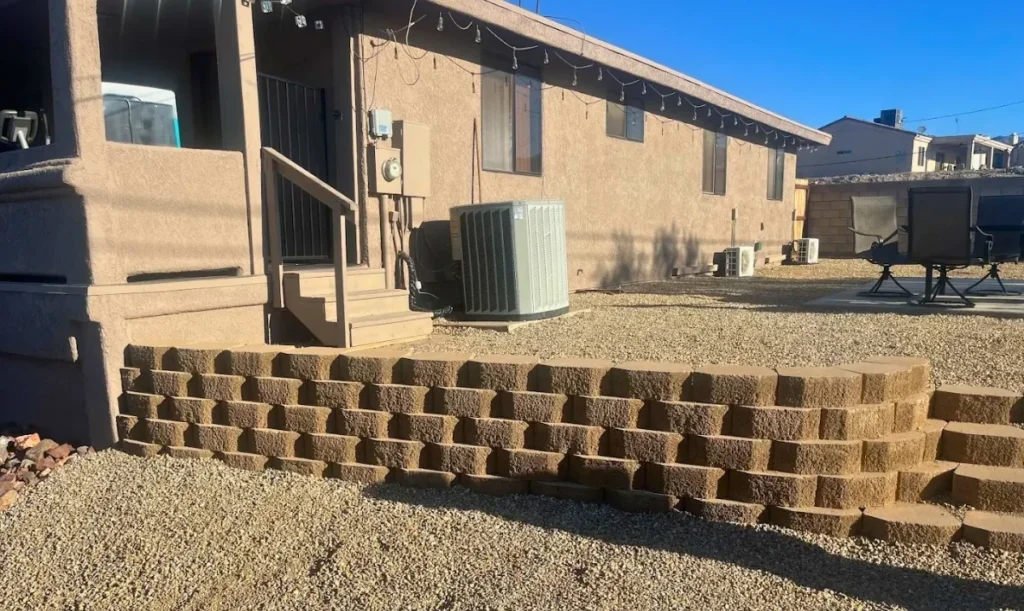
For these shorter heights, dry-stack interlocking concrete blocks are highly popular. They are fast to install and adapt well to minor ground settling. At this scale, the project is highly focused on enhancing curb appeal and creating clean, tidy landscape zones. Homeowners looking to transform flat sections of their property can find inspiration by browsing backyard retaining wall ideas.
Medium Structural Slope Walls (2 to 4 Feet)
Once a wall rises into the two-to-four-foot range, it transitions from a decorative landscape feature into a structural element. These walls are designed to manage moderate grade changes, prevent soil from washing down sloped yards during summer storms, and stabilize cut-and-fill sections of a property.
At this height, the pressure exerted by the soil behind the wall increases significantly. Proper base preparation, gravel backfilling, and integrated drainage pipes become mandatory to prevent the structure from bowing or tipping forward over time. Homeowners facing soil movement on sloped lots can learn more about managing these forces by reading erosion control retaining walls.
Large Engineered and Multi-Level Terraced Walls (Over 4 Feet)
Walls exceeding four feet in height are major civil engineering projects. A wall of this size must support tremendous lateral soil pressure, which is often compounded by “surcharge loads” — the weight of objects on top of the soil, such as parked RVs, pool decks, or adjacent home foundations.
To safely manage these steep slopes, contractors often design multi-level terraced walls instead of a single, massive barrier. Terracing breaks up the soil load into smaller, manageable steps, which can reduce overall engineering requirements while creating beautiful, multi-tiered planting beds. This approach is highly effective for steep desert hillsides. To understand how these heavy-duty systems are designed to protect properties, review do i need a retaining wall for my yard slope.
Retaining Wall Cost Drivers in Desert Environments
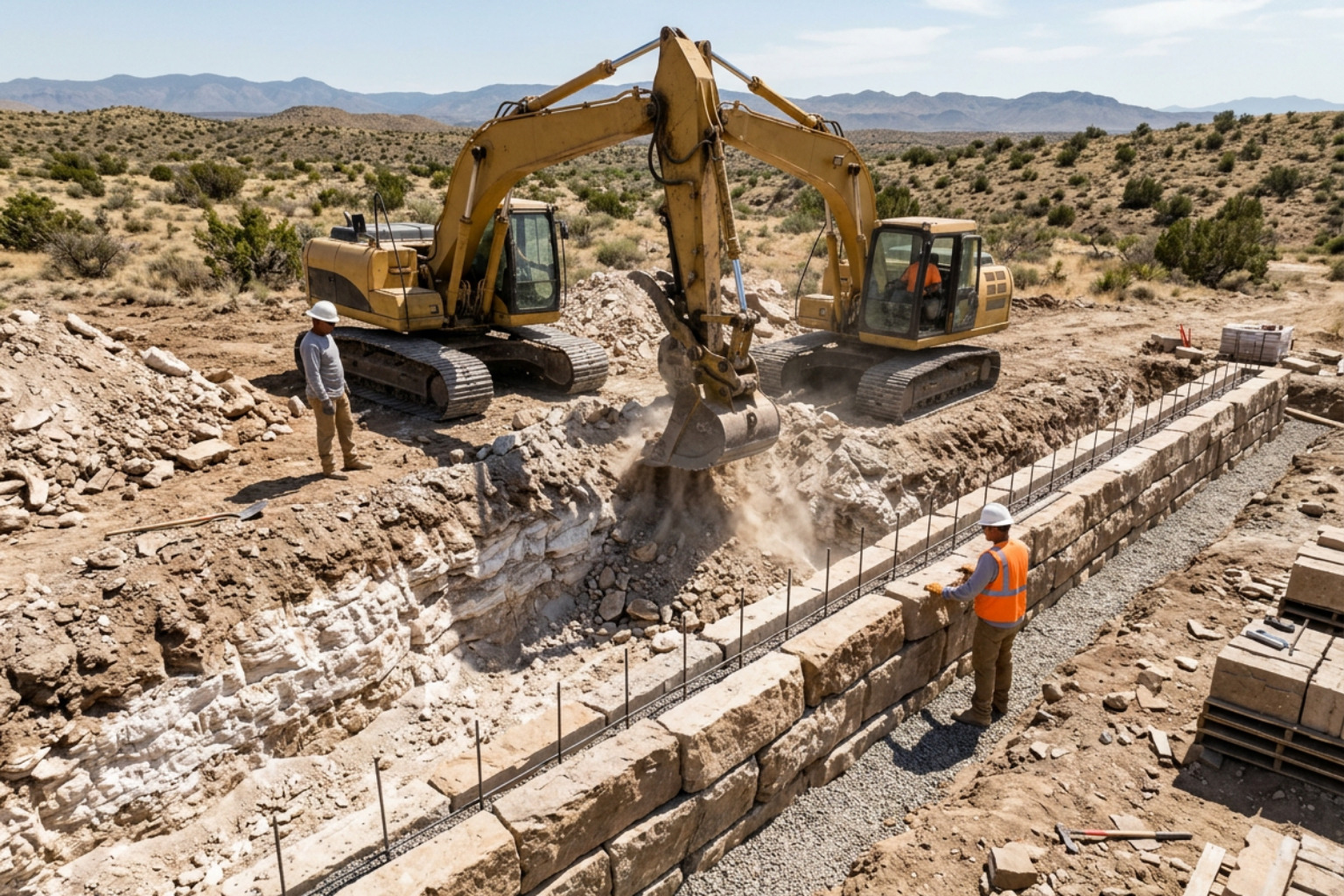
Building a retaining wall in Mohave County is vastly different from building one in regions with soft, organic topsoil. The desert environment presents unique physical challenges that directly impact excavation time, labor hours, and structural design requirements.
- Caliche Soil: This naturally occurring, cement-like layer of calcium carbonate is common throughout Lake Havasu City and Golden Shores. Digging through caliche requires heavy equipment, such as excavators equipped with hydraulic breakers or jackhammers. If a contractor hits a thick vein of caliche while digging the wall’s footing, excavation costs can quickly rise.
- Extreme Heat and Thermal Expansion: Summer temperatures routinely exceed 110°F in Parker and Lake Havasu. This extreme heat causes building materials to expand and contract significantly. Retaining walls must be built with proper expansion joints and high-quality materials that can withstand intense UV exposure and thermal movement without cracking.
- Monsoon Drainage Demands: While the desert is dry most of the year, late-summer monsoons bring sudden, torrential downpours. A retaining wall must be designed to act as a dam that safely channels water away from the property rather than trapping it, which leads to hydrostatic buildup and catastrophic wall failure.
How Much Does a Retaining Wall Cost by Material?
The material you choose is one of the most significant factors in determining your final project cost. Each material has distinct structural characteristics, aesthetic qualities, and installation requirements in hot, arid climates.
- Segmental Concrete Blocks: These are the industry standard for modern structural retaining walls. They are engineered to interlock, require no mortar, and are highly resistant to thermal expansion and UV degradation. They offer an exceptional balance of durability and long-term value.
- Natural Stone: Using dry-stacked or mortared natural stone provides a classic, high-end desert look. However, natural stone is highly labor-intensive, as each piece must be hand-selected, shaped, and placed by skilled craftsmen, making it one of the more expensive options.
- Poured Concrete: Ideal for modern, minimalist designs and heavy structural loads. Poured concrete walls require extensive wooden formwork, steel rebar reinforcement, and precise concrete deliveries, which can drive up initial costs.
- Boulders: Utilizing large, local desert boulders creates a highly natural look that blends seamlessly with the surrounding landscape. Boulder walls are excellent for slope stabilization, but they require heavy machinery, such as loaders and cranes, to place the massive stones safely.
- Timber: While pressure-treated wood is often the cheapest material upfront in other parts of the country, it is poorly suited for the desert. The intense Arizona sun, extreme dry heat, and occasional flash moisture cause timber to warp, split, rot, and degrade within 10 to 15 years, leading to premature failure and expensive replacement costs.
How Much Does a Retaining Wall Cost for Tall or Engineered Structures?
In most jurisdictions across Mohave County, any retaining wall that stands over four feet tall (measured from the bottom of the buried footing to the top of the wall) triggers the “four-foot rule.” This means the wall legally requires a building permit, formal structural engineering plans stamped by a licensed Professional Engineer (PE), and municipal inspections.
Engineering fees for these structural walls typically add $1,500 to $4,000 to the project budget. The engineer will specify exact footing depths, rebar placement, and the use of geogrid reinforcement — a high-strength polymer mesh embedded between the layers of block and stretched back into the soil to anchor the wall face to the hillside. Skipping these requirements to save money is a major code violation that can prevent the future sale of a home and lead to structural collapse.
Hidden Costs and Critical Infrastructure Behind the Wall
When looking at a finished retaining wall, you only see the face. However, the most critical components of the system — and the ones that represent a significant portion of your investment — are completely hidden underground and behind the wall.
The Cost of Skipping Proper Drainage
Every professional hardscape installer knows that retaining walls are drainage structures first and retaining structures second. When water from a monsoon storm saturates the soil behind a wall, the weight of that wet soil increases by up to 50%. This creates immense hydrostatic pressure pushing against the back of the wall.
Without a way for this water to escape, even the strongest concrete or stone wall will eventually bow, crack, or completely blow out. A proper drainage package is not an optional add-on; it is the single most important factor in the lifespan of the wall.
A professional installation includes:
- A 4-inch perforated drain pipe (with a protective fabric sock) laid at the base of the wall’s interior.
- A minimum of 12 inches of clean, angular crushed drainage gravel backfilled directly behind the wall face.
- Non-woven geotextile filter fabric separating the drainage gravel from the native desert soil to prevent fine dirt from clogging the system.
- Integrated weep holes spaced along the bottom of the wall face to allow trapped water to drain out harmlessly.
Site Access and Excavation Challenges
The physical layout of your property can greatly influence the labor and equipment required to build a wall. If a contractor has wide-open access to a sloped lot, they can bring in large excavators, skid steers, and material haulers, which speeds up the process and keeps labor costs down.
Conversely, if the wall must be built in a narrow side yard, adjacent to a newly installed pool deck, or along a tight RV parking pad, access becomes highly restricted. In these “tight-access” scenarios, crews must use smaller, specialized compact equipment or perform excavation and material transport by hand. This significantly increases the total labor hours required to complete the project safely.
Professional Installation vs. DIY Cost Evaluation
It is easy to understand why homeowners are tempted to tackle a retaining wall as a DIY project. On paper, doing the work yourself can save on the total project cost by eliminating professional labor fees.
However, the reality of building a retaining wall in our region involves several major hurdles:
- Physical Demands: Moving tons of dirt, gravel, and heavy concrete blocks (which often weigh 40 to 80 pounds each) in the desert heat is incredibly grueling work.
- Specialized Equipment: Standard residential tools cannot penetrate caliche or grade a steep hillside. Renting commercial-grade compact excavators, plate compactors, and demolition hammers quickly eats into your projected savings.
- Structural Risks: A poorly constructed wall that leans or collapses can cause thousands of dollars in damage to nearby structures, pool decks, or neighboring properties.
When Professional Installation is Required
While a homeowner might successfully build a one-foot-tall decorative border around a garden bed, any wall that exceeds three feet in height, supports a slope, or sits near a structural element like a driveway or home foundation should always be left to a licensed professional.
Professional hardscaping contractors possess the specialized machinery, licensing, engineering partnerships, and local knowledge required to build a wall that stands straight and drains perfectly for decades. Property owners can learn more about the benefits of hiring local expertise by reading about retaining wall installation in Lake Havasu.
Frequently Asked Questions about Retaining Wall Costs
What is the cheapest retaining wall material and what are the trade-offs?
The cheapest material upfront is pressure-treated timber or railroad ties. However, timber is a poor choice for the desert. The intense UV rays, extreme summer heat, and dry air in Mohave County cause wood to warp, crack, and dry-rot rapidly. While you save money on day one, you will likely have to pay to completely tear out and rebuild the wall within 10 to 15 years.
Segmental concrete blocks cost slightly more initially but last 50 to 100 years with virtually zero maintenance, making them the most cost-effective choice over the lifespan of your property.
Do I need a permit or engineering for a retaining wall in Mohave County?
In Lake Havasu City, Golden Shores, and Parker, any retaining wall that is four feet or taller (measured from the bottom of the footing to the top of the wall) requires a building permit and stamped engineering plans. Additionally, walls of any height that support a “surcharge” load (such as a driveway, patio, or pool) or are built close to property lines or utility easements will also require professional engineering and municipal approval. It is also critical to consult your local Homeowners Association (HOA) guidelines, as they often have specific aesthetic and material requirements.
Does a retaining wall add value to a home and what is the typical ROI?
Yes, a well-built retaining wall adds substantial value to a desert home, though it is best viewed as a functional investment rather than a purely cosmetic upgrade. In steep, sloped areas like Lake Havasu, flat land is at a premium. A retaining wall turns unusable, eroding hillsides into flat, functional space for RV parking, pool decks, or outdoor living areas.
While exact returns vary, studies show that professional hardscaping projects that solve erosion issues and improve yard usability typically recoup 50% to 75% of their cost in appraised home value, while significantly increasing the home’s marketability and protecting its structural foundation.
Conclusion
Determining how much does a retaining wall cost involves evaluating your property’s unique terrain, your choice of materials, and the height of the structure. In the challenging desert environment of Mohave County, trying to cut corners on excavation, footing depth, or drainage is a recipe for premature wall failure. Investing in proper engineering and professional installation is the best way to ensure your wall stands strong against extreme heat, caliche soil, and monsoon storms.
Since 2003, River Palm Landscaping has provided homeowners in Lake Havasu City, Golden Shores, and Parker, AZ, with durable, climate-appropriate outdoor spaces. As a fully licensed, experienced local contractor, the team specializes in desert hardscaping built to withstand the harshest local conditions.
Whether you need to stabilize a steep, lake-view slope, create a level pad for your RV, or install a beautiful tiered block system, River Palm Landscaping delivers reliable, structural solutions that protect your property and enhance its long-term value. Ready to discuss your project? Schedule a consultation for erosion control retaining walls with the local experts today.