Understanding Slope Stability: Do I Need a Retaining Wall for My Yard Slope?
Many homeowners in Lake Havasu City struggle with yard slopes that wash away during monsoon season, threatening the stability of their outdoor living spaces and home foundations. When soil begins to migrate toward your home or pool, it creates a significant structural risk that requires professional intervention. River Palm Landscaping specializes in evaluating these desert landscapes to determine if you need a retaining wall for your yard slope to prevent further erosion and property damage.
Signs that your property requires professional stabilization include:
- Visible soil migration or gullies forming after rain
- Water pooling near your foundation or at the base of a slope
- Shifting fences, sheds, or hardscaping elements
- Significant grade differences between your property and neighboring lots
In the Mojave Desert, the combination of rocky soil and intense runoff makes slope management essential. Without proper reinforcement, lateral pressure can eventually impact your home’s structural integrity. This overview explains how we evaluate slope stability and implement professional solutions for residential and investment properties across Lake Havasu City, Golden Shores, and Parker, AZ.
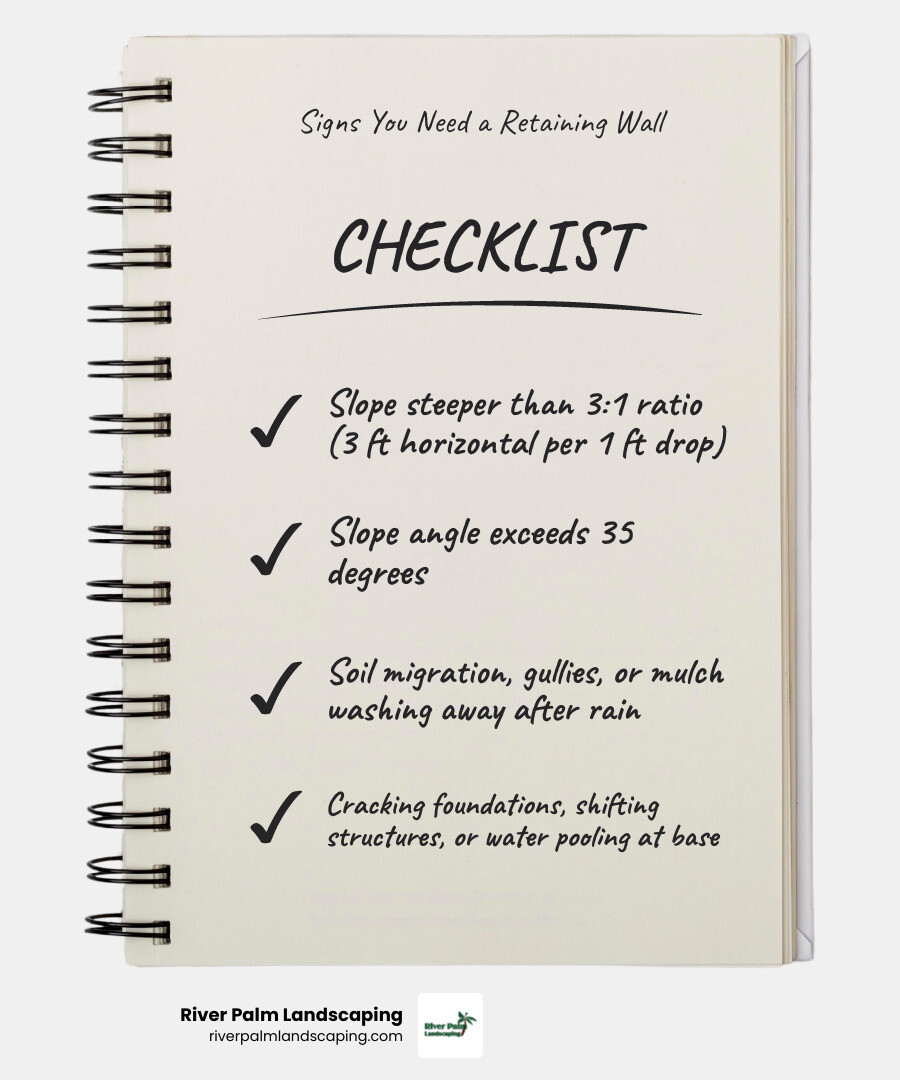
Soil in our region naturally reaches a point where it can no longer support its own weight, especially when saturated. Professional installers look at the slope ratio to determine when reinforcement is necessary. Retaining walls 101 – Bob Vila notes that these structures act as a physical barrier to resist the pressure that pushes soil downhill.
Signs That Indicate You Need a Retaining Wall for Your Yard Slope Immediately
Ignoring an unstable slope often leads to soil piling against fences or patios. Another indicator is the constant washout of decorative rock or mulch. More serious signs include the formation of rills—small channels carved into the dirt that accelerate topsoil loss. If you notice these issues, the lateral pressure could be affecting your property. For more details on these symptoms, check out everything you need to know about erosion control retaining walls.
Determining if You Need a Retaining Wall for Your Yard Slope Based on Angle
The threshold for a retaining wall is often dictated by the soil type. In our region, we deal with granular soil that lacks cohesive properties. When a slope becomes too steep, it requires structural support to prevent the downward movement of earth. A retaining wall provides this by creating a stable cut in the landscape, which is critical for protecting property lines. Understanding these mechanics is essential for effective erosion control retaining walls.
Engineering for the Desert: Materials and Drainage

Building a wall in Lake Havasu City requires specialized knowledge of local conditions, including extreme heat and the presence of caliche layers. These natural cement-like layers make excavation a task for heavy machinery. Selecting the right materials and engineering approach is what ensures a structure remains stable over the long term.
Selecting Durable Materials for Extreme Heat and Rocky Soil
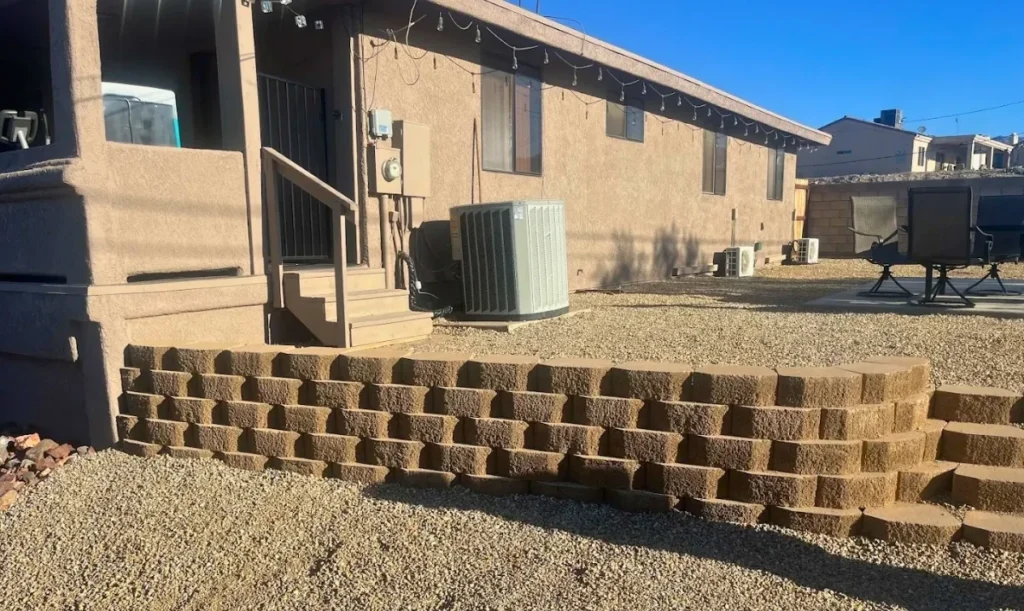
For desert stability, segmental concrete blocks are a preferred choice. Unlike materials that warp in the Arizona sun, segmental blocks are designed to accommodate minor earth movements without losing structural integrity. These systems often utilize the weight of the soil to help secure the units in place.
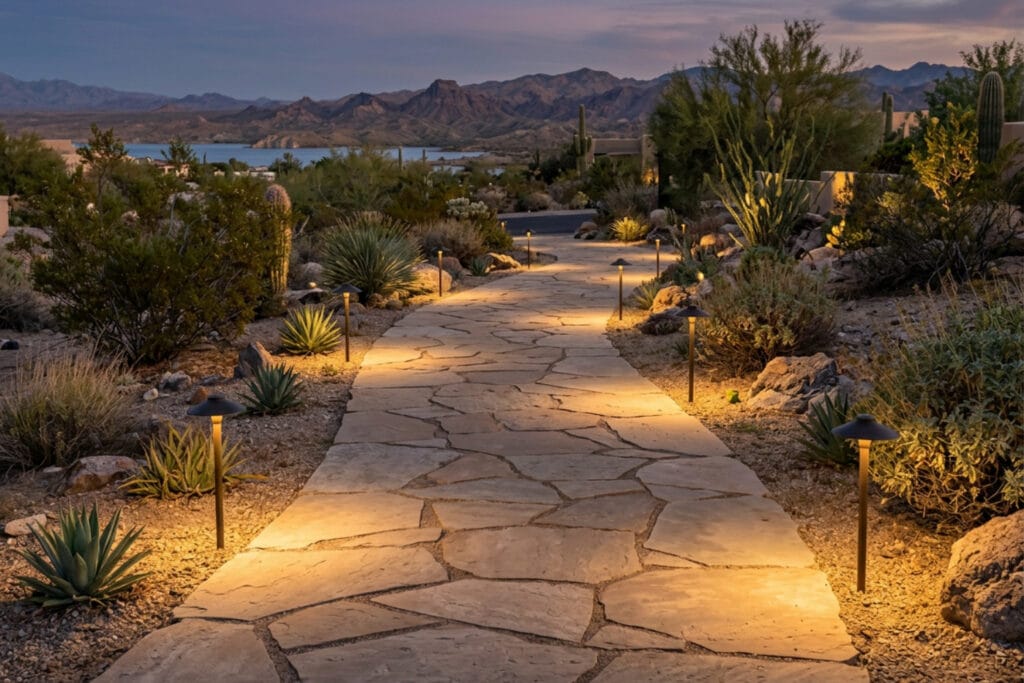
Aesthetics are also a priority. We recommend materials that complement the desert palette, such as tans and deep reds. To enhance the appearance of a structural wall, we can integrate desert-hardy plants like Lantana or the architectural Totem Pole cactus, which thrive in our climate with minimal water once established.
Why Professional Drainage is the Key to Wall Longevity
The primary cause of wall failure is trapped water. When heavy rains occur in Lake Havasu, moisture can build up behind a structure, creating significant pressure. Professional installation includes integrated drainage systems to manage this moisture effectively.
Our professional installations feature:
- Gravel backfill: Allows water to move away from the wall face.
- Perforated pipe: Collects and redirects water away from the structure.
- Weep holes: Provides an exit point for moisture.
- Landscape fabric: Prevents soil from interfering with the drainage system.
Without these professionally installed components, any wall is at risk of failure. Learn more about these critical systems at everything you need to know about erosion control retaining walls.
Alternatives and Advanced Stabilization Systems
Sometimes, a traditional vertical wall isn’t the only solution for managing a slope. For expansive or particularly steep areas, advanced systems like geocells offer a modern alternative for property owners.
Professional Slope Stabilization with Geocell Systems
Geocells utilize cellular confinement to stabilize loose desert soil. These high-density polyethylene structures create a stable, unified mass that conforms to the landscape. This method is often used for large areas where a traditional hardscape might not be the primary goal.
Geocell systems provide a permeable solution that allows water to flow through the structure, reducing the risk of pressure buildup. They are an effective way to secure a hillside while maintaining a more natural appearance.
Benefits of Vegetated Slopes in Arid Climates
In Lake Havasu, we can utilize these systems to create a living wall. By incorporating native soil and precision irrigation, we can establish a stabilized hillside where plant roots further reinforce the structure over time. This approach helps keep the ground cooler and adds aesthetic appeal to the property. For more on how vegetation aids in stability, see erosion control retaining walls.
Professional Assessment and Local Regulations in Lake Havasu
In Arizona, building a retaining wall requires strict adherence to local building codes. A failing wall is a liability that can damage your home, neighboring properties, and public infrastructure. Professional assessment is the only way to ensure your project meets safety standards.
Risks of Improper Installation and Structural Failure
The risks of unpermitted or poorly constructed walls are high. A collapse can lead to significant damage, including broken irrigation lines and compromised foundations. Most insurance policies do not cover damage caused by structures built without proper permits or by unlicensed contractors.
In many jurisdictions, walls over a certain height require a permit and professional engineering. This ensures the design is appropriate for the specific loads of your property. Professional evaluation determines whether your slope needs a simple garden wall or a complex engineered system.
Long-Term Professional Maintenance
Even well-built structures benefit from periodic professional inspections, especially after the monsoon season. We look for signs of blocked drainage outlets, soil settling, or widening gaps between blocks. Proactive professional maintenance can significantly extend the life of your stabilization system. For a deeper dive into long-term care, visit more info about erosion control retaining walls.
Frequently Asked Questions about Retaining Walls
When is a slope too steep to leave unreinforced?
Generally, if a slope is difficult to walk on or shows signs of erosion like gullies and sliding soil, it requires professional stabilization. Once the soil’s natural stability is exceeded, a retaining wall or geocell system is necessary to prevent property damage.
What factors influence the cost of a professional retaining wall in Arizona?
Project costs are determined by the materials used, the height and length of the structure, site accessibility for heavy equipment, and the complexity of the required drainage system. A professional site assessment is necessary to provide an accurate estimate based on your specific landscape needs.
Do I need a permit for a retaining wall?
In Lake Havasu City and surrounding areas, permit requirements often depend on the height of the wall. However, HOA restrictions and local zoning rules always apply. It is essential to have a licensed contractor verify local requirements before beginning any work.
Conclusion
If you are observing soil erosion on your property and wondering, “do i need a retaining wall for my yard slope,” it is important to act before the next storm causes further damage. Whether you are in Lake Havasu City, Golden Shores, or Parker, managing a slope is about protecting your property and making your outdoor space functional.
At River Palm Landscaping, we have extensive experience addressing the unique challenges of desert landscapes. We provide durable, climate-appropriate solutions designed to handle the heat and intense rainfall of our region. From tiered block systems to geocell stabilization, we help homeowners secure their land. For more guidance on protecting your property, read more info about erosion control retaining walls or contact us for a professional site assessment.