Why Finding the Right Yard Drainage Company Near You Can Protect Your Home
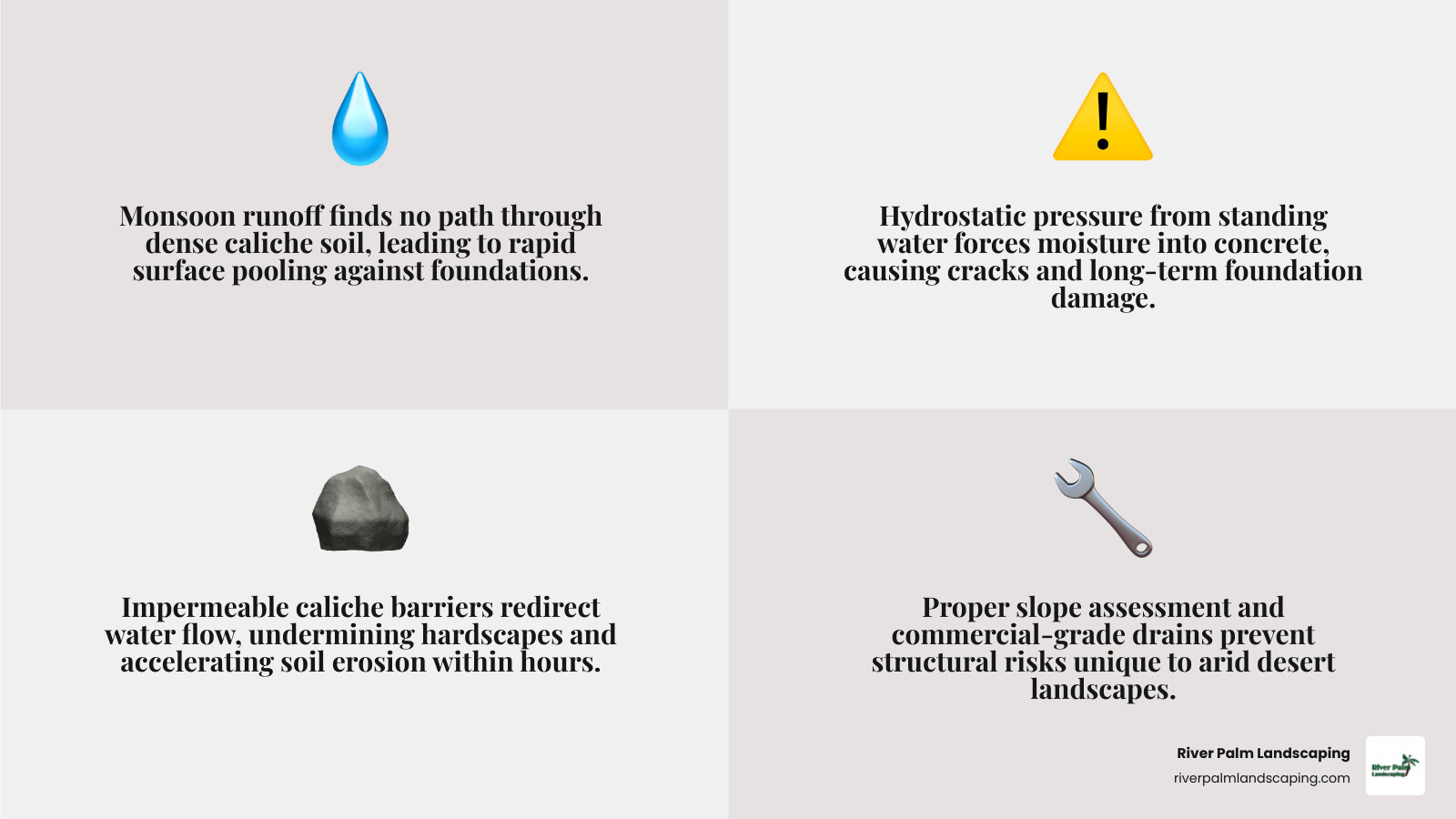
Searching for the best yard drainage company near me is about more than finding someone who can install a drain. In Lake Havasu City, poor drainage can quickly lead to erosion, foundation issues, damaged hardscapes, and costly repairs after monsoon storms. Caliche soil beneath the surface acts like a concrete shelf, so water often has nowhere to go. It pools against foundations, undermines hardscape, and accelerates erosion within hours of a heavy storm.
Most drainage problems require more than a simple trench or basic landscaping work. Proper grading, excavation, and water management are essential for long-term performance.
The best yard drainage companies typically have these qualifications:
- Verified Arizona ROC license — confirms legal authorization to perform excavation and drainage work
- Local soil experience — specifically with caliche, rocky terrain, and desert grading challenges
- Drainage-focused services — French drains, swales, channel drains, grading, and downspout diversion
- On-site slope assessment — any reputable drainage contractor should verify elevation before proposing a solution
- Clear warranty and material specs — ask which pipe materials will be used and why they are appropriate for your property’s drainage conditions
- Liability insurance — protects you if anything goes wrong during excavation near your foundation
The stakes are high. Standing water against a desert home foundation creates hydrostatic pressure that can crack slabs, shift retaining walls, and compromise the structural integrity of your property over time. An experienced drainage contractor should be able to explain how these conditions influence the solution they recommend for your property. Companies that specialize in drainage solutions consistently outperform general contractors on these projects because drainage engineering requires a different skill set than planting or paving.
The sections below walk you through exactly how to evaluate and hire the right yard drainage company for your property.
Recognizing the Signs of Poor Desert Yard Drainage
In the arid climates of western Arizona, homeowners often assume that drainage is a secondary concern. However, when the skies open up during late-summer monsoons, sudden, heavy downpours drop inches of water in a matter of minutes. Because our regional soils are packed with dense, impermeable caliche barriers, this water cannot naturally percolate into the ground. Instead, it moves rapidly across the surface, seeking the path of least resistance.
If your property is not properly graded, that path leads directly toward your home’s foundation or behind critical hardscapes. Over time, standing water creates immense hydrostatic pressure against concrete slabs and footings. This pressure forces moisture through microscopic pores in the concrete, leading to interior dampness, efflorescence, and eventual foundation cracks. An experienced drainage contractor should be able to explain how grading, soil conditions, and runoff patterns affect the system they recommend.
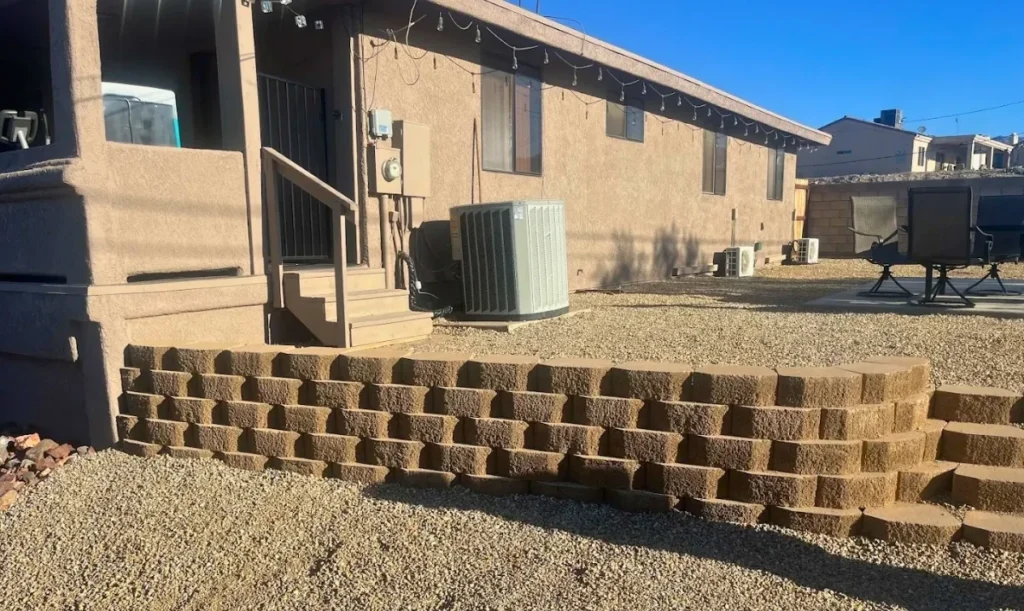
Another major pain point for local homeowners is soil erosion and shifting. When water pools behind retaining walls or under beautifully laid paver patios, it saturates the underlying bedding sand and subgrade. As the wet soil expands and then contracts under the intense desert heat, it causes the ground to shift. This movement leads to cracked concrete, sinking pavers, and tilting walls.
Artificial turf also needs proper subsurface drainage. Without it, water can pool on the turf, create soggy hot spots, degrade backing material, and cause odors after storms. If you notice water lingering for more than a few hours after a storm, or if you spot soft, muddy zones in your gravel basins, it is time to start researching professional yard drainage solutions. Homeowners often find themselves deciding when your yard needs a French drain to intercept this subsurface water before it can compromise structural footings.
Why You Need a Specialized Drainage Contractor Instead of a Generalist
Many homeowners make the mistake of hiring a general yard maintenance crew or a basic landscaping service to solve water issues. While a generalist is excellent for trimming a Totem Pole cactus or spreading decorative granite, they rarely possess the heavy equipment or engineering expertise required to manage complex hydrology.

Addressing drainage in places like Lake Havasu City, Golden Shores, and Parker requires commercial-grade excavation. The ground here is not soft topsoil; it is a mixture of highly compacted river rock, gravel, and thick sheets of caliche. Standard hand tools will barely scratch the surface. A specialized contractor utilizes heavy machinery, such as compact skid-steers and specialized trenchers, to break through these rock layers and establish a sustained, functional slope.
Furthermore, a specialized contractor understands the physical forces unique to our desert environment:
- Caliche Excavation: Knowing how to cut through cemented calcium carbonate layers without damaging underground utilities.
- Thermal Expansion: Designing PVC pipe runs with appropriate fittings to handle extreme thermal expansion and contraction when ground temperatures fluctuate from winter lows to blistering summer highs.
- Hardscape Integration: Ensuring that drainage channels flow seamlessly beneath or around solid concrete structures without causing them to crack or drop.
- Slope and Elevation Accuracy: Utilizing precise laser levels to guarantee a minimum 2% slope (a 2-inch drop for every 10 feet) so water actually flows to the designated discharge point rather than backing up.
To understand why hiring a specialist is so critical, consider the differences between professional drainage engineering and common quick-fixes:
| Feature | Professional Drainage Engineering | General Landscaping Quick-Fixes |
|---|---|---|
| Pipe Material | Heavy-duty Schedule 40 PVC (smooth interior prevents clogs and resists crushing) | Thin-walled corrugated black plastic (easily crushed, ridges trap sediment and debris) |
| Trench Depth & Grading | Deep, laser-leveled trenches cut past caliche layers to ensure proper gravity flow | Shallow, hand-dug trenches that follow existing yard contours |
| Backfill Method | Clean, washed aggregate wrapped in commercial-grade geotextile fabric | Backfilled with native dirt and gravel, leading to rapid clogging |
| Structural Longevity | Designed to last decades; handles soil shifting and thermal expansion | Fails or collapses within 1 to 2 years, requiring complete replacement |
Attempting to save money with a shallow, non-engineered trench often results in water backing up right where you do not want it. Investing in professional drainage solutions for rocky soil ensures the job is done correctly the first time, protecting your hardscape assets from costly future repairs.
Key Drainage Solutions for Arid and Rocky Landscapes
A professional drainage plan must be customized to the unique topography and soil structure of your property. There is no one-size-fits-all remedy. Instead, an expert contractor will integrate several proven solutions to manage both surface runoff and subsurface moisture.
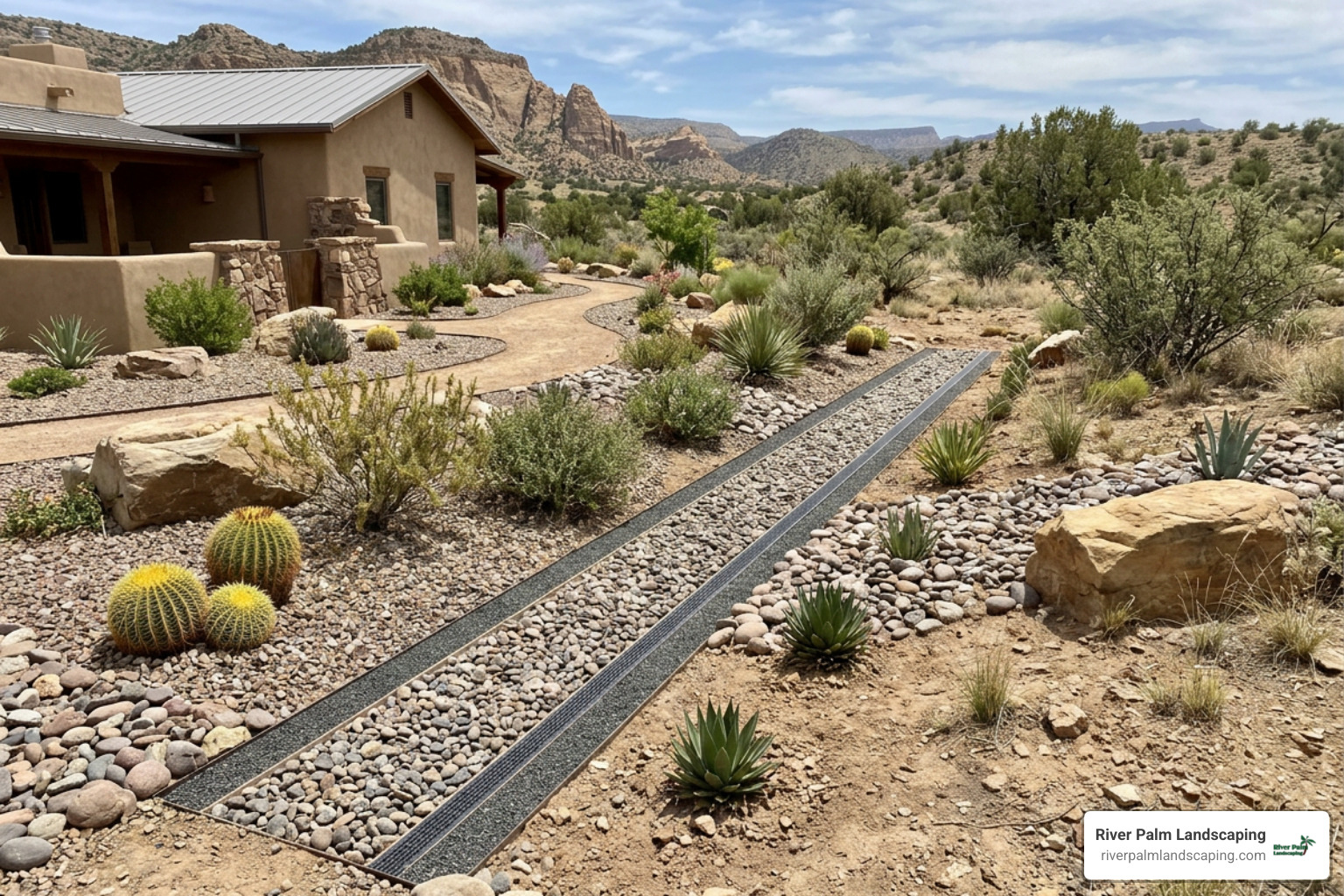
French Drains
For subsurface water control, a French drain is highly effective. It consists of a perforated pipe buried in a trench filled with washed rock and wrapped in filter fabric. This system intercepts water moving underground and channels it safely away from the home. It is particularly useful along the uphill side of foundations or behind retaining walls where water tends to accumulate.
Channel Drains and Catch Basins
When dealing with large, impermeable surfaces like concrete driveways, pool decks, or patio slabs, surface water must be collected quickly. Channel drains—long, narrow grates installed flush with the concrete—capture sheet flow before it can flood your living spaces or pool against walls. Catch basins are placed at low points to collect larger volumes of concentrated runoff, filtering out heavy debris before routing the water into underground solid pipes.
Swales and Dry Creek Beds
For natural, aesthetic water management, contoured swales or decorative dry creek beds are excellent choices. By carefully grading wide, shallow channels and lining them with river rock and desert-hardy plants like Lantana, a contractor can redirect massive volumes of monsoon runoff. This approach slows down the water, preventing erosion while matching the natural beauty of the desert landscape.
Implementing these systems requires a deep understanding of structural boundaries and material performance under intense western sun exposure. For instance, exposed plastics will degrade rapidly under UV radiation, which is why professional systems utilize durable, UV-resistant materials or keep pipes completely subterranean. Homeowners looking to protect their properties can explore local drainage solutions to keep your property dry during the most volatile weather events. Additionally, integrating these systems with a professional retaining wall installation in Lake Havasu can stabilize slopes and prevent catastrophic soil washouts along property lines.
Evaluating and Choosing a Professional Yard Drainage Company
Selecting a contractor to excavate near your home’s foundation is a decision that requires careful screening. You want to ensure you are hiring a qualified specialist who understands the local geology and local building codes.
Licensing, Insurance, and Local Expertise
In Arizona, residential excavation and structural drainage modifications require a valid license from the Arizona Registrar of Contractors. Never hire an unlicensed handyman for drainage work. If they accidentally sever a utility line or compromise your home’s foundation footing, you could be held financially liable.
Verify that the contractor carries comprehensive liability insurance and workers’ compensation. Furthermore, ask about their experience working specifically with the rocky, caliche-heavy soils of the Colorado River Valley. A contractor from a region with soft, sandy loam will not understand how to properly excavate or grade our local terrain.
What to Expect During a Professional Consultation
A reputable drainage company will not give you a firm estimate over the phone or simply eyeball your yard. They must conduct a thorough on-site consultation. During this visit, the specialist should:
- Perform an Elevation Survey: Use a transit level or laser level to map the exact high and low points of your property. This is the only way to scientifically verify that water will flow downhill through the proposed system.
- Analyze Soil and Hardscape Boundaries: Identify caliche barriers, existing concrete footings, and potential utility conflicts.
- Provide a Custom Plan: Present a clear diagram or written plan detailing exactly where water will be collected, how it will be transported, and where it will discharge.
Questions to Ask a Drainage Specialist Before Hiring
Before signing a contract, protect your investment by asking these direct questions:
- What specific materials will you use? Ensure they specify Schedule 40 PVC or equivalent rigid pipe for underground runs, rather than thin, flexible corrugated piping that collapses under heavy rocky backfill.
- Will you contact 811 before digging? Underground utility lines must be marked before any heavy excavation begins.
- What kind of warranty do you offer? A quality installation should come with a clear parts and labor warranty, giving you peace of mind that the system will perform during the next major storm.
- How will you restore my landscape? Excavation is messy. Ensure the contract details how they will put back your decorative rock, artificial turf, or desert plantings once the underground work is complete.
Frequently Asked Questions About Yard Drainage in Arizona
How does caliche soil affect yard drainage installation?
Caliche is a layer of soil in which the individual particles have been cemented together by calcium carbonate. It is essentially nature’s concrete. When installing a drainage system, caliche acts as an absolute barrier to water, preventing natural downward percolation. For contractors, it requires heavy machinery, specialized jackhammers, or heavy-duty excavators to break through. Any drainage trench must be excavated deeply enough to bypass or cut channels through these caliche shelves to ensure water can escape.
Can poor drainage damage my home’s foundation in dry climates?
Yes, absolutely. In fact, dry-climate foundations are highly susceptible to damage from sudden water accumulation. Desert soils are often highly expansive when they finally get wet. When monsoon runoff pools against a concrete slab, the sudden influx of moisture causes the surrounding soil to swell unevenly. This creates localized hydrostatic pressure that can crack concrete slabs, heave floors, and compromise structural walls.
How often should desert drainage systems be maintained?
While desert drainage systems do not deal with daily rainfall, they still require regular maintenance to ensure they perform when a storm hits. You should inspect your catch basins, channel grates, and dry creek beds at least twice a year—ideally right before the summer monsoon season and after the winter rains. Clear out any accumulated windblown sand, leaves, or debris. If your system utilizes a sump pump or backflow valve, test its operation annually to verify that it is fully functional.
Conclusion
Choosing the best yard drainage company near you is one of the most important steps in protecting your home’s foundation, hardscape investment, and long-term property value. By investing in professional grading, robust French drains, and engineered surface channels, you prevent hydrostatic pressure from cracking your foundation and stop monsoons from washing away your landscape.
When evaluating costs, professional yard drainage work is a direct investment in the safety, usability, and curb appeal of your property. While pricing varies based on your specific site conditions, soil density, and project complexity, a properly engineered system built with high-quality materials will protect your home for decades.
If you are ready to secure your property against the next heavy storm, partner with a licensed, local drainage company that understands the realities of desert excavation. Explore the comprehensive River Palm Landscaping services in Lake Havasu to schedule a professional elevation assessment and take the first step toward a dry, secure, and beautiful outdoor living space.