Why Efficient Landscape Lighting Matters in Parker, AZ
Efficient landscape lighting Parker homeowners rely on starts with the right fixtures, the right placement, and the right technology — and for most desert properties, that means LED low-voltage systems designed to handle extreme heat without draining your wallet.
Here’s a quick look at the most energy-efficient landscape lighting options for Parker, AZ:
| Lighting Type | Best Use | Recommended Lumens | Key Feature |
|---|---|---|---|
| LED path lights | Walkways, driveways | 50–100 lumens | Low heat, long lifespan |
| LED accent/spot lights | Totem Pole cactus, desert plants | 75–150 lumens | Directional, low wattage |
| LED wall packs | Entryways, garage facades | Up to 145 lm/W | Adjustable wattage |
| Low-voltage flood lights | Trees, architectural features | 200–400 lumens | Wide coverage |
| Motion sensor lights | Security zones | 400+ lumens | Triggered only when needed |
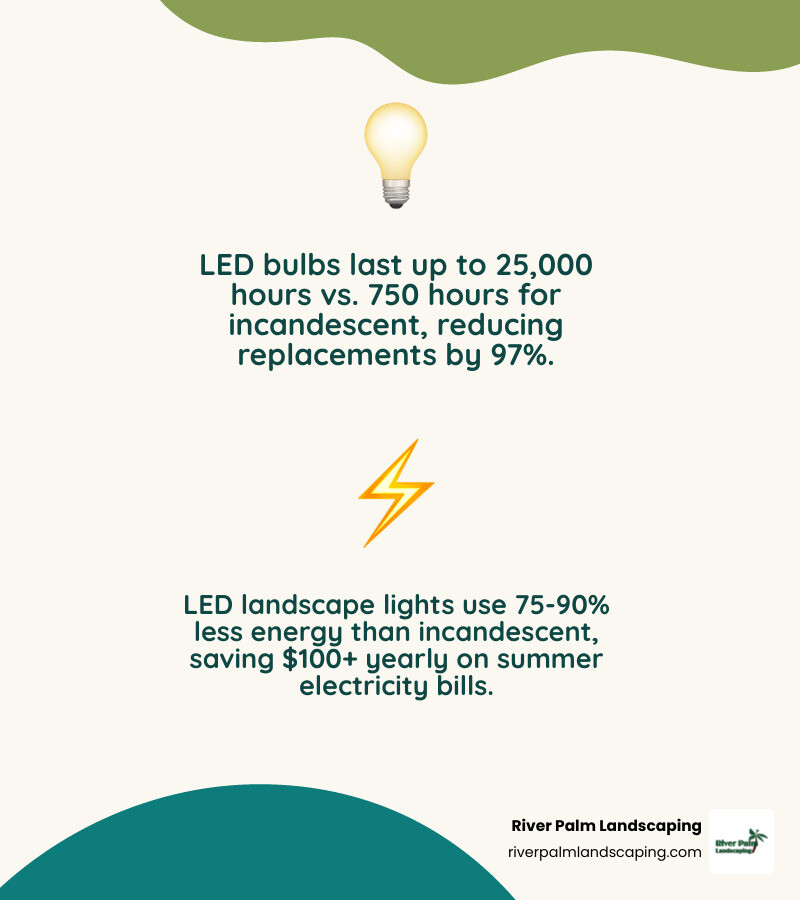
Many homeowners along the Colorado River Valley discover their outdoor spaces become dark and even unsafe after sunset — not because they skipped lighting, but because they installed the wrong kind. Outdated incandescent fixtures burn out fast (sometimes in as little as 750 hours), eat through electricity, and struggle in the desert heat. In the peak of a 2026 Parker summer, that means higher utility bills and fixtures that need constant replacing.
The good news: a well-designed LED landscape lighting system running 20 fixtures for five hours a night can add less than $30 a month to your electricity bill. That’s a dramatic difference from older setups — and it’s why more Parker, AZ homeowners are making the switch to efficient, professionally installed outdoor lighting.
Basic efficient landscape lighting parker vocab:
Designing efficient landscape lighting parker for Desert Environments
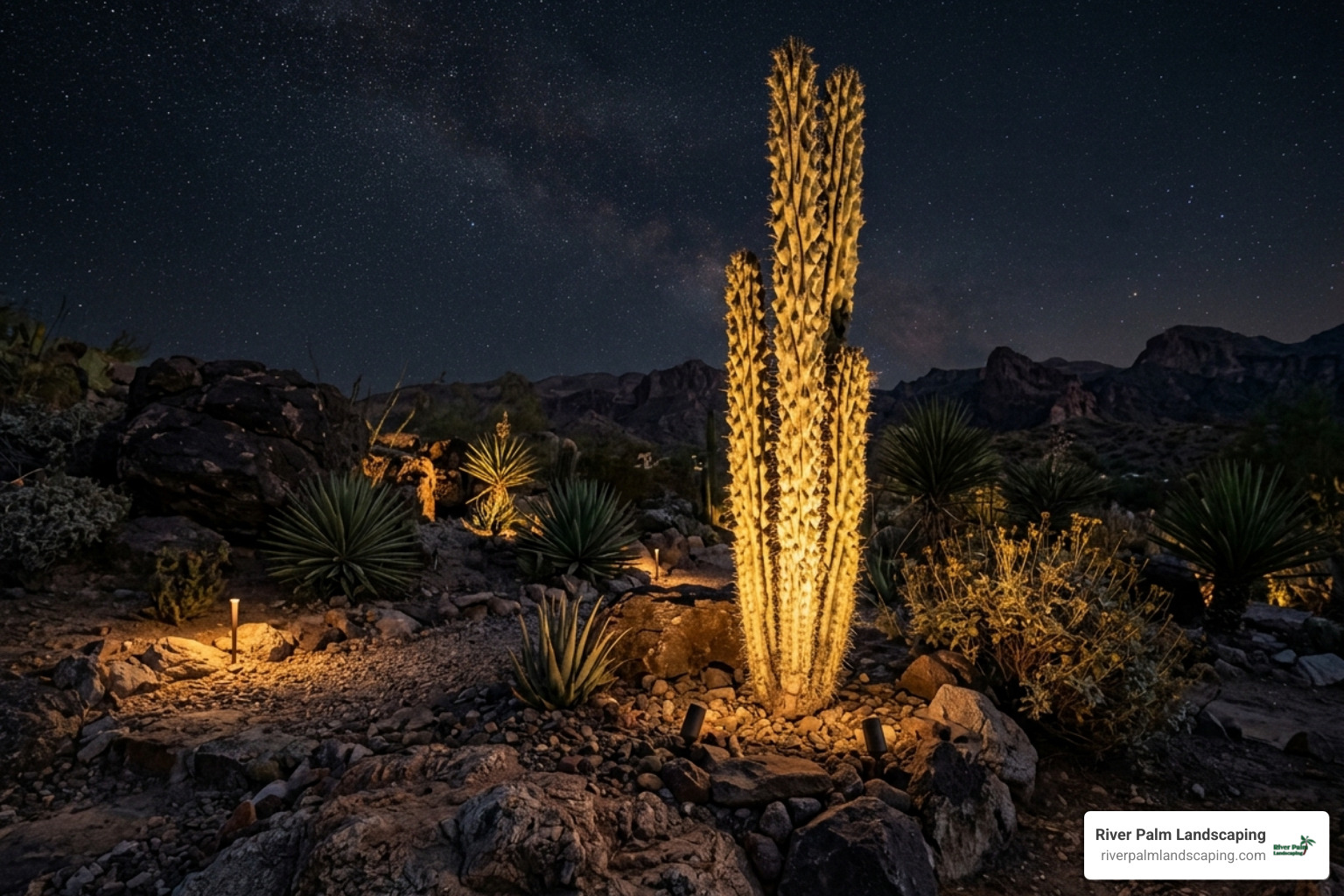
Designing for the Colorado River Valley requires a different mindset than lighting a lush, green lawn in the Midwest. In Parker, we deal with rocky soil, extreme UV exposure, and temperatures that can soar well above 110 degrees. Standard retail-grade plastic fixtures often warp or crack within a single season. To achieve truly efficient landscape lighting parker standards, the focus must be on durability and low-voltage LED technology.
Low-voltage systems (typically 12V) are the gold standard for residential landscaping. They are safer to install around pets and children, use significantly less energy than line-voltage systems, and allow for smaller, more discrete fixtures that blend into the desert floor. When working with rocky soil common in Parker neighborhoods, professional contractors utilize specialized trenching and protective conduit to ensure that the “brains” of the system—the cabling and transformers—remain protected from the elements and local pests.
| Feature | Incandescent Bulbs | LED Technology |
|---|---|---|
| Average Lifespan | 750 – 2,000 hours | 15,000 – 50,000+ hours |
| Energy Consumption | High (60W per bulb) | Low (5W – 12W per bulb) |
| Heat Emission | Very High | Minimal |
| Durability | Fragile glass | Solid-state (vibration resistant) |
Core Components of efficient landscape lighting parker
For those seeking the highest level of efficiency, the Parker LED Rotatable Wall Pack is a standout choice for home exteriors. This specific type of fixture achieves up to 145 lm/W efficiency, meaning it produces a massive amount of light for every watt of electricity used. Its rotatable lens is particularly useful for Parker homes, as it allows light to be directed precisely toward a pathway or architectural feature rather than spilling into the sky or a neighbor’s window.
Beyond wall packs, high-quality outdoor lighting in Parker, CO relies on cast brass fixtures. Unlike aluminum or plastic, cast brass is a robust material that withstands the abrasive sand and high heat of the desert without corroding. Look for fixtures with an IP65 rating, which ensures they are dust-tight and protected against water—essential for when those monsoon rains finally hit.
Strategic Placement for Safety and Aesthetics
Efficiency isn’t just about the bulb; it’s about how many fixtures you use and where you put them. Over-lighting is a common mistake that wastes energy and creates harsh glare. For backyards and pool decks, the goal is to provide enough light for safety without ruining the nighttime ambiance.
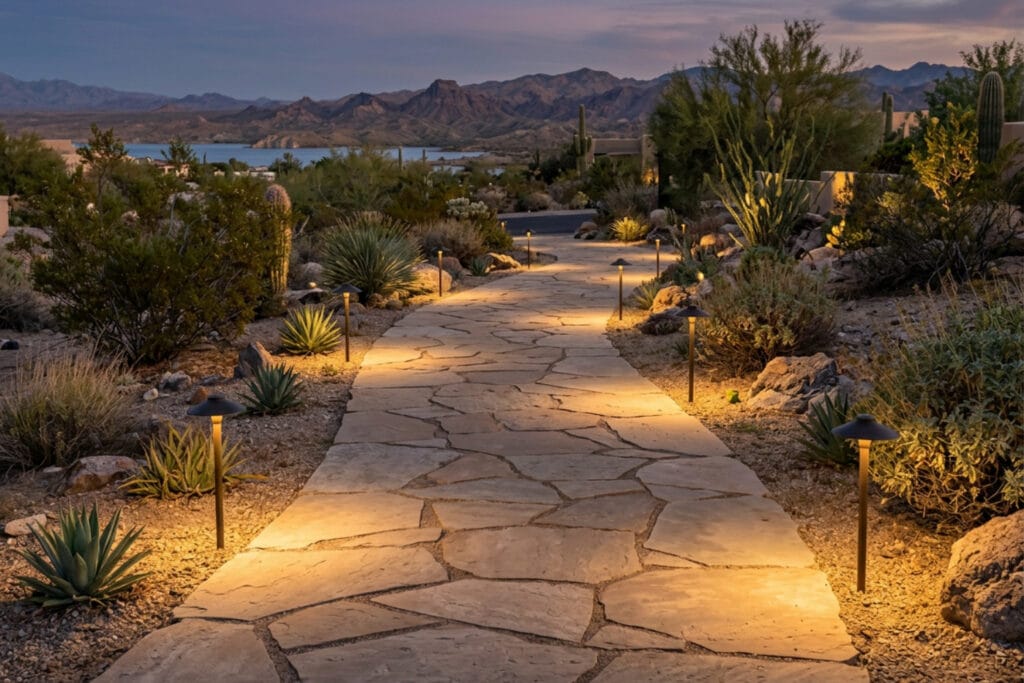
Pathway lighting should be spaced approximately 8 to 10 feet apart. Spacing them too closely creates an “airport runway” effect that looks amateurish and uses twice the energy needed. Each fixture should ideally produce between 50 and 100 lumens, providing a soft pool of light that guides the foot without blinding the eye. For architectural features, placing lights at a 30-degree angle helps to highlight the texture of stone or stucco, adding depth to the home’s facade.
Layered Lighting Techniques for Arizona Curb Appeal
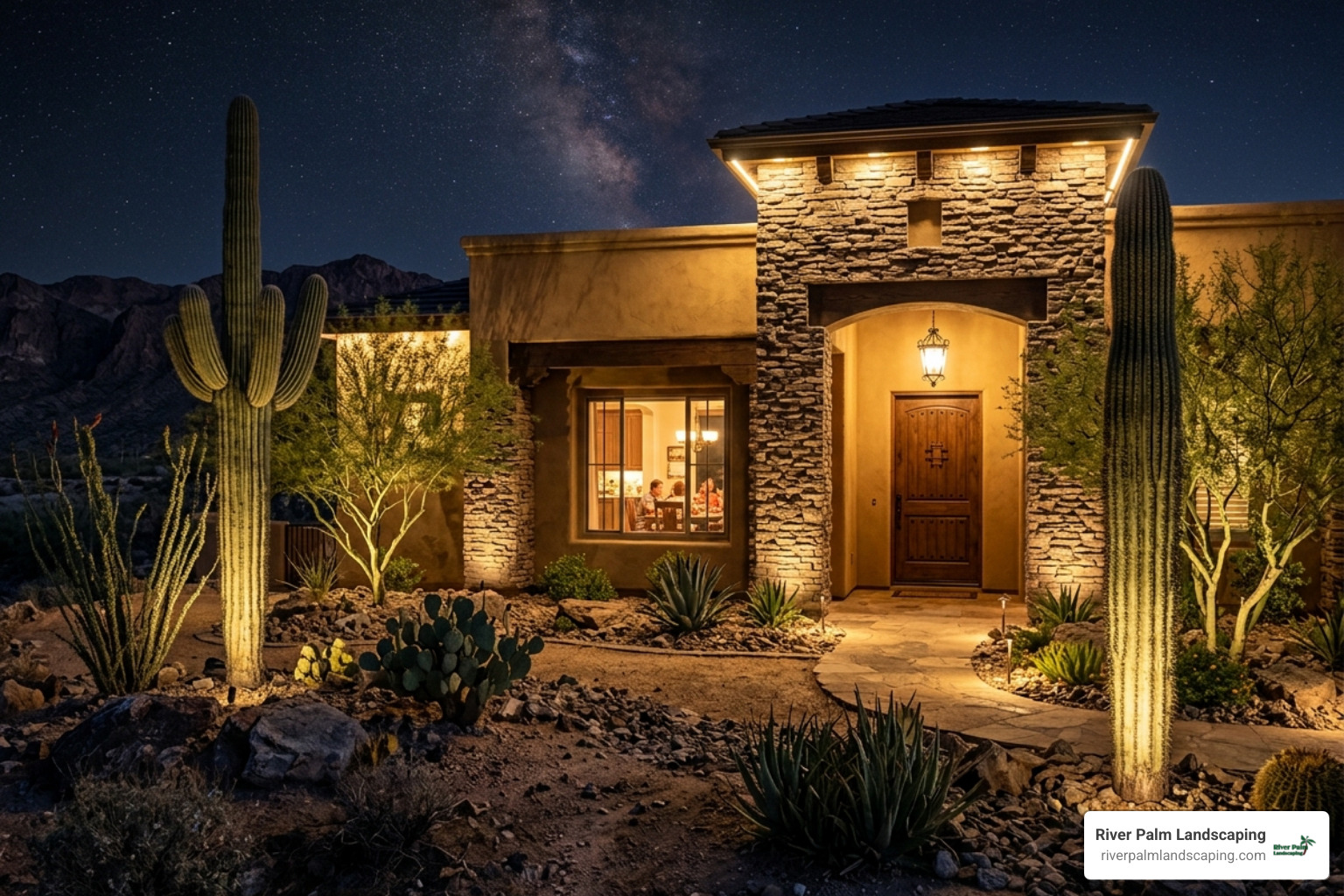
A professional lighting design is like a stage production; it requires layers to look natural and inviting. By combining ambient, task, and accent lighting, homeowners can maximize curb appeal while keeping energy consumption low.
- Ambient Lighting: This provides the general “wash” of light for the area. In Parker, this is often achieved through wall sconces or soft down-lighting from patio covers.
- Task Lighting: This is functional light for specific activities. In patios and outdoor kitchens, task lighting ensures the grill master can see the steaks and the walkways are clear of tripping hazards.
- Accent Lighting: This is where the “glow” happens. It focuses on specific focal points, like a unique rock formation or a prized specimen plant.
For the most inviting look, stick to a warm white color temperature between 2700K and 3000K. Cooler temperatures (4000K+) can make desert landscapes look clinical or ghostly, whereas warm tones complement the earthy reds and tans of Parker’s rock and sand.
Highlighting Desert-Hardy Features
The unique textures of desert flora are perfect candidates for accent lighting. A Totem Pole cactus, with its bumpy, sculptural surface, looks stunning when “up-lit” with a 75–150 lumen bullet light. Low-growing Lantana can be showcased with soft path lights that highlight its colorful blooms during the evening hours.
Architectural up-lighting on the home itself typically requires a bit more power—around 200 to 400 lumens—to reach the roofline. This technique makes a home appear larger and more secure. As noted in innovative outdoor lighting solutions for scenic Prescott, using directional LEDs allows you to highlight these features without the light “bleeding” into areas where it isn’t wanted.
Avoiding Common Lighting Mistakes
One of the biggest drains on efficiency is “light spill.” This occurs when fixtures are poorly aimed, sending light into the sky or across property lines. Not only does this waste energy, but it also contributes to light pollution. When installing pavers for a new driveway or patio, ensure that any integrated lighting is shielded.
Another mistake is using too much light. The human eye adjusts to the dark; you need far less light outdoors than you do indoors. By using lower-wattage LEDs and focusing on contrast—the play between light and shadow—you create a more dramatic and energy-efficient result than if you simply flooded the yard with high-powered floodlights.
Dark Sky Compliance and Local Standards in Parker
Parker and the surrounding Colorado River Valley communities value their starry nights. To protect this natural resource, efficient landscape lighting must adhere to certain standards. Organizations like the International Dark-Sky Association (IDSA) and the Illuminating Engineering Society (IESA) provide guidelines that many modern HOAs now require.
Key standards to follow for desert landscaping include:
- Luminaire Limits: LEED standards often prohibit luminaires over 3,500 lumens for residential use to prevent excessive glare.
- Shielding: All fixtures should be “fully shielded,” meaning the light source is not visible from the side or above. The light should be directed strictly downward.
- Light Spillover: Ensure that your light does not cross property lines, which can be a nuisance to neighbors and is often a violation of local codes.
Professional Installation of efficient landscape lighting parker
While some homeowners attempt a DIY approach, professional installation by a licensed contractor ensures the system lasts for decades rather than months. At River Palm Landscaping, we focus on the technical details that matter in the desert. This includes using solid crimped connections rather than cheap wire nuts. Crimping provides a permanent, moisture-resistant bond that won’t wiggle loose as the ground shifts or temperatures change.
Furthermore, deep cable burial is essential. In Parker’s rocky terrain, cables left too close to the surface are easily damaged by gardening tools or wildlife. A professional landscape design incorporates the electrical layout from day one, ensuring that transformers are hidden but accessible and that the system can handle future expansions. A professionally installed, high-efficiency system is a long-term investment that enhances usability and provides a polished look to the property.
Smart Controls and Long-Term Energy Savings
The final piece of the efficient landscape lighting parker puzzle is control. Even the most efficient LED still wastes energy if it’s running at 2:00 PM. Modern smart controls have revolutionized how we manage outdoor power.
- Astronomic Timers: These smart timers know exactly when the sun sets and rises in Parker, AZ, every day of the year. They automatically adjust for daylight savings and the changing seasons, ensuring your lights are only on when needed.
- Motion Sensors: For security and commercial landscaping applications, motion sensors allow high-output lights to remain off until they detect movement, providing safety without constant energy draw.
- App-Controlled Systems: Many modern LED transformers allow you to dim lights or change zones directly from your smartphone. If you’re having a late-night dinner on the patio, you can brighten the task lighting and dim the accents with a single tap.
With these controls and high-quality LED fixtures, a permanent lighting system can last 15 to 20 years or more. This longevity drastically reduces the “hidden” costs of lighting—the time and money spent buying and replacing bulbs every few months.
Frequently Asked Questions about Parker Outdoor Lighting
How much can I save by switching to LED landscape lighting?
Switching from traditional incandescent or halogen bulbs to LED can reduce your lighting energy consumption by up to 75%. Because LEDs last up to 25 times longer, you also save significantly on the cost of replacement bulbs and the labor required to change them, which is especially helpful for hard-to-reach fixtures on rooflines or in dense desert plantings.
Are low-voltage systems durable enough for the Arizona heat?
Yes, provided you use professional-grade components. While “big box” store kits may fail, high-quality low-voltage systems using cast brass fixtures and IP65-rated LEDs are specifically designed for harsh environments. LEDs actually perform very well in cooler night temperatures, and their lack of heat emission prevents them from “cooking” themselves or the surrounding plants during our warm Parker nights.
Does professional landscape lighting really increase property value?
While no contractor can guarantee a specific percentage, high-quality landscape lighting is widely recognized as a top feature for improving curb appeal and “buyability.” It extends the usable square footage of the home into the evening and provides a sense of security and luxury that buyers in neighborhoods like The Pinery or Stonegate find highly desirable.
Conclusion
Investing in efficient landscape lighting parker is about more than just seeing where you step; it’s about transforming your property into a safe, beautiful, and sustainable retreat. By moving away from energy-hungry incandescent bulbs and embracing high-efficiency LEDs, smart controls, and durable cast brass fixtures, you can enjoy a glowing garden that stands up to the rigors of the Arizona desert.
Whether you are looking to highlight a majestic Totem Pole cactus or ensure your outdoor kitchen is ready for a summer evening, professional installation ensures your system is built to last. For homeowners in Lake Havasu City, Golden Shores, and Parker, the right lighting is the finishing touch that turns a house into a desert oasis.
Ready to illuminate your night? Request a consultation for desert landscaping and let the experts at River Palm Landscaping design a high-efficiency lighting plan tailored to your property.